
A DWI arrest in Texas can be overwhelming, but you don’t have to face it alone. The flashing lights in your rearview mirror, the officer's pointed questions, and the sudden pressure to perform on the side of a busy road can be a disorienting and stressful experience. A central part of this roadside encounter is the series of field sobriety tests (FSTs), a set of physical and mental exercises designed to gather evidence of potential impairment.
However, what many Texas drivers don't realize is that these tests are not scientifically perfect. Their results can be influenced by medical conditions, nervousness, or even improper instructions from the officer. The sobriety test questions an officer asks before and during these tests are just as critical, designed to elicit specific responses that can be used against you. Understanding these questions and the physical challenges involved is the first and most crucial step in protecting your driver's license, your freedom, and your future.
This guide is designed to demystify the entire process. We will break down the most common field sobriety tests used in Texas, from the Horizontal Gaze Nystagmus (HGN) to the Walk-and-Turn, explaining exactly what officers are looking for. You'll learn how these tests can impact your DWI case, what your legal rights are regarding refusal, and why having a knowledgeable Houston DWI lawyer is essential. With this information, you can navigate a DWI stop with more confidence and begin building a strong defense from the very start.
1. What is the Horizontal Gaze Nystagmus (HGN) Test and How is it Administered?
The Horizontal Gaze Nystagmus (HGN) test is often the first and most technical of the three standardized field sobriety tests (SFSTs) administered during a Texas DWI stop. It's not a test of your memory or coordination but rather an observation of involuntary eye movements. The underlying theory is that central nervous system depressants, like alcohol, can exaggerate a naturally occurring jerking of the eyes (nystagmus) when looking to the side.
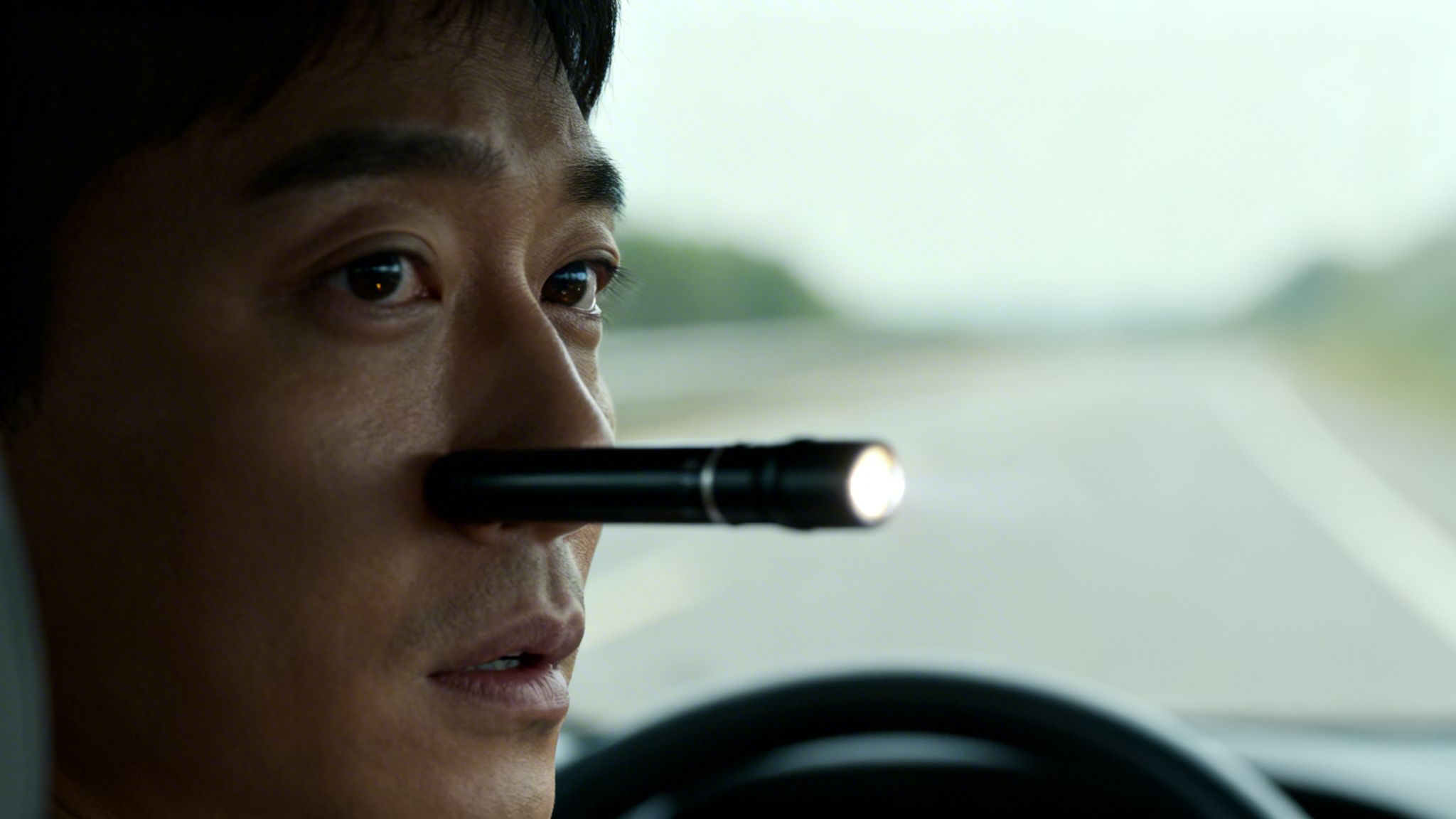
During the HGN test, the officer will ask you to stand still, keep your head straight, and follow a stimulus (usually a pen, finger, or penlight) with only your eyes. The officer is trained to look for six specific "clues," three in each eye.
How the HGN Test is Scored
An officer is searching for three distinct clues of impairment in each of your eyes, for a total of six possible clues:
- Lack of Smooth Pursuit: As your eye follows the stimulus from center to the side, it should move smoothly. An intoxicated person's eye may jerk or bounce instead.
- Distinct and Sustained Nystagmus at Maximum Deviation: When your eye is held at its farthest point to the side for at least four seconds, a noticeable and sustained jerking may be observed.
- Onset of Nystagmus Prior to 45 Degrees: The officer will move the stimulus slowly out from the center of your face. If the jerking begins before the stimulus reaches a 45-degree angle from the center, it is marked as a clue.
According to the National Highway Traffic Safety Administration (NHTSA), observing four or more of these six clues suggests a blood alcohol concentration (BAC) of 0.08 or higher. However, this conclusion is far from foolproof.
Why HGN Test Results Can Be Challenged
The HGN test is highly susceptible to both human and environmental errors, which can lead to false positives and an unjust arrest. Common issues include:
- Improper Administration: The officer may move the stimulus too quickly, hold it at the wrong distance or height, or fail to follow the standardized procedure exactly.
- Medical Conditions: Over 50 medical conditions can cause nystagmus, including inner ear problems, head injuries, and neurological disorders. Certain prescription medications can also produce the same clues an officer associates with intoxication.
- Environmental Factors: Flashing lights from patrol cars, passing traffic, and poor lighting can interfere with the test and cause your eyes to react in a way that is misinterpreted as a clue of impairment.
If you have been arrested for a DWI in Texas, it is critical to have an experienced attorney review the administration of your HGN test. At The Law Office of Bryan Fagan, PLLC, we meticulously analyze dashcam and bodycam footage to identify procedural errors that can get HGN evidence suppressed. A DWI arrest can be overwhelming, but you don't have to face it alone. Contact us for a free consultation to protect your rights and driving privileges.
2. What Does the One-Leg Stand (OLS) Test Measure and What Are Common Defenses?
Following the HGN test, an officer will often administer the One-Leg Stand (OLS) test. This is known as a "divided attention" test, designed to assess your ability to perform both a mental task (counting) and a physical task (balancing) simultaneously. The theory is that a person impaired by alcohol will struggle to divide their attention between these two requirements.
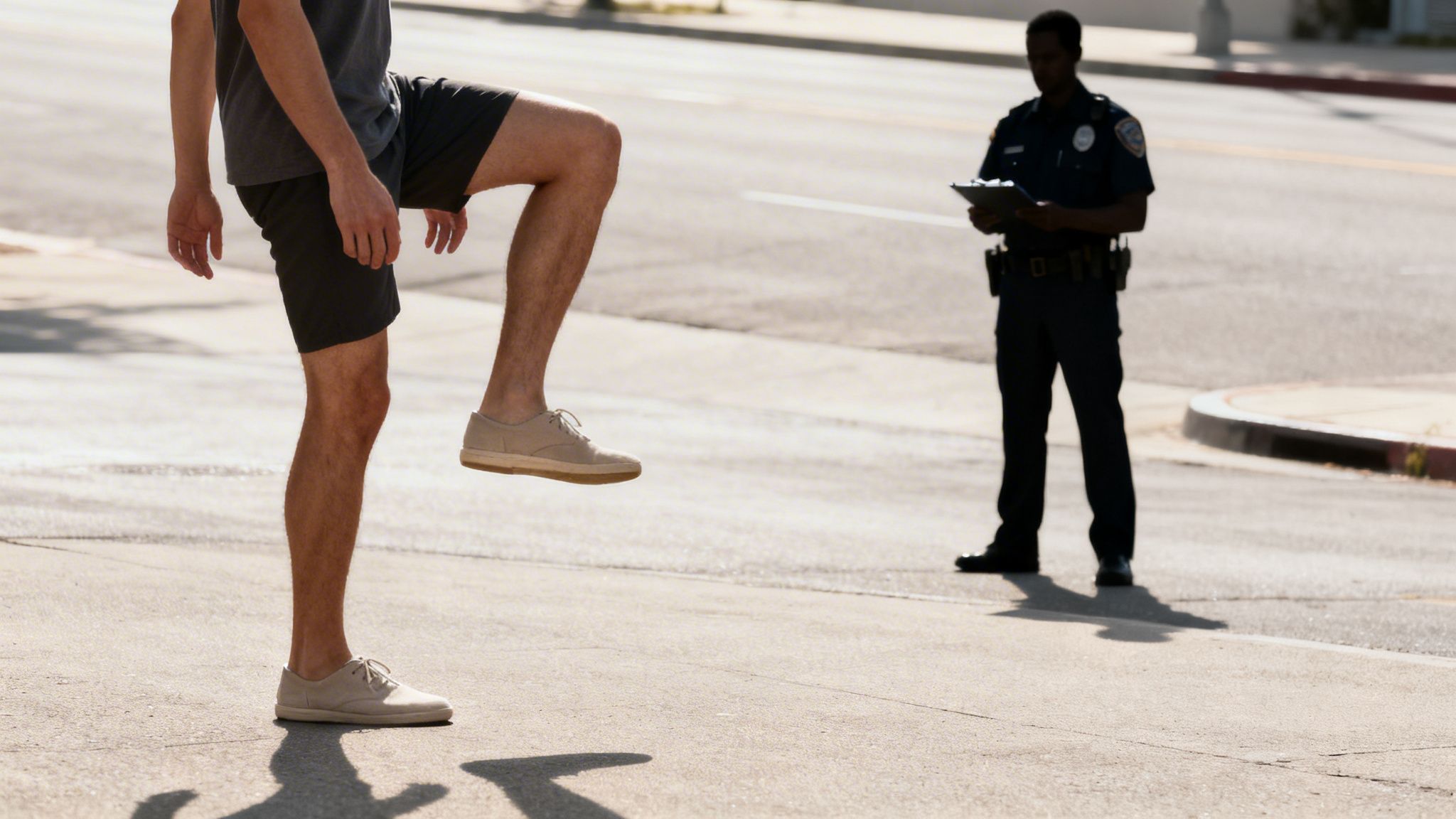
During the OLS test, the officer will instruct you to stand with your feet together, raise one foot approximately six inches off the ground, and count aloud ("one thousand one, one thousand two…") for 30 seconds while looking at your raised foot. The officer watches for specific clues that they associate with impairment.
How the One-Leg Stand Test is Scored
An officer is trained to look for four specific clues of impairment during the 30-second test. Observing two or more of these clues is considered a "fail" according to NHTSA standards.
- Sways while balancing: The officer observes if you are swaying from side-to-side or front-to-back while trying to maintain your balance.
- Uses arms for balance: You raise your arms more than six inches from your sides to keep from falling.
- Hops: You hop on your anchor foot to maintain your balance.
- Puts foot down: You are unable to keep your foot raised for the full 30 seconds and put it down one or more times.
According to NHTSA, if a person exhibits two or more of these four clues, there is a statistical probability that their BAC is 0.08 or higher. However, this test is notoriously unreliable and often the weakest part of a prosecutor's case.
Why OLS Test Results Can Be Challenged
The One-Leg Stand test is fundamentally a test of physical coordination and balance, attributes that are affected by countless factors having nothing to do with alcohol consumption. This makes it highly vulnerable to legal challenges.
- Environmental Conditions: The test must be performed on a level, dry, and non-slippery surface. Uneven pavement, a sloped shoulder, gravel, or wet conditions can make it impossible for even a sober person to pass. Wind from passing traffic can also affect balance.
- Physical and Medical Issues: Age, weight, and physical injuries to the legs, back, or hips can severely impact a person's ability to perform the test. Furthermore, medical conditions like neurological disorders or inner ear problems directly affect balance.
- Inappropriate Footwear: Performing this test in high heels, boots, sandals, or loose-fitting shoes is extremely difficult and can easily lead to a "fail" that is not indicative of impairment.
- Improper Instructions: An officer's failure to properly demonstrate the test, provide clear instructions, or accurately time the 30-second duration can invalidate the results.
If you were arrested for a DWI in Texas, your performance on the OLS test should be scrutinized. At The Law Office of Bryan Fagan, PLLC, our attorneys meticulously review all evidence, including dashcam footage of the roadside stop, to identify these exact errors. Challenging the administration and reliability of these sobriety test questions is a key part of building a strong defense to fight a DWI in Texas. Contact us for a free consultation to start protecting your rights.
3. How Should the Walk-and-Turn (WAT) Test Be Properly Administered and What Are Common Errors?
The Walk-and-Turn (WAT) test is the second of the three standardized field sobriety tests. It is a "divided attention" test, designed to assess your ability to follow instructions and perform a physical task simultaneously. The theory is that an intoxicated individual will struggle to divide their attention between the mental and physical aspects of the test.

The test consists of two phases: the instruction phase and the walking phase. The officer will instruct you to place your feet heel-to-toe on a line and maintain that position while listening to all instructions. You will then be told to take nine heel-to-toe steps down the line, turn in a specific manner, and take nine heel-to-toe steps back. The officer is looking for specific clues that they associate with impairment.
How the WAT Test is Scored
An officer is trained to look for eight specific clues of impairment during the WAT test. According to the National Highway Traffic Safety Administration (NHTSA), if an individual exhibits two or more of these eight clues, it suggests a BAC of 0.08 or higher. The clues are:
- Cannot balance during instructions: You are unable to maintain the heel-to-toe stance while the officer gives directions.
- Starts too soon: You begin walking before the officer has finished giving all instructions.
- Stops while walking: You pause for several seconds during the walk.
- Does not touch heel-to-toe: You leave a gap of more than half an inch between your heel and toe on any step.
- Steps off the line: You step with one or both feet completely off the designated line.
- Uses arms to balance: You raise your arms more than six inches from your sides to maintain balance.
- Improper turn: You fail to turn as instructed, such as by losing your balance or not using a series of small steps.
- Incorrect number of steps: You take more or fewer than the required nine steps in either direction.
Why WAT Test Results Can Be Challenged
The Walk-and-Turn test is highly dependent on perfect conditions and flawless administration, which are rarely present on the roadside during a Texas DWI stop. This makes the results highly unreliable and open to legal challenges.
- Improper Administration: An officer's failure to give clear, standardized instructions or demonstrate the test correctly can easily cause a sober person to fail. Asking a series of complex sobriety test questions and commands under duress is designed to be confusing.
- Environmental Conditions: The test requires a dry, hard, level, non-slippery surface with a clearly visible line. Cracked pavement, a sloped road, gravel, poor lighting, or even an imaginary line can make it impossible for anyone to perform the test perfectly.
- Personal and Physical Factors: Your age, weight, physical injuries, medical conditions affecting balance, and even the type of footwear you are wearing (like heels or loose-fitting sandals) can significantly impact your performance, none of which have anything to do with alcohol consumption.
A DWI arrest can feel like the end of the road, but a skilled Texas DUI attorney can challenge the validity of these tests. At The Law Office of Bryan Fagan, PLLC, we meticulously scrutinize the evidence, including dashcam footage, to find errors in how sobriety tests were conducted. Don't let an unreliable test dictate your future. Contact us for a free consultation to start building your defense.
4. What is the Romberg Balance Test and Why Do Texas Officers Use It?
The Romberg Balance Test, often called the modified Romberg test, is a non-standardized field sobriety test that some Texas law enforcement officers use during a DWI investigation. Unlike the three standardized tests, the Romberg test is not part of the official NHTSA-approved battery but is still frequently administered. It's designed to gauge your sense of balance and your internal clock, both of which can theoretically be affected by alcohol.
During the test, the officer will instruct you to stand with your feet together, tilt your head back, and close your eyes. You will then be asked to estimate the passage of 30 seconds and say "stop" when you believe that time has elapsed. While you do this, the officer observes you for signs of impairment.
How the Romberg Balance Test is Scored
An officer administering this test is looking for specific indicators, or "clues," that they believe point to intoxication. Unlike the HGN test, there is no standardized scoring system, making the results highly subjective and dependent on the officer's personal judgment. The primary observations include:
- Amount of Body Sway: The officer will watch to see how much you sway. However, a certain amount of natural swaying (postural sway) is normal for everyone, and the officer has no objective way to measure this.
- Eyelid Tremors: The officer may look for fluttering or tremors in your eyelids.
- Inability to Follow Instructions: Opening your eyes before the time is up, moving your feet, or raising your arms for balance can be interpreted as signs of impairment.
- Time Estimation: If your estimation of 30 seconds is significantly off (either too fast or too slow), the officer may count this as a clue.
The subjective nature of these observations makes the Romberg test one of the least reliable field sobriety exercises. Any combination of these "clues" could be used by the officer to justify an arrest.
Why Romberg Test Results Can Be Challenged
The Romberg test is highly controversial and often successfully challenged in court because it lacks scientific validity as an indicator of alcohol impairment. Its results are prone to misinterpretation and can be influenced by numerous factors unrelated to intoxication.
- Lack of Standardization: The test is not endorsed by NHTSA, and there are no universal, scientifically validated procedures for its administration or scoring.
- Medical and Physical Conditions: Many conditions can cause poor balance or swaying, including inner ear problems, neurological disorders, arthritis, neuropathy, and previous injuries. Normal fatigue can also significantly impact performance.
- Environmental Factors: Uneven ground, wind, poor lighting, and the flashing lights of a patrol car can all negatively affect your ability to balance and concentrate during the test.
- Subjective Interpretation: What one officer considers "significant" swaying, another might see as normal. Without objective measurement standards, the results are merely the officer’s opinion, not scientific fact.
If you were arrested for a DWI in Texas after performing a Romberg test, it is crucial to understand that these results are far from conclusive. At The Law Office of Bryan Fagan, PLLC, our experienced attorneys scrutinize every detail of a traffic stop, including the administration of non-standardized tests. We know how to expose the scientific weaknesses of the Romberg test to protect your rights. A DWI arrest can be overwhelming, but you don't have to face it alone. Contact us for a free consultation to start building your defense.
5. What Questions Might Officers Ask During Field Sobriety Testing and How Should You Respond?
Beyond the physical tests, an officer's investigation relies heavily on the answers you provide to a series of seemingly simple questions. These sobriety test questions are designed not just to gather information, but to document admissions, observe your mental state, and build a case for probable cause. The officer is trained to note not just what you say, but how you say it, including any hesitation, slurred speech, or confusion.
During a DWI stop in Texas, an officer will use this dialogue to create a narrative of impairment. For instance, admitting to having "one beer" can be twisted to suggest you are hiding how much you truly drank. Explaining you are tired from a long day at work can be documented as a sign of intoxication.
Common Questions and How They Are Used
An officer's questioning is a strategic tool. Your responses can and will be used against you in court. Be prepared for questions like:
- "Have you had anything to drink tonight?": This is a direct attempt to get an admission. Any answer other than "no" can be used as evidence of impairment.
- "Do you have any medical conditions?" or "Are you taking any medication?": While these questions seem innocent, they can be used to either dismiss legitimate reasons for poor balance or coordination, or to add a charge of driving while intoxicated by other substances.
- "Do you understand my instructions?": Answering "yes" confirms you were capable of understanding, making any subsequent "failure" on a test appear to be due to impairment rather than confusion. Your hesitation or request for clarification may be noted as a sign of intoxication.
- "Where are you coming from?" and "Where are you going?": These questions test your memory and ability to form coherent thoughts under pressure.
An officer is documenting every aspect of your interaction, from your speech patterns to your politeness, to build a case. Your best strategy is to remain calm and be mindful of your rights.
How You Should Respond to Protect Your Rights
You are not required to answer an officer's questions about your activities or alcohol consumption. You have the right to remain silent to avoid self-incrimination.
- Provide Your Essentials: You are legally required to provide your driver's license, proof of insurance, and registration when asked.
- Politely Decline to Answer: You can and should politely decline to answer incriminating questions. A simple, "Officer, I respectfully decline to answer any questions without my attorney present" is a complete and legally sound response.
- Do Not Volunteer Information: Avoid offering up details about your day, your health, or where you've been. This information can be misinterpreted and used against you.
- Silence is Not Guilt: In Texas, your silence cannot be used as evidence of impairment. Exercising your right to remain silent is a strategic move, not an admission of guilt.
A DWI arrest can feel disorienting, but you hold significant power in what you choose to say. If an officer continues to press for a chemical test after you refuse questions, it is crucial to understand the implications of implied consent and the possibility of a warrant for a blood draw. You can learn more about how warrants for a DWI blood draw work in Texas and how to protect your rights in that situation.
If you have been arrested for a DWI in Texas, the words you used during the stop will be a critical part of the prosecution's case. At The Law Office of Bryan Fagan, PLLC, we meticulously analyze every detail of your arrest, including the officer's questioning. A DWI arrest is a serious event, but it doesn't have to define your future. Contact us for a free consultation to start building your defense today.
6. What Are Your Legal Rights Regarding Field Sobriety Test Refusal in Texas?
Among the most critical pieces of information for any Texas driver to understand during a DWI stop is their legal right concerning field sobriety tests (FSTs). Unlike chemical tests, which fall under Texas's implied consent law, standardized field sobriety tests are entirely voluntary. You have the absolute right to refuse to perform them, and this refusal carries no direct legal penalty, such as an automatic license suspension.
This distinction is crucial because FSTs are subjective and designed for you to fail, providing the officer with probable cause to arrest you. By refusing, you prevent the state from creating potentially misleading evidence of impairment. An officer might still arrest you based on other observations, but you have not supplied them with the flawed "proof" that FSTs often generate.
How to Properly Refuse Field Sobriety Tests
Politely and clearly asserting your rights is key. An officer may try to persuade or imply that you must comply, but standing firm is your right. If you choose to refuse, you should:
- State Your Refusal Clearly: Use a simple and direct phrase like, "Officer, I respectfully decline to perform any field sobriety tests."
- Do Not Explain or Justify: Providing a reason for your refusal, such as being tired or having a medical condition, can be twisted and used against you later as an admission of impairment or an excuse. Simply decline without explanation.
- Remain Calm and Cooperative: Refusing FSTs is not an act of defiance. Maintain a respectful tone and cooperate with other lawful commands, such as providing your license and registration.
It's important to remember that refusing FSTs is different from refusing a chemical test like a breathalyzer. While you can also refuse a breath or blood test, that decision triggers an automatic Administrative License Revocation (ALR). To learn more about the specific consequences of a chemical test refusal, you can refuse a breathalyzer in Texas, but the penalties are significant.
Why Refusing FSTs Can Be a Strategic Advantage
Refusing to perform these tests limits the evidence that can be used against you in court, which can be a powerful strategic move for your defense.
- Prevents False Positives: Medical conditions, physical limitations, fatigue, or even simple nervousness can cause a sober person to "fail" an FST. Refusal prevents this inaccurate evidence from ever being created.
- Limits Probable Cause: Without FST results, the prosecutor's case for probable cause for your arrest may be significantly weakened, relying only on the officer's subjective observations like red eyes or the smell of alcohol.
- Officer Misrepresentation: Sometimes, an officer might incorrectly state that refusal is an admission of guilt. This is legally false. If this happens, your attorney can use the officer's misstatement, often captured on dashcam or bodycam, to challenge the officer's credibility and the legitimacy of the stop.
If you have been arrested for DWI in Texas, whether you took the field sobriety tests or not, your rights need immediate protection. The attorneys at The Law Office of Bryan Fagan, PLLC, are experts at scrutinizing every detail of a DWI stop. We analyze video evidence to ensure your rights were respected and build a powerful defense. A DWI arrest is a serious matter, but you have options. Contact us for a free consultation to discuss your case.
7. What Is the Scientific Validity of Field Sobriety Tests and How Do Courts Apply This in Texas DWI Cases?
While the Standardized Field Sobriety Tests (SFSTs) are presented by law enforcement as reliable tools for detecting impairment, their scientific foundation is far from perfect. The "validation" for these tests, including the HGN, Walk-and-Turn, and One-Leg Stand, comes from studies conducted by the National Highway Traffic Safety Administration (NHTSA) decades ago. These studies, however, have significant limitations that an experienced Texas DWI attorney can challenge in court.
The core problem is that NHTSA's research was conducted in highly controlled, laboratory-like environments. These conditions are drastically different from a real-world traffic stop on the side of a busy Texas highway at night. The original studies often used young, healthy participants who consumed measured doses of alcohol, which doesn't reflect the diversity of the actual driving population.
How SFST "Science" Can Be Challenged
Even under these ideal laboratory conditions, NHTSA's own data reveals questionable accuracy rates. The tests are often cited as being 68% to 79% accurate, which means that even at their best, they are wrong roughly one out of every four times. This creates an unacceptable risk of a sober driver failing and being wrongfully arrested.
A skilled defense attorney will scrutinize the validity of these tests as they apply to your specific situation. Common points of challenge include:
- Deviation from Protocol: NHTSA validation is only applicable if the officer administers the tests exactly according to standardized procedures. Any deviation, such as giving incorrect instructions or conducting the test on an uneven surface, can invalidate the results.
- Inapplicable Study Population: The original research subjects were often not representative of the general public. Results from a study on healthy college students may not apply to an older driver, someone with a medical condition, or an individual who is overweight.
- Environmental and Medical Factors: The original studies did not account for the immense stress, fatigue, or nervousness a person experiences during a traffic stop. Nor did they properly account for the dozens of common medical conditions, from inner ear problems to old injuries, that can cause a person to display the same "clues" of impairment an officer is looking for.
The Role of Courts in Scrutinizing SFST Evidence
Texas courts permit SFST results as evidence, but they are not accepted blindly. Judges are increasingly open to hearing arguments that challenge the scientific basis of the tests and the accuracy of their administration. A strong defense involves demonstrating that the "clues" observed by the officer could have been caused by factors other than intoxication.
By highlighting these scientific deficiencies and procedural errors, it's possible to have the field sobriety test evidence suppressed, significantly weakening the prosecution's case against you. To understand more about how these tests are used and contested, you can find helpful information in The Texas Driver's Guide to DUI and Sobriety Testing.
A DWI arrest based on questionable evidence can be overwhelming, but it doesn't mean a conviction is inevitable. At The Law Office of Bryan Fagan, PLLC, we meticulously analyze every detail of your stop, including the supposed science behind the sobriety tests. Contact us for a free consultation to start building your defense today.
7-Point Comparison: Sobriety Test Questions
| Item | Implementation Complexity 🔄 | Resource & Environment Needs ⚡ | Expected Reliability / Quality ⭐ | Typical Outcomes / Impact 📊 | Ideal Use Cases / Defense Tip 💡 |
|---|---|---|---|---|---|
| Horizontal Gaze Nystagmus (HGN) | Moderate — NHTSA protocol; requires precise stimulus speed/distance and trained observer | Low equipment (small light/pen) but needs controlled lighting and close observation | ★★★★☆ in ideal lab conditions; real-world reliability lower due to medical/confounding factors | Often yields discrete "clues" recorded in report; can strongly influence arrest decisions but prone to false positives | Use when video/lighting/training records exist; defense: challenge medical causes, lighting, and officer technique |
| One-Leg Stand (OLS) | Low — simple instructions but requires accurate timing and observation | Minimal equipment; needs flat, stable surface and appropriate footwear | ★★☆☆☆ — accuracy limited (NHTSA ~68% at best); highly affected by non-alcohol factors | Produces observable balance clues but weak standalone evidence; vulnerable to environmental/physiological confounders | Best avoided if driver has mobility/age issues; defense: document surface, footwear, medical conditions |
| Walk-and-Turn (WAT) | Moderate–High — multiple instruction points, step counting, and turn observation | Requires straight, level walking surface/clear line and time for demonstration | ★★★☆☆ — better than OLS but still error-prone (NHTSA ~79% ideal); sensitive to instructions and surface | Yields multiple observable clues; commonly misadministered leading to false failures | Strong defense angle: challenge instructions, line definition, step counts, and pavement conditions |
| Romberg (modified) | Low — short observational test but lacks standardized protocol | Minimal resources; subjective observation worsened by poor lighting/distance | ★☆☆☆☆ — minimal scientific validation; high officer subjectivity | Rarely reliable as standalone evidence; often excluded or discounted by courts | Defense: emphasize lack of NHTSA validation, natural postural sway, and medical explanations |
| Officer Questions During Testing | Low — verbal exchange; depends on wording and officer rapport | No equipment; often recorded on body/dash cam; environment affects clarity | ★★☆☆☆ — content useful but easily misinterpreted or coerced | Admissions or confused answers frequently included in reports and used at trial | Politely decline to discuss alcohol; provide only ID; request counsel before detailed answers |
| Right to Refuse Field Tests | Very low (procedure: verbal refusal) — legal clarity required | No resources; beneficial to have clear, calm verbal refusal and request for attorney | N/A as a "test" — strategic quality: high (protects against self-generated evidence) ⭐⭐⭐⭐ | Removing SFST evidence forces prosecution to rely on chemical tests or other indicators | Say clearly: "I do not consent to field sobriety tests." Do not volunteer reasons; request attorney if questioned |
| Scientific Validity (summary) | High for review — requires expert analysis and literature review | High — expert witnesses, studies, and records to challenge admission | ★★☆☆☆ — NHTSA provides foundation but studies are dated and limited; real-world validity contested | Increasing judicial scrutiny; can exclude or weaken SFST evidence when protocol/validation gaps shown | Use expert testimony to challenge applicability of NHTSA studies, officer adherence to protocol, and alternative explanations |
Take Control of Your Defense: Contact a Houston DWI Lawyer Today
Navigating a traffic stop and facing a battery of sobriety test questions can feel disorienting and unfair. As we’ve explored, the Standardized Field Sobriety Tests (SFSTs) like the Horizontal Gaze Nystagmus (HGN), One-Leg Stand (OLS), and Walk-and-Turn (WAT) are not simple pass-or-fail assessments. They are complex physical and cognitive exercises designed to be administered under very specific conditions, and even minor deviations can invalidate the results. An officer’s subjective interpretation, combined with external factors like uneven pavement, poor lighting, or your own medical conditions, can lead to a wrongful arrest based on flawed evidence.
Understanding what these tests entail and the specific questions officers ask is your first line of defense. Knowing that you have the right to refuse these tests without direct criminal penalty in Texas is a critical piece of information that can prevent you from inadvertently providing the prosecution with its primary evidence. The most significant takeaway from this guide is that the evidence gathered during a DWI stop is often far from infallible. Every instruction, every observation, and every question is a potential point of contention for a skilled defense attorney.
From Understanding to Action: Building Your DWI Defense
Knowledge empowers you during a traffic stop, but strategic legal action is what secures your future after an arrest. A DWI charge in Texas sets in motion two parallel legal battles: the criminal case that could lead to fines and jail time, and the civil Administrative License Revocation (ALR) process that threatens your driving privileges. You have only 15 days from the date of your arrest to request an ALR hearing to fight a DWI license suspension. Missing this deadline results in an automatic suspension, making immediate action essential.
Your defense starts with a meticulous review of the evidence, including the officer's administration of the field sobriety tests. An experienced Houston DWI lawyer will scrutinize the dashcam and bodycam footage, looking for critical errors:
- Improper HGN Administration: Did the officer hold the stimulus at the correct distance and speed? Did they check for all six clues properly?
- Incorrect WAT Instructions: Were you given the chance to maintain the starting position while the officer explained all nine steps and the turn?
- Unfair OLS Conditions: Were you on a level, dry surface, away from flashing patrol car lights that could disrupt your balance?
- Leading Sobriety Test Questions: Were you asked confusing or medically-related questions without proper context, designed to elicit incriminating responses?
These are not just minor details; they are the building blocks of a powerful defense strategy. Challenging the validity of SFSTs can lead to the suppression of evidence, which may result in reduced charges or even a complete dismissal of your case. An arrest is not a conviction, and the officer’s opinion is not the final word. You have the right to contest every piece of evidence and hold the prosecution to its burden of proving guilt beyond a reasonable doubt.
Don't let a DWI arrest define your future. The moments following an arrest are critical for protecting your rights, your license, and your reputation. By understanding the nuances of sobriety testing and partnering with a legal team that knows how to dismantle the prosecution's case, you can take back control. The path forward begins with a single, decisive step.
A DWI arrest based on subjective sobriety test questions and performance can be challenged and defeated. The experienced attorneys at the Law Office of Bryan Fagan, PLLC specialize in dissecting every detail of a DWI stop to build a powerful defense for clients across Texas. Contact the Law Office of Bryan Fagan, PLLC 24/7 for a free and confidential case evaluation to start protecting your rights today.
