
A DWI arrest can be overwhelming, but you don't have to face it alone. If this is a second DWI in Texas, the case is already in a different category from a first arrest, and the clock starts moving immediately. Your next few days matter more than your emotions, because the State can push both criminal penalties and license consequences at the same time.
What you do first can change the shape of the case. The priority is simple, protect your license, preserve the evidence, and make the State prove every part of the enhancement. If you're looking for a Houston DWI lawyer or a Texas DUI attorney who handles repeat-offense cases, focus on action, not panic.
Facing a Second DWI Charge in Texas
A second arrest often hits people the same way. You're worried about jail, you're worried about work, and you're trying to figure out whether an old case from years ago still matters. It does, and that's why second DWI penalties Texas cases need fast, careful handling.
The hard truth is that a repeat allegation changes the dynamics in your case. Texas treats a second DWI more seriously than a first one, and the consequences can include mandatory jail exposure, a longer DWI license suspension, and conditions that affect your day-to-day life right away, not just after conviction. The right move is to stop guessing and start building a defense around deadlines, prior records, and the evidence the State says it has.
Practical rule: If you only remember one thing, remember this, the first two weeks after arrest are where a lot of license and defense options get won or lost.
You also need to understand the administrative side of the case. The criminal court is one track, and the license fight is another. If you miss the administrative deadline, you can make the rest of the case harder than it needs to be.
For a basic roadmap after arrest, review What Happens After a DWI in Texas and use it as a checklist, not a substitute for counsel. Then call a lawyer who works these cases daily and can move quickly on the hearing request, bond terms, and evidence review.
How Texas Classifies a Second DWI Offense
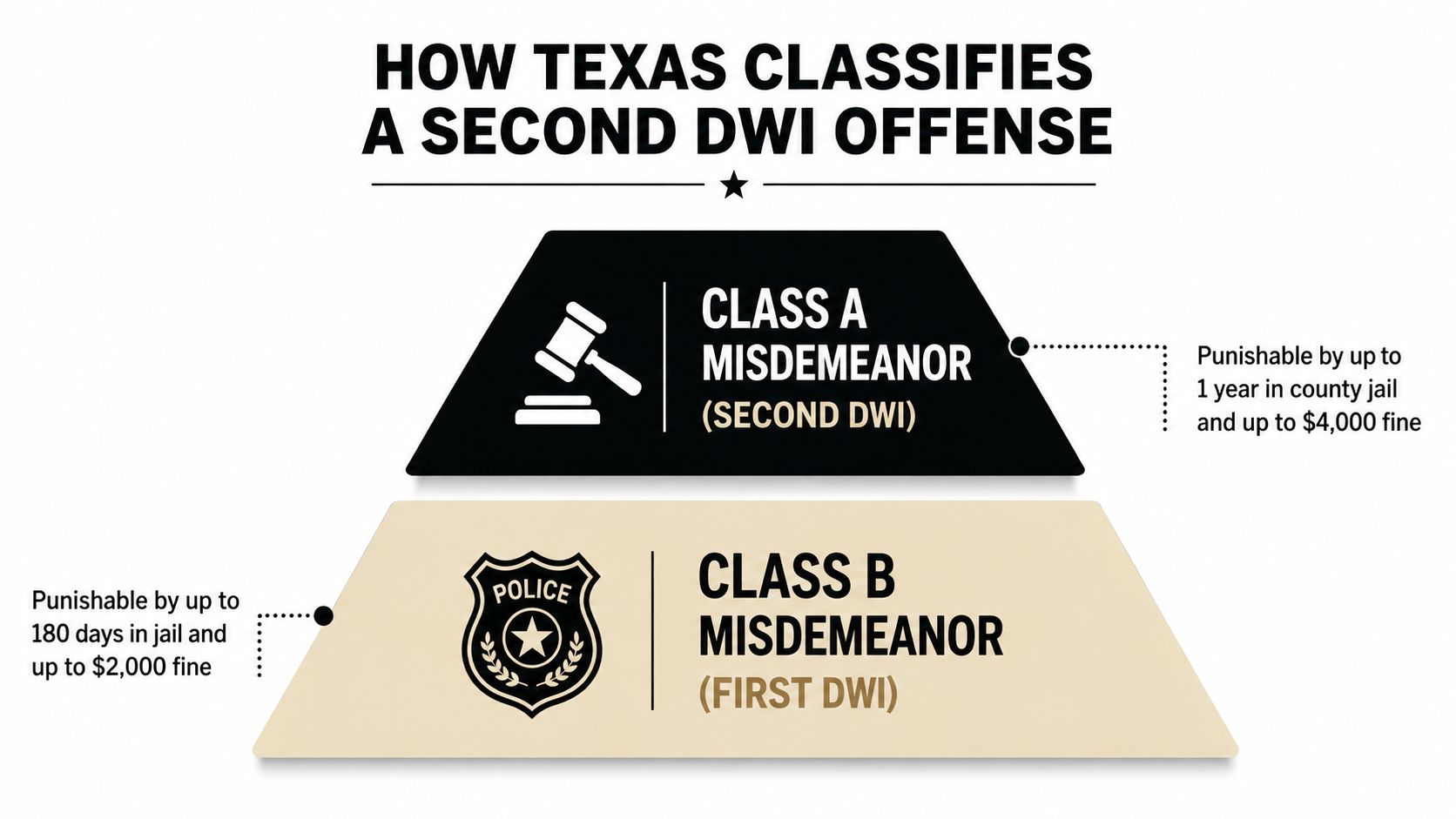
Texas does not treat a second DWI like a slightly worse first DWI. A repeat offense is typically charged as a Class A misdemeanor, and that classification brings a much tighter penalty box. Texas transportation guidance says the offense carries a maximum $4,000 fine, 30 days to 1 year in jail, and a driver's license loss of up to 2 years. TxDOT's impaired driving guidance also notes that the incarceration range starts at one month, not just a few days.
Key terms you need to know
BAC means blood alcohol concentration, the measurement used to allege intoxication through breath or blood testing. Implied consent is the rule that ties driving in Texas to chemical testing consequences after a lawful request. Administrative license suspension, often called an ALR case, is the separate license process that runs through DPS, not the criminal judge.
A field sobriety test is the roadside exercise officers use to claim impairment, usually including balance and divided-attention tasks. Those tests are subjective, and officers can make mistakes in how they're given and interpreted. A lawyer's job is to decide whether the stop, the testing, and the alleged prior conviction all hold up under scrutiny.
The practical takeaway is simple. A second DWI is not just a bigger ticket, it's a case with mandatory jail exposure, stronger supervision risk, and a longer license problem. If you are comparing this to a first case, First-Offense DWI in Texas: Penalties and Defenses gives useful context on what changes once the State says you're a repeat offender.
For enhancement issues, see DWI Enhancement Prior Conviction in Texas, because the prior conviction question often drives the entire defense strategy.
Why Old Priors Still Count Against You
A lot of people think a first DWI from years ago has aged out. In Texas, that assumption can hurt you badly. State and defense materials say Texas has no set lookback period for DWI enhancement, and priors since September 1, 1994, can still be used to classify a new case as a second offense. Texas repeat-offense guidance makes the point plainly, old does not always mean irrelevant.
That matters because the prior conviction changes more than the label. It changes what the prosecutor can demand, what the judge can consider, and how much room there is to negotiate. It can also affect whether ignition interlock becomes part of bond or supervision, which is why the old record needs to be audited before anyone starts talking plea.
The State has to prove the prior conviction, not just assume it.
What your lawyer checks first
A defense lawyer should verify whether the prior conviction is usable for enhancement. That means checking the paperwork, the dates, the court records, and whether the State can connect the prior case to you with competent proof. If the enhancement fails, the case may stop being a second-offense prosecution and start looking very different.
This is also where bargaining power exists. If the prosecution can't cleanly prove the old case, its position weakens. If the prior is valid, your defense has to adjust fast and focus on the stop, the testing, and the current arrest facts.
The right mindset is not, “Can't they just ignore the old one?” The right question is, “Can they prove it, and if so, what can still be challenged?” That's the difference between wishful thinking and a defense plan that gives you options.
The First 15 Days After Your Arrest
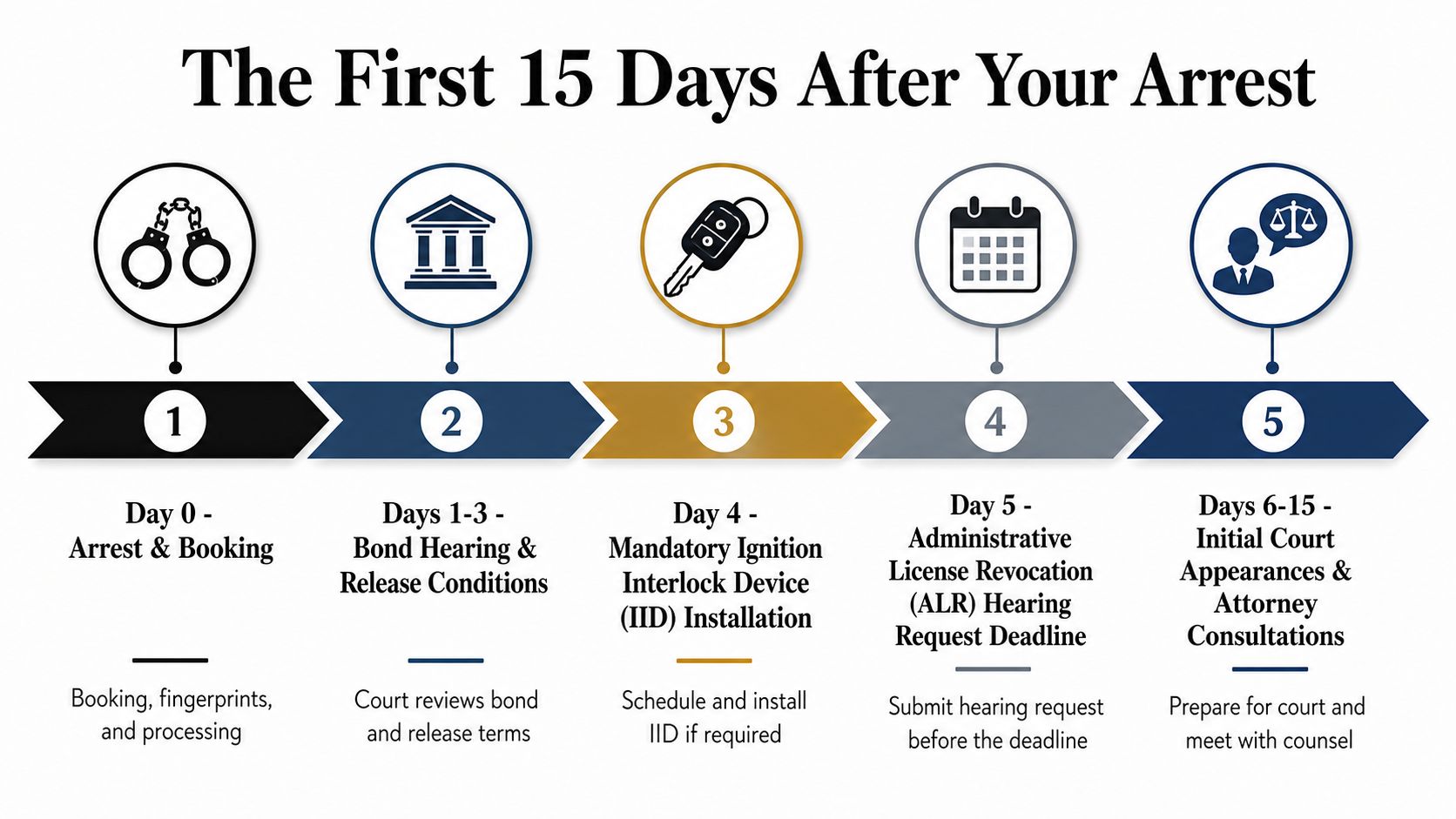
The first 15 days decide a lot of the license fight. Texas drivers generally have 15 days to request an ALR hearing to challenge a suspension, and that deadline moves fast when you're still dealing with booking, bond, and paperwork. Texas ALR guidance says refusal or failure on chemical testing can trigger separate administrative penalties that run independently from the criminal case.
What to gather right away
Start collecting everything tied to the stop and arrest. That includes the DIC-24, the suspension notice, any breath or blood paperwork, and the names of the officers involved. If you have the test result paperwork, keep it, because your lawyer may need to compare it against the stop report and the machine or lab records.
The next step is protecting your driving privileges while the case is still fresh. If bond conditions require an ignition interlock device, deal with it early so you don't create a separate compliance problem. For drivers who need a limited license, see How to Get an Occupational License and move quickly before the administrative process narrows your options.
Straight answer: Don't wait to “see what happens.” The State starts moving on suspension and criminal court at the same time, and your lawyer should be doing the same.
If you can, get a defense lawyer involved within the first 48 hours. That gives counsel time to request the ALR hearing, review the stop, and get ahead of any bond conditions before they harden into habits or violations. Waiting usually helps the prosecution, not you.
Enhancements That Stack on a Second DWI
A second DWI already raises the stakes, but the case can get worse fast when other facts are in play. The most common escalators are a high BAC, a child passenger, a crash with injury or death, and a CDL holder's separate employment exposure. Those issues do not replace the second-offense charge, they stack on top of it.
| Scenario | Charge Level | Jail Exposure | License Consequence | Key Risk |
|---|---|---|---|---|
| Second DWI with no extra facts | Class A misdemeanor | 30 days to 1 year in county jail | Up to 2 years suspension | Mandatory jail floor and enhancement proof |
| Second DWI with prior conviction and testing issues | Class A misdemeanor | Same statutory range, but case turns on evidence challenges | Suspension risk still separate from criminal case | Breath or blood proof may be attacked |
| Second DWI involving a CDL holder | Repeat DWI exposure plus CDL consequences | Criminal range still matters, job loss risk rises | CDL disqualification can become career-ending for driving work | Employment consequences hit fast |
| Second DWI with crash, injury, or death | Potential felony-level exposure depending on facts | Jail can become prison exposure if charged as intoxication assault or manslaughter | License consequences intensify | Serious injury facts change the whole case |
The point is not to scare you, it's to make you tell your lawyer everything early. A prosecutor is not surprised by facts you leave out until later. If there was a passenger, a crash, a commercial license, or a high test result, your defense needs to know immediately so it can plan around the exposure.
The Real Cost Beyond the Headline Penalty
A working parent in Houston usually cares about one thing first, how to keep life moving while this case is pending. The court fine is only part of the answer. The bill includes ignition interlock, alcohol classes, court costs, supervision fees, license reinstatement issues, and the time you lose at work while you handle all of it.
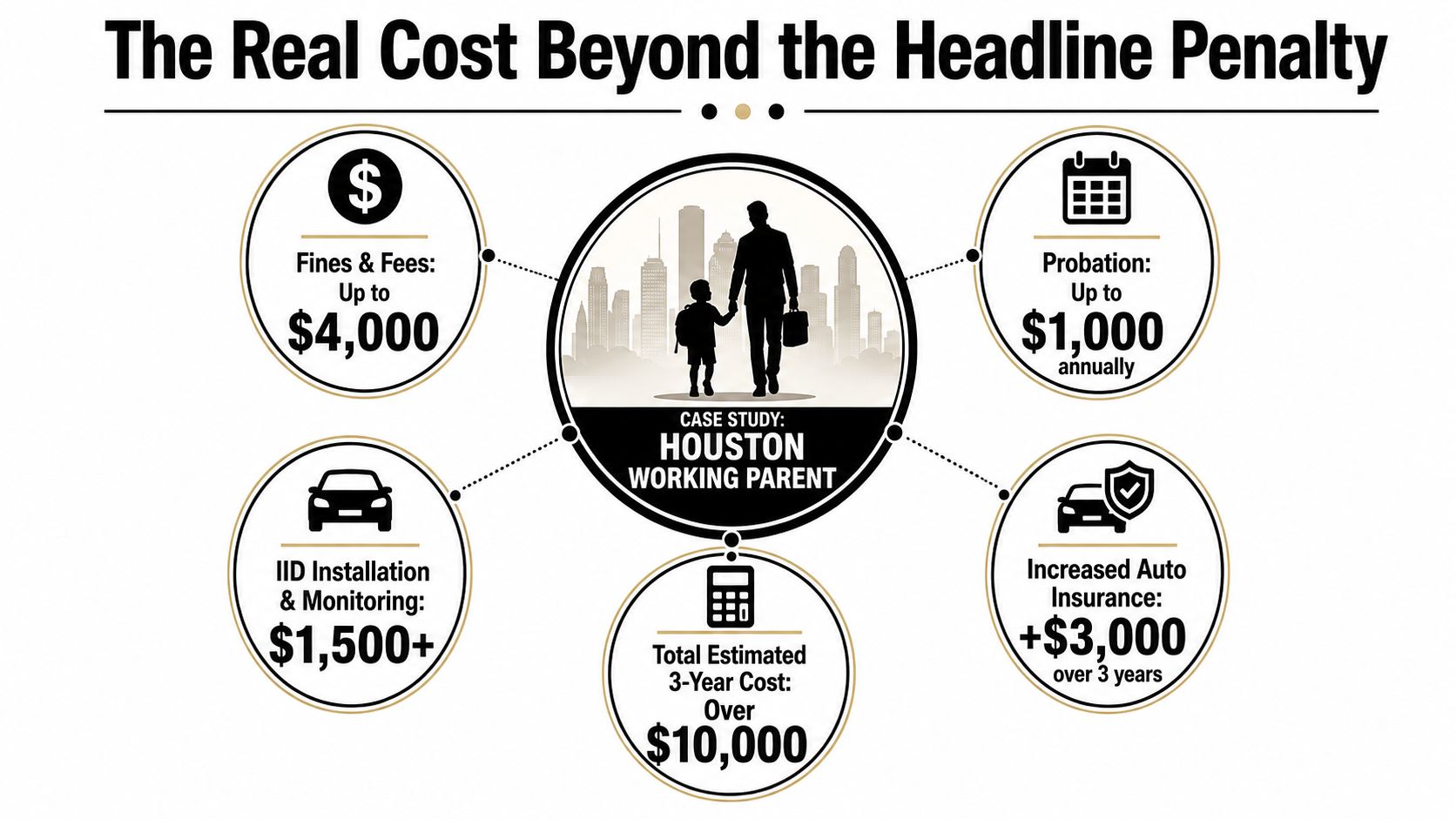
The penalty range in Texas includes a $4,000 fine and the possibility of up to 1 year in jail, but the practical cost can run much higher once the case is under supervision and your car has to stay compliant. Texas defense materials note that the total cost of a second DWI often exceeds $10,000 when fees, interlock, classes, and insurance impacts are added. Texas repeat-offense guidance also reflects the fact that mandatory interlock and repeat-offender compliance now matter more than a bare fine-and-jail summary.
A realistic defense plan has to budget for life, not just court. That means making arrangements for transportation, telling your employer only what you need to tell them, and understanding that insurance and supervision costs can linger after the criminal case is over. If you are a licensed professional, this part of the case may matter as much as the plea negotiation itself.
One more point matters here. Jail that gets probated is still not the end of the story. The expense, time, and compliance burden stay with you, and that is why a second DWI is often more disruptive than people expect even when they avoid the worst statutory outcome.
Defense Strategies That Actually Work
A second DWI is defendable. It is not automatic, and it is not a foregone conclusion just because the State filed enhancement paperwork. The defense starts with the traffic stop and moves outward from there.
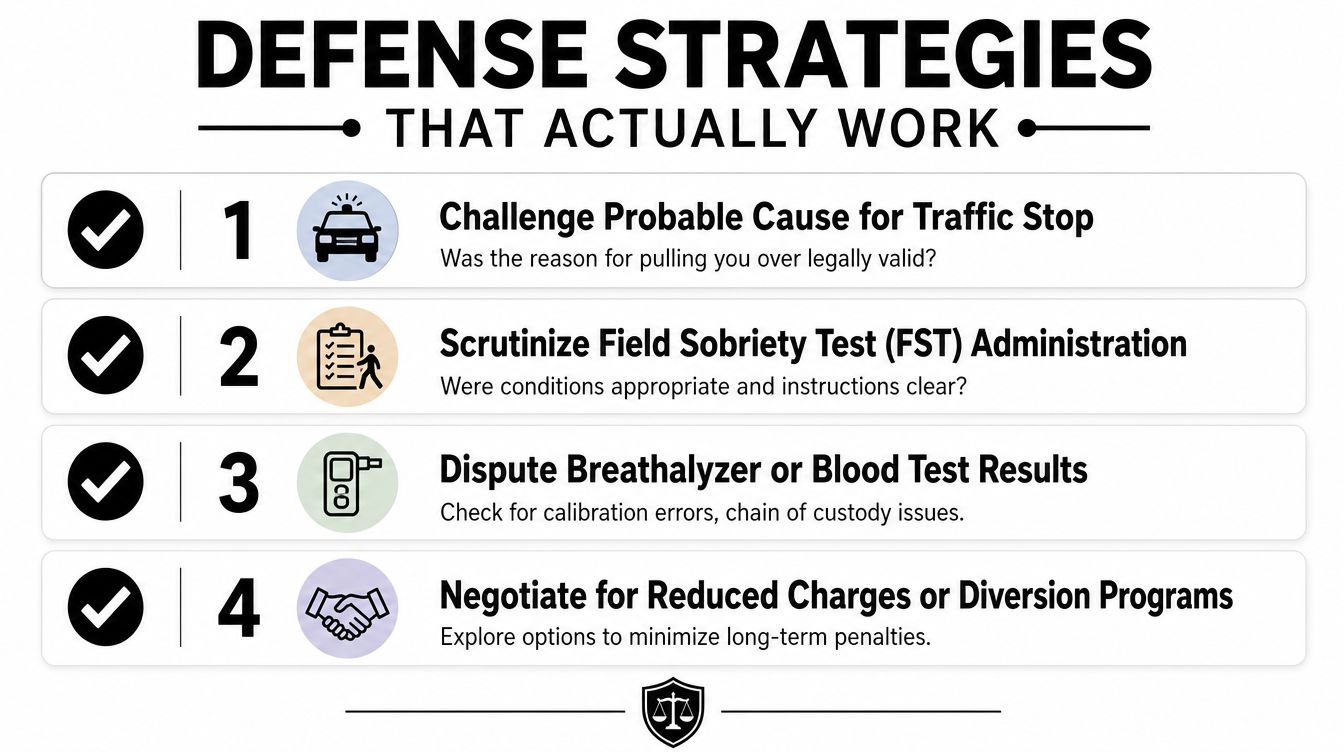
The core levers
- Challenge probable cause for the stop. If the officer lacked a lawful reason to pull you over, the rest of the case can weaken fast.
- Scrutinize field sobriety testing. Poor instructions, bad lighting, uneven pavement, nerves, injuries, or bad weather can all distort the result.
- Attack breath or blood evidence. Calibration problems, chain-of-custody gaps, and lab issues matter, especially when the State uses the test to support enhancement.
- Force the State to prove the prior conviction. The prosecutor has to connect the old case to you in a way the court will accept.
Those are the issues that move cases. They matter because a second offense is often won or lost on proof, not on emotion. If the State gets sloppy, the defense should be ready to make that mistake expensive.
Mitigation still matters too. Treatment, clean conduct between offenses, community support, and a realistic plan for compliance can help reduce the damage in plea talks. That doesn't erase the charge, but it can help narrow the punishment track and improve your position before trial.
For some people, a repeat DWI defense also means one of the options on the table is the Law Office of Bryan Fagan, PLLC, which handles DWI defense, ALR hearings, and evidence review for Texas drivers. The point is not to shop for slogans, it's to find a lawyer who knows how to pressure the State where its case is weakest.
Your Next Steps and How an Attorney Helps
The next month should be organized, not chaotic. First, make sure the ALR hearing request is filed within the 15-day window. Second, keep every paper from the stop, the arrest, the release, and any testing. Third, don't talk about the case on social media or in casual messages, because screenshots can travel farther than you think.
Your attorney should then work the case in layers. That means reviewing probable cause, looking for suppression issues, checking the prior conviction proof, and deciding whether the breath or blood evidence can be attacked before trial. It also means handling bond conditions, license issues, and court settings without letting you guess what comes next.
You should expect direct advice, not vague reassurance. A strong defense team will tell you where the case is weak, where the State is strong, and what the likely consequences look like if you keep fighting versus if you negotiate. That kind of guidance is what turns a repeat-offense arrest into a case with a plan.
If you're facing a second DWI, take the next step today. Get the deadline on the calendar, gather your paperwork, and speak with counsel before the State locks in its version of events.
If you need a steady hand on a second DWI case, the Law Office of Bryan Fagan, PLLC can review the stop, the testing, and the enhancement issues that drive your exposure. Visit Law Office of Bryan Fagan, PLLC to request a free consultation and get clear next steps for your defense.