
A DWI arrest can be overwhelming—but you don’t have to face it alone. The path forward will almost certainly involve a required DWI course in Texas. It's best to view this program not just as a legal hurdle, but as a critical first step toward resolving your case, protecting your rights, and getting your life back on track.
Your First Step After a Texas DWI Arrest
Facing a DWI charge is disorienting. The legal system is a complex maze, and it’s easy to feel lost right from the start. But there are concrete actions you can take right now to regain control, and enrolling in a DWI education program is one of the most powerful moves you can make.

This course is not just another penalty; it is an opportunity to build a proactive defense. While completing the program is usually a condition of probation and essential for reinstating your driver's license, the benefits can begin much earlier if you act strategically.
Why Proactive Enrollment Matters So Much
When you enroll in a state-approved DWI course before a judge orders you to, you send a clear, powerful message to the prosecutor and the court. It demonstrates that you are taking responsibility and are committed to addressing the situation head-on, rather than simply waiting to be told what to do.
This single action can set a more positive tone for your entire case. An experienced Houston DWI lawyer can leverage your proactive enrollment during plea negotiations, often using it to argue for a more favorable outcome, such as reduced charges or penalties.
The first few hours and days after an arrest are crucial. Understanding what to do immediately can protect your rights and set you up for a better defense. For a detailed guide on those initial steps, learn more about what to do after a DWI arrest in our guide.
A DWI course serves two main purposes: educating you on the serious consequences of drinking and driving and satisfying a key legal requirement of your case. It is an essential piece of the puzzle in nearly every DWI resolution in Texas.
Taking this course is about taking an active role in your own defense from day one. A knowledgeable attorney can advise you on the best time to enroll and how to make it work to your advantage in court.
Understanding the Two Types of Texas DWI Courses
When you are ordered to take a DWI course, it's important to know that not all programs are the same. Texas offers two distinct courses, each designed for a different situation. Understanding which one applies to your case is a critical step toward resolving your legal issues.

One course is a standard educational program focused on laws and risks, while the other is a more intensive intervention program designed to address patterns of behavior. Your legal history and the specifics of your DWI charge will determine which path you must follow.
The 12-Hour DWI Education Program
For most individuals facing a first-time DWI in Texas, the court will require the 12-hour DWI Education Program. This is the state-standardized course designed to prevent future incidents through information and awareness.
The goal is to ensure you fully understand the serious legal, financial, and personal consequences of drinking and driving. The curriculum typically covers:
- Texas DWI Laws: A clear explanation of statutes, penalties, and key legal terms like Blood Alcohol Concentration (BAC), implied consent, and the court process you are facing.
- How Alcohol Affects You: The science behind how alcohol impairs judgment, coordination, and reaction times.
- Making a Plan: Practical strategies to help you avoid finding yourself in this situation again.
This program is typically broken into three 4-hour sessions. An experienced DWI attorney can advise you on the best time to enroll to ensure it helps, not hurts, your overall defense strategy.
The 32-Hour DWI Intervention Program
The second option is the much more intensive 32-hour DWI Intervention Program. This course is almost always reserved for individuals with more than one DWI offense or for cases where a judge identifies a higher risk of reoffending.
Here, the focus shifts from education to behavioral intervention. It is designed to address the underlying patterns that can lead to repeat offenses. The curriculum is far more comprehensive and digs deeper into:
- Identifying Triggers: Helping you recognize the personal and environmental cues that lead to high-risk drinking.
- Developing Coping Skills: Teaching healthier, more effective strategies for managing stress and making responsible decisions.
- Making Lifestyle Changes: Encouraging the development of positive routines and strong support systems.
This program acknowledges that for some, a DWI is a symptom of a larger issue. With nearly 340 DUI arrests per 100,000 drivers, these intervention programs are a critical tool in Texas aimed at breaking a dangerous cycle.
Whether you're taking a course in-person or online, it is absolutely essential to choose a provider approved by the state. You can check out our guide on Texas online DWI class approval to make sure the certificate you earn will actually count.
How a DWI Course Impacts Your License and Case
Completing a DWI course in Texas is a strategic move that can positively influence the two separate battles you are fighting: the criminal case and the administrative effort to keep your driver's license.
When handled correctly, proof of your course enrollment becomes powerful leverage. It sends a clear message to the court and the prosecutor that you are taking this situation seriously, which can dramatically improve your standing.
Strengthening Your Position in an ALR Hearing
Immediately after a DWI arrest, you face an Administrative License Revocation (ALR) hearing. This is not part of the criminal case; it is a separate civil proceeding where the Texas Department of Public Safety (DPS) attempts to suspend your license. The threat of a DWI license suspension is very real at this stage.
This is where proactive enrollment can be a game-changer. Presenting proof of enrollment to the administrative law judge demonstrates responsibility. It is especially persuasive if you are seeking an occupational license, as it shows you are taking steps to ensure you can drive safely for work and other essential needs. You can get a better handle on that process by exploring how to get an occupational license in Texas.
Gaining an Advantage in Your Criminal Case
In criminal court, a course completion certificate gives your Houston DWI lawyer a valuable bargaining chip. Prosecutors are often more willing to consider favorable plea agreements for individuals who have already taken concrete steps toward rehabilitation.
This one action can open doors to better outcomes, such as:
- Reduced Charges: Your attorney can use it to argue for reducing the DWI to a lesser charge, like reckless driving.
- Lighter Penalties: It could help you negotiate for minimum fines, less community service, or a shorter probation term.
- Deferred Adjudication: Proactive enrollment is often a key factor in securing a plea for deferred adjudication, a type of probation that, if completed successfully, results in the case being dismissed and keeps a conviction off your public record.
A DWI course certificate isn’t just a piece of paper; it's evidence. It’s proof that you are actively working to address what led to your arrest, not just waiting for the system to decide your fate.
This proactive mindset is crucial, as DWI outcomes can vary widely across Texas. Dismissal and reduction rates often depend on the county and case specifics, highlighting the importance of a strong defense. While favorable results are never guaranteed, a skilled defense that includes moves like early course completion can make a real difference. You can discover more insights about Texas DWI statistics on zealousadvocate.com.
At The Law Office of Bryan Fagan, PLLC, we almost always advise our clients to enroll early. We then use that certificate in negotiations to build a stronger, more compelling defense aimed at protecting your future.
A Step-By-Step Guide to Enrolling and Completing Your Course
Navigating the logistics of a court-ordered program can feel complex, but enrolling in and finishing your DWI course in Texas is a straightforward process. With a clear roadmap, you can complete this requirement efficiently and ensure you get full credit for your effort.
Your first step is to find a state-approved provider. The Texas Department of Licensing and Regulation (TDLR) maintains an official, searchable list of every certified program in the state. It is critical that you choose a provider only from this list. A course from an unapproved provider will not satisfy your legal requirements.
Finding and Enrolling in the Right Program
When searching for a program, have basic information from your case handy, like your court order or case number. As you compare options, consider these factors:
- Location and Format: Decide if you learn better in a classroom or need the flexibility of a state-approved online course.
- Scheduling: Many providers offer evening or weekend classes. Find one that allows you to finish well before any court-mandated deadlines.
- Cost: Prices are generally competitive but can vary. Confirm the total cost upfront, including fees for materials or your certificate.
Once enrolled, attendance is mandatory. You must participate in every session, whether online or in person, to receive credit.
This simple chart shows how completing your course is the first step toward satisfying the requirements for both your driver's license and your criminal case.
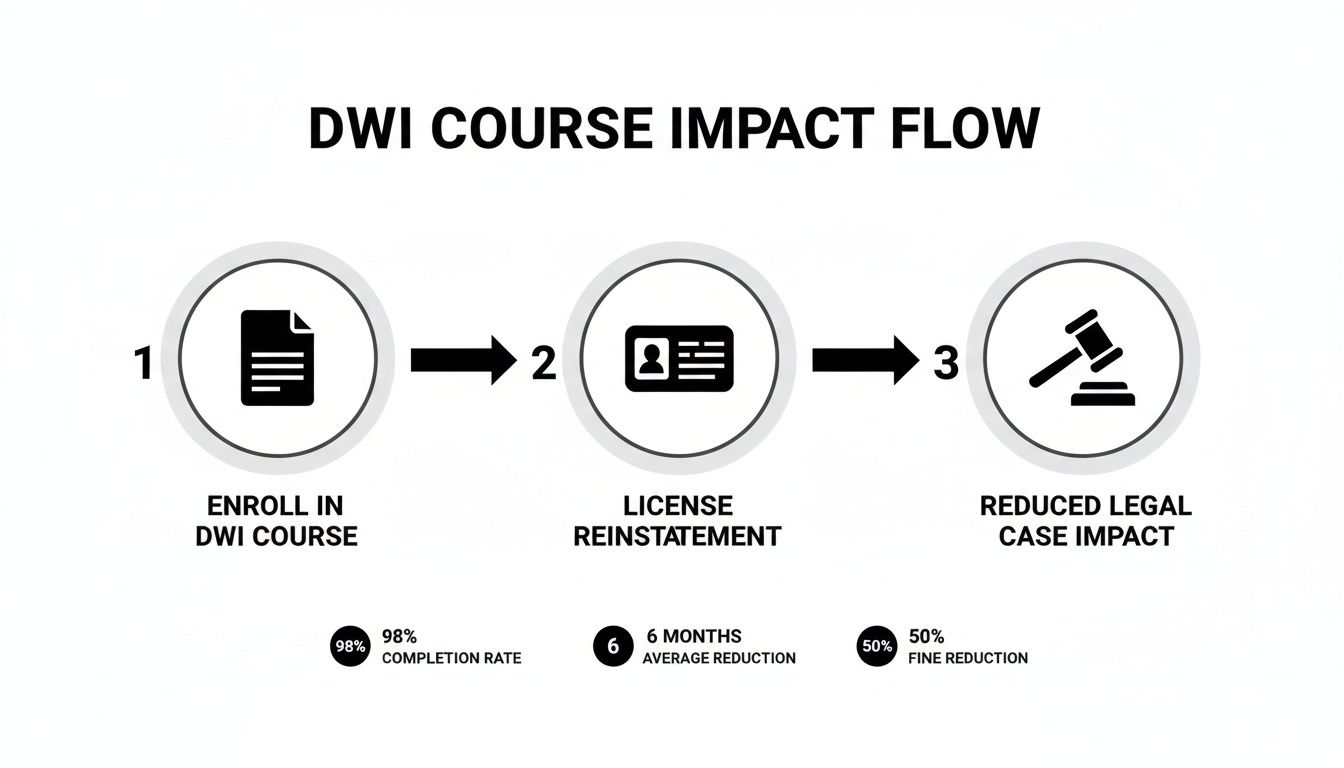
As you can see, enrollment kicks off the process for getting your license back with DPS and satisfying the court’s demands for your case.
Receiving and Using Your Certificate of Completion
Upon finishing the last session, you will be issued a certificate of completion. This document is your official proof that you have fulfilled the educational requirement and is a critical tool for your legal defense.
The first thing you should do is make multiple copies of your certificate. Your attorney will need one, your probation officer will likely need one, and you should always keep an extra for your personal records.
Submitting this certificate correctly ensures your compliance is officially recorded, preventing potential probation violations or delays in reinstating your driving privileges. A Houston DWI lawyer can ensure it is filed correctly and used to its full advantage in negotiations.
Special Rules for Underage Drivers and CDL Holders
While any DWI charge in Texas is serious, the rules are stricter for drivers under 21 and those holding a Commercial Driver's License (CDL). For these individuals, the penalties are harsher, and the consequences can derail their futures. If you or your child falls into one of these categories, a specialized legal strategy is essential from the very beginning.
For Drivers Under 21: The DUI Charge
Texas has a zero-tolerance policy for underage drinking and driving. For anyone under 21, it is illegal to operate a vehicle with any detectable amount of alcohol in their system. This is far stricter than the standard 0.08% BAC limit for adults.
An underage charge is called a DUI (Driving Under the Influence). While typically a Class C misdemeanor, the penalties are significant. One mandatory consequence is completing a specialized Alcohol Awareness Course, which is different from the standard 12-hour DWI education course and is designed specifically for young people.
For a young person, a DUI is more than a ticket. It can jeopardize college admissions, scholarships, and career opportunities. A strong defense is about protecting their entire future.
For Commercial Driver's License (CDL) Holders
For a commercial driver, a CDL is their livelihood. A DWI charge puts their entire career at risk. The laws for CDL holders are incredibly strict, and a conviction can trigger devastating professional consequences.
If you have a CDL, you need to know these critical facts:
- A Lower BAC Limit: When operating a commercial vehicle, the legal BAC limit is just 0.04%—half the standard limit.
- Personal Vehicle, Professional Consequences: A DWI arrest in your personal vehicle directly impacts your CDL. A first-offense conviction leads to an automatic one-year disqualification of your commercial license.
- A Second Offense Is a Career-Ender: A second DWI conviction results in a lifetime disqualification of your CDL.
When your career hangs in the balance, completing the required DWI course in Texas is just one part of a much larger fight. The real battle is to save your career. To fight DWI Texas charges aggressively with a skilled Texas DUI attorney is an absolute necessity.
Take Control of Your Case with a Strategic Defense
A DWI arrest can make you feel like you’ve lost control, but completing a DWI course in Texas is one of the first and most powerful ways to start taking that control back.
Successfully finishing a required course is a proactive step that sends a strong message to the court. It shows you recognize the seriousness of the situation and are committed to ensuring it never happens again. This single action can strengthen your case, aid in your efforts to keep your driver's license, and set a more positive tone for negotiations with the prosecutor.
Your Next Step Is the Most Important One
While a DWI course is a critical piece of the puzzle, it is still just one piece. Navigating the rest of the legal system alone is a risk you don't have to take. The complexities of an ALR hearing, court procedures, and high-stakes plea negotiations demand the skill of an experienced Texas DUI attorney.
The right lawyer can ensure your proactive efforts, like early course enrollment, are used to their full potential to protect your rights and fight for the best possible outcome. They can challenge the evidence, negotiate on your behalf, and build a defense aimed at minimizing the long-term consequences you face.
You don't have to face the uncertainty of a DWI charge by yourself. A strategic defense begins with a single conversation, and acting quickly is key to protecting your future.
The Law Office of Bryan Fagan, PLLC is here to help you move forward with confidence. We are committed to protecting your rights and guiding you through every step of this difficult process. We invite you to contact us for a free, confidential consultation to discuss your case. Let’s start building your defense strategy today.
Frequently Asked Questions About Texas DWI Courses
When you're dealing with the fallout from a DWI arrest, questions about the required educational courses are common. Here are clear answers to help you move forward with confidence.
How Long Does a DWI Class Take in Texas?
The time commitment depends on the course the court orders for your specific situation. For most people facing a first DWI in Texas, the standard requirement is the DWI Education Program. This is a 12-hour class, typically broken down into three 4-hour sessions.
If you are dealing with a repeat offense or your case has more serious elements, a judge may require the more intensive DWI Intervention Program, which is a 32-hour course that spans several weeks.
Can I Take My DWI Course Online?
Yes, Texas allows you to complete your court-ordered DWI course online, offering flexibility to fit it into your schedule.
However, it is critical that you must choose a provider that is officially certified by the Texas Department of Licensing and Regulation (TDLR). An unapproved course will not count toward your legal requirements, and you will have wasted both your time and money.
What Happens If I Don't Complete the Course?
Failing to complete your required DWI course in Texas on time is a serious probation violation. The consequences can be severe, potentially leading to the revocation of your probation and even jail time.
Additionally, it will halt the process of getting your driver's license reinstated, prolonging the impact of the charge on your daily life. The course is a mandatory step toward putting this behind you. An experienced Texas DUI attorney can help ensure you meet all deadlines and use your completion certificate as a positive factor in your case.
A DWI charge can make you feel isolated, but you don't have to go through this process alone. The legal team at The Law Office of Bryan Fagan, PLLC is here to build a strategic defense aimed at protecting your rights and your future. Contact us today for a free and confidential case evaluation to understand all your options.