 Skip to content
A DWI blood test result in Texas can take 3 to 9+ months, depending on the type of case and the lab backlog. Alcohol-only cases often take about 3 to 6 months, refusal-plus-warrant cases about 4 to 7 months, and drug-related or multi-substance cases often take 6 to 9+ months.
A DWI arrest can be overwhelming, but you don't have to face it alone. The hard part for many drivers isn't just the arrest, it's the gap between what happens in the street and what eventually comes back from the lab. You may be home, back at work, and still not know whether the State will try to build its case around your blood.
The Waiting Game After a Texas DWI Arrest
The first few days after a DWI arrest often feel like suspended time. You've been stopped, booked, and released, but the key evidence may still be sitting in a lab queue while your license and your case start moving on separate tracks. That disconnect is what makes dwi blood test results how long texas such a stressful question.
A lot of people expect a blood result to work like a breath test, something immediate and final. It doesn't. In Texas, the blood evidence can be the centerpiece of the case, but the report itself may not arrive for months, and multiple court settings can happen before anyone sees it. The result is a strange kind of limbo, where the State may eventually use the blood, but you're left dealing with consequences right away.
Practical rule: Don't wait for the lab to start protecting your driver's license. The legal clock starts long before the scientific one ends.
That's why early defense work matters. If you're searching for a Houston DWI lawyer or a Texas DUI attorney, you're usually already behind the lab timeline, but you're still right on time for the deadlines that matter most. The goal is to get ahead of the case before the blood report becomes the only piece of evidence anyone talks about.
Typical Timelines for DWI Blood Test Results in Texas
Texas blood testing is slower than a lot of drivers expect because the sample has to move through collection, transport, analysis, and review. A 2026 Dallas-focused timeline summary says results typically return in 3 to 9 months, with alcohol-only cases often taking about 3 to 6 months, refusal-plus-warrant cases about 4 to 7 months, and drug-related or multi-substance cases often taking 6 to 9+ months because lab backlog and expanded testing increase turnaround time. Texas DWI blood test timeline
| Estimated DWI Blood Test Turnaround Times in Texas (2026) | |
|---|---|
| Case Type | Estimated Time for Results |
| Alcohol-only case | About 3 to 6 months |
| Refusal plus warrant | About 4 to 7 months |
| Drug-related or multi-substance case | 6 to 9+ months |
| General Texas timeline | 3 to 9 months |
What those ranges mean in practice
An alcohol-only draw is usually faster because the lab isn't screening for as many compounds. Once drugs, prescription medications, or multiple substances enter the picture, the analysis becomes broader and slower. That doesn't mean the State has a stronger case, it just means the science takes longer to finish.
A blood draw done after a refusal and warrant can also move more slowly, because those files often involve more paperwork, more legal review, and more scrutiny before the results are finalized. That delay can be frustrating, but it gives the defense time to prepare. A smart lawyer doesn't sit and wait for the lab. The defense starts building from day one.
A blood test result tells you what the lab reported, not whether the State can prove the case in court.
If you're dealing with a first DWI in Texas, the wait can feel especially confusing because you're often trying to understand the license side, the criminal side, and the lab side at the same time. They don't move together. That's why the timeline needs to be read as a warning, not a comfort.
Why Your DWI Blood Test Results Are Delayed
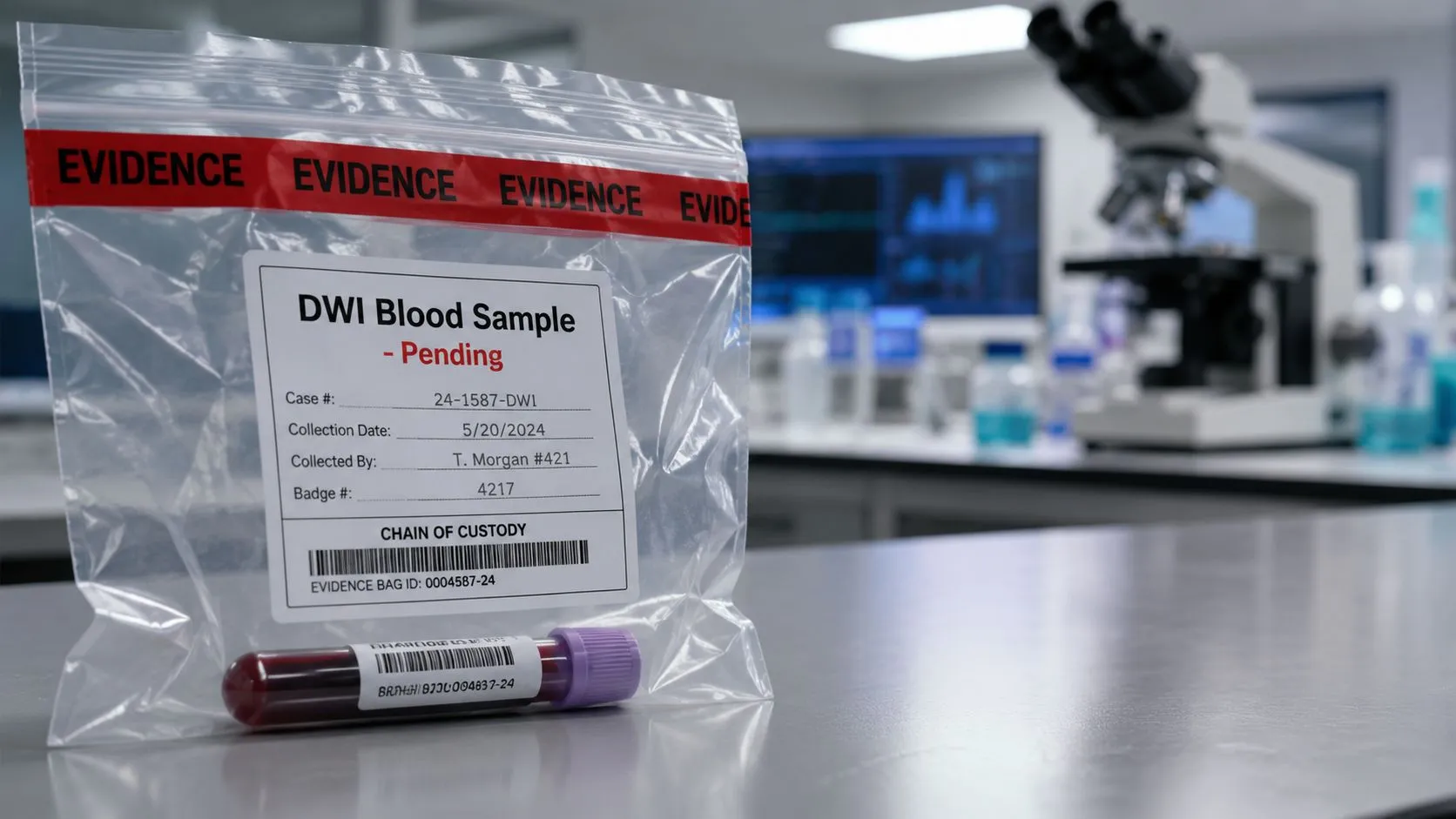
Blood testing is slower because it's a forensic process, not a roadside screening. The sample has to be preserved, logged, and analyzed under procedures that are meant to hold up in court. In Texas DWI defense work, those steps matter just as much as the final number.
A major reason for delay is lab backlog. Crime labs don't just handle DWI samples. They often process a wide range of forensic evidence, and that volume creates a waiting line. The more cases that need screening, the longer your sample can sit before it's tested.
The science is precise, but it takes time
The underlying methods used in blood testing are designed for accuracy, which is good for the State and good for the defense when the process is done correctly. But precision takes time, especially if the lab is checking for alcohol, drugs, or both. More testing means more handling, more review, and more chances for delay.
You also have the human side of the process, which includes staffing, documentation, and quality control. A sample can't move to the front of the line just because a driver is worried about it. That's why a delay doesn't usually mean something is wrong with your case. It usually means the system is busy.
The legal side matters too. If officers needed a warrant to get the blood, the warrant paperwork adds another layer to the file. When police need a DWI blood draw warrant is one of the issues a defense lawyer reviews early because a lawful blood draw still has to be documented correctly. If the process breaks down, the delay can become part of the defense.
Urgent Legal Deadlines That Will Not Wait for Results
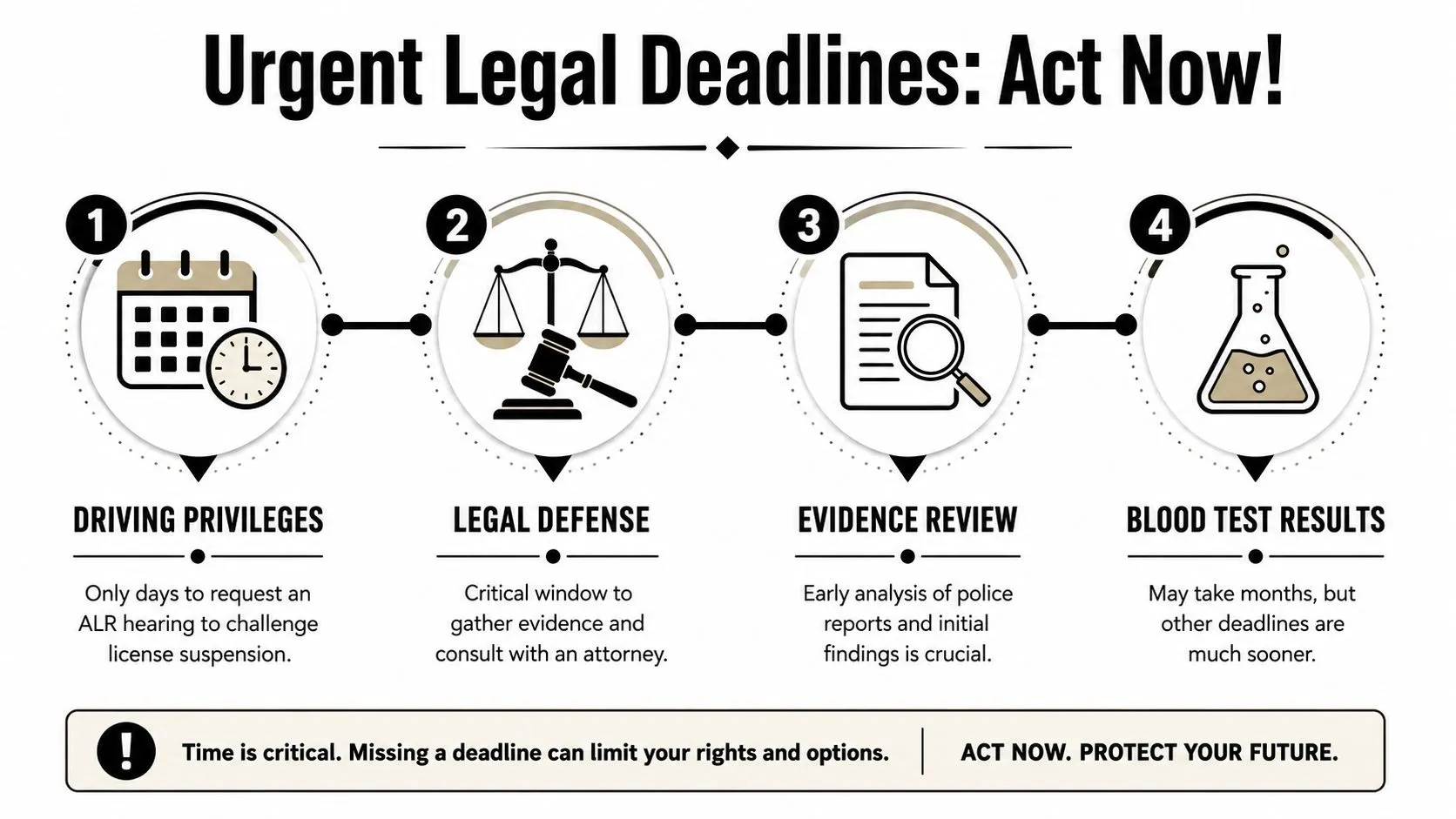
A blood result can take months, but your license case starts right away. After a Texas DWI arrest, the State can move on the driver's license issue while the lab is still processing the sample, and that separate track does not pause for the criminal report. If you were arrested for DWI in Texas, the first deadline is usually the one that catches people off guard.
In Texas, implied consent lets the State treat a refusal or a test result as part of a separate license process. If you refuse a breath or blood test, you generally have 15 days from the date notice is served to request an ALR hearing. If you submit a specimen over the legal limit, you generally have 20 days from the mailing date of the suspension notice to request a hearing. If no hearing is requested, the suspension typically takes effect on the 40th day after service or presumed receipt, and a $125 reinstatement fee is required before the license can be renewed or reissued. The hearing is held by the State Office of Administrative Hearings (SOAH), where an Administrative Law Judge (ALJ) decides whether DPS proved its case. Texas DPS ALR program
That separation matters because the blood report and the license deadline do not wait for each other. The lab may still be working while the suspension clock is already running, and that is why DWI license suspension has to be addressed immediately. A delayed result does not delay DPS.
The ALR hearing is your early defense window
The ALR hearing gives your lawyer a chance to challenge the State's basis before the criminal case fully develops. The officer has to show the grounds for the stop, the arrest, and the license action. If those facts are weak, that can help your defense even before the blood result comes back.
The hearing also forces the State to put its position on the record early. That is often the first real pressure point in the case, because the defense can learn what the officer claims happened and whether the paperwork supports it. What Is an ALR Hearing in Texas? explains the process, but the practical point is simple. You do not wait for the lab and hope the license issue takes care of itself.
A timely request for a hearing is one of the fastest ways to protect driving privileges while everything else is still unfolding. The 15-Day ALR Deadline: Save Your License After a DWI Arrest is why people should call soon after the arrest, not after the reports arrive. It is a deadline problem, not a panic problem.
If you miss the ALR deadline, you have already lost an important fight before the blood result ever arrives.
Strategic Next Steps While You Wait for Your Results

While the lab works, your defense should already be moving. The Texas DWI process goes from reasonable suspicion at the traffic stop, to probable cause, to arrest, then to breath or blood testing, magistration for bond, a first court date or arraignment, and then discovery, which can last for months. Texas DWI timeline
The best use of this waiting period is simple.
- Write down everything now. Traffic location, time, what the officer said, whether you were asked to do field sobriety tests, and anything unusual about the stop.
- Save every notice. Mail from DPS, bond paperwork, and court settings can all affect deadlines.
- Get counsel involved early. A Houston DWI lawyer can request the ALR hearing, begin discovery, and start preserving evidence before it disappears.
- Preserve your own evidence. If you had passengers, receipts, phone records, or dashcam footage from your own vehicle, tell your lawyer immediately.
The court process is not just about waiting for a lab result. It's about building the record. If you need a defense team that handles the criminal case and the license case together, the Law Office of Bryan Fagan, PLLC is one option to consider because it works on both the ALR side and the court side of a Texas DWI case.
Later in the case, discovery can show you what the State has, and what it doesn't. But you can't get there cleanly if you lose records early. That's why early preservation letters matter so much. Once video is overwritten or an officer's notes are lost, you can't get them back.
How Your Attorney Can Challenge the Blood Test Results
When the blood results finally come back, they are not the final answer. They are evidence, and evidence can be challenged. A seasoned defense lawyer looks at the draw, the paperwork, the lab handling, and the warrant to find weaknesses in the State's proof.
Texas DWI defense materials note common challenges such as improper collection, labeling, storage, lack of qualified personnel, and defective warrants, so the defense should request preservation records right away, along with chain-of-custody documentation and the underlying lab method used to test the sample. Texas DWI blood test defense issues
The main pressure points
Chain of custody is the paper trail that shows who had the blood and when. If that record is incomplete or inconsistent, the defense can argue the sample was not handled reliably.
Improper collection can matter too. If the blood draw did not follow proper procedure, the sample's integrity may be compromised before it ever reaches the lab.
Warrant defects are another major issue. If police used a defective warrant or did not have lawful authority for the draw, the blood evidence may be challenged through a motion to suppress.
A high BAC number does not end the analysis. It starts it.
That is why blood test fights are often technical, not emotional. The issue is not whether the number looks bad on paper. The issue is whether the State can prove the sample is admissible, accurate, and tied cleanly to you. A defense lawyer uses those problems to narrow the State's advantage, and sometimes to suppress key evidence entirely.
For people fighting DWI Texas charges, the case often turns on this point. The blood report may look strong to a prosecutor, but a detailed review can expose gaps that do not show up in the headline number. When the facts support it, a motion to suppress can be a decisive step, and how to file a motion to suppress evidence is one of the tools used to challenge unlawfully obtained proof.
If the State's testing looks flawed, the defense can press those problems in court and use them to reduce the weight of the lab result. That may mean questioning who drew the blood, whether the kit was sealed correctly, whether the lab followed its own procedures, or whether the warrant was valid from the start. The point is simple, a blood result does not win a DWI case by itself. It still has to survive scrutiny.

