
A DWI arrest can be overwhelming, but you don't have to face it alone. If an officer is standing at your window asking for a breath or blood test, you're under pressure, you're confused, and every answer feels loaded. In Texas, that moment matters because your choice can affect both your driver's license and your criminal case at the same time.
If you're dealing with a Houston DWI lawyer issue right now, the first thing to understand is simple. Refusal is allowed, but it is not consequence-free, and it does not always stop the state from getting evidence. That's the key decision point in dwi blood test refusal texas cases, and it's where smart defense work starts.
A DWI Stop Can Change Everything in Minutes
You've been pulled over, the officer says there's a DWI investigation, and then comes the request for a breath or blood test. That's when a lot of people freeze. Some think saying yes will make everything go away, others think saying no ends the matter, and both assumptions can lead to bad decisions.
The better way to think about it is this, one roadside conversation can split into two separate legal problems. One track goes through the criminal court, the other goes through the Texas licensing system. If you're trying to fight DWI Texas, you need to treat both tracks seriously from the start.
A driver in that position needs calm, not panic. You do have rights, and the officer still has to follow Texas law before evidence becomes usable. That's why your first move should be to slow the situation down mentally, remember as much as you can, and avoid volunteering extra information.
Practical rule: Don't argue facts on the shoulder of the road. Preserve the details in your head, then let a lawyer sort out what matters legally.
Texas drivers often call after the arrest thinking the license issue is separate from the DWI charge. It isn't. A refusal can affect your mobility immediately, and the refusal itself can later become part of the criminal case. That's why the question isn't just whether you can say no, it's what happens after you do.
Understanding Implied Consent and Your Right to Refuse
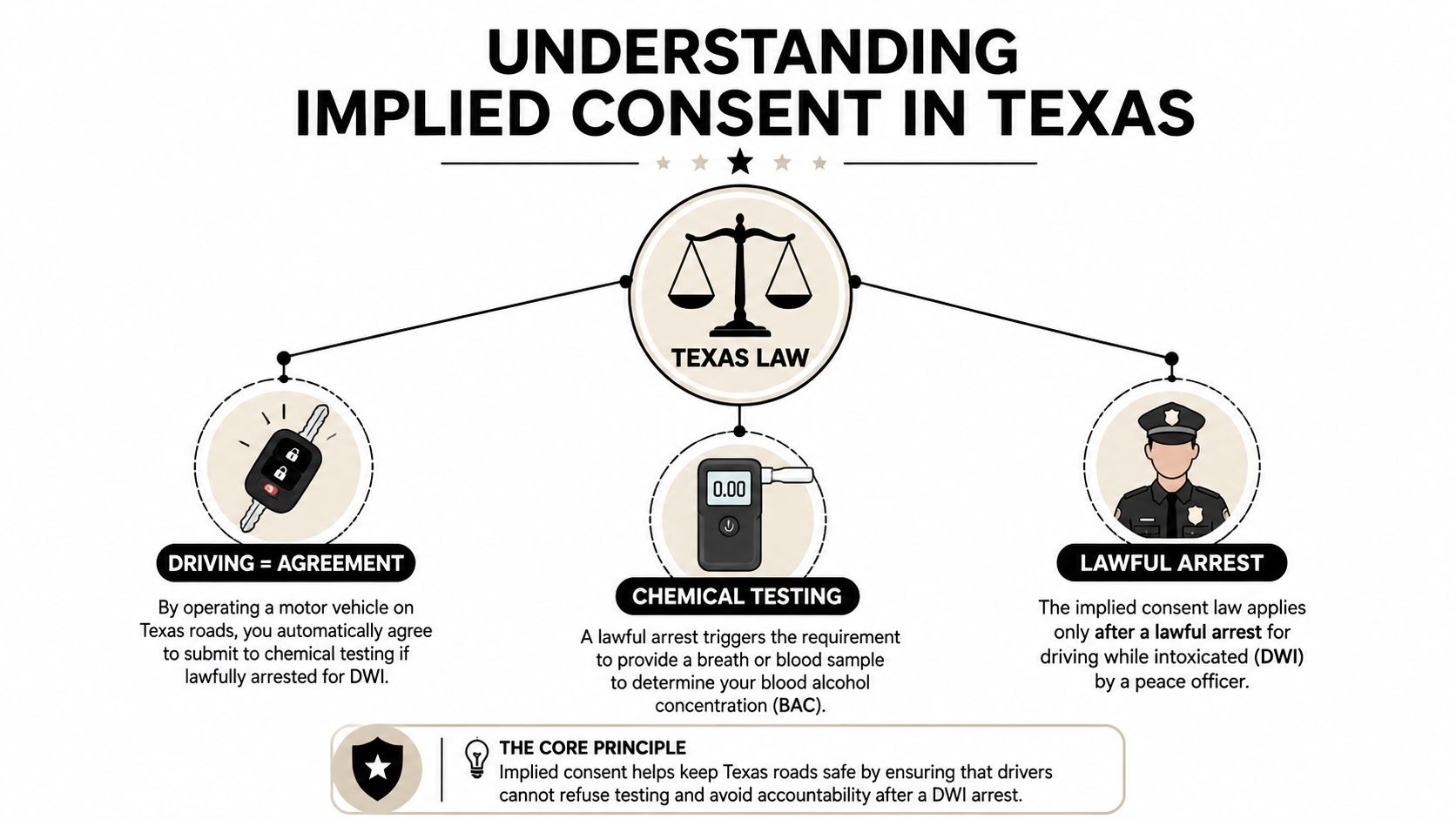
Texas uses implied consent, which means that by driving on Texas roads, you've already agreed that if you're lawfully arrested for DWI, the state can ask for a chemical test. A chemical test measures BAC, which stands for blood alcohol concentration. In plain terms, BAC is the number police and prosecutors use to argue whether alcohol impaired you.
That does not mean the state can force your agreement on the spot. It means Texas can attach consequences to refusal and, in many cases, still pursue the evidence through other lawful means. Think of implied consent like a rule tied to the privilege of driving, not a literal moment-by-moment contract you must verbally sign.
Roadside field sobriety tests are different from a post-arrest breath or blood test. Those roadside tests are generally voluntary, and refusing them does not create the same automatic license penalty that follows a post-arrest chemical test refusal. The official test after arrest is the one that triggers the implied consent fight.
If you want a practical overview of what this looks like in real life, the guide on Texas Implied Consent and Refusing a Breath Test lays out what happens when you refuse chemical testing after a DWI arrest. It helps because the law is easier to understand when you separate the roadside request from the post-arrest consequences.
For a more direct breakdown, the page on can you refuse a breathalyzer in Texas addresses the same decision point from the driver's side. The key takeaway is straightforward, you can refuse, but the state can still respond with penalties and evidence-gathering steps.
The Two Tracks of Consequences After a Refusal
A refusal in Texas hits on two tracks at once. The first is Administrative License Revocation (ALR), which is a civil process run through DPS, not a criminal conviction. The second is your DWI case in court, where the refusal can be used to argue that you knew you were impaired.
The license side moves fast. Under the verified Texas data, DPS can seek an automatic 180-day suspension for a first refusal and up to 2 years for repeat refusals, and you must request an ALR hearing within 15 days or the suspension becomes automatic. That deadline matters more than almost anything else in the first few days after the arrest.
The court side is different, but it is just as serious. The fact of refusal may be introduced at trial, which gives the prosecutor another fact to work with even if no chemical number ever comes in. A good defense lawyer focuses on both tracks because winning one and ignoring the other leaves you exposed.
| Consequence Type | Refusal (First Offense) | Failed Test (0.08+ BAC) | Repeat Refusal |
|---|---|---|---|
| Administrative license result | 180-day suspension if the ALR process goes forward without a successful challenge | 90-day suspension may apply in some failed-test situations | Up to 2 years |
| Hearing deadline | 15 days to request an ALR hearing | Same administrative process can apply depending on the stop and test result | Same deadline pressure |
| Criminal case impact | Refusal can be used as evidence | Failed result can be used as evidence | Refusal can still be used as evidence |
If you need help on the civil side, the ALR process is where a lawyer can sometimes protect your license early. The firm's ALR hearings practice page and its DWI license suspension guidance matter because the deadline is short and the consequences show up fast. A Texas DUI attorney who knows the ALR system can tell you whether the stop, the warnings, or the paperwork give you a real opening.
Texas also treats refusal as strategically important because the refusal decision changes both mobility and trial strategy. That's why the state's administrative system and criminal system should never be viewed as separate problems. They're connected, and the state uses both.
Why Refusal Does Not Always Stop a Blood Draw
A lot of people think refusal means no blood draw, end of story. That's not how Texas works. Officers can still seek a search warrant after a refusal, and in some situations they can move quickly enough that the blood evidence still ends up in the case.
That's where the practical question really begins. Does refusal help if police can get a warrant anyway? Sometimes it does, sometimes it doesn't, and that's why blanket advice is dangerous. Refusal can still keep the state from getting a clean, immediate sample in routine stops, but it is not a shield against every blood draw.
Texas history makes the point clear. NHTSA data show refusal has been a persistent feature of DWI enforcement, with an average refusal rate across states of 19% in 1987, 25% in 2001, and 22% in 2005, and Texas jurisdictions responded to a statewide refusal rate of about 50% with No Refusal Weekends in 2005. That background explains why warrant-backed enforcement became normal here, especially in high-enforcement periods. NHTSA's refusal facts show just how common this issue has been.
Texas law sources also describe mandatory blood draw situations, including crashes involving serious bodily injury or death, child passengers, and prior intoxication-related convictions. In those settings, the refusal decision may matter less than people think because the law already gives officers other pathways to testing. For drivers with prior cases, CDL concerns, or an out-of-state license, that distinction can be decisive.
The practical guide on Texas DWI blood draw warrant is useful because it tracks what officers do after refusal and how that affects the evidence picture. The short version is this, refusal can complicate the state's path, but it doesn't always block it.
A refusal is a tactic, not magic. If the officer can still get a warrant, the fight shifts from the stop itself to whether the warrant and draw were lawful.
How an Experienced Attorney Challenges Refusal Evidence
A strong defense starts with the basics. Was the stop lawful, was the arrest supported by probable cause, and did the officer give the right warnings before asking for chemical testing? If any one of those steps is flawed, the state's case can start to crack.
That's also where a Houston DWI lawyer earns the fee. A lawyer can challenge the traffic stop, attack the arrest narrative, and force the state to prove every link in the chain. If the officer relied on weak facts, sloppy paperwork, or a bad warrant, that matters.
When a blood draw happened after refusal, the defense has more to examine. Chain of custody, collection procedures, judicial approval, and the accuracy of the testing process all matter. If the sample was handled badly, the state may have evidence, but not necessarily usable evidence.
Common defense angles include:
- Stop legality: Was there a real reason for the traffic stop, or was it a hunch dressed up as suspicion?
- Probable cause: Did the officer have enough facts to justify the arrest and warrant request?
- Warning compliance: Were the implied consent warnings given the way Texas law requires?
- Blood-draw reliability: Was the sample collected and documented correctly?
The challenge is often not the refusal itself. It's whether law enforcement complied with the procedure around the refusal. That distinction matters because a bad warning, a weak warrant, or an unreliable blood draw can change the case even when the refusal is undisputed. If you're facing a first DWI in Texas, that's the kind of issue that can shape whether the state has real power or just a stack of assumptions.
The firm's challenging breath and blood tests in Texas DWI cases resource fits here because chemical-test evidence is only as strong as the process behind it. And yes, refusal can be explained too. People refuse because they're scared, confused, or trying to understand what's happening, not because they're guilty.
Your First 15 Days After a DWI Refusal Arrest
The first 15 days matter because the ALR clock is already running. Don't wait for the criminal court date to think about your license. By then, you may already have lost the chance to fight the suspension on time.
Start with the paper in your hand
Read the Notice of Suspension carefully. That document tells you what the state says happened and what deadline controls your hearing request. If you don't know what a line means, don't guess.
Then protect your driving ability
If you need to drive for work, school, or family, ask about an occupational license option right away. A suspension can disrupt your life fast, so your lawyer should look at both the license issue and the criminal case together.
Build the defense while the facts are fresh
Write down everything you remember about the stop, the questions, the warning, and the officer's tone. Save names, locations, and any witness details you remember. Don't post about the arrest online, and don't explain it to friends who may later repeat it in a way that hurts your case.
- Day 1: Focus on release, bond, and the paperwork you were given.
- Days 3 to 5: Call a lawyer and lock down the hearing deadline.
- By Day 15: Make sure the ALR request is filed before the deadline passes.
If you're looking for a straight answer on what to do next, the DWI license suspension process starts immediately after arrest, not weeks later. Acting early gives your lawyer more room to challenge the stop, preserve evidence, and protect your driving privileges before the state locks in the suspension.
Protecting Your Future with Strategic Legal Defense
A refusal in Texas is not a confession, and it is not an automatic conviction. It is a legal event with consequences, and those consequences can be challenged on both the administrative and criminal sides. That's where strategy matters more than panic.
The Law Office of Bryan Fagan, PLLC approaches these cases by checking every step of the stop, the arrest, the warnings, the warrant, and the blood draw. In the right case, that can mean a dismissal, a reduction, or a better outcome on the license side. For a Texas DUI attorney, the work is about limiting damage and putting you back in control.
If you're dealing with a refusal, a DWI license suspension, or a first DWI in Texas, don't sit on it. The sooner someone reviews your paperwork and the officer's actions, the more options you usually have.
If you've been arrested for refusing a blood or breath test, Law Office of Bryan Fagan, PLLC can review the stop, the ALR deadline, and the evidence the state plans to use against you. Visit Law Office of Bryan Fagan, PLLC to request a free consultation and get clear guidance on how to protect your license, your record, and your next steps.