
A DWI arrest can be overwhelming, but you don't have to face it alone.
If you were just released, you're probably staring at a stack of papers, trying to remember what the officer said, wondering whether you can drive, and worrying about court, work, and your family. That reaction is normal. Individuals often aren't thinking clearly in the first hours after an arrest, and that's exactly why the next steps matter so much.
The good news is that there is a clear path forward. If you're asking what should I do right after getting a DWI in Texas, the answer starts with three priorities. Protect your right to stay silent. Protect the evidence while it's still fresh. Protect your license before a deadline slips by.
Your First Step After a Texas DWI Arrest
You get home after release, empty your pockets, and end up with a pile of papers on the kitchen counter. One sheet mentions bond conditions. Another looks like a temporary license. Another is a tow receipt. You are tired, embarrassed, and tempted to deal with it later.
Do not do that.
Your first job is to sort the paperwork before you miss a deadline or violate a condition by accident. Right after a Texas DWI arrest, the paperwork is the trap. Each document usually requires a different response, and treating them all like routine discharge papers can create problems fast. If you need a simple way to organize it, use this Texas DWI post-arrest checklist.
Start by separating the papers into four groups
Clients usually leave custody with some combination of these documents:
- Bond papers that list rules you must follow right away
- A temporary driving permit or DIC notice tied to your license status
- Tow or impound paperwork that tells you how to recover your vehicle
- A court notice, magistrate form, or booking sheet with case information
These papers do not serve the same purpose. A court date on one page does not mean every other deadline waits for that date.
Practical rule: Read every page the same day you get home. Then photograph every page and save the images somewhere you can find them.
What each document means in real life
Bond papers are not just administrative forms. They can include alcohol-monitoring rules, travel limits, no-contact provisions, reporting requirements, or orders to install an ignition interlock. If you do not understand a condition, get it clarified immediately. Guessing is how bond violations happen.
The temporary permit or DIC notice may control whether you can keep driving for now and how long you have to act to fight a license suspension. Many people focus on the criminal charge and miss the license issue entirely.
Tow and impound receipts affect cost and evidence. Waiting too long can increase storage fees, and in some cases your vehicle may contain receipts, containers, or personal items that matter later.
Court and booking paperwork helps your lawyer match the arrest to the right court, agency, and cause number. That sounds minor. It is not. A small clerical mistake can slow down case tracking and delay action on deadlines.
The best use of the first few hours
Write out a timeline while the details are still fresh. Note where you were, when you were stopped, what testing was requested, what you were handed at release, and anything you remember about the officer's instructions.
Then stop discussing the facts with friends, coworkers, or family by text. I have seen casual explanations become inconsistent with video, reports, or later testimony. Silence protects you. Good records help your lawyer.
A Texas DWI charge can lead to jail exposure, fines, license consequences, bond restrictions, and higher insurance costs, as the Texas Department of Transportation explains in its overview of DWI laws and penalties. That does not mean your case is hopeless. It means the first smart move is not arguing about what happened. It is identifying what each paper requires and responding before the state gains an advantage.
Protecting Your Rights During a DWI Stop
A DWI stop can feel fast, confusing, and personal. Officers ask questions in a conversational tone, but every answer can become part of the report, the video, or the State's theory of the case. Your job is simple. Be polite, comply with lawful instructions, and do not give away facts the prosecution can use later.

What to say and what not to say
Keep your words short and controlled. In my experience, drivers hurt themselves most by trying to sound cooperative or explain away harmless details that later sound damaging on paper.
These statements are usually enough:
- “I want to remain silent.”
- “I want a lawyer.”
- “I will not answer questions without counsel.”
Provide identifying information when required. Stop there. Do not explain where you came from, how much you drank, when you last ate, whether you are tired, or whether you think you are okay to drive. Those details often seem minor in the moment and become important later. If you want a clearer sense of the risk, read this guide on how statements to police can affect a Texas DWI case.
Respect matters here. Keep your hands visible, do not argue, and do not try to talk your way out of the stop.
Field sobriety tests and BAC
Field sobriety tests are roadside coordination exercises, not chemical measurements. Officers use them to claim they observed signs of impairment. The common ones include the walk-and-turn, the one-leg stand, and the eye test.
BAC means blood alcohol concentration. A breath or blood test is designed to measure alcohol level. That is different from roadside exercises, which depend on the officer's instructions and interpretation.
This distinction matters because poor performance on field tests does not automatically prove intoxication. Fatigue, anxiety, injury, medical conditions, poor lighting, uneven pavement, weather, and footwear can all affect how a person looks on video. Jurors may later hear the officer describe those exercises as simple. They often are not.
Implied consent and the choice you face
Texas implied consent means a driver can face license consequences for refusing or failing a chemical test after a DWI arrest. That issue is separate from the criminal charge, which is why the paperwork after release matters so much.
The choice at the roadside has immediate consequences. Refusal can trigger a license suspension process. Failing a test can do the same. The officer's paperwork often starts that clock, and many drivers do not realize it until they are home sorting through a temporary permit, DIC notice, or bond papers.
That does not mean every stop was legal or every test result will hold up. It means the defense often begins with details that seem small at first. Why the officer stopped you, what was said before testing, how the request was made, what warnings were given, and which document you received can all affect how the case is challenged later.
The First 24 Hours What to Do After Jail Release
The first day after release is usually where people fall into the paperwork trap. You're tired, frustrated, and tempted to deal with it later. Don't. The papers you were handed tell you what you must do, what deadline is already running, and what can go wrong if you miss it.
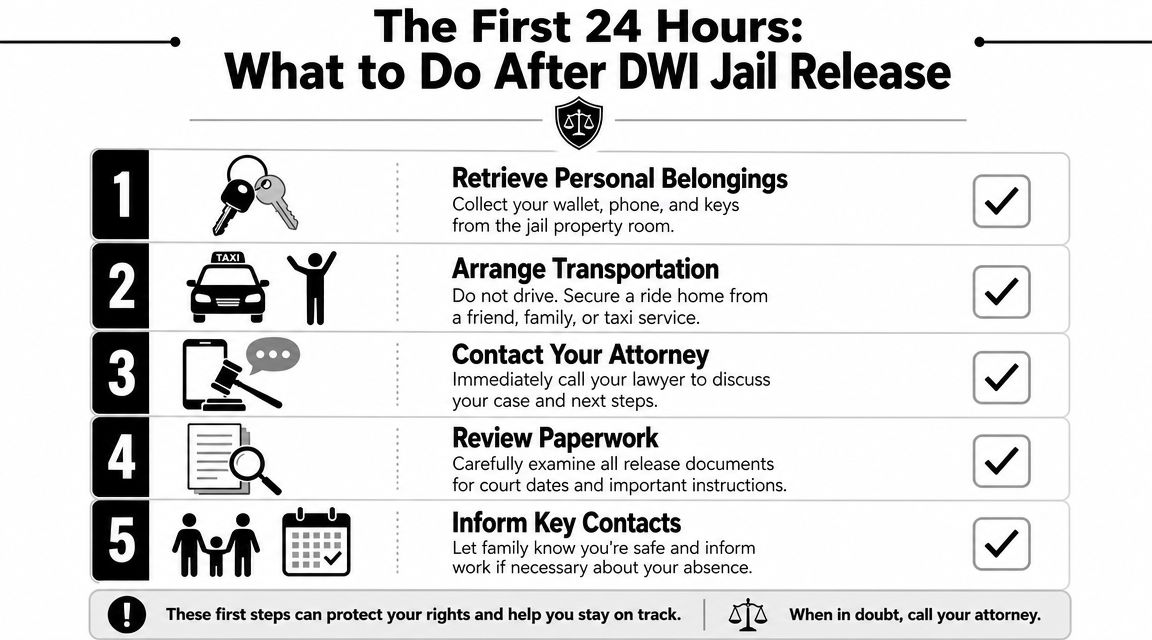
Sort the papers before you sort the emotions
Lay everything out on a table and separate it into categories. That sounds simple, but it's one of the most useful first moves you can make.
| Document | What it usually affects | What to do next |
|---|---|---|
| Bond paperwork | Release conditions and court compliance | Read every line and follow it exactly |
| Temporary permit or DIC notice | Driving privileges and license timeline | Check the service date and save a photo |
| Tow or impound receipt | Vehicle recovery | Call the lot and ask what documents they require |
| Court or booking notice | Future appearances | Put dates in your phone calendar immediately |
A key challenge after a Texas DWI arrest is the immediate paperwork trap. Guides often miss the significance of the temporary permit, DIC notice, and bond conditions. The ALR deadline is 15 days from service of the notice, and understanding which form starts that clock is critical, especially for out-of-town drivers, as noted in this discussion of post-arrest Texas DWI paperwork.
What each paper means in real life
Bond papers are not suggestions. They are court orders. If they restrict alcohol use, travel, reporting, or testing, follow them exactly as written until your lawyer tells you otherwise.
Temporary driving paperwork may control whether you can still drive for the moment and how long you have to act. Don't assume your plastic license status tells the whole story. The paper notice is often what matters first.
Impound paperwork controls how you get your car back. Call before you go. Ask what identification, proof of ownership, insurance paperwork, or authorization they require.
Start a private DWI journal
Before you go to sleep or move on with the day, write down the sequence of events while your memory is fresh. Include facts, not arguments.
Useful details include:
- The stop sequence and what the officer said first
- Statements made by you or the officer
- Field sobriety test instructions and where they happened
- Chemical test circumstances, including timing and location
- Witness names or anyone who saw you before the stop
- Receipts or transactions that help show timing
Write it as if you're preserving memory, not persuading a judge. Accuracy helps more than drama.
This kind of record can help your lawyer compare your memory to reports, video, and testing records later.
The Critical 15-Day ALR Deadline to Save Your License
You get home, sort through the papers they handed you, and see dates, warnings, and unfamiliar forms. At this point, people often make avoidable errors. The paper tied to your license often starts a short clock, and if you miss it, the state can suspend your driving privileges even while the criminal case is just beginning.
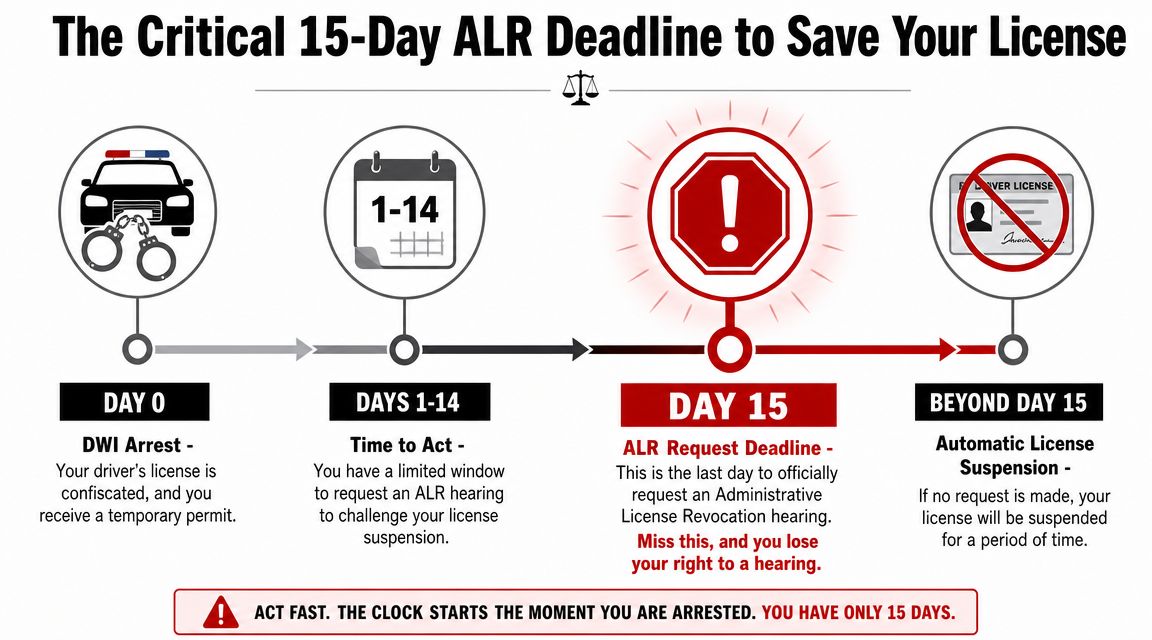
An ALR case is the administrative case about your license. It is separate from the criminal charge. After a Texas DWI arrest, you usually have 15 days to request the hearing that challenges the proposed suspension. If you were handed temporary driving paperwork or a notice of suspension risk at release, do not toss it in a pile with your bond papers or impound receipt. That document may control your next deadline.
This is the paperwork trap. People focus on the court date because it feels bigger. The quieter problem is the license notice sitting in the release packet.
Why this hearing matters
The hearing is about more than whether you can drive to work. It can create an early chance to examine the state's version of events before the criminal case is fully developed.
A timely ALR request may help your lawyer examine issues such as:
- Whether the officer had a lawful basis for the stop
- Whether the arrest was supported by the facts
- Whether the warning forms and test request were handled correctly
- Whether the officer can be questioned under oath early in the case
Those opportunities matter in real cases. Sometimes the paperwork is clean and the officer is prepared. Sometimes the dates, warnings, or basis for the stop deserve a hard look. A Texas ALR hearing process guide can help you see how that process works and what your lawyer may try to obtain from it.
A short overview can also help clarify the urgency:
What to do with the license paperwork
Start with the date on the notice connected to your driving privileges. Calendar the deadline immediately. Save a clear photo of that paper and keep the original somewhere safe.
Then get the hearing request handled promptly.
Do not assume your first court setting protects your license. It does not. Do not assume your plastic driver's license tells you your status. In many cases, the paper notice controls the immediate next step.
If you miss the ALR deadline, you can lose an opportunity to challenge the suspension early and question the state's evidence at the front end of the case.
Understanding the Two Cases Against You
One of the most confusing parts of a Texas DWI is that you are not dealing with one case. You are dealing with two separate legal tracks at the same time.
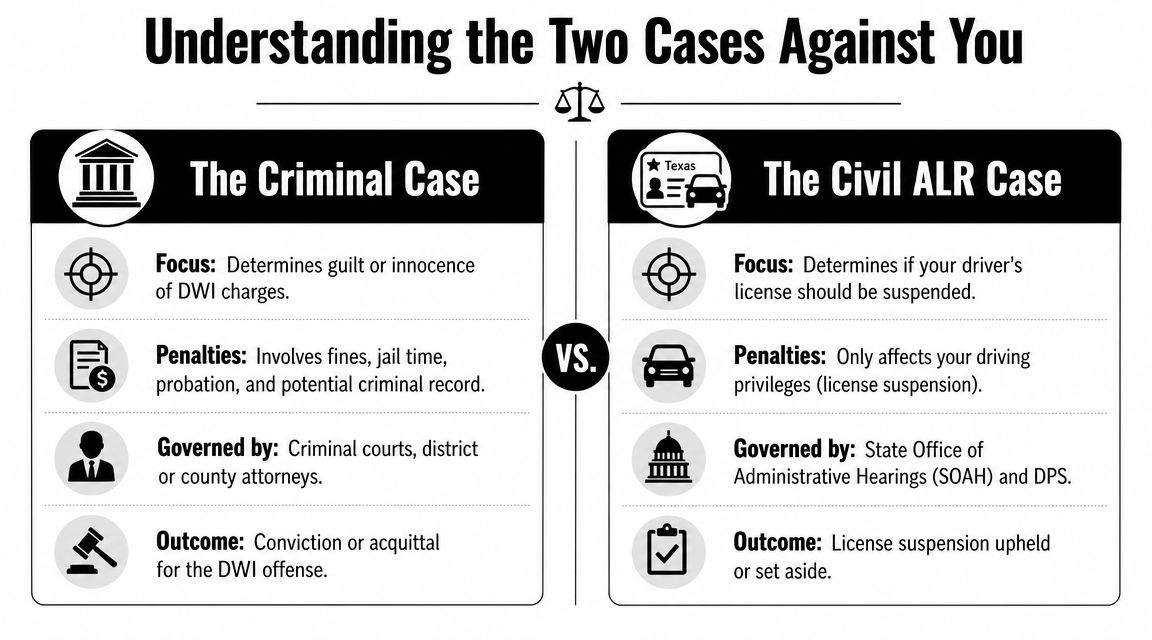
Think of it as fighting on two fronts. One fight is about the criminal accusation. The other is about your license.
A Texas DWI arrest initiates two parallel legal tracks: a criminal case and an Administrative License Revocation (ALR) case. The top priority is to request the ALR hearing within 15 days, as this preserves license defense options independently of the criminal proceedings, as explained in this overview of the two-track DWI process in Texas.
The criminal case
The criminal case is the one that often comes to mind first. It is handled in criminal court and focuses on whether the state can prove the DWI charge.
That case can involve issues such as:
- The traffic stop
- Officer observations
- Field sobriety testing
- Breath or blood evidence
- Possible penalties if there is a conviction
The ALR case
The ALR case is separate. It focuses on your driving privileges. It is not resolved automatically just because something happens in criminal court.
Here is the practical difference:
| Track | Main question | Main risk |
|---|---|---|
| Criminal case | Can the state prove DWI? | Criminal penalties and record consequences |
| ALR case | Should your license be suspended? | Loss of driving privileges |
The reason this matters is strategy. A smart defense often requires one plan for court and another for the license hearing. Evidence that matters in one track can also help in the other, but the processes are not interchangeable.
Why separate strategy matters
People get into trouble when they treat the DWI as a single file with a single deadline. That approach causes missed hearing requests, missed evidence opportunities, and confusion about what each paper means.
If you're trying to fight DWI in Texas, ask any lawyer you speak with how they handle both the criminal case and the license case. That question tells you a lot about whether they're thinking strategically.
Your Next Move Contacting a Houston DWI Attorney
You may be home, but the case is already moving.
By this point, you likely have a stack of papers that do not explain themselves well. Bond conditions tell you what can send you back to jail. Your temporary license or notice of suspension affects how long you can legally drive. Tow or impound papers can affect access to your vehicle and personal property. A lawyer's job early on is to match each document to the right action, on the right timeline, before a preventable mistake creates a bigger problem.
If you are asking what should I do right after getting a DWI in Texas, get your papers together first. Keep the bond paperwork, the temporary driving document, any notice tied to a failed or refused breath or blood test, the citation, the bail receipt, and the impound inventory. Take clear photos of all of it. Then contact a lawyer who handles both the court case and the license case, because those tracks need separate attention and they can affect each other.
A good Houston DWI lawyer or Texas DUI attorney should do more than give general advice. That lawyer should review the stop, testing, and arrest timeline, explain what each document means, identify the immediate deadlines, and tell you what not to do while the case is pending. That is especially important in a first DWI in Texas, a case involving an out-of-state license, or any case where missing work or losing driving privileges would hit hard.
The Law Office of Bryan Fagan, PLLC handles Texas DWI defense, including ALR hearings and criminal court representation. Early legal help often makes a practical difference. It can help preserve evidence, prevent bond violations, and keep you from handing the prosecution statements or records they did not already have.
If you've been arrested and don't know what to do next, request a free consultation with Law Office of Bryan Fagan, PLLC. A confidential case evaluation can help you understand your deadlines, your license situation, and your defense options while there is still time to act.
