 Skip to content
You get pulled over after dinner, answer a few questions, try to follow the officer's instructions, and end the night in handcuffs. By morning, the worry sets in fast. Your license, your record, your job, and your reputation all feel exposed.
A Texas DWI case is not decided by the arrest alone. It is decided by whether the State can defend every step that came before and after it. A skilled defense lawyer does not treat these cases as a single accusation. We examine them stage by stage. The reason for the stop, the officer's observations, the field sobriety testing, the arrest decision, the breath or blood procedure, the machine records, the lab paperwork, and the video all have to line up.
That is why procedural mistakes matter so much. A weak DWI case often starts with one error and spreads from there. An officer may stop a driver without enough legal justification. The field tests may be given incorrectly. A blood sample may be mishandled. A breath machine may have maintenance problems. Video may be missing. Statements may be taken in violation of basic constitutional rules. Any one of those problems can change the value of the State's evidence and the strength of your defense.
The strategy is not to hunt for gimmicks. It is to identify pressure points that can lead to suppressed evidence, reduced charges, better negotiation advantage, or a trial defense with real force. Early case review often turns on whether police had the right level of suspicion at the right time, and the difference matters. This explanation of probable cause vs. reasonable suspicion in Texas DWI cases gives useful context for how those issues develop.
Texas has a long history with DWI enforcement and chemical testing. That history matters because these cases are built on procedures, records, and human decisions that can be tested in court. The defense work is methodical. We compare the report to the video. We compare the video to the sworn affidavit. We compare the test result to the maintenance logs, lab records, and collection procedures.
If you are under investigation or already charged, stress is normal. So is uncertainty. What matters now is finding out where the case is vulnerable and preserving the evidence before it disappears. The sections below focus on seven critical mistakes that can help win a Texas DWI case in Texas when the defense identifies them early and uses them strategically.
1. Failure to Establish Probable Cause for the Traffic Stop
The traffic stop is often the first pressure point in a Texas DWI case. If the officer didn't have a lawful reason to pull you over, much of the evidence that came after the stop may be challenged. That can include the officer's observations, field sobriety testing, statements, and chemical test results.
Texas DWI defense regularly focuses on the legality of the stop because suppression issues can decide the whole case. A weak stop is especially important when the report uses vague language such as “weaving,” “looked suspicious,” or “driving late at night.” Those descriptions don't always match what video shows.
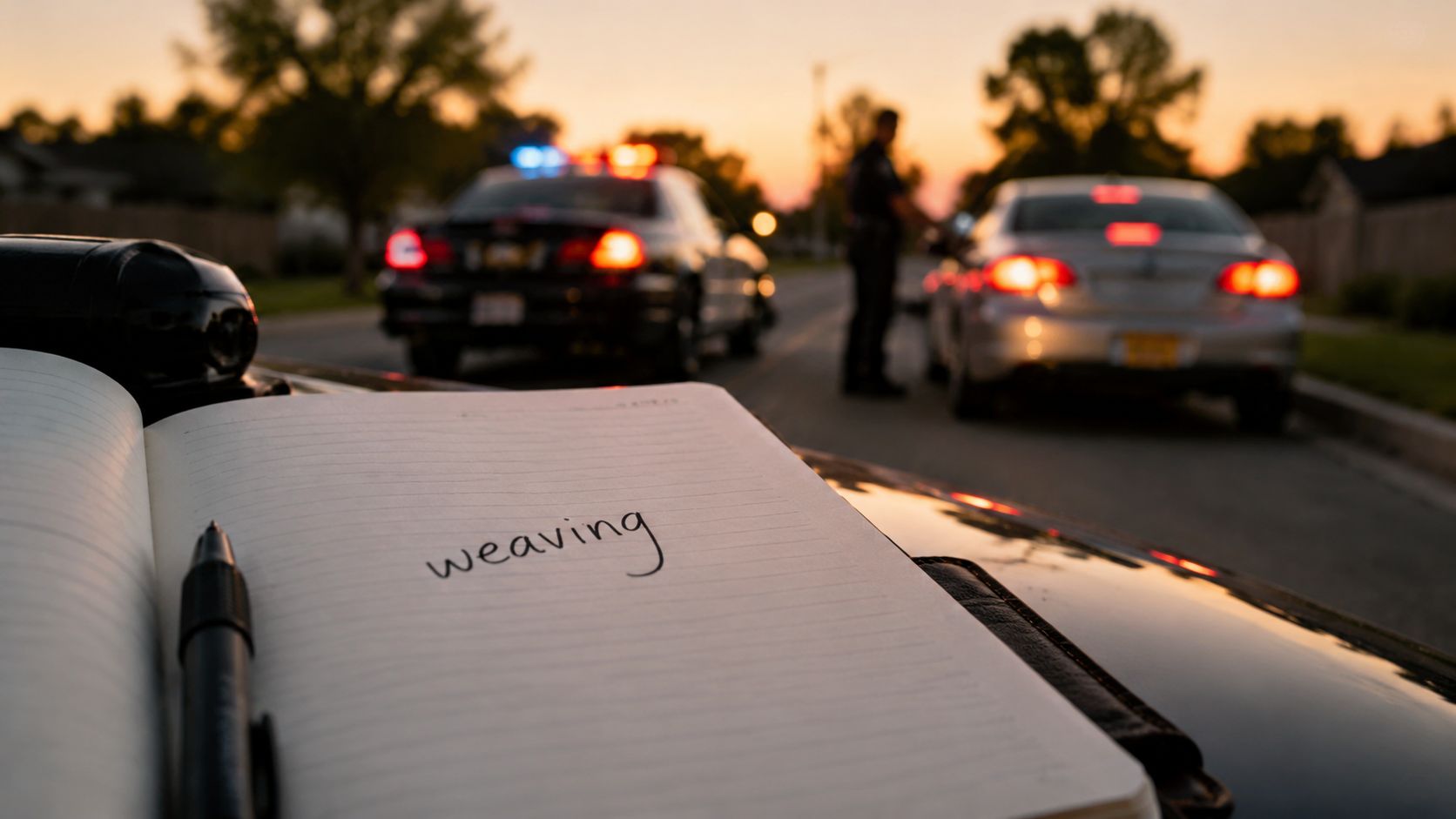
A common real-world scenario looks like this: an officer says a driver failed to maintain a lane, but dash cam video shows the vehicle stayed inside the lane and committed no clear traffic violation. Another example is a stop based on an equipment issue that turns out not to exist at all. In those cases, the defense doesn't argue around the problem. The defense attacks the foundation.
What to examine right away
A good Houston DWI lawyer will usually move fast to lock down evidence before it disappears or gets harder to obtain. That includes reasonable suspicion and probable cause standards in Texas DWI stops and whether the officer can point to specific facts, not just a hunch.
- Get the video early: Dash cam, body cam, and dispatch audio often tell a cleaner story than the written report.
- Compare words to footage: Officers sometimes describe “weaving” or “erratic driving” in broader terms than the video supports.
- Watch the timeline: If supposed signs of intoxication only appear after the stop, that matters.
- File the right motion: A motion to suppress can be one of the strongest ways to fight DWI Texas cases built on an unlawful stop.
Practical rule: If the stop falls apart, the rest of the case may fall with it.
For a more detailed look at this issue, Was Your DWI Stop Legal? Reasonable Suspicion and Probable Cause explains how an unlawful stop can undermine an entire DWI case.
2. Improper Administration and Interpretation of Field Sobriety Tests
Field sobriety tests often look scientific to a jury, but they are far more contestable than many people realize. Officers must administer them in a standardized way, and small deviations can make the results less reliable. That matters because many arrests turn on how the officer interpreted these tests.

The main tests are the Horizontal Gaze Nystagmus test, the Walk-and-Turn, and the One-Leg Stand. A field sobriety test is a roadside exercise an officer uses to look for signs of impairment. These tests can be affected by poor lighting, uneven pavement, bad instructions, traffic noise, injuries, age, footwear, fatigue, anxiety, or medical conditions.
Texas guidance also recognizes a broader point that many drivers miss. Medical, physiological, and timing issues can create signs that look like intoxication even when alcohol is not the true explanation, and expert-driven challenges can be important in these cases, especially when officer observations look strong at first glance. That issue is discussed in Texas DWI defense guidance on medical and timing-related challenges.
Why these tests are often weaker than they seem
An officer may testify that you “failed” the Walk-and-Turn, but video can show something more nuanced. Maybe the shoulder was sloped. Maybe the instructions were rushed. Maybe you disclosed a balance issue that the officer ignored. In practice, those details matter.
If you want to understand the mechanics of these challenges, how to challenge field sobriety test results in Texas is a useful starting point. So is Field Sobriety Tests and How They Are Challenged, which explains why standardized field sobriety tests are more contestable than they appear.
Before relying on roadside test results, it helps to see how these tests are supposed to be performed:
A strong defense doesn't just say the test was unfair. It shows exactly how the officer departed from proper procedure.
3. Violations of Blood and Breath Test Administration and Chain of Custody
Chemical testing can be powerful evidence, but only if the State can prove the sample and the process were reliable from start to finish. In many cases, that proof depends on records. Missing records, weak documentation, or unexplained handling gaps can create real doubt.
BAC means blood alcohol concentration. It refers to the amount of alcohol measured in a person's blood or breath. Prosecutors often rely heavily on BAC evidence, but the number alone isn't the end of the inquiry. The defense still looks at who collected the sample, how it was stored, how it was transferred, and whether the paperwork supports the State's claims.
A practical example is a blood sample that changed hands several times with incomplete signatures or unclear timestamps. Another is a breath result tied to records that don't clearly show the machine was in proper working order at the relevant time. Juries may hear a neat result on paper, but chain-of-custody problems can turn that neat story into a messy one.
The records that matter most
A Texas DWI lawyer will often ask for much more than the final lab result.
- Calibration and maintenance records: These show whether the testing equipment was being checked and maintained.
- Operator qualifications: The person administering the test must be properly authorized and trained.
- Collection and transfer logs: Blood evidence should have a clear paper trail.
- Storage details: Temperature, preservatives, and handling procedures can matter in blood cases.
The point isn't to raise random objections. The point is to test whether the State can prove every link. Challenging Breath and Blood Tests in Texas DWI Cases gives a useful overview of how chemical-test evidence can be questioned in a DWI defense.
4. Inadequate or Absent Miranda Warnings and Interrogation Violations
Some DWI cases are strengthened not by test results, but by the driver's own words. Officers know that. They ask when you last drank, how much you had, where you were coming from, and whether you feel impaired. Those statements can become a major part of the prosecution's case.
Miranda warnings are the advisements police must give before custodial interrogation. In plain terms, once you are in custody and officers want to question you, your rights matter in a very specific way. If warnings were not given when required, or officers kept questioning you after you invoked your rights, your statements may be challenged.
A common problem in DWI cases is the gray area between roadside investigation and custody. Another problem is when officers treat a direct request for a lawyer as if it didn't happen. Video often becomes decisive here because it captures tone, timing, and exactly what was said.
When statements can be attacked
These issues can arise in several ways:
- Custody began earlier than the State claims: That can trigger Miranda sooner than the report suggests.
- Questioning continued after invocation: If you asked for counsel and questioning kept going, that's a serious issue.
- A “spontaneous statement” wasn't really spontaneous: Video may show the officer prompted it.
- The most damaging statements came after arrest: That timing can matter a lot.
If the State's strongest evidence is what you said after arrest, counsel should examine exactly when custody began and exactly how the questioning unfolded.
This is one reason every experienced Texas DUI attorney wants body cam, dash cam, and booking-room footage as early as possible.
5. Failure to Preserve Evidence and Destruction of Video or Physical Evidence
Some of the best defense evidence in a DWI case is the evidence the prosecution failed to keep. That may sound backward, but it's true. Missing body cam footage, incomplete dash cam recordings, lost blood samples, or late-disclosed video can create major problems for the State.
A practical example is a case where the report says the driver was slurring speech, swaying, and unable to follow instructions, but the key body cam segment is missing. Another is a blood sample that cannot be independently reviewed because it was not properly preserved. When potentially important evidence disappears, the defense can argue that the loss prejudiced the ability to challenge the accusation.
Why missing evidence can change the case
Preservation fights are not automatic wins. The defense usually has to show why the missing evidence mattered. But when the absent evidence goes to the heart of the stop, the arrest, or the testing, the consequences can be significant.
- Video can contradict reports: Missing footage may have shown normal speech, steady balance, or a lawful driving pattern.
- Physical evidence can't be retested if it's gone: That matters in blood cases.
- Late disclosure hurts preparation: If exculpatory material surfaces late, the court may need to address the prejudice.
- Patterns matter: Repeated “camera malfunctions” or retention failures can become part of the defense argument.
A careful lawyer doesn't wait for trial to ask about this. Preservation requests and discovery strategy should start early.
6. Improper Breath Test Machine Maintenance, Calibration, and Certification Issues
A driver blows into the machine, a number prints out, and the case suddenly looks harder than it did five minutes earlier. That moment rattles people. It also causes many defendants to assume the breath result is final. It is not.
Breath evidence is only as reliable as the machine, the records behind it, and the officer who administered the test. A strong Texas DWI defense does not treat the result as a fixed fact. It examines the entire testing process step by step, because small procedural failures can weaken the State's confidence in the number or keep it out altogether.
Breath test cases often turn on paperwork and protocol. If the prosecution wants a jury to trust the machine, it should be ready to show the machine was properly maintained, properly checked, and operated by someone who was qualified on the date of the test. That is why challenging the accuracy of breathalyzers usually starts long before trial, with maintenance logs, calibration records, repair history, and operator credentials.
A careful lawyer reviews several pressure points:
- Maintenance history: Missed inspections or incomplete logs can raise doubts about reliability.
- Calibration and reference checks: The timing and accuracy of those checks matter, especially if they were done close to the date of the test.
- Repairs and malfunctions: A machine with a recent service issue may deserve much closer scrutiny.
- Operator certification: A valid result still depends on a properly trained and currently certified operator.
- Record consistency: Dates, serial numbers, and testing records need to match. Sloppy documentation creates room to challenge the State's foundation.
The trade-off is straightforward. A maintenance problem does not automatically make the case disappear. Some issues affect the weight of the evidence rather than admissibility. But even when the judge allows the result in, a poorly documented machine can give the defense a strong cross-examination path and make the prosecutor work much harder to sell the number as dependable.
This is one of the clearest examples of how DWI defense is built, not guessed. The stop matters. The investigation matters. The testing stage matters too. If the breath machine records are incomplete, inconsistent, or tied to a questionable certification history, that procedural weakness can become a real opportunity to reduce the charge, negotiate from a stronger position, or fight the case at trial.
7. Unlawful Blood Draw and Violations of Implied Consent Rights
Blood draws raise some of the strongest privacy issues in a DWI case. Police do not get unlimited authority to take blood just because they suspect intoxication. Consent, warrants, warnings, and collection procedures all matter.
Implied consent is the rule that by driving on Texas roads, you are deemed to have consented to chemical testing under certain circumstances. That does not mean police can ignore constitutional limits. In many cases, whether the blood draw was lawful turns on whether there was valid consent, a valid warrant, or some legally recognized basis for proceeding.
Administrative license suspension, often called ALR or administrative license revocation, is the separate process that can affect your driver's license after a DWI arrest. It is separate from the criminal case. Texas DWI guidance commonly warns that you must act quickly to request an ALR hearing, and missing that step can forfeit an important chance to challenge the suspension and preserve testimony and records. That issue is discussed in Texas guidance on common DWI mistakes and the ALR hearing deadline.
Consent problems can weaken both cases
This is one of the most strategic parts of a defense because it can affect the criminal case and the DWI license suspension case at the same time. If officers gave incomplete warnings, relied on questionable consent, skipped the warrant process when one was needed, or used improper collection procedures, the defense may have suppression arguments.
- Check whether consent was valid: A signed form is not always the end of the issue.
- Review the warning process: The exact wording and timing can matter.
- Confirm who drew the blood: Qualifications and procedure still count.
- Preserve ALR issues early: The hearing can lock officers into testimony and expose weaknesses before trial.
The ALR hearing is not a side issue. In many cases, it's the first real opportunity to test the officer's story under oath.
For many clients, especially those facing a first DWI in Texas, early legal help makes the biggest difference. A weak blood draw case can become much stronger for the defense when counsel acts before deadlines pass.
7 Critical Errors That Can Help Win a Texas DWI Case
| Issue / Defense Theory | Complexity 🔄 | Resources ⚡ | Expected Impact 📊 | Ideal Use Cases 💡 | Key Advantage ⭐ |
|---|---|---|---|---|---|
| Failure to Establish Probable Cause for the Traffic Stop | Moderate–High 🔄 Requires video/report comparison and legal motion | Medium ⚡ Dash/body-cam, dispatch logs, counsel | High 📊 Potential suppression of all downstream evidence; possible dismissal | Stops based on vague driving descriptions or apparent pretext (e.g., "weaving") | Excludes evidence obtained after unlawful stop; can end prosecution ⭐ |
| Improper Administration and Interpretation of Field Sobriety Tests (FSTs) | Moderate 🔄 Needs expert review of procedures and conditions | Medium ⚡ Video, NHTSA protocol, medical records, expert | Medium–High 📊 Can discredit officer testimony and reduce evidentiary weight | FSTs conducted in poor lighting, uneven surfaces, or with medical confounders | Undermines subjective tests; effective with expert testimony ⭐ |
| Violations of Blood/Breath Test Administration and Chain of Custody | High 🔄 Technical audit of records, timestamps, and handlers | High ⚡ Calibration logs, operator certs, chain documentation, toxicologist | High 📊 Grounds to suppress chemical results or create reasonable doubt | Missing/expired certifications, gaps in custody, improper storage | Attacks prosecution's strongest scientific evidence; often dispositive ⭐ |
| Inadequate or Absent Miranda Warnings and Interrogation Violations | Low–Moderate 🔄 Determine custody/timing via audio/video review | Low–Medium ⚡ Body/dash/interview recordings and transcripts | Medium–High 📊 Suppression of statements; weakens narrative and plea leverage | Post‑arrest questioning without warnings or questioning after counsel invoked | Protects Fifth/Sixth Amendment rights; can remove confessions from evidence ⭐ |
| Failure to Preserve Evidence and Destruction of Video/Physical Evidence | Moderate–High 🔄 Requires IT/retention policy analysis and prejudice proof | Medium–High ⚡ All video, IT logs, maintenance records, discovery motions | High 📊 Sanctions, adverse inference, suppression, or dismissal if prejudicial | Missing dash/bodycam footage, lost biological samples, destroyed logs | Can provoke sanctions or dismissal; exposes systemic issues ⭐ |
| Improper Breath Test Machine Maintenance, Calibration, and Certification Issues | High 🔄 Detailed technical review of device logs and software | High ⚡ Machine serial/calibration logs, DPS records, breath experts | High 📊 May exclude or devalue breath results; prompt technical challenges | Overdue calibrations, uncertified operator, undisclosed firmware/repairs | Directly challenges breathalyzer reliability; strong exclusion potential ⭐ |
| Unlawful Blood Draw and Violations of Implied Consent Rights | High 🔄 Warrant/consent and Fourth Amendment analysis required | Medium–High ⚡ Warrant documents, consent forms, phlebotomist certs, experts | High 📊 Suppression of blood results; constitutional remedies available | Warrantless draws, improper refusal warnings, non‑certified draws | Robust Fourth Amendment protection for invasive searches; often excludes blood evidence ⭐ |
Take the First Step to Protecting Your Future
A DWI charge can leave you feeling like everything is moving too fast. Your license may be at risk. Court dates start appearing. You may be worried about work, your family, or what a conviction could mean for your record. That stress is real, but it's also why strategy matters so much at the start.
The answer to what mistakes help win a DWI case in Texas usually isn't one dramatic flaw. More often, it's a careful review of every stage of the case. Was the stop legal? Were field sobriety tests administered correctly? Did the officer respect your rights during questioning? Can the State prove the breath or blood evidence is reliable? Were records preserved, or did key evidence disappear? Those are the questions that build a strong defense.
This is also why early action matters. A DWI defense is not just about trial. It can involve bond conditions, discovery, suppression motions, the ALR process, chemical-test review, and planning for possible outcomes such as dismissal, reduction, or later record-cleanup options in eligible situations. If you're dealing with a first DWI in Texas, or worried about a DWI license suspension, getting clear advice now can help you avoid mistakes that make the case harder later.
The experienced Houston DWI lawyers at Law Office of Bryan Fagan, PLLC review the stop, the testing, the video, and the paperwork with that exact mindset. The goal is simple. Protect your rights, challenge weak evidence, and put you in the strongest position possible.
You do not have to sort this out alone. If you need a Houston DWI lawyer or Texas DUI attorney to evaluate the facts, explain your options, and start building a defense, now is the right time to act. A prompt case review can help preserve evidence, protect your driving privileges, and give you a clearer path forward.
If you're facing a DWI charge and need clear next steps, request a free consultation with Law Office of Bryan Fagan, PLLC. The firm represents Texans in DWI cases, ALR hearings, and related defense matters, and can help you evaluate the stop, the testing, and your options for fighting the case.

