 Skip to content
A DWI arrest can feel immediate and final. It isn’t. In Texas, an arrest starts a process that can be challenged at every stage, and the details matter more than is commonly understood. If the officer made a mistake during the stop, the investigation, the testing, or the arrest itself, that mistake can become part of your defense.
That matters because DWI enforcement in Texas is high-volume. In Harris County alone, more than 10,500 people were arrested under suspicion of DWI during the first eight months of 2019, according to Harris County DWI arrest data discussed here. High-volume enforcement creates pressure, and pressure leads to shortcuts, missed steps, and weak documentation.
You should also know this early. A DWI case is not just about whether you drank. It’s about whether police followed the law, whether the stop was valid, whether the tests were reliable, and whether the State can prove its case with admissible evidence. If the answer to any of those questions is no, your case may be much stronger than it looks on day one.
Texas DWI law has a few terms you need to understand right away. BAC means blood alcohol concentration. Implied consent means that by driving on Texas roads, you can be asked to provide a breath or blood sample after a lawful DWI arrest, and refusing can trigger consequences. A field sobriety test is a roadside divided-attention test such as the Walk-and-Turn, One-Leg Stand, or Horizontal Gaze Nystagmus test. Administrative license suspension, often handled through an ALR hearing, is the separate license process that can begin after a failed or refused chemical test.
If you want to fight DWI Texas charges strategically, start by looking closely at the mistakes police make during DWI arrests Texas drivers face every day. Each one creates a specific opening for your defense.
1. Failure to Establish Reasonable Suspicion Before Traffic Stop
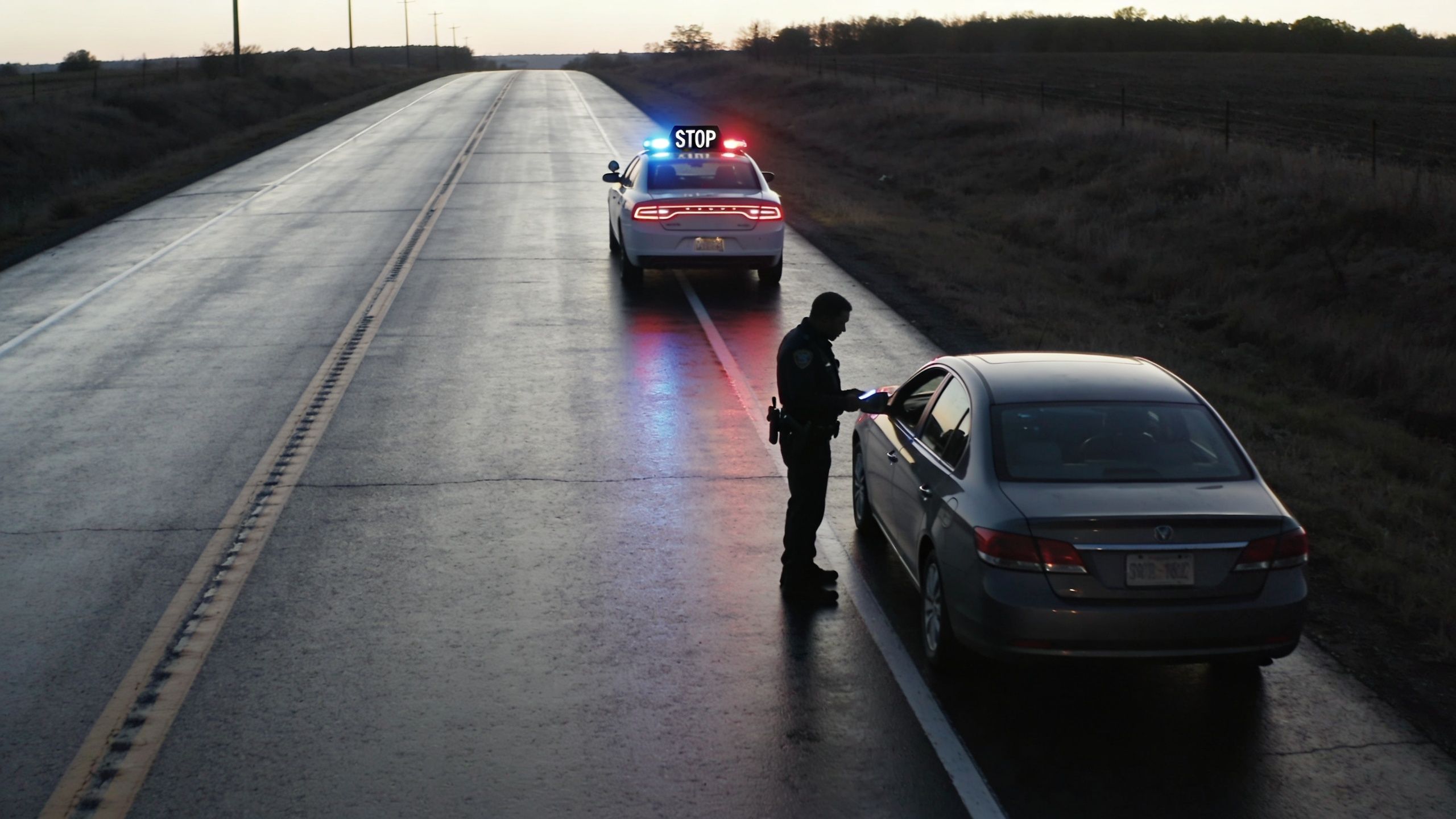
An officer can’t stop you on a hunch. The officer needs specific, articulable facts suggesting a traffic violation or other criminal activity. If that foundation is missing, the stop may be unconstitutional, and the evidence that follows can often be challenged.
A common example is the vague “weaving” stop. The report may claim lane problems, but the dashcam shows normal driving. Another example is a stop based only on the time of night or the fact that you were leaving a bar area. Those facts alone don’t automatically justify a DWI stop.
What the law requires
Reasonable suspicion is a lower standard than probable cause, but it still requires real facts. The officer should be able to explain what you did, when you did it, and why that conduct suggested a violation. If the explanation is too vague, too broad, or contradicted by video, the stop may not hold up.
This distinction matters. If you want a plain-language breakdown, review probable cause vs. reasonable suspicion in Texas DWI cases. Many people hear those terms during their case and assume they mean the same thing. They don’t.
Practical rule: If the stop was illegal, your lawyer should examine whether later evidence, including statements, field tests, and chemical tests, can be suppressed as the product of that stop.
What you should do right away
Move fast on the evidence. Video can disappear, and memories get softer with time. Your defense gets stronger when you lock down the timeline early.
- Request video quickly: Ask your lawyer to seek dashcam and body camera footage as soon as possible.
- Write down the details: Note the location, weather, traffic, lighting, and what the officer said was the reason for the stop.
- Compare report to video: A police report may describe swerving, delay, confusion, or unsafe driving. Video may show something very different.
- Focus on specifics: The key question is simple. What exact traffic violation did the officer claim to see?
If the stop started with a weak reason, that weakness can spread through the whole case. A Houston DWI lawyer will often begin there because a bad stop can undercut everything that came after it.
2. Improper Administration of Field Sobriety Tests
Field sobriety tests often look scientific on video. They aren’t reliable unless the officer follows the National Highway Traffic Safety Administration standards closely. When officers improvise, rush the instructions, choose a bad location, or ignore medical limitations, the tests lose value fast.
Texas officers commonly use three standardized tests: the Horizontal Gaze Nystagmus test, the Walk-and-Turn, and the One-Leg Stand. These are the only standardized roadside tests recognized for DWI investigation. Even then, standardization is the whole point. A test given the wrong way is not the same test.

Where officers go wrong
The technical rules matter. The HGN test must be performed at a specific distance from the eyes and with proper pacing. The Walk-and-Turn should be demonstrated correctly and performed on a flat, even surface. In the verified material, the Walk-and-Turn is described as having 77% validity when properly administered, but errors can reduce that validity to as low as 50% under the NHTSA benchmarks discussed in this field sobriety test article.
That drop matters in real life. If you were tested on gravel, uneven pavement, a sloped shoulder, or near passing traffic, your lawyer should treat the results skeptically. The same goes for physical conditions such as arthritis, knee problems, foot injuries, back problems, hearing difficulty, poor circulation, ear and balance issues, brain injuries, speech impediments, or recovery from surgery, all of which can affect roadside performance.
How to turn bad testing into a defense
If the field tests are central to the arrest, challenge them hard. Your lawyer can compare the officer’s training claims to the actual bodycam footage and to the NHTSA instructions.
For a step-by-step look at this defense, see how to challenge field sobriety test results in Texas.
A short video can also help you understand how these tests are attacked in court:
- Document your limitations: Tell your lawyer about old injuries, surgeries, medications, neurological conditions, or balance problems.
- Check the testing surface: Uneven ground, poor lighting, and distracting traffic all weaken the State’s argument.
- Review the instructions: Officers often leave out demonstration steps or give confusing directions.
- Use the footage: Bodycam often shows details the report skips.
Poor roadside testing doesn’t prove intoxication. It may prove only that the officer didn’t follow the required method.
If your first DWI in Texas is built mostly on field tests, this issue can be one of the strongest places to fight back.
3. Chemical Test Violations and Chain of Custody Failures
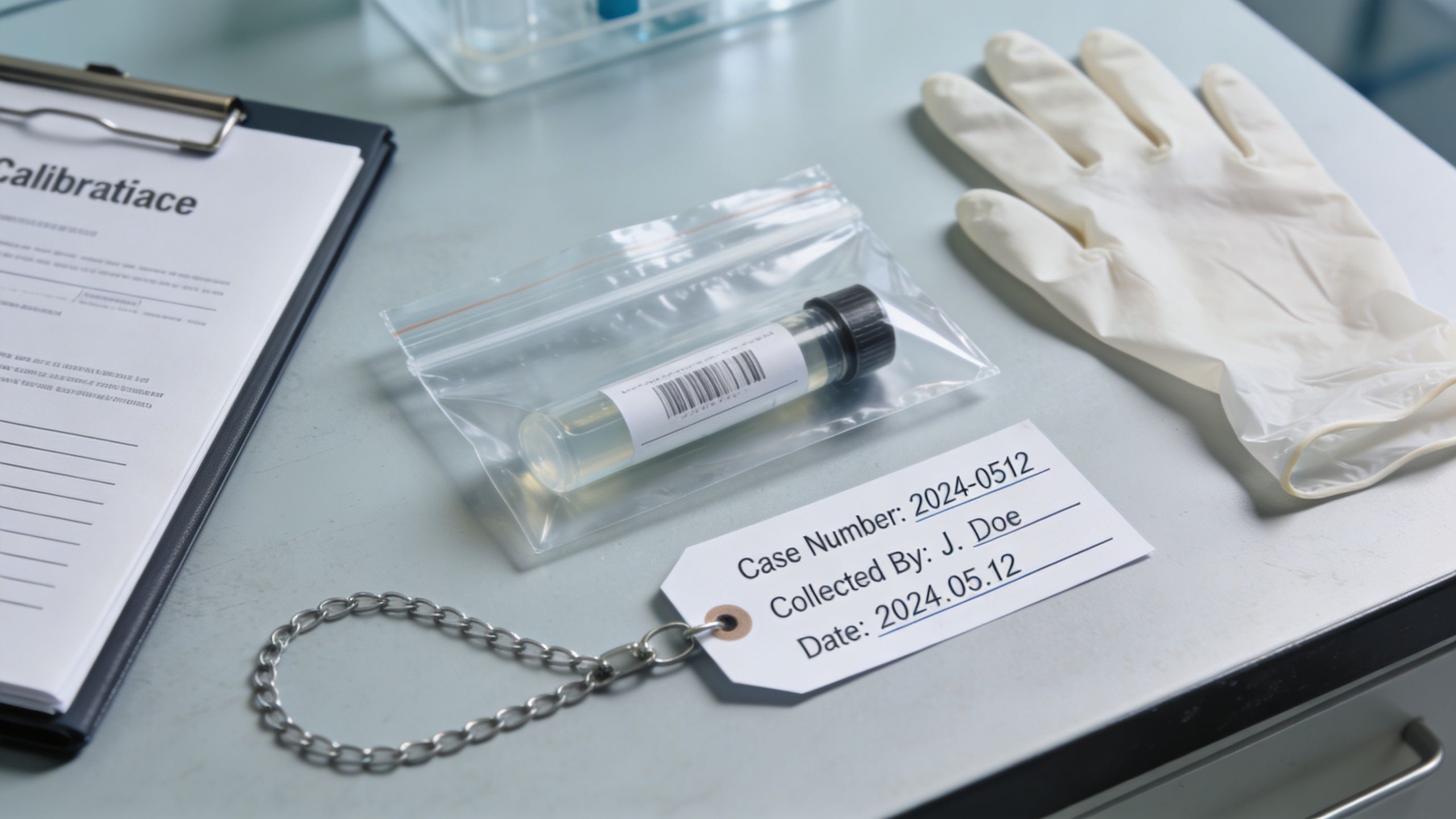
You give a breath or blood sample, and the officer acts like the case is over. It is not. Chemical evidence only helps the State if police and the lab followed the required rules from start to finish. If they cut corners, you have a defense target with real force.
Texas regulates breath testing through Department of Public Safety rules, and blood evidence can rise or fall on how the sample was drawn, labeled, stored, transported, and logged. See the Texas Administrative Code rules for breath alcohol testing in 37 Tex. Admin. Code Chapter 19 and the Texas Transportation Code provisions that govern specimen requests and procedures in Chapter 724. Those are the standards that matter.
Where chemical evidence cases break
Breath tests depend on procedure. The officer must follow the required observation period and use a properly maintained instrument operated by a qualified person. If the subject burped, vomited, placed anything in the mouth, or was left unobserved during that period, the defense should examine whether the result is still reliable.
Blood cases create even more points of attack. The State must show the sample came from you, stayed sealed, stayed identifiable, and was not mixed up or contaminated. A missing label, a gap in transfer records, poor storage, or conflicting timestamps can turn a “scientific” result into a chain-of-custody problem the prosecutor has to explain away.
That is the strategy here. Do not treat a paperwork mistake as minor. Treat it as a chance to limit or exclude the State’s strongest evidence.
What your lawyer should demand in discovery
General complaints do nothing. Records win this fight.
Ask for the breath machine maintenance history, calibration records, operator certification, test ticket, observation notes, video, blood draw records, submission forms, lab bench notes, analyst records, and every custody log tied to the sample. Then compare those documents against each other. Dates, initials, times, seal numbers, and transfer entries should match. If they do not, press the issue.
If you want a clearer explanation of how these scientific weaknesses are challenged, read accuracy and reliability in the science of DWI testing.
- Get the observation record: A weak or undocumented pre-test observation period can undermine a breath result.
- Inspect machine records: Missed maintenance, questionable calibration history, or incomplete logs can damage reliability.
- Trace the blood sample step by step: The State should account for collection, sealing, storage, transport, receipt, and testing.
- Match every identifier: Tube labels, submission forms, lab reports, and custody sheets should all line up.
- Use inconsistencies aggressively: One unexplained gap can support a motion to suppress, a motion in limine, or a strong cross-examination theme.
A strong DWI defense does not accept chemical evidence at face value. It tests the testing. If police or the lab failed to protect the sample, document the result, or follow the governing rules, that mistake can become one of the best openings in your case.
4. Lack of Probable Cause for Arrest After Initial Stop
A lawful stop doesn’t automatically justify a DWI arrest. The officer still needs probable cause before placing you under arrest. That means enough facts, taken together, to support the belief that you were driving while intoxicated.
Such circumstances frequently lead to flawed cases. An officer may start with a valid stop for speeding or a lane issue, then quickly jump to arrest based on a smell of alcohol, bloodshot eyes, or general nervousness. Those facts can be relevant, but they aren’t always enough on their own.
Signs are not the same as proof
Probable cause should be built on specific observations, not labels. “Appeared intoxicated” is a conclusion. It is not a fact. A strong defense looks underneath that conclusion and asks what the officer observed before and after the stop.
For example, bloodshot eyes can come from fatigue, allergies, contact lenses, or irritation. Slurred speech may be affected by stress, speech patterns, dental issues, or medical conditions. The odor of alcohol may suggest consumption, but it does not by itself prove loss of normal use of mental or physical faculties.
The best question in a DWI arrest review is often the simplest one. What concrete facts did the officer have before making the arrest?
How to challenge the arrest decision
Read the arrest report closely. Separate observations from conclusions. Then compare the report to the video and to any witness accounts.
- Identify pre-stop facts: What did the officer claim to observe while you were driving?
- Separate driving from roadside behavior: Trouble balancing on a roadside shoulder after midnight is not the same as unsafe driving.
- Challenge vague wording: Words like “confused,” “swaying,” or “unsteady” need context.
- Consider alternative explanations: Illness, injury, fatigue, and anxiety often get mistaken for intoxication.
This issue is especially important when field sobriety evidence is weak, when there is no chemical test, or when the officer made the arrest quickly without careful investigation. If probable cause was missing, your lawyer may seek to suppress the arrest and the evidence that followed.
5. Violation of Miranda Rights and Improper Interrogation
You are in the patrol car, the door is shut, and the officer starts asking questions that sound casual. Where were you coming from? How much did you have to drink? What time was your last drink? Those answers can do more damage than the stop itself.
That is why this issue matters. Once you are in custody, police cannot interrogate you without following the rules. Under Miranda v. Arizona, 384 U.S. 436 (1966), statements made during custodial interrogation may be suppressed if warnings were not given. Texas also limits the use of oral statements unless statutory requirements are met. See Texas Code of Criminal Procedure art. 38.22.
This is not a technicality. It is a defense opportunity.
A DWI case often depends on your own words. Prosecutors want statements such as “I only had a few,” “I was coming from a bar,” or “I probably shouldn’t have been driving.” If those statements came after custody began and before proper warnings, your lawyer has a clear target for a suppression motion. If police kept questioning you after you asked for a lawyer, that problem gets even stronger.
Where officers get this wrong
Some mistakes are obvious. An officer handcuffs you, puts you in the back seat, and starts asking drinking questions without Miranda warnings.
Others are more subtle. The officer calls the questions “routine,” “booking,” or “just paperwork” to keep you talking. But labels do not control the analysis. Custody and interrogation do.
Your lawyer should pin down the exact timeline. When were you no longer free to leave? What questions came before the warnings? What happened after you said you wanted a lawyer? Body camera video, dashcam footage, station video, and audio logs often answer those questions better than the report does.
What you should do in the moment
Be polite. Be brief. Do not help build the case.
- Ask for a lawyer clearly: Say, “I want a lawyer.”
- Stop answering drinking questions: Do not explain where you were, what you drank, or when you stopped.
- Do not get drawn into casual conversation: Small talk often becomes evidence.
- Remember the sequence: If you can, later write down when questioning started, when you were handcuffed, and whether warnings were given.
How this mistake helps your defense
The strategic value is simple. If your statements get suppressed, the State may lose some of its strongest evidence. That can weaken both the criminal case and any related license case, especially when the driving facts are limited or the test evidence is open to challenge.
Your job is not to argue with the officer on the roadside. Your job is to avoid giving away evidence. Your lawyer’s job is to turn improper interrogation into a specific legal attack on the State’s case.
6. Failure to Properly Preserve or Document Breath Test Maintenance Records
You blow into the machine, a number prints out, and the State acts like the result settles everything. It does not. A breath test is only as strong as the records behind the machine.
That is where cases get interesting.
Texas regulates breath alcohol testing through the Department of Public Safety. If the State cannot produce clear records showing the instrument was properly maintained, checked, and operated under the applicable rules, you have a real opening to challenge reliability. See the official Texas DPS breath alcohol testing program rules.
Why these records create a defense opportunity
A breath machine does not prove itself. The prosecutor still has to connect your test result to a specific instrument, a qualified operator, and a maintenance history that holds up under scrutiny.
Small record problems can become big defense points. A missing serial number match matters. A gap in inspection or reference sample checks matters. A repair close to your test date matters. Sloppy documentation gives your lawyer something concrete to attack instead of arguing in the abstract.
This is the strategic point you should understand. If the paperwork behind the machine is weak, the breath result stops looking like hard science and starts looking like a number the State cannot fully support.
What your lawyer should demand and compare
Do not stop at the printed test slip. That is only the surface.
- Match the exact instrument: The offense report, breath ticket, maintenance file, and technical records should identify the same machine.
- Review DPS compliance records: The State should be able to show the instrument was checked and maintained under DPS requirements.
- Confirm the operator was qualified: Certification and authorization records matter if the State wants the result treated as reliable.
- Look for nearby repairs or errors: Service issues before or after your test can weaken confidence in the reading.
- Check for missing logs or inconsistent dates: Record gaps often point to larger reliability problems.
Your lawyer should also look at the state’s own reporting sources for the broader enforcement context, not a defense blog repeating numbers secondhand. For official Texas traffic safety and impaired-driving reporting, use TxDOT traffic safety data and reports where relevant to the case narrative, not as a substitute for machine-specific proof.
How this mistake helps your defense
This issue gives you a practical path, not just a technical argument. If the State cannot lay the proper foundation for the machine, your lawyer may be able to limit the weight of the result, attack admissibility, or force the prosecutor to rely more heavily on weaker evidence.
That can affect both the criminal case and the license case. Breath records often become a pressure point early. Use that pressure.
7. Unlawful Traffic Stop Extension Beyond Scope of Original Violation
Even when a stop starts legally, police can still go too far by stretching it beyond the time needed to handle the original reason for the stop. Officers can’t turn every minor traffic stop into an open-ended fishing expedition for DWI evidence.
This mistake shows up when the original task is basically done, but the officer keeps delaying release to ask more questions, wait for backup, or start roadside tests without a lawful basis for extending the stop. A stop for a light violation or speeding ticket should stay tied to that mission unless new facts justify expanding it.
How the extension issue develops
Timing matters here. The bodycam and dashcam usually tell the story better than the report. If the officer had already collected your documents, checked your information, and handled the traffic issue, the next question is why the detention continued.
A common scenario looks like this. The officer writes or prepares the warning, then shifts into a DWI investigation without identifying new, specific facts that justified the extra detention. If that extension was unlawful, the field tests and later evidence may be vulnerable.
Watch the timestamps closely. A few extra minutes can become a major suppression issue if the officer lacked a legal reason to keep you there.
What to focus on in your case
Build a timeline. This is one of the clearest ways to challenge a stop extension.
- Mark each phase of the stop: First contact, document request, records check, ticket or warning stage, DWI questioning, field tests, arrest.
- Compare mission to delay: Ask what the officer was doing during each stretch of time.
- Identify unrelated waiting periods: Time spent lingering without purpose can matter.
- Tie the evidence to the extension: If the officer only developed the DWI case after the delay became unlawful, suppression may be available.
This defense is especially useful when the initial reason for the stop was minor and the officer’s report is thin on specific impairment facts. For someone searching for a Houston DWI lawyer or a Texas DUI attorney, this is one of the most practical reasons to get video reviewed quickly. The timeline often tells you whether the officer followed the law or kept you there until something looked suspicious.
7 Key Police Errors in Texas DWI Arrests
A Texas DWI case often looks strong on paper until you match each police decision to the rule that governs it. That is where defense strategy starts. Each mistake below points to a specific pressure point your lawyer can attack, whether the goal is suppressing evidence, weakening the State's timeline, or forcing better plea options.
Summary Table: Key Police Errors
| Issue | What the mistake creates for your defense | Best evidence to review | Strongest use case | Main limitation |
|---|---|---|---|---|
| Failure to Establish Reasonable Suspicion Before Traffic Stop | A basis to challenge the entire stop and seek suppression of everything that followed | Dashcam, bodycam, dispatch notes, offense report | Vague claims like weaving, drifting, or late-night suspicion without clear facts | Judges often give officers room if the video is unclear |
| Improper Administration of Field Sobriety Tests | A way to attack the officer's conclusions and reduce the value of field test evidence | Bodycam footage, test instructions, road and lighting conditions, NHTSA standards | Poor instructions, uneven ground, bad footwear, medical issues, or distracting traffic conditions | Officers often claim substantial compliance and juries may still give weight to test performance |
| Chemical Test Violations and Chain of Custody Failures | A direct path to challenge blood or breath reliability | Lab records, chain of custody forms, draw procedures, storage records, analyst notes | Missing handoffs, questionable storage, flawed blood draw procedures, or inconsistent paperwork | These challenges usually require close record review and sometimes expert help |
| Lack of Probable Cause for Arrest After Initial Stop | A basis to suppress evidence obtained after an arrest that should never have happened | Video, report language, arrest timeline, cross-examination points | Arrests based mostly on odor, red eyes, or generalized suspicion | Courts look at the full situation, not one fact in isolation |
| Violation of Miranda Rights and Improper Interrogation | A chance to exclude damaging statements | Audio, bodycam, jail video, written statements, booking records | Custodial questioning without warnings or continued questioning after a request for counsel | Routine booking questions may still come in |
| Failure to Properly Preserve or Document Breath Test Maintenance Records | A way to challenge whether the breath machine was reliable at all | Maintenance logs, calibration records, operator certifications, quality control records | Gaps, missing checks, conflicting dates, or incomplete machine history | Prosecutors often argue the machine was reliable despite record problems |
| Unlawful Traffic Stop Extension Beyond Scope of Original Violation | A timeline-based suppression argument that can knock out later field tests and statements | Time-stamped video, CAD logs, warning or citation timing, officer report | The original traffic task was done, but the officer kept investigating without new facts | Small factual disputes over timing can decide the issue |
Use this table like a checklist, not a summary you skim and forget. If one error appears in your case, press it. If several appear together, they can reshape the entire defense.
Take the Next Step Turn Police Mistakes into Your Strongest Defense
A DWI arrest can look finished the moment the handcuffs go on. It is not finished. It is the point where your defense starts, and police mistakes often give you the strongest ground to fight back.
Treat this case like a record-building project from day one. The stop, the officer’s questions, the roadside tests, the arrest decision, the breath or blood process, and the license suspension timeline all create pressure points. Your job is to identify which pressure points failed, then push on them with proof.
Start with your own timeline. Write down why the officer said you were stopped, what was asked, whether you were told to get out, when field tests began, what was said about refusing or taking a test, and when you were formally arrested. Save every paper, bond document, tow sheet, receipt, and notice you received. Keep screenshots and voicemail messages. Stay off social media. A casual post can hand the prosecutor a statement they did not have before.
Then move fast on evidence. Video footage, dispatch records, jail recordings, blood paperwork, breath testing records, and maintenance files get harder to secure with delay. Early action gives your lawyer more to work with and gives the State less room to control the story.
Do not treat each police error as an isolated problem. Stack them. A weak reason for the stop can undercut everything that followed. Poor field testing can weaken probable cause. Missing breath machine records can damage the reliability of the result. Miranda violations can cut out statements the State wants to use against you. That is how a list of police mistakes becomes a defense plan.
You also have two fights to handle at once. One is the criminal case. The other is your driver’s license. Miss the license deadline, and you give up options that may have been available.
Do not assume a first arrest means an easy conviction for the State. Make the prosecutor prove the stop was lawful, the investigation was handled correctly, the arrest was supported, and the testing was reliable. If the officer cut corners, force the issue.
If you need legal help, get a free consultation from a Houston DWI lawyer at the Law Office of Bryan Fagan, PLLC. An attorney can review the timeline, spot suppression issues, protect your license deadlines, and build a defense around the specific mistakes the police made in your case.

