
A DWI arrest can be overwhelming, but you don’t have to face it alone.
If you were stopped, tested, booked, and released, you’re probably dealing with the same common questions that arise in the first day or two. Am I going to lose my license? Does the breath test number decide everything? Can I still be charged if I blew under the limit, or if I refused testing?
Those questions all lead back to one issue. The legal definition of intoxication in texas. If you understand how Texas defines intoxication, you understand how the state will try to prove its case, and where a strong defense can start pulling that case apart.
What Happens After a DWI Arrest in Texas
The first few hours after an arrest feel fast and confusing. You may have dealt with roadside questions, field sobriety testing, a request for a breath or blood sample, booking, bond, and release, all before you had time to think clearly about what happened.

What matters now is getting organized. A DWI case usually creates two separate problems at the same time:
- The criminal case. This is the charge itself, handled in court.
- The license case. This is the attempt to suspend your driving privileges through an administrative license suspension, often called an ALR hearing.
- The evidence issue. This includes the stop, officer observations, field sobriety tests, video, and any breath or blood result.
A field sobriety test is a roadside test officers use to claim they saw signs of impairment. Common examples include the horizontal gaze nystagmus test, walk-and-turn, and one-leg stand. These tests are not the same as chemical testing, and they often become a major point of dispute.
A BAC, or blood alcohol concentration, is the alcohol concentration used in chemical testing. In some cases, the prosecution focuses heavily on that number. In others, the state relies more on behavior, speech, balance, and driving pattern.
An administrative license suspension is separate from whether you’re convicted in criminal court. That surprises many first-time clients. You can beat one issue and still have to fight the other.
Practical rule: The sooner you review the stop, the testing, and the paperwork, the more options you usually have.
If this is your first DWI in Texas, don't assume the case is automatic. If you're looking for a Houston DWI lawyer or a Texas DUI attorney, what you need most right now is someone who can identify which path the state is using to claim intoxication, then challenge that path directly.
The Legal Definition of Intoxication Under Texas Law
You get pulled over after dinner, and the first question on your mind is usually simple. "How can they say I was intoxicated?" Under Texas law, the answer is narrower and more technical than many people expect. Prosecutors do not get to rely on a vague feeling that you looked off. They have to prove intoxication under Texas Penal Code Section 49.01(2).
Texas recognizes two legal definitions. A person is intoxicated if they have lost the normal use of their mental or physical faculties because of alcohol, a drug, a dangerous drug, a controlled substance, or a combination of those substances, or if they have an alcohol concentration of 0.08 or more under Texas Penal Code Section 49.01.
That two-part definition shapes every DWI case I handle. The state usually builds the case around one path more heavily than the other, and the defense has to identify that path early.
The BAC route
The first path is the per se theory. The prosecutor's position is straightforward. If a breath or blood test is admitted and shows 0.08 or higher, the state argues the legal definition is satisfied even if the officer's observations are weak.
That sounds simple on paper. In practice, this route often turns on technical details that matter a great deal. I look at when the sample was taken, whether the result reflects your condition at the time of driving, whether the machine was properly maintained, whether the blood draw followed procedure, and whether the state can account for the sample from collection through testing.
For a closer explanation of the threshold itself, review this guide on Texas legal blood alcohol concentration.
The normal faculties route
The second path is the impairment theory. Here, the state tries to prove you did not have the normal use of your mental or physical faculties because of alcohol, drugs, or a combination of substances. No chemical test over 0.08 is required for the state to try this approach.
That phrase, "normal use," gives the prosecution room to argue. It also gives the defense room to push back. Officers often rely on a mix of observations such as:
- Driving conduct like drifting, braking inconsistently, or reacting late
- Physical appearance such as balance issues, red eyes, or an odor of alcohol
- Speech and responses such as slurring or confused answers
- Roadside test performance during field sobriety testing
A good defense does not accept those observations at face value. Fatigue, anxiety, injury, medical conditions, uneven pavement, poor instructions, and ordinary nervousness can all affect how a person looks on the roadside. Video matters. The officer's wording matters. The timeline matters.
This video gives a helpful visual overview of how intoxication issues come up in Texas DWI cases.
Why the definition matters
The legal definition tells you what the state must prove, and that tells your lawyer where to attack the case. If the prosecution is leaning on a number, the defense tests the reliability and timing of that number. If the prosecution is leaning on officer observations, the defense tests whether those observations show intoxication under the statute.
That distinction affects plea decisions, motion practice, trial strategy, and how a case should be investigated from the start.
A careful defense asks a focused question. Can the state prove either legal route with reliable evidence, or is it asking the court to fill gaps with assumptions?
Understanding Per Se vs Impairment Intoxication
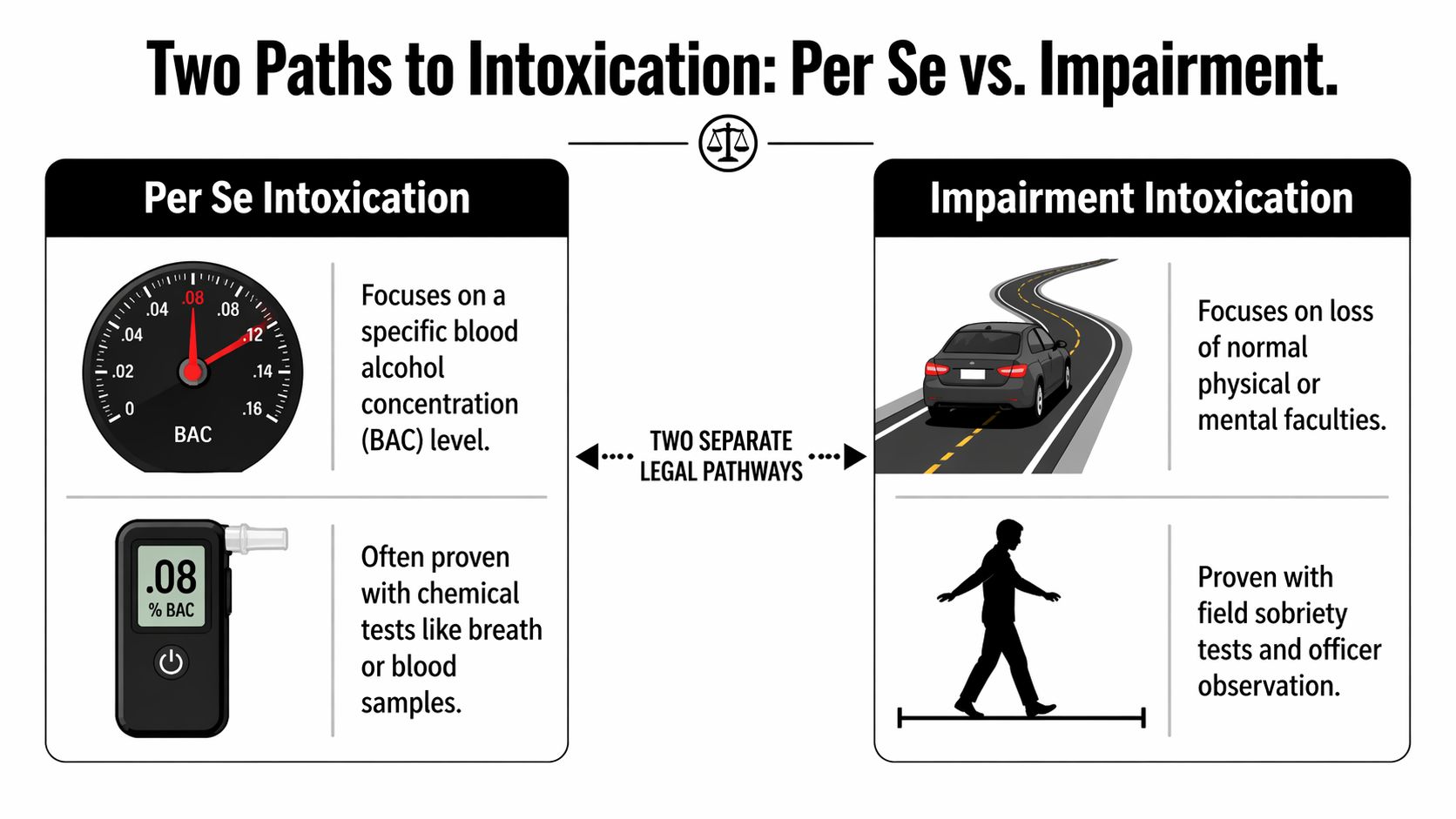
Think of a DWI prosecution as two roads leading to the same courthouse. One road is built around a number. The other is built around observations. Both roads can support a charge, but they require different proof, and they call for different defense strategies.
Per se intoxication
In a per se case, the prosecution wants the jury focused on the chemical result. The argument is simple. Your BAC was at or above the legal threshold, so the state claims intoxication is established.
That sounds straightforward, but per se cases often hide technical weak points. The defense will want to know when the sample was taken, how it was handled, whether the machine was working correctly, and whether the result reflects your condition while driving rather than later.
Impairment intoxication
In an impairment case, the state relies on behavior instead of a BAC result, or relies on behavior to support a BAC result. The focus shifts to whether you had the normal use of mental or physical faculties.
That usually means the prosecutor leans on officer testimony, patrol video, body camera footage, and roadside testing. The officer may describe bloodshot eyes, odor of alcohol, poor balance, delayed answers, or a "failed" field sobriety test.
Side by side comparison
| Path | What the state focuses on | Common evidence | Common defense focus |
|---|---|---|---|
| Per se | BAC at or above the legal threshold | Breath test, blood test, lab records | Test accuracy, timing, procedure, admissibility |
| Impairment | Loss of normal faculties | Officer observations, video, field sobriety tests | Alternate explanations, poor test conditions, weak observations |
Texas applies both routes because intoxication isn't limited to a single type of proof. The state can proceed even without a chemical result, and that’s one reason many people are surprised by how these cases work.
For a practical overview of the threshold issue, this page on what is the legal alcohol limit is useful background.
What works in defending a per se case
A weak response in a per se case is merely saying, "I didn't feel drunk." Jurors may not care if the admitted test result is strong and properly explained.
What often works better is a focused challenge to the reliability of the number itself. Questions that matter include:
- Timing problems. Was the test taken well after driving?
- Collection issues. Was the blood draw or breath procedure done correctly?
- Machine concerns. Was the equipment maintained and used under proper protocol?
- Legal issues. Can the result be suppressed because of a constitutional or statutory problem?
The number matters only if the state can connect it to your driving and prove the result is reliable.
What works in defending an impairment case
An impairment case is more human and more subjective. That can help the defense if the video contradicts the report, if the roadside conditions were poor, or if there were innocent reasons for the behavior the officer interpreted as impairment.
For example, balance issues can be affected by footwear, nerves, fatigue, injury, age, roadside slope, or flashing lights. Speech can sound off when a person is frightened, upset, or exhausted. A person can follow directions imperfectly without being intoxicated.
What usually doesn't work is broad outrage about the stop without tying that outrage to evidence. What does work is methodically showing where the officer overstated what happened.
The two-path issue changes case strategy
A smart fight DWI Texas strategy starts by identifying which path is really carrying the state’s case. Sometimes it’s almost entirely chemical. Sometimes it’s almost entirely observational. Sometimes the prosecution uses both, but one is much stronger than the other.
That distinction affects every next move, from the cross-examination of the officer to motions challenging the test result to how the defense explains your conduct to a judge or jury.
How Police Build a Case for Intoxication
Police don't walk into court with a conclusion only. They build a sequence. The stop, the conversation at the window, the officer's notes, roadside testing, video, and any chemical testing all become pieces of the state's argument.
The stop and initial contact
Most DWI cases begin with a claimed traffic violation, unusual driving pattern, or another reason for contact. After the stop, the officer starts collecting observations quickly. They listen to your speech, look at your eyes, note any odor they believe is alcohol, and assess how you respond to instructions.
Those observations matter because they often become the backbone of an impairment case. Even in a chemical-test case, the officer uses them to justify expanding the stop into a DWI investigation.
Field sobriety tests
A field sobriety test is a set of physical and attention-based tasks officers use to claim they observed signs of impairment. The common tests are the horizontal gaze nystagmus, walk-and-turn, and one-leg stand.
These tests are often treated like scientific proof on the roadside, but in practice they are heavily dependent on conditions and interpretation. Lighting, traffic, weather, surface conditions, footwear, medical issues, fatigue, and anxiety can all affect performance.
Common issues include:
- Instruction problems. The officer may rush the explanation or demonstrate poorly.
- Physical limitations. An injury, age, or balance issue can affect the result.
- Roadside conditions. Uneven pavement and traffic distractions matter.
- Subjective scoring. Officers decide what counts as a clue and when.
A field sobriety test does not measure BAC. It gives an officer more material to describe in court.
Chemical tests and implied consent
Chemical testing usually means a breath, blood, or sometimes urine sample. A BAC result comes from breath or blood testing in most DWI cases.
Texas also uses the concept of implied consent. That means when you drive on Texas roads, you are considered to have agreed to provide a specimen under the rules that apply after a lawful DWI arrest. Refusing a requested test can trigger a separate effort to suspend your license, even though the refusal may also limit the amount of chemical evidence the state has in the criminal case.
That’s where the administrative license suspension process becomes important. The license issue moves on its own track, and timing matters. A prompt response is often the difference between contesting the suspension and absorbing it.
What happens next in the court process
After release, the case moves through court settings, evidence review, negotiations, and sometimes motions hearings or trial. The criminal case may involve questions such as:
- Was the stop lawful
- Did the officer have probable cause to arrest
- Were the tests administered properly
- Can key evidence be excluded
- Can the case be reduced, dismissed, or resolved another way
This is why early case review matters so much. The state builds a DWI case one step at a time, and a defense lawyer's job is to test each step instead of accepting the final accusation at face value.
Special Intoxication Laws for CDL Drivers Minors and Repeat Offenders
A school pickup line, a commercial delivery route, or a second arrest after an old DWI can put three drivers in the same courthouse with very different legal exposure. Texas does not treat these cases the same, and neither should your defense.
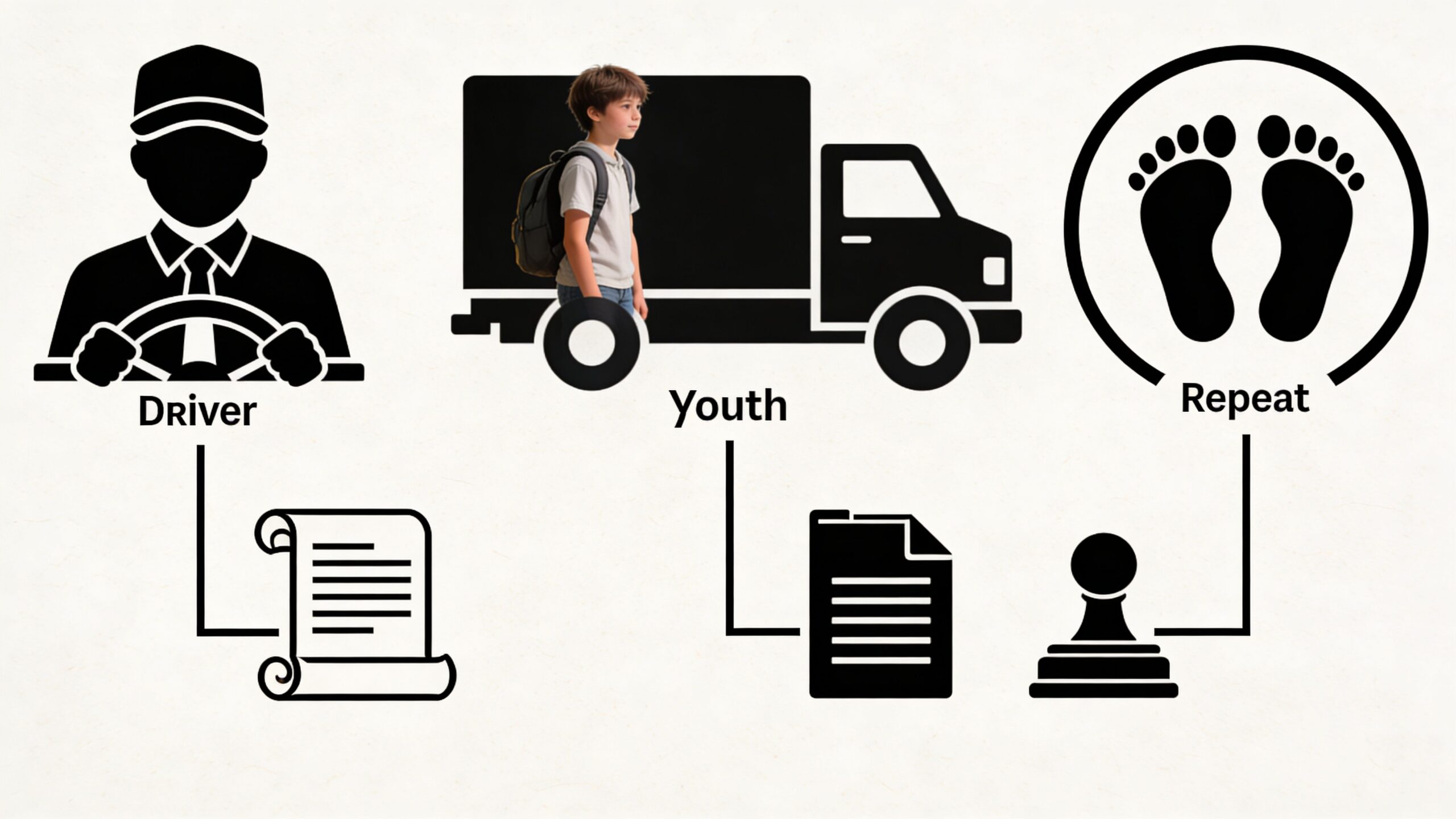
The reason matters. The state may still try to prove intoxication through a chemical test or through alleged loss of normal use, but certain drivers face added rules, faster license consequences, and more pressure to plead early. That is often a mistake.
CDL drivers
For commercial drivers, a DWI case is usually two cases at once. One is the criminal charge. The other is the threat to the commercial license that pays the bills.
Texas applies a lower alcohol threshold to CDL operation, and a conviction or license action can trigger a long disqualification from commercial driving under the Texas Department of Transportation impaired driving guidance. In practice, that means the defense has to examine both paths the state may use. If prosecutors are relying on a breath result, I look closely at testing procedure, machine maintenance, and the accuracy issues that can affect breathalyzer results. If they are building an impairment case instead, I focus on the stop, body camera video, roadside instructions, fatigue, and medical explanations that can look like intoxication.
For a CDL holder, protecting the license is often as important as fighting the charge itself.
Drivers under 21
Underage cases surprise a lot of families because the legal standard can shift depending on the allegation. A minor can face zero-tolerance consequences for any detectable alcohol, and in more serious cases the state may still pursue a DWI by trying to prove intoxication under the usual legal definition.
That distinction matters. If the accusation rests on a low alcohol reading, the defense may center on whether the state can connect that result to the offense charged. If the officer is claiming impairment without a strong chemical result, the case often turns on observation evidence that is less reliable than it sounds on paper. Nervousness, inexperience, late-night driving, and poor test instructions can all distort what the officer says happened.
The goal is not only to address the charge. It is to limit damage to school, insurance, driving privileges, and future opportunities.
Repeat offenders
A repeat allegation changes the risk immediately. Prosecutors usually take a harder line, judges may impose tighter bond conditions, and ignition interlock requirements become much more likely.
Strategy has to get sharper too. In a repeat case, the state often expects the prior history to do part of its work for it. A good defense does the opposite. It forces the prosecution to prove this arrest on its own facts. That means separating an old case from the current evidence and attacking the exact theory the state is using now. A weak per se case should be treated like a weak per se case. A thin impairment case should be exposed for what it is.
That disciplined approach matters because repeat cases carry more punishment risk and less room for error.
Why these groups need a different strategy
The charge may read "DWI," but the defense plan should match the person standing in court.
- For CDL drivers, the license issue can drive every decision about timing, hearings, and case resolution.
- For minors, the defense has to account for both the immediate case and the long-term record impact.
- For repeat offenders, the case calls for a tighter attack on punishment exposure, interlock conditions, and the state's proof.
A generic response is rarely enough in these cases. The right defense looks at how Texas says it can prove intoxication, identifies whether the state is really pursuing a per se theory, an impairment theory, or both, and then challenges the weak points before those allegations start dictating your future.
How a Houston DWI Lawyer Challenges Intoxication Evidence
You get pulled over, answer a few questions, try the roadside tests, and later see a breath or blood result in the paperwork. Many people assume the case is over at that point. It is not.
In Texas, I look at intoxication evidence by separating the state's two paths. If prosecutors are trying to win with a chemical number, the defense attacks the reliability, timing, and admissibility of that test. If they are trying to prove loss of normal mental or physical faculties, the defense tests the officer's observations, the video, and the conditions under which those observations were made. That distinction matters because a strong strategy against a per se case is not always the right strategy against an impairment case.
Attacking the stop and arrest decision
Some of the best DWI defenses start before any breath test or blood draw. If the officer did not have legal grounds for the stop, or lacked reasonable suspicion to turn a traffic encounter into a DWI investigation, the evidence that followed may be vulnerable.
Video is often the turning point. Reports can sound polished and certain. Dash cam and body cam footage may show something very different. A lawyer compares the footage to the written report line by line, looking for missing details, exaggerated clues, and gaps in the officer's account.
As noted earlier in the article, Texas intoxication cases often turn on whether the officer can back up the claimed signs of impairment with reliable, consistent evidence. If the video undercuts the reason for the stop, the field tests, or the arrest itself, the prosecution's case can weaken fast.
Challenging field sobriety evidence
Field sobriety tests are not magic, and they are not pass fail exams. They are officer-administered exercises that depend on clear instructions, proper conditions, and fair scoring. That gives the defense several places to press.
I usually start with basic questions:
- Were the instructions clear and complete
- Did the officer demonstrate the test correctly
- Was the surface uneven, sloped, wet, or poorly lit
- Did the officer account for age, injury, fatigue, footwear, or anxiety
- Does the video match the officer's claimed clues
These issues matter most when the state is pursuing an impairment theory. In that kind of case, prosecutors need the judge or jury to accept the officer's interpretation of your balance, speech, attention, and coordination. If the testing conditions were poor or the scoring was sloppy, that interpretation becomes much less convincing.
Sometimes the defense is not about proving perfect performance. It is about showing the jury there is a reasonable explanation for what the officer called intoxication.
Challenging breath and blood evidence
A chemical test can look powerful because it gives the state a number. But a number only helps the prosecution if the state can prove the result is reliable and legally admissible in your case.
That review is technical. It includes the machine used, the operator's training, maintenance and calibration records, the timing of the test, the observation period, the blood draw procedure, chain of custody, and the lab work. Small mistakes can matter. So can larger ones.
For cases built on a breath result, a lawyer may examine known issues involving machine maintenance, mouth alcohol, radio frequency interference, or the timing between driving and testing. This page on breathalyzer accuracy issues in Texas DWI cases gives a useful look at why those challenges arise.
Blood cases raise a different set of questions. Who drew the blood. Where was it stored. Was the sample handled correctly. Did the state preserve enough information for the defense to review the testing process? A per se case often looks strongest at first glance, but it can become much weaker if the state cannot lay the proper foundation for the result.
What tends to work and what usually falls flat
The best DWI defenses are specific and tied to proof.
What tends to help:
- Contradictions between the report and the video
- Clear non-alcohol explanations for alleged impairment
- Testing errors in roadside, breath, or blood evidence
- Targeted motions to suppress illegally obtained evidence
- A defense strategy built around the state's actual theory of intoxication
What usually does not help:
- General complaints about unfair treatment without supporting evidence
- Assuming a chemical result cannot be challenged
- Assuming a refusal automatically fixes the case
- Using the same defense approach for a per se case and an impairment case
Good DWI defense is disciplined work. If the state is relying on a BAC result, the attack has to focus on the science, the procedures, and the legal foundation for that result. If the state is relying on officer observations, the attack has to focus on credibility, conditions, and whether those observations really show loss of normal faculties. If the state is trying both paths, the defense identifies which one is weaker and starts there.
Take Control of Your Future After a DWI Arrest
Texas gives the state two ways to argue intoxication. It can point to a chemical result, or it can argue that you lost the normal use of your mental or physical faculties. That two-path system is exactly why many DWI cases are more defensible than people think.
If you're facing a DWI license suspension, a criminal charge, or both, don't assume the paperwork tells the whole story. The primary question is whether the state can prove its version of events with reliable, admissible evidence.
Act quickly. One of the most important early deadlines in many cases is the 15-day window to request an ALR hearing, as noted in the verified data provided for this article. Missing that deadline can make the license fight much harder.
Take these steps now:
- Save every document you received at release
- Write down everything you remember about the stop and arrest
- Preserve evidence such as receipts, messages, or names of witnesses
- Get the case reviewed quickly so the defense can identify the strongest pressure points
The legal definition of intoxication in texas gives prosecutors more than one route, but it also gives the defense more than one way to fight back.
The right response is calm, fast, and strategic. Whether this is a first accusation or a repeat case, early action can protect your license, your record, and your options.
If you were arrested for DWI and need clear answers now, contact Law Office of Bryan Fagan, PLLC for a free, confidential consultation. Their team helps Texans challenge intoxication evidence, fight ALR hearings, defend first-time and repeat DWI charges, and pursue the best available path forward.