 Skip to content
A DWI arrest can be overwhelming, but you don’t have to face it alone.
You may be reading this after a long night in jail, after posting bond, or after finally getting home and seeing a breath test number on paperwork that makes your stomach drop. That’s normal. Many assume the machine decided the case.
It didn’t.
The accuracy of breathalyzers is a real legal issue. In Texas, a breath result can be challenged. The machine can be wrong. The officer can make mistakes. The testing process can break down in ways that matter in court and in a DWI license suspension case.
If you were arrested for a first DWI in Texas, or you’re a CDL holder, parent, nurse, teacher, engineer, or anyone else worried about your record and license, this is the key point: a breath test is evidence, not a conviction. A prosecutor still has to prove the result is reliable. My job as a Houston DWI lawyer is to test the state’s proof, not accept it.
Your DWI Arrest and the Breathalyzer Test
You get pulled over after dinner in Houston. The officer says they smell alcohol. A few questions turn into roadside tests, handcuffs, a ride to the station, and then a breath test request while you are tired, stressed, and trying to guess which answer hurts you less.

That is the moment many drivers lose perspective. They see a number on a machine and assume the state just proved the case.
That is a mistake.
A breath result gives the prosecution something to argue. It also gives your defense lawyer something to attack. In Texas, the breath test can be challenged in the criminal case and in the ALR hearing because every part of the process can be tested. The stop. The arrest. The waiting period. The operator. The machine. The maintenance records. The way the sample was collected.
A bad result on a machine should be treated as the starting point for the defense, not the end of your case.
That strategy matters because timing can skew what the machine reports. If your test happened well after driving, the number may reflect alcohol absorption at the station instead of your condition on the road. A closer look at how long alcohol stays on the breath shows why the timeline is often one of the first pressure points in a Texas DWI defense.
Here is the practical takeaway. Do not argue with the machine yourself. Do not assume refusal issues, consent issues, or a printed result mean you have no defense. Get the records, force the state to prove reliability, and build the challenge around specific failures that can suppress evidence, weaken the prosecution in court, or protect your license in the ALR process.
How Breathalyzers Measure Blood Alcohol Content
A breath machine works by taking a sample of your breath and converting it into an estimate of BAC, or blood alcohol concentration. BAC is the amount of alcohol the law says is present in your blood.
Texas prosecutors like breath numbers because they look clean and scientific. But the machine isn’t reading your blood directly. It is making an assumption about the relationship between breath alcohol and blood alcohol.
The machine is estimating, not observing
Breath testing is built on a standard 2100:1 partition ratio. In plain English, the device assumes a set relationship between alcohol in your breath and alcohol in your blood. That ratio is useful for standardization, but human beings are not standardized.
Age, body chemistry, breathing pattern, health conditions, and timing can all affect whether that estimate lines up with reality.
Think of it this way. A breathalyzer is not looking inside your veins. It is sampling air and using a formula. If the formula doesn’t match your body well, the number can mislead.
If you’re trying to understand why a reading may not match how you felt, this breakdown on how long alcohol stays on the breath helps explain why timing and breath samples matter.
Fuel cell and semiconductor sensors are not the same
Not all breath devices use the same sensor.
Fuel cell sensors are the professional standard because they are more specific to ethanol. According to this explanation of breath alcohol testing accuracy, fuel cell sensors oxidize alcohol on a platinum electrode and create an electrical current proportional to breath ethanol concentration. That design helps reduce interference from substances like acetone, smoke, or hairspray that can trouble consumer-grade semiconductor devices.
Here’s the practical difference:
| Sensor type | General use | Main legal takeaway |
|---|---|---|
| Fuel cell | Professional-grade and law enforcement devices | Better specificity for ethanol, but still dependent on calibration, maintenance, and proper testing procedure |
| Semiconductor | Common in many personal devices | More vulnerable to interference and less persuasive in a criminal case |
A police machine using fuel cell technology is better than a cheap gadget bought online. But “better” is not the same as “beyond challenge.”
Why police-grade still doesn’t mean untouchable
Fuel cell technology helps. It doesn’t fix everything.
The device still has to be maintained. The operator still has to follow procedure. The sample still has to come from the right kind of breath. And the legal system still has to decide whether the number is reliable enough to use against you.
That’s why a Texas DUI attorney doesn’t only ask what the result was. We ask how the state got it.
Common Factors That Challenge Breathalyzer Accuracy
You blow a number that looks bad on paper. The prosecutor treats it like a fact. I treat it like evidence that needs to be tested.
That difference matters. A breath result can be attacked from several directions, and each flaw points to a specific defense strategy in the criminal case and the ALR hearing.

Mouth alcohol can falsely raise a reading
A breath machine is supposed to test deep lung air. If the sample is contaminated by alcohol sitting in the mouth or rising from the stomach, the reading can jump.
That problem shows up in cases involving:
- Recent drinking
- Burping or belching
- GERD or acid reflux
- Alcohol-based mouth products
This is not a technical side issue. It is a defense issue. If the officer failed to observe you properly before the test, I can challenge whether the sample was valid in the first place. In many cases, that means pressing the officer on the observation period, body camera footage, timing, and whether you burped, coughed, gagged, or put anything in your mouth.
If the state cannot show a clean sample, the breath number loses weight fast.
Calibration and maintenance problems create doubt the state has to answer
Police machines need regular checks, proper maintenance, and accurate records. If the machine was overdue for service, showing error messages, or tied to incomplete logs, that gives the defense something concrete to attack.
Records are particularly important here. I want the maintenance history, calibration history, repair notes, and technical documents tied to the exact device used in your case. You can see how that process works in this guide on obtaining DWI breathalyzer records in Texas.
Here is the strategy. If the machine history is messy, I push on reliability. If records are missing, I push on admissibility and credibility. In an ALR hearing, weak documentation can also expose gaps in the state’s proof long before the criminal case is resolved.
Operator mistakes can turn a usable machine into bad evidence
A machine does not defend itself on the witness stand. The operator does.
Officers and breath test personnel have to follow procedure. They have to give proper instructions, collect the sample correctly, document what happened, and avoid shortcuts. When they fail on any of those points, I use that failure to challenge the result.
Common problems include:
- Skipping or mishandling the observation period
- Giving poor instructions that affect the sample
- Keeping sloppy or incomplete paperwork
- Rushing the process instead of following protocol
Jurors understand human error. Judges do too. A breath result tied to careless procedure is much easier to limit, explain away, or suppress.
Your body does not always match the machine’s assumptions
Breath testing depends on biological assumptions. Real people do not always fit them.
Medical and physical issues that can affect a result include:
- GERD or reflux
- Certain medications
- Ketosis or diabetic-related chemistry
- Breathing pattern
- Body temperature and testing conditions
Each of those facts can support a different defense move. Sometimes the right play is cross-examining the breath test technical supervisor. Sometimes it is bringing in medical records. Sometimes it is showing that a number near the legal limit is far less certain than the state wants the jury to believe.
That is how these cases are won. You connect the science problem to a legal problem.
A borderline result often gives the defense room to fight
Prosecutors like to present a breath number as precise. It is not. Breath testing involves variables, assumptions, and procedure. When the result is close to a legal threshold, those weaknesses matter even more.
A borderline breath result often marks the start of the legal fight, not the end of it.
In court, that uncertainty supports reasonable doubt. In an ALR hearing, it can support a challenge to the officer’s basis and the reliability of the state’s evidence. My job is to turn every weak link into a record the judge can act on.
Breathalyzer Results in the Texas Legal System
Texas doesn’t convict people because a machine exists. The state still has to fit the breath result into the law, the procedures, and the facts of your arrest.

Key Texas DWI terms you need to know
A few terms show up in almost every case.
- BAC means blood alcohol concentration.
- Implied consent means that by driving on Texas roads, you are considered to have agreed to provide a chemical specimen after a lawful DWI arrest. If you refuse, Texas can move to suspend your license.
- Administrative license suspension or ALR refers to the civil process that can suspend your license apart from the criminal case.
- Per se DWI usually means the state is alleging you were at or above the legal alcohol limit.
- Field sobriety test means the officer’s roadside exercises used to claim impairment.
For many adult drivers, the alcohol threshold prosecutors focus on is 0.08% BAC. For commercial drivers, lower thresholds can become critical. That’s why low-range breath accuracy matters in CDL cases.
Why low BAC accuracy matters in Texas
This is one area where the state’s own benchmark can help the defense.
A National Highway Traffic Safety Administration study on evidential breath testers found that devices meeting model specifications were accurate within ±0.005% BAC at low levels between 0.020% and 0.040%, and the study explains why proper maintenance is essential to keeping that level of performance. You can review that at the NHTSA report on evidential breath tester accuracy.
That matters in Texas because if a machine should perform within that benchmark when properly maintained, a defense lawyer can ask whether your specific machine did.
If you need the actual records for your case, start with this guide on how to obtain DWI breathalyzer records.
The ALR hearing is separate from the criminal case
Many people miss this.
The criminal court decides whether you’re guilty of DWI. The ALR hearing deals with your driver’s license. They are separate proceedings, with separate strategy.
In the ALR hearing, your lawyer can challenge the stop, the arrest, the request for a specimen, and the way the breath evidence was handled. This hearing also gives the defense a chance to question the officer early and lock in testimony.
That can pay off later in court.
The ALR hearing isn’t a side issue. It’s often the first real chance to attack the state’s case.
A breath result still has to be admitted and believed
Even when the state has a printout, prosecutors still need a foundation.
They must show the device was the right kind of machine, used the right way, maintained properly, and operated by a qualified person. If the proof is weak on any of those points, the judge may limit the evidence or the jury may give it less weight.
That’s where breath science and Texas procedure meet. The accuracy of breathalyzers becomes a legal defense issue, not just a technical argument.
How a Houston DWI Lawyer Fights Breath Test Results
You get arrested, you blow into a machine, and the officer acts like the case is over.
It is not over. A breath result is only as strong as the machine, the operator, the records, and the procedures behind it. My job is to attack every weak point and turn technical flaws into legal pressure the state has to answer.
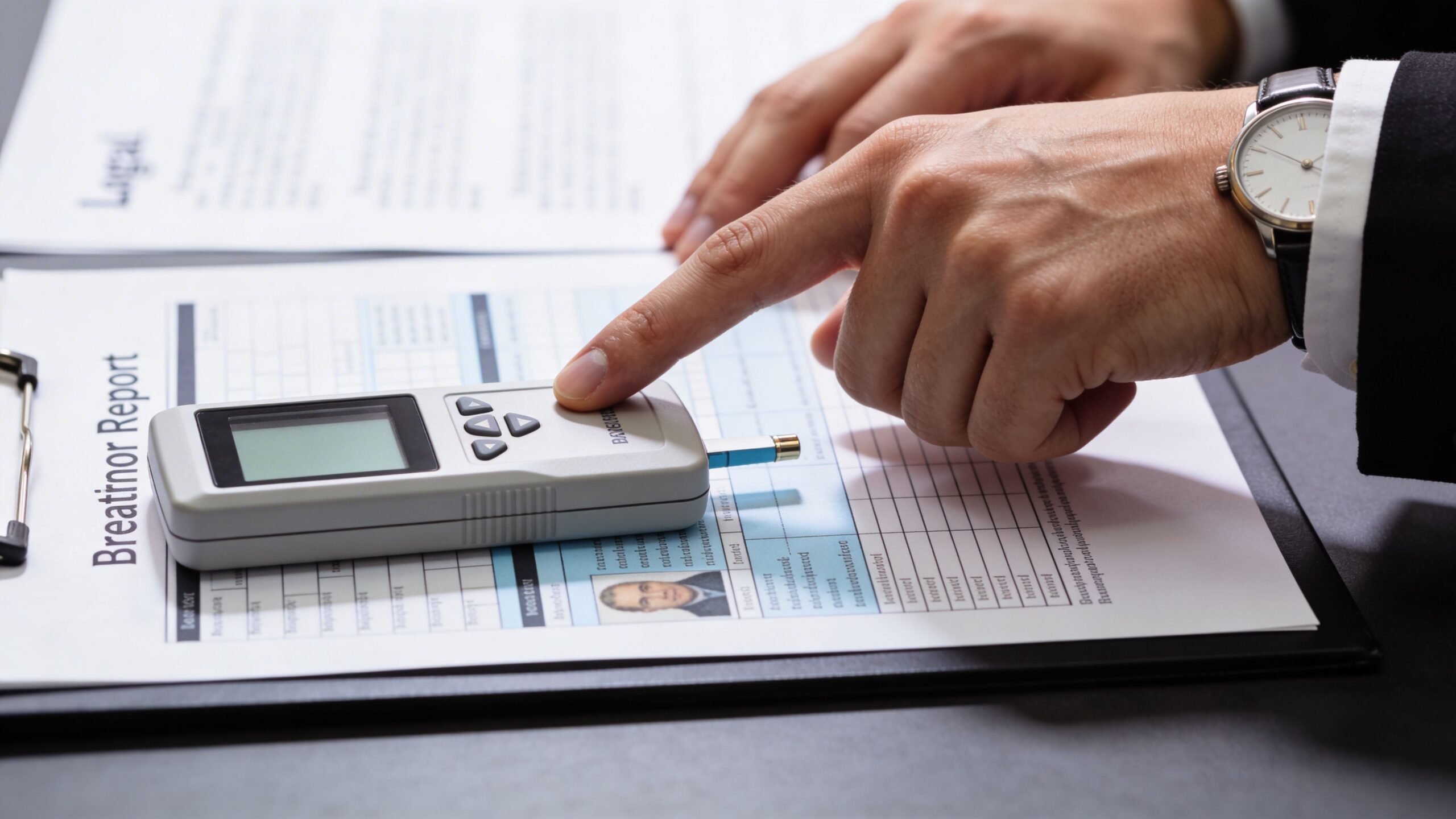
I start with the paper trail and the timeline.
That means the offense report, body cam, station video, breath test slips, maintenance and reference records, operator certification, and every timestamp tied to the stop, arrest, and testing process. Prosecutors want the jury focused on one number. I want the full story around that number, because that is where bad assumptions and bad procedures show up.
We turn technical flaws into legal defenses
Every accuracy problem has a courtroom use.
If the machine had maintenance gaps, I challenge reliability and admissibility. If the operator was careless or poorly trained, I attack the state’s foundation. If the observation period was sloppy, I raise mouth alcohol contamination and move to undermine the result. If your medical condition, recent burping, dental work, or mouthwash use could have affected the sample, I tie that fact directly to cross-examination, expert review, and reasonable doubt.
That is how these cases are won. Not by complaining about the machine in general, but by connecting a specific flaw to a specific defense.
If you want a plain-English example, read about how a false positive breathalyzer test can happen and why that matters in a DWI case.
We pressure the state where its proof is weakest
A breath test case usually turns on a few practical questions.
- Was the machine working properly on your test date? If not, the result loses weight fast.
- Did the officer follow the required procedure? Shortcuts give us something real to attack.
- Was the sample affected by mouth alcohol or a health issue? That can explain an inflated reading.
- Does the timeline fit the state’s theory? Delays between driving and testing can matter.
- Is the result close enough to the limit that uncertainty matters? If so, the state has a proof problem, not you.
In Texas, those points are useful in both the criminal case and the ALR hearing. A weak foundation can support a suppression argument, improve negotiations, and give your lawyer strong cross-examination material early in the case.
Here is a short explanation of why these cases require that level of scrutiny:
The defense plan depends on the flaw
Some cases call for a motion to suppress. Some call for a technical challenge through records and cross-examination. Some need an expert who can explain why the machine reading does not equal your true blood alcohol level at the time of driving.
A strong defense often includes:
- Getting records fast. I want the underlying logs and reports, not the prosecutor’s summary.
- Pinning the officer down under oath. Vague testimony helps the defense.
- Testing the foundation for admissibility. If the state cannot prove the machine and procedure were reliable, that matters.
- Using an expert when the science needs translating. Juries do not fill in technical gaps for the state.
- Using those weaknesses to negotiate from strength. Better outcomes usually follow weaker proof.
One option Texans use for this kind of defense is the Law Office of Bryan Fagan, PLLC, which handles ALR hearings, breath test challenges, and DWI defense in Texas courts.
What a strong breath test challenge can accomplish
You do not need a fairy tale. What you need is an advantage.
A good attack on the breath result can lead to:
- Suppression of the breath test
- Reduced charges
- Stronger plea options
- Better positioning in the ALR case
- A trial defense the jury can understand
Do not assume the printout decides your future. In a Houston DWI case, breath test errors become defense tools when your lawyer knows how to use them.
Your Next Steps After a Texas DWI Arrest
What you do in the first days after arrest matters. A lot.
If you want to protect your license and build a real defense, move quickly and do it in order.
Step one is the deadline that can hurt you fastest
You generally have 15 days from the date of arrest to request an ALR hearing in Texas. If you miss that, your DWI license suspension issue can move forward without you getting that early chance to challenge the stop and arrest.
Do not sit on that deadline.
Write down what happened while it’s still fresh
Memory fades quickly, especially after a stressful arrest.
Make a private timeline for your lawyer. Include:
- Where you were before the stop
- What you ate and drank
- When you last drank
- What the officer said
- Whether you burped, coughed, or used mouthwash
- Any medical issues like reflux, diabetes, or breathing problems
- How long you were watched before the breath test
Small details become useful later.
Write it down today, not next week. Facts you think you’ll remember often disappear by the time court starts moving.
Save every document and do not explain the case online
Keep the citation, bond paperwork, temporary license, towing documents, and any testing paperwork.
Also, stop talking about the case on social media. Don’t post jokes, explanations, apologies, or “what really happened.” Those posts rarely help and often hurt.
Learn the basic process so you’re not blindsided
A Texas DWI case usually moves through these stages:
| Stage | What happens |
|---|---|
| Arrest and release | You’re booked, then released on bond or other conditions |
| ALR hearing request | You act quickly to challenge the threatened license suspension |
| Arraignment or first court setting | The court addresses the charge and schedules the case |
| Discovery and investigation | Your lawyer reviews videos, records, and breath evidence |
| Motions and negotiation | Legal challenges may narrow the state’s case |
| Trial or resolution | The case ends through dismissal, plea, or trial verdict |
If this is a first DWI in Texas, don’t assume the standard outcome is automatic. There may be room to challenge the evidence, seek a reduction, or protect your record later through remedies like nondisclosure or, in the right case, expunctions.
Hire counsel early, not after the damage is done
Early representation changes cases.
A lawyer can request the ALR hearing, preserve evidence, examine the breath records, and start testing the state’s proof before deadlines and memories slip away. That’s how you fight DWI Texas charges with a plan instead of panic.
Protect Your Future and Challenge the Evidence
If a breath test result is hanging over your head, don’t treat it like the final word.
Breath machines estimate. Officers make mistakes. Procedures get skipped. Records go missing. Health conditions interfere. Those problems don’t automatically win your case, but they give a skilled Houston DWI lawyer real ground to work with.
That matters whether you’re trying to save your license, protect a professional career, avoid damage from a first DWI in Texas, or keep one bad arrest from becoming a permanent label.
A strategic defense starts with the right questions:
- Was the stop legal?
- Was the arrest justified?
- Was implied consent handled correctly?
- Was the machine reliable?
- Was the operator careful?
- Can the state prove the breath result should be believed?
If the answer to any of those questions is weak, your case may be stronger than you think.
You do not need to sort this out alone. A careful Texas DUI attorney can break down the science, challenge the paperwork, fight the ALR case, and push back against weak prosecution evidence in court.
If you were arrested for DWI and a breath test is part of the case, request a free consultation with Law Office of Bryan Fagan, PLLC. We can review the stop, the breath evidence, your ALR deadline, and the best path to protect your license, record, and future.

