 Skip to content
A DWI arrest can be overwhelming, but you don't have to face it alone. If you hold a security clearance in Texas, your first thought is probably not the courthouse, it's your career, your badge, and whether one bad night just put everything at risk. The short answer is that a DWI does not automatically end your clearance, but the way you handle the next few days can decide whether this becomes a manageable problem or a career-threatening one.
If you're a federal contractor, engineer, service member, or government employee, understand this right now. Clearance adjudicators care about truthfulness, judgment, alcohol use, and pattern behavior, not just the arrest itself. A Texas DWI defense lawyer can protect the criminal case, but you also need to protect your clearance file, because those are two separate fights.
A DWI Arrest Does Not Automatically End Your Clearance
A Texas project manager gets stopped on the way home, sits through the field sobriety tests, and leaves the station thinking the worst part is over. Then the next morning, he remembers the company email that says he has a clearance and must report arrests. That's the moment panic usually sets in.
The law does not treat one DWI as an automatic career death sentence. A DWI in Texas does not automatically cancel a security clearance, but it can trigger a review under the federal whole person approach used for classified access decisions. That review looks at the full person, not one isolated mistake. Adjudicators weigh whether the conduct reflects reliability, judgment, and alcohol misuse risk, and they look at seriousness, frequency, timing, and the likelihood of recurrence, which is why a first-offense misdemeanor DUI with a “reasonable” BAC is often less damaging than a second offense, a very high BAC, or repeated alcohol-related incidents security-clearance guidance on DWI review.
What the government is really asking
The question is not only, “Did you get arrested?” It is also, “Does this show a pattern that makes you unreliable?” That's why an isolated arrest and a repeated record are treated very differently.
For Texas workers, the practical issue is pattern recognition. If the record looks like a one-time mistake, you have room to defend it. If it looks like the start of a habit, the government can treat it as a trustworthiness problem. That distinction matters more than raw fear, because it tells you where to focus your response.
Practical rule: Your clearance risk rises when the DWI starts looking like a broader judgment problem, not when it stands alone.
The right move is to act quickly, disclose correctly, and start building mitigation. Waiting and hoping the charge disappears usually makes the clearance review harder, not easier. In a case like this, silence is rarely protection.
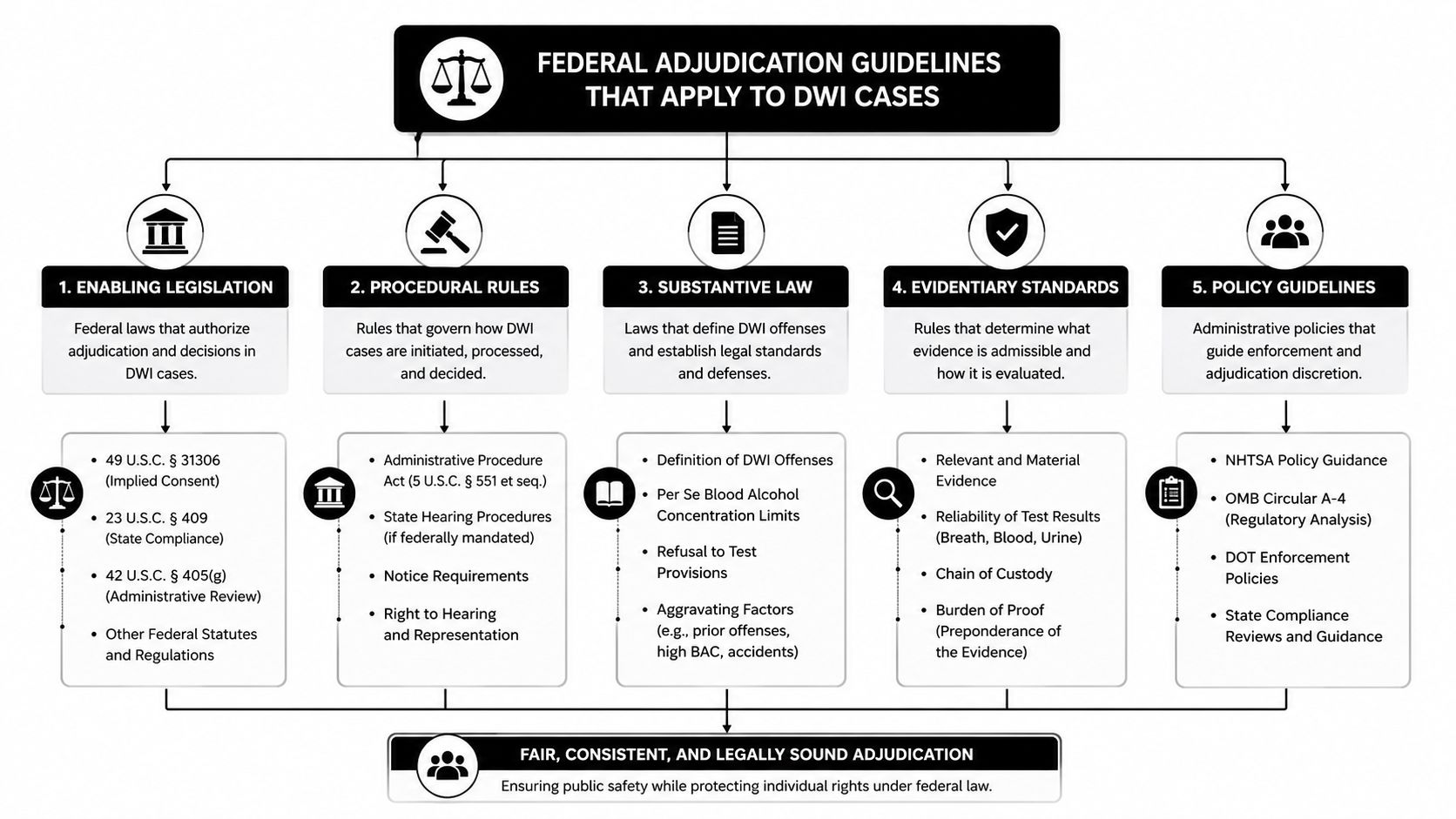
Federal Adjudication Guidelines That Apply to DWI Cases
A clearance review is not a casual background check. Adjudicators are trained to look at the DWI through specific federal lenses, and the same arrest can hit you under more than one guideline at the same time.
The most common one is Guideline G, which deals with alcohol consumption. If the arrest suggests risky drinking, poor control, or repeat alcohol-related conduct, that guideline becomes a problem. A DWI can also trigger Guideline E for personal conduct if there were false statements, omissions, or misleading answers during the process. Guideline J can come into play because the government also evaluates criminal conduct, not just drinking behavior federal guidelines for DUIs and security clearances.
How adjudicators read the file
They are not reading the arrest report like a prosecutor. They are asking whether the facts show a stable, dependable person or a person who makes risky choices and then hides them. That is why candor matters so much.
A DWI can be viewed very differently depending on the surrounding facts. If you fully disclose it, finish court requirements, and show no later misconduct, the incident can remain a contained event. If you deny it, minimize it, or stack it on top of prior incidents, the file starts to look like a reliability problem. That is the primary danger.
The three guideline buckets that matter most
Guideline G is about alcohol use and whether there's evidence of misuse.
Guideline E is about honesty, completeness, and personal conduct.
Guideline J covers the criminal side and whether the conduct itself raises security concerns.
You don't need to master the federal manual to protect yourself. You do need to understand that your DWI is being read from several angles at once. If one of those angles shows dishonesty, the clearance case gets much harder.
Your Self-Reporting Obligation and the Critical First 72 Hours
The first mistake many clearance holders make is waiting. They assume they can watch the criminal case develop, then report only if it turns into a conviction. That approach puts the clearance at risk from the start.
A DWI arrest can trigger review even without a conviction, and many clearance holders must self-report quickly under agency rules clearance timing guidance on post-DUI reporting. The clearance review can begin based on the arrest alone Houston security clearance DWI lawyer on arrest-triggered review. The clock starts when you are arrested, not when a court reaches the end of the case.

What to do first
- Read your reporting rule immediately. Agency policies vary, and your clearance conditions control the deadline.
- Notify the right person. In many workplaces, that means your facility security officer or designated supervisor, not your whole chain of command.
- Document the arrest facts. Write down the stop time, location, officer name, test request, bond details, and any paperwork you received.
- Do not freelance explanations. If an investigator or supervisor asks questions, answer carefully and do not guess.
- Call counsel before making written statements. Your criminal defense strategy and your reporting statement need to line up.
The first 24 hours after an arrest are where people make avoidable mistakes. Use the practical guidance in this Texas DWI first-day resource before you send anything in writing or start talking informally about what happened. A sloppy first report can create a dishonesty issue that outlasts the DWI itself.
Bottom line: Fast, accurate disclosure is usually safer than delayed disclosure. Waiting until annual review can look like concealment.
One more point matters here. If you need a reference point for criminal defense, the Texas DWI Defense Lawyer page covers defense for drivers charged under Texas Penal Code 49.04. That is the charge sitting underneath the clearance problem, and it can shape every later decision.
How Adjudicators Evaluate Isolated Incidents Versus Patterns
Clearance adjudicators care about context. One DWI can be manageable, but repeated alcohol-related incidents, a high BAC, or a recent arrest can change the whole picture. The distinction is not subtle, and you should treat it that way.
One useful benchmark is that fewer than 10% of applicants fail to obtain security clearance overall, and DUI alone is usually described as insufficient to cause denial security clearance and DWI history. That does not mean a DWI is harmless. It means the government is usually looking for something more than a single arrest before it denies access.
Side-by-side, the difference is obvious
| Case type | Clearance risk |
|---|---|
| First-offense misdemeanor DWI, disclosed, with court compliance | Often less damaging |
| Older isolated offense with full candor and completed requirements | May have limited effect |
| Recent DUI or multiple DUIs within about 10 years | Raises substantial concern |
| Pattern of alcohol-related incidents | Can point to broader trustworthiness issues |
That comparison is the core issue. An old, isolated offense may fade in importance if you disclose it fully and comply with every order. A recent or repeated pattern, especially if it includes false statements or missed requirements, creates a much harder adjudication problem.
The aggravators that change the file
A high BAC matters because it can signal more serious alcohol misuse. So does a second offense, because repetition suggests the first incident was not a wake-up call. False statements are especially dangerous because they create a separate honesty issue.
If your case includes treatment, that can help. If your case includes excuses, denial, or incomplete compliance, that usually hurts. Adjudicators want to see accountability, not performance.
Mitigation Strategies That Protect Your Clearance and Your Future
Mitigation is not about pretending the arrest never happened. It's about showing the government that the incident was contained, addressed, and is not part of a larger reliability problem. If you do that well, you improve your position in both the criminal case and the clearance review.
Start with treatment or education if alcohol is even a question in the file. You do not need to wait for a court order to show responsibility. Keep proof of attendance, proof of completion, and proof that you followed every condition the court imposed. If you miss a step, the clearance issue gets harder because noncompliance suggests you still don't take the matter seriously.
Build a record that helps you
- Document everything. Save court orders, receipts, class records, and any communication about compliance.
- Get character support. A supervisor or colleague who can speak to your reliability can help, but the reference has to be real and specific.
- Keep employer communication tight. Tell the truth, keep it brief, and don't speculate about the case.
- Show stability after the arrest. Steady work, no new incidents, and visible compliance matter more than speeches.
- Push the criminal case hard. A dismissal, reduction, or deferred adjudication can materially improve the clearance analysis.
Clear advice: The clearance file improves when your conduct after the arrest looks disciplined, not desperate.
If you need a legal team that understands the criminal and professional sides of the problem, the Law Office of Bryan Fagan, PLLC handles DWI defense with clearance consequences in mind. That's the kind of representation that matters when the arrest affects more than your driving record.
Cascading Consequences Beyond Security Clearance
The clearance issue is only one layer. A DWI can ripple into licensing, employment, and transportation problems that create pressure from several directions at once. You need to see the whole field, not just the criminal court date.
CDL holders face a sharper edge because a DWI can threaten the job itself, not just background screening. State professional licenses can also trigger separate reviews with different timelines and standards. If you work in a regulated field, your employer may care about the clearance issue while your licensing board cares about the underlying conduct. Those are not the same process.
A federal or government-related job can also magnify the impact of a DWI because future screening may surface the record again and again. For some non-citizens, immigration questions can come into play too. If you want a broader view of how public-sector employment gets affected, review this Texas government employment impact guide.
Why the criminal case still drives everything
A weak criminal defense can spill into every other consequence. If the stop was illegal, the tests were unreliable, or the evidence is weak, you may be able to reduce or dismiss the charge. That helps the clearance file because there is less bad conduct left standing.
The reverse is also true. If the criminal case ends with a clean conviction and a messy record of noncompliance, the other agencies see that file too. You can't separate those outcomes neatly. That is why one coordinated defense matters.
Why Early Legal Intervention Changes Everything
The first 72 hours after a DWI arrest often decide how much damage you can control. The calls you make, the answers you give, the test you submit to, and whether you request an ALR hearing all affect the clearance file as much as the criminal case. Wait too long, and you give the government more room to define the story for you.
A strong Houston DWI lawyer can attack the stop, the field sobriety tests, and the chemical testing process. That is not just about beating the charge in court. It also limits the conduct and evidence an adjudicator may later review when your clearance is under scrutiny. If the stop was unlawful, the testing was unreliable, or the officer's report does not hold up, you reduce the damage on both fronts.
You also need to protect your license right away. The Administrative License Revocation, or ALR, process is separate from the criminal court case, and you generally have 15 days from arrest to request the hearing before a DWI license suspension takes effect Texas DWI record and ALR timing overview. Miss that deadline, and you lose a real chance to challenge the suspension and create early pressure on the state's case.
A delayed response also creates self-reporting problems. Clearance holders often have to report the arrest before the criminal case is finished, and that filing needs to be careful, factual, and consistent with the defense strategy. If you rush a statement without legal review, you can hand the agency material that is harder to walk back later. That is why a prompt Texas DWI attorney consultation should happen immediately after the arrest, before you say more than you have to.
What strategic help should do for you
- Challenge the stop and detention. If the officer lacked a valid reason, the case may weaken fast.
- Review field sobriety tests carefully. Balance issues, medical conditions, and poor administration all matter.
- Inspect breath or blood evidence. Chemical testing errors can change the outcome.
- Align criminal and reporting strategy. Your clearance statement should not create a new problem.
- Move before deadlines expire. Early action preserves options that disappear later.
A Texas DUI attorney who understands clearance risks can help you protect both your freedom and your career. If you are facing a first DWI in Texas, or you need help deciding how to fight DWI Texas charges while protecting a clearance, act now. Do not wait for the agency to frame your story for you.
If you have been arrested and your clearance is on the line, get help now. The Law Office of Bryan Fagan, PLLC works on DWI defense, ALR hearings, and the professional fallout that can threaten your job, and we can help you build a plan that fits your case. Visit Law Office of Bryan Fagan, PLLC to request a free consultation and get a direct strategy for your next step.

