
A DWI arrest can be overwhelming—but you don’t have to face it alone. When a breathalyzer shows a result at or above the legal limit, but your actual blood alcohol level is much lower, that’s what we call a false positive breathalyzer test. It’s not just a technical glitch; it's a very real problem that can turn your life upside down.
These inaccurate readings can happen for many reasons—from medical conditions and diet choices to simple police error or a faulty machine. In Texas, understanding this is the first step toward building a solid defense and protecting your future.
A Failed Breathalyzer Test Is Not a Conviction
Let’s get one thing straight right away. If you were pulled over, took a breath test, and the machine showed a result over the 0.08% Blood Alcohol Concentration (BAC) legal limit, it’s easy to feel like the fight is already lost. That feeling of hopelessness is exactly what the prosecution counts on.
But you need to understand this critical fact: the machine’s result is not the final word. A DWI arrest is not a conviction, and that number from the breathalyzer is just one piece of evidence. And like any piece of evidence, it can be questioned, challenged, and proven wrong. An experienced Houston DWI lawyer knows exactly how to do this.
You Have the Right to Challenge the Evidence
In a Texas courtroom, a breath test result is evidence that must be proven reliable. An experienced DWI lawyer knows these devices aren't foolproof; they are sensitive instruments that are notorious for making mistakes.
A powerful defense often starts by putting the state's evidence under a microscope, and a breathalyzer result is frequently the weakest link. Many different factors can trick a breathalyzer into producing a false positive, including:
- Medical Conditions: Health issues like acid reflux (GERD) or diabetes can produce chemical compounds in your breath that the machine confuses with ethyl alcohol.
- Dietary Choices: Low-carb, high-protein diets like the Keto diet can put your body into a state of ketosis, producing substances called ketones that can easily trigger a false positive.
- Improper Police Procedure: Texas law is very clear on how these tests must be administered. Officers are required to follow strict protocols, including a mandatory 15-minute observation period before the test. If they skip or shorten this step, the results can be challenged.
- Machine Errors: Breathalyzers need constant, careful maintenance and calibration to work correctly. If the machine used in your case was not properly maintained, its readings are completely unreliable.
A huge concern with breath tests is the risk of false positives from both human and machine-related factors. Research has shown that a surprising percentage of people tested may get a BAC reading that’s significantly higher than their actual level. For example, conditions like GERD can cause stomach alcohol to travel up into the mouth, contaminating the breath sample and leading to a falsely high BAC. You can find out more about the causes of false breathalyzer readings and the impact they can have on a case.
Instead of feeling defeated by a number on a machine, it’s time to feel empowered. You have legal rights and strategic defenses available to you. By questioning the validity of that breath test, you start taking back control and building a strong defense to fight DWI Texas charges.
How Breathalyzers Can Get It Wrong
To fight a DWI charge, you first have to understand where the prosecution’s evidence comes from—and more importantly, where its weaknesses are. A breathalyzer result can feel like a slam dunk for the state, but these machines are far from perfect.
Knowing how they work is the first step to showing how they fail.
A breathalyzer doesn't actually measure the alcohol in your blood. It measures the alcohol vapor in the air from deep in your lungs, then uses a mathematical formula—a "partition ratio"—to estimate your Blood Alcohol Concentration (BAC). It's an indirect measurement, an educated guess at best.
Think of it like a cashier trying to figure out how much money you have just by weighing your wallet. A heavy wallet might mean lots of cash, or it could just be full of heavy coins and useless receipts. A breathalyzer can be fooled in the same way by things in your breath that aren't beverage alcohol, leading to a false positive breathalyzer test.
The Science Behind the Error
At its core, a breathalyzer is a chemical sensor. The models used by Texas law enforcement have a chemical compound inside that reacts with ethyl alcohol—the kind in alcoholic drinks. This reaction creates a tiny electrical current, and the machine measures that current to spit out a BAC number.
Here’s the problem: other chemical compounds can trigger the exact same reaction. Your own body can produce substances with a molecular structure similar to ethyl alcohol, especially under certain medical or dietary conditions.
When these "interferents" are in your breath, the machine can't tell the difference. It just counts them as alcohol, jacking up your BAC reading. This is a fundamental flaw when you dig into the overall accuracy and reliability in the science of DWI testing.
This diagram breaks down the three main ways a breath test can go wrong.
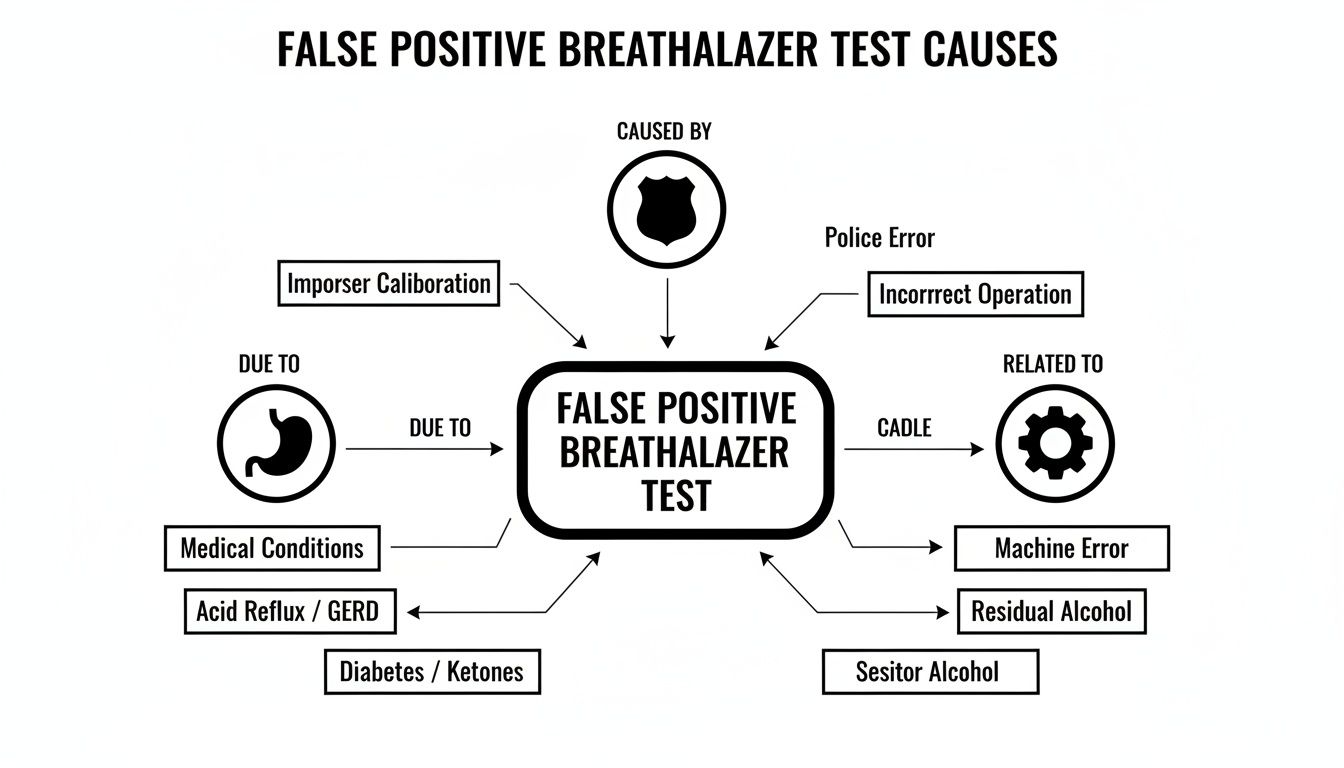
As you can see, the potential for a bad reading isn't just one thing. It can come from your own body, the officer's actions, or the machine itself.
Common Causes of Inaccurate Readings
The vulnerabilities of breathalyzers create multiple avenues for a skilled DWI lawyer to challenge the state's evidence. The table below breaks down the most common factors that can wreck a breath test's credibility.
Common Causes of Inaccurate Breathalyzer Readings
| Factor Category | Specific Cause | How It Creates a False Positive |
|---|---|---|
| Physiological Factors | Medical Conditions (e.g., GERD, Diabetes) | Acid reflux can push stomach alcohol into your mouth, while conditions like ketoacidosis produce chemicals (ketones) that mimic ethyl alcohol. |
| Physiological Factors | Diet (e.g., Keto, Low-Carb) | High-protein, low-carb diets cause the body to burn fat for fuel, producing ketones that can be falsely detected as alcohol by the breathalyzer. |
| Environmental Contaminants | Mouth Alcohol | Recent use of alcohol-based mouthwash, cough syrup, or even breath spray can leave alcohol residue in the mouth, leading to an artificially high reading. |
| Environmental Contaminants | Airborne Fumes | Fumes from paint, gasoline, cleaning solvents, or adhesives can be inhaled and then exhaled into the device, triggering a false positive. |
| Machine & Operator Error | Improper Calibration | Breathalyzers must be regularly calibrated and maintained. A poorly maintained device will not provide accurate or reliable measurements. |
| Machine & Operator Error | Radio Frequency Interference (RFI) | Strong signals from police radios or cell phones can interfere with the sensitive electronic components of the breathalyzer, corrupting the test results. |
| Machine & Operator Error | Procedural Mistakes | The officer failing to conduct the mandatory 15-minute observation period or providing improper instructions can lead to a contaminated sample. |
Understanding these potential errors is the first step in building a strong defense. That number on the machine's screen doesn't automatically mean you were intoxicated. It means there's a piece of evidence that needs to be scrutinized, questioned, and challenged. Knowing where to look for mistakes is how a Texas DUI attorney fights a DWI charge.
Medical Conditions and Diets That Trick the Test
It’s a common—and dangerous—misconception that a breathalyzer is a perfect, infallible judge of sobriety. The reality is that your personal health, what you eat, and even the medications you take can all interfere with the test, creating a false positive even if you haven’t had a single drop of alcohol.
Your own body can produce chemical compounds that look identical to ethyl alcohol to these sensitive, but often simplistic, machines.
Understanding how your unique physiology can fool a breathalyzer is a critical part of building a defense. This isn't about making excuses; it's about using scientific facts to create reasonable doubt in the state's evidence. A skilled Houston DWI lawyer knows how to use this information to protect your rights.
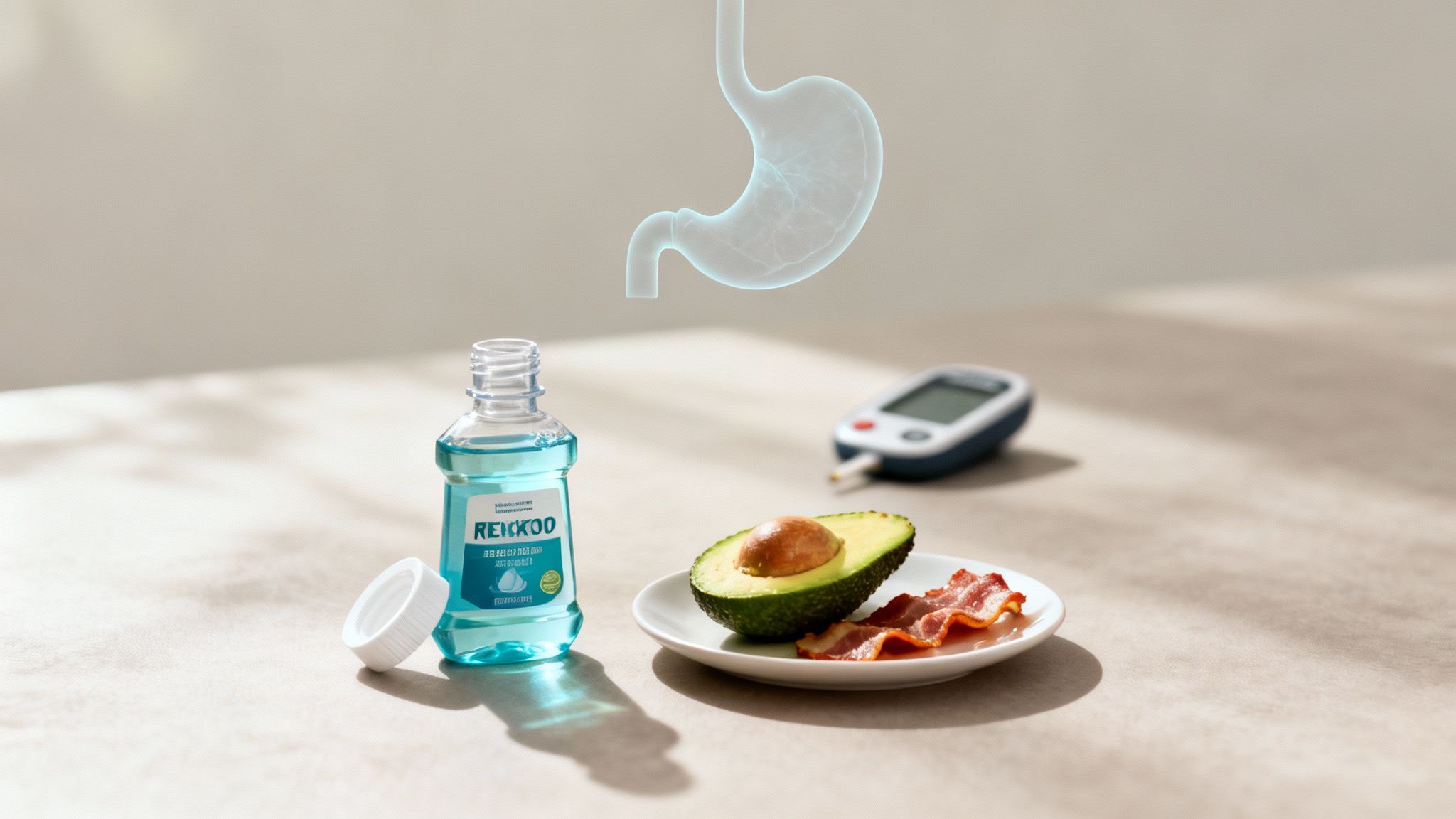
How Your Diet Can Create False Alcohol Readings
Thousands of Texans follow low-carb, high-protein diets like Keto or Atkins for their health. While great for weight management, these diets can have disastrous and unintended consequences during a traffic stop. When your body is deprived of carbohydrates, it starts burning fat for energy in a process called ketosis.
This metabolic state produces natural chemicals called ketones. One of these ketones, acetone, has a molecular structure strikingly similar to the ethyl alcohol found in beer, wine, and liquor. When you exhale, your breath is full of these ketones, which a breathalyzer often can't tell apart from actual alcohol.
It's a fundamental flaw in the technology. The machine is calibrated to detect a specific chemical shape, but it's easily fooled by other substances your body creates naturally. This means your healthy lifestyle choice could inadvertently lead to an inaccurate and life-altering DWI charge.
You could be completely sober, but if your body is in ketosis, the breathalyzer might show a BAC reading well over the legal limit. This is a potent defense because it offers a reasonable, scientific explanation for the machine's result that has nothing to do with impairment.
Medical Conditions That Interfere with Breath Tests
Beyond what you eat, several common medical conditions can produce a false positive. We're not talking about rare diseases; these are conditions affecting millions of people who may have no idea they're at risk during a DWI stop.
Some of the most common medical culprits include:
- Gastroesophageal Reflux Disease (GERD): Most people know this as acid reflux. GERD causes stomach acid and undigested contents to flow back into the esophagus. If you had an alcoholic drink hours ago, that undigested alcohol can get pushed up into your mouth, creating "mouth alcohol." This gives the breathalyzer a highly concentrated—and artificially high—sample to read.
- Diabetes: Individuals with diabetes, especially Type 1, can experience a condition called ketoacidosis. It's similar to dietary ketosis but is a serious medical state where the body produces an extremely high level of ketones. A person in this state can have breath that smells fruity or like acetone, which will almost certainly trigger a false positive. Worse, the symptoms of ketoacidosis—like confusion and disorientation—can be easily mistaken for intoxication by a police officer.
- Hypoglycemia: Low blood sugar can also cause the body to produce ketones. Just like with ketoacidosis, this can result in a breath sample contaminated with substances that mimic alcohol and trick the machine.
Residual Mouth Alcohol
A final, and crucial, factor is residual mouth alcohol. This is any alcohol that’s lingering in your mouth from a source other than what's in your bloodstream. It completely skews the test because a breathalyzer is supposed to measure deep lung air, not the contents of your mouth.
Common sources of mouth alcohol that can lead to a false positive include:
- Mouthwash: Many popular mouthwash brands contain a high percentage of alcohol. Rinsing just before you drive can leave enough residue to fail a test.
- Breath Sprays: Just like mouthwash, these sprays often contain alcohol that can linger and contaminate a sample.
- Cough Syrups and Medications: Certain over-the-counter medicines and prescriptions contain alcohol.
Police officers in Texas are required by law to observe you for 15 minutes before administering a breath test. This observation period exists for one specific reason: to ensure you don’t burp, vomit, or put anything in your mouth that could cause mouth alcohol contamination.
If the officer failed to follow this procedure to the letter, any resulting breath test is unreliable and can be challenged in court. Your health and the officer's procedure are key parts of your story, and they just might hold the key to protecting your freedom.
How to Challenge Breathalyzer Results: Police & Machine Errors
Even with a perfectly healthy and sober driver, a breathalyzer test is only as trustworthy as the machine itself and the officer who operates it. A failed test can feel like definitive proof of guilt, but it often reveals more about procedural mistakes and technical glitches than it does about your sobriety.
The entire process is built on a foundation of strict rules. When law enforcement fails to follow them, the evidence against you can be completely invalidated. In Texas, the Breath Alcohol Testing Program lays out a precise, non-negotiable set of regulations for administering these tests. If an officer deviates from these protocols—even slightly—it can be grounds to have the results suppressed.
Your defense isn't just about what you did; it's also about proving law enforcement failed to do their job correctly.
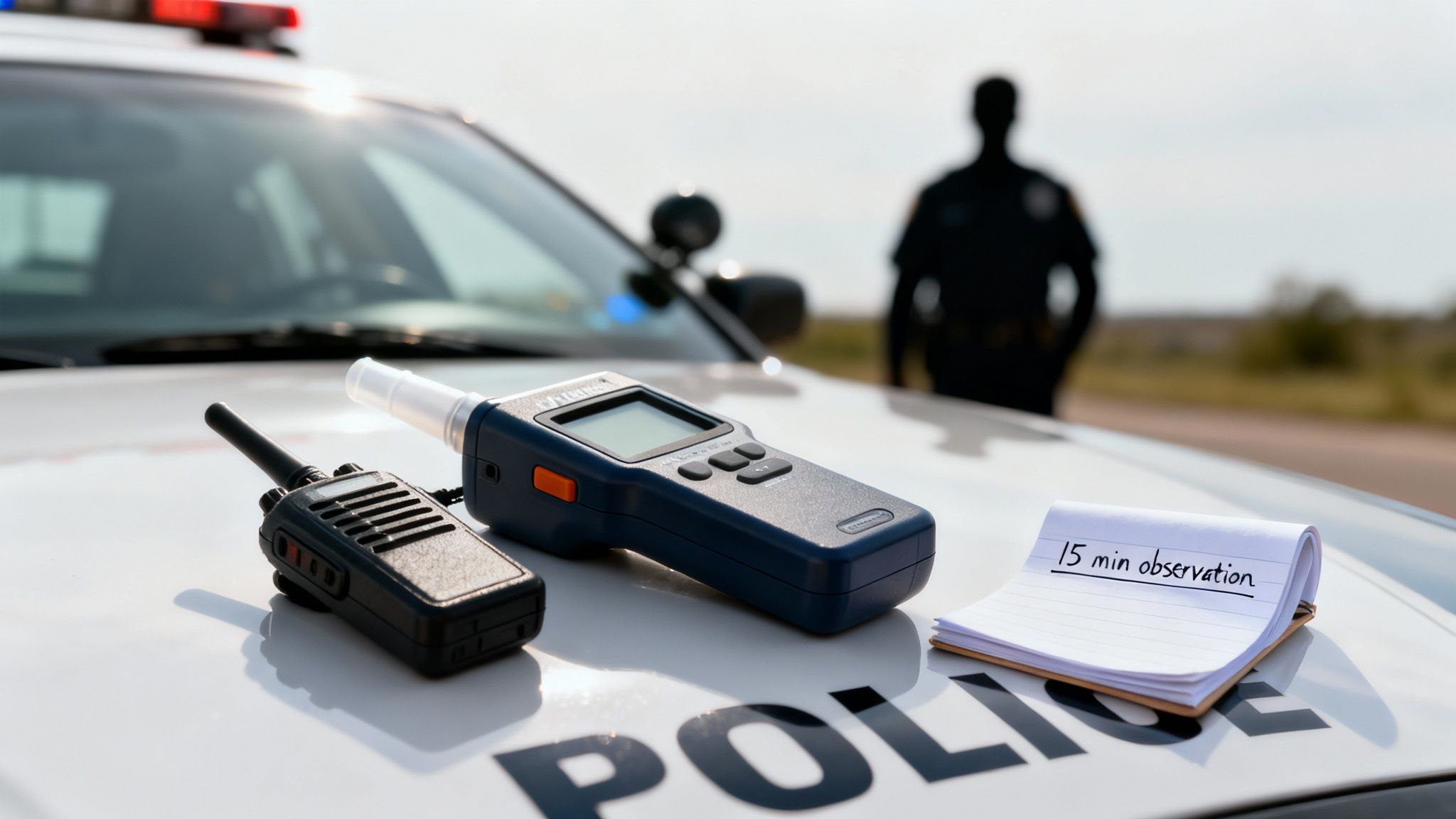
The Critical 15-Minute Observation Period
One of the most important rules—and one of the most frequently violated—is the mandatory 15-minute observation period. Before you ever blow into the device, the officer must continuously watch you for at least 15 minutes.
The purpose is to ensure you don’t do anything that could contaminate the breath sample, like burping, hiccuping, vomiting, or putting anything in your mouth. Each of these actions can introduce "mouth alcohol," which is just alcohol residue from your stomach or mouth that hasn't actually been absorbed into your bloodstream.
A breathalyzer is supposed to measure deep lung air, so a sample contaminated with mouth alcohol will produce an artificially high and completely inaccurate reading. If the officer was distracted by their radio, busy filling out paperwork, or simply didn’t wait the full 15 minutes, your attorney can argue that the test is unreliable and should be thrown out.
When the Machine Itself Is the Problem
Beyond human error, the breathalyzer devices themselves are prone to a wide range of malfunctions that can produce a false positive. These machines are not infallible. They are complex electronic instruments that require precise care and a controlled environment to work right.
Several key technical issues can sink a breath test result:
- Improper Calibration: To stay accurate, breathalyzers must be regularly calibrated by a certified technical supervisor. Your attorney can request the machine's maintenance and calibration logs. If we find that the device used in your case missed its scheduled service or failed a calibration test, we can argue its results are inadmissible.
- Software Bugs: Like any computer, a breathalyzer runs on software that can have bugs or glitches. These errors can cause the machine to misinterpret data and spit out an incorrect BAC reading.
- Radio Frequency Interference (RFI): Breathalyzers are sensitive to electromagnetic interference. Strong signals from a police officer's handheld radio, the squad car's radio, or even a nearby cell phone can disrupt the machine's internal electronics and corrupt the test result.
Human error and systemic failures are not just theoretical possibilities; they are documented problems. For example, a major investigation in New Zealand uncovered that police officers had falsified or incorrectly recorded approximately 30,000 alcohol breath tests due to procedural failures and misconduct. You can read more about these systemic breathalyzer issues and see how official errors can impact thousands of cases.
Uncovering the Truth in Your DWI Case
When you hire a Houston DWI lawyer, we don't just take the breathalyzer result at face value. We immediately begin an exhaustive investigation into every aspect of the test administration and the machine's history. We will request and scrutinize all relevant records, looking for any deviation from protocol or sign of malfunction.
Our goal is to uncover the facts that the prosecution may have missed or ignored. Was the officer properly trained and certified to operate the device? Did they follow every single step required by Texas law? Was the machine in perfect working order? The answer to these questions can be the difference between a conviction and a dismissal. You have the right to challenge every piece of evidence, and that process starts by questioning the machine and the person who used it.
How a DWI Lawyer Builds Your Defense
Knowing a breathalyzer can get it wrong is one thing. Proving it in a Texas courtroom is another. This is exactly where an experienced Houston DWI lawyer becomes your most critical asset. An effective defense against a **false positive breathalyzer test** isn’t just about making arguments—it’s about systematically dismantling the state’s evidence, piece by piece.
Your defense doesn’t start on the day of your trial; it begins the second you’re arrested. We take immediate action to protect your rights, starting with the administrative side of your case while simultaneously building a powerful defense against the criminal charges. This proactive approach is essential to fighting a DWI in Texas.
The First Battle: Protecting Your License
One of the first and most urgent steps is the Administrative License Revocation (ALR) hearing. After a DWI arrest, you have only 15 days to request this hearing to challenge the automatic suspension of your driver’s license. If you miss this deadline, you forfeit your right to fight the DWI license suspension.
But the ALR hearing is more than just a bureaucratic hurdle; it's a strategic opportunity. It’s often our first chance to question the arresting officer under oath. We can challenge the legality of the traffic stop, the way the officer administered the field sobriety tests, and the exact procedures they followed for the breath test. The evidence we gather here can be invaluable for building your criminal defense later.
Digging Deep Into the Evidence
A breath test result is only as strong as the evidence supporting it. A skilled DWI defense attorney never just accepts the number the machine spits out. We launch a full-scale investigation by filing legal motions to obtain and meticulously analyze all the records connected to your test.
This process involves scrutinizing several key areas:
- Breathalyzer Maintenance Logs: Every single breathalyzer in Texas is required to undergo regular maintenance and calibration to ensure it’s working correctly. We comb through these logs, looking for any missed service dates, failed accuracy checks, or notes about malfunctions that could make the results completely unreliable.
- Officer Training and Certification: The officer who gave you the test must be properly trained and certified to operate that specific breathalyzer model. If their certification has lapsed or their training records are incomplete, we can argue they weren't qualified to perform the test in the first place.
- Dashcam and Bodycam Footage: Video evidence is often a crucial piece of the puzzle. We review every second of available footage to see if the officer followed the mandatory 15-minute observation period without interruption and to spot any other procedural mistakes that could invalidate the test.
These documents often hold the key to proving that a machine or human error occurred.
The prosecution's case often hinges on the assumption that the breathalyzer test was administered perfectly by a flawless machine. Our job is to expose the reality that these tests are subject to numerous errors, any of which can create reasonable doubt.
Using Expert Witnesses to Clarify the Science
Sometimes, the most powerful tool in a DWI defense is an expert witness. A toxicologist or a former police officer trained in breath alcohol testing can break down complex scientific concepts for a judge or jury in simple, understandable terms.
For example, if you have a medical condition like GERD or follow a ketogenic diet, an expert can testify how your own body could have naturally produced substances that fooled the breathalyzer. They can explain the science behind mouth alcohol contamination or show how radio frequency interference from the officer's own equipment could have corrupted the reading.
This expert testimony provides a credible, scientific alternative to the prosecution's narrative. It transforms your defense from a simple claim into a fact-based argument that jurors can understand and believe. By methodically questioning the evidence, challenging procedures, and presenting expert analysis, we can turn a seemingly open-and-shut case into a fight you can win.
Take Control After a Texas DWI Arrest
The moments after a DWI arrest are a blur of confusion and stress. It’s easy to feel overwhelmed, but what you do next can change the outcome of your case. Let’s get one thing straight: breathalyzer results are not perfect. A number on a machine is not the final word, and building a powerful legal defense is absolutely possible.
Your most immediate concern is the 15-day deadline to request your Administrative License Revocation (ALR) hearing. If you miss this window, your driver's license will be suspended automatically. This hearing is your first and often best chance to challenge the evidence and keep your driving privileges.
Your Rights and Your Next Steps
You have rights, and our job is to make sure they're protected from day one. Deciding whether to take a breathalyzer is a complicated choice with its own set of consequences. You can learn more about the pros and cons of refusing a breathalyzer in Texas and how that decision plays out in both the administrative and criminal courts.
Your future doesn't have to be defined by a single number from a flawed machine. By taking immediate and decisive action, you can challenge the evidence, protect your rights, and work toward the best possible outcome.
Don't let fear or uncertainty paralyze you. The sooner you get an experienced Houston DWI attorney in your corner, the stronger your defense will be. We can immediately file the paperwork for your ALR hearing, start digging into the details of your arrest, and begin crafting a defense strategy built for your specific situation.
We invite you to contact The Law Office of Bryan Fagan for a free, confidential consultation. Let our experienced DWI attorneys review your case, pinpoint potential defenses related to a false positive breathalyzer test, and create a plan to fight for your future.
Frequently Asked Questions About Texas Breathalyzer Tests
When you’re facing a DWI arrest, it’s normal to have a lot of questions. It’s a stressful and confusing time. Below are some clear, straightforward answers to the questions we hear most often from clients in Texas.
Can I Refuse a Breathalyzer Test in Texas?
Yes, you have the right to refuse a breathalyzer test. However, you need to understand Texas's "implied consent" law. By having a Texas driver's license, you have legally agreed to provide a breath or blood sample if lawfully arrested for DWI.
Refusing has an immediate consequence: an automatic Administrative License Suspension. For a first-time refusal, this means your license will be suspended for 180 days. This is a civil penalty, separate from the criminal DWI charge. While a license suspension is a major inconvenience, refusing the test means the prosecution won’t have your alleged BAC—often their strongest piece of evidence.
Is a Blood Test More Accurate Than a Breath Test?
Generally, yes. Blood tests are considered more reliable because they directly measure the alcohol in your bloodstream, not an estimate based on your breath.
But "more accurate" doesn't mean "perfect." Even blood tests can be flawed. A skilled Texas DUI attorney knows exactly where to look for errors, such as:
- Improper medical procedures during the blood draw.
- Contamination of the sample.
- A broken chain of custody from your arm to the lab.
If you refuse a breath test, the police can get a warrant to draw your blood. But just like a breath test, the results from that blood draw can be challenged and fought in court.
What if My BAC Was Just Barely Over the Legal Limit?
A breathalyzer result that's just a hair over the 0.08% legal limit—say, a 0.08 or 0.09—can be a strong starting point for your defense.
Every breathalyzer has an accepted margin of error. A skilled attorney can argue that this built-in margin of error, combined with other factors like a calibration issue or a medical condition, creates reasonable doubt that your true BAC was actually over the limit at the time you were driving. This is a common and effective strategy for a first DWI in Texas.
A DWI charge can feel like the world is crashing down, but you don’t have to go through it alone. At The Law Office of Bryan Fagan, PLLC, our experienced DWI attorneys are here to protect your rights and fight for the best possible outcome in your case. We understand the science behind breathalyzer tests and know how to challenge inaccurate results. Contact us today for a free, confidential case evaluation and let us start building your defense. Call us or visit https://texasduilawfirm.com.