 Skip to content
If you're facing a DWI charge in Texas, the situation is already overwhelming. When a judge orders you to wear a SCRAM bracelet, that stress can skyrocket. You’re probably asking yourself, "What does this thing actually do?" and, even more critically, "Can SCRAM bracelets detect drugs?"
A DWI arrest can be overwhelming—but you don’t have to face it alone. Let's get straight to the point: The answer is a clear and simple no. This guide will break down exactly why that is—and what it means for your case.
Your Guide To SCRAM Bracelets And DWI Charges
When a court orders a Secure Continuous Remote Alcohol Monitor—the infamous SCRAM bracelet—it’s completely natural to feel anxious and confused about what you're being monitored for. A DWI arrest can feel like your world is spinning out of control, but you don't have to navigate it by yourself.
Understanding this technology's very specific purpose is the first step toward building a strong defense with a Houston DWI lawyer and reclaiming some control over your situation.
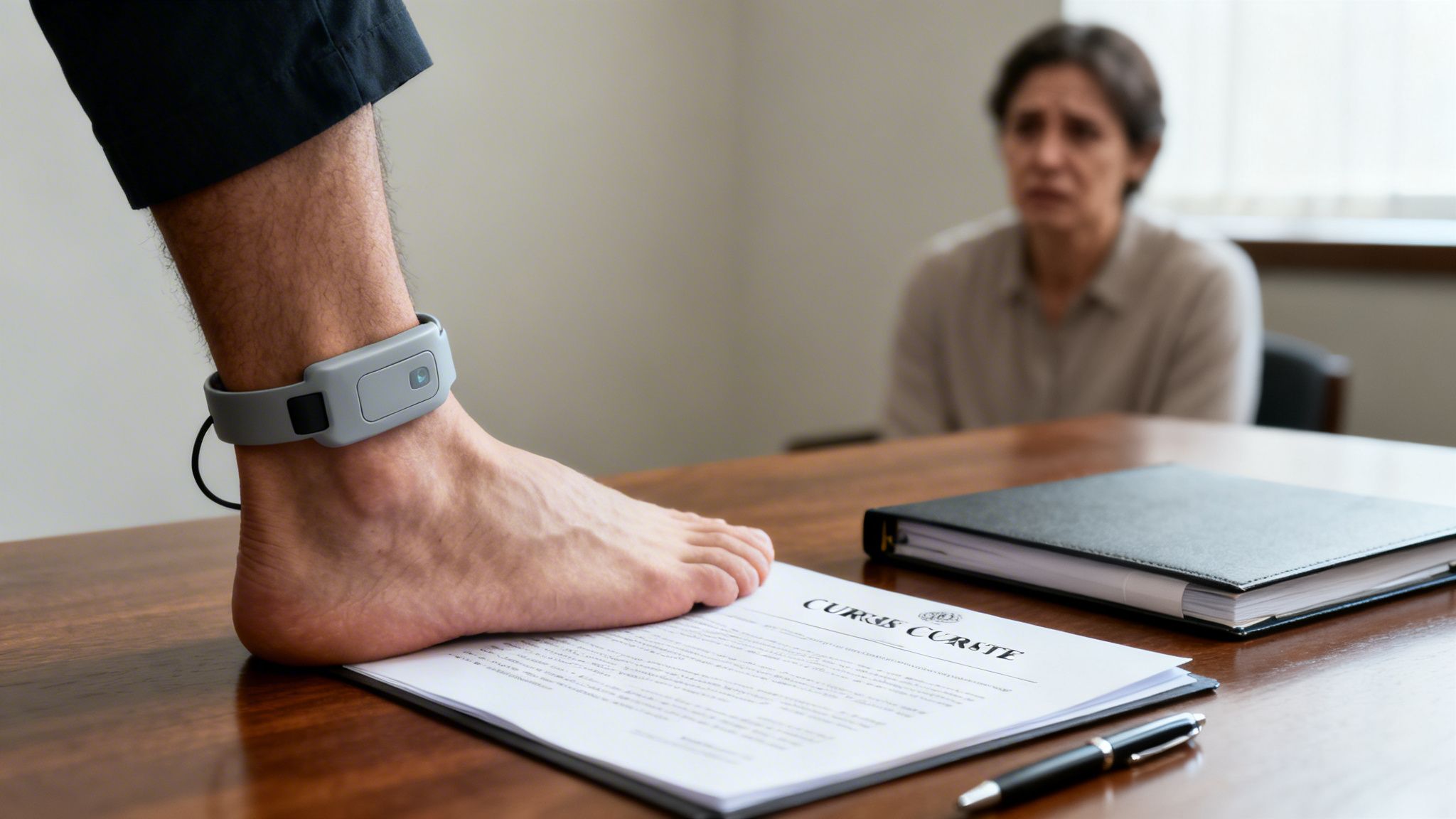
What SCRAM Bracelets Actually Monitor
Think of a SCRAM bracelet like a highly specialized tool with just one job: to detect alcohol. It is not, and was never designed to be, a drug test. This is a critical distinction for anyone facing DWI or drugged driving charges in Texas.
These ankle devices work by constantly "sniffing" the vapor from your sweat. Every 30 minutes, a sensor takes a sample to see if it contains ethanol—the type of alcohol found in drinks.
The device simply doesn't have the hardware or chemical sensors needed to pick up on other substances like marijuana, cocaine, or opioids. Its technology is built to recognize one specific compound, and one compound only. Because of this, prosecutors can't use SCRAM data to prove drug use. Period. You can discover more about these scientific findings and how they apply in legal settings.
SCRAM Bracelet Detection Capabilities At A Glance
This table provides a quick, clear summary of what SCRAM bracelets can and cannot detect, helping you understand the device's specific purpose and limitations in a Texas DWI case.
| Substance Type | Detection Capability | Reason |
|---|---|---|
| Alcohol (Ethanol) | Yes | The device is specifically engineered to detect ethanol molecules in sweat vapor. |
| Marijuana (THC) | No | It lacks the sensors to identify cannabinoids or their metabolites. |
| Cocaine | No | The technology is not designed to detect cocaine or its byproducts. |
| Opioids/Opiates | No | Heroin, fentanyl, and prescription painkillers are undetectable by SCRAM. |
| Other Illicit Drugs | No | It cannot detect methamphetamines, MDMA, or other common illicit substances. |
As you can see, the bracelet is exclusively an alcohol monitor. It offers no useful data for a case involving alleged drug use.
A common misconception is that a SCRAM bracelet is an all-purpose monitoring tool. In reality, it's a highly specialized device focused exclusively on transdermal alcohol detection, making it irrelevant for a drugged driving allegation.
This key fact is often a cornerstone of a solid defense strategy. If you are facing a charge for driving under the influence of drugs, the presence of a SCRAM bracelet provides zero evidence for the state’s case against you. A skilled Houston DWI lawyer will hammer this point home to challenge the prosecution and protect your rights. Our team at The Law Office of Bryan Fagan, PLLC, is here to help you cut through the confusion, fight back against the charges, and work toward the best possible outcome.
How Transdermal Alcohol Monitoring Actually Works
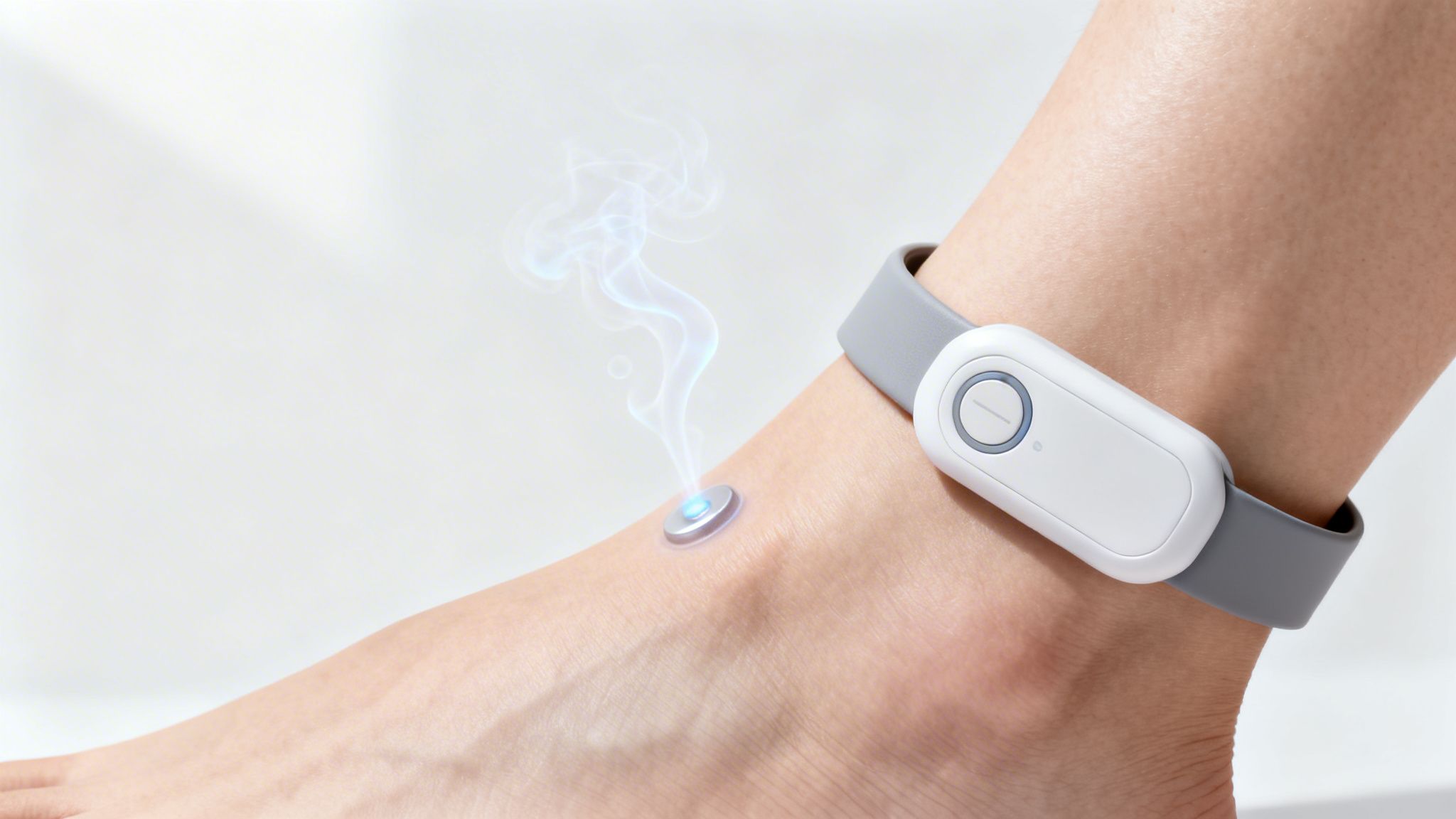
The reason a SCRAM bracelet is useless for detecting drugs comes down to its very specific, one-track-mind design. Think of it less like a sophisticated drug test and more like an automatic breathalyzer—but for your skin. The entire system is built around a process called transdermal testing.
Here’s how it works: After you drink alcohol, your body works to get rid of it. While most is processed by your liver, a tiny, measurable amount—about 1%—escapes through your skin as ethanol vapor. This happens through what’s known as insensible perspiration, the constant, unnoticeable sweat your body produces 24/7. The SCRAM bracelet is designed to do one thing and one thing only: sniff out that specific ethanol vapor.
The Science Behind The Sensor
Inside that bulky ankle bracelet is a highly specialized fuel cell sensor. It’s calibrated to react only to the chemical signature of ethanol molecules. Nothing else.
When the sensor comes into contact with the ethanol vapor from your sweat, it triggers a tiny electrochemical reaction. This reaction generates a small electrical current, which the device measures and records. This reading is then converted into an estimated Blood Alcohol Concentration (BAC).
This isn’t a one-time thing. The device takes a sample automatically, typically every 30 minutes, around the clock. All of this data is then transmitted to a monitoring station, building a detailed timeline of your alcohol consumption—or lack thereof. If you want a deeper look at the legal side, our guide on how an ankle monitor that detects alcohol can be used in a Texas DWI case is a must-read.
The device's entire purpose is to confirm sobriety from alcohol. Its technology is not designed, nor is it capable, of detecting the complex chemical compounds found in drugs like marijuana, cocaine, or opioids.
Built-In Tamper Detection
So, what stops someone from just taking it off or slipping something underneath it? The courts rely on SCRAM data because these bracelets are packed with sophisticated anti-tampering technology. They are designed to report any attempt to interfere with their operation.
Key tamper alerts include:
- Temperature Sensors: The device constantly measures the temperature of your skin. If it’s removed, the sudden temperature drop triggers an immediate alert.
- Infrared Emitters: A tiny infrared beam is always checking the space between the sensor and your ankle. If you try to slide a piece of paper or plastic underneath to block the sweat reading, the beam is broken, and it sends a violation report.
- Strap Integrity: The strap itself isn't just a piece of plastic. It contains a circuit, and if that strap is cut, stretched, or tampered with in any way, it sends an alert to the monitoring center.
When you understand how this technology is built—with a laser focus on ethanol and tamper-proofing—its limitations become crystal clear. Its singular purpose is exactly why a skilled Houston DWI lawyer can effectively argue that SCRAM evidence has zero relevance in a case involving alleged drug use, protecting you from having irrelevant and prejudicial data used against you.
Texas DWI Penalties Explained: Alcohol vs. Drugged Driving
When you hear “DWI,” your mind probably jumps straight to alcohol. It’s a common assumption—but in Texas, it’s a dangerously incomplete one. The law’s definition of intoxication is far broader, and understanding that difference is absolutely crucial, especially if a court has ordered you to wear a SCRAM bracelet.
Under Texas Penal Code § 49.01, the state doesn’t just define intoxication by alcohol. You are legally intoxicated if you’ve lost the “normal use of mental or physical faculties” because of alcohol, a controlled substance, a drug, or any combination. This means you can be charged with a DWI without having a single drop of alcohol in your system.
This single piece of law creates two completely different battlegrounds for a prosecutor. Each requires a unique strategy and, more importantly, a unique kind of proof. A sharp Texas DUI attorney knows that this separation is the key to showing why a SCRAM bracelet—a device that only detects alcohol—is completely useless in a case built on drugs.
How The State Must Prove Its Case
The way a prosecutor tries to prove you were intoxicated is entirely different depending on what they claim you consumed. The evidence for an alcohol-related DWI looks nothing like the evidence needed for a drugged driving DWI.
Alcohol DWI: This is a numbers game for the state. Their case almost always comes down to your Blood Alcohol Concentration (BAC). If they can show your BAC was 0.08% or higher, the law says you are intoxicated, period. They prove this with a breath or blood test, giving them a straightforward, quantitative number to show a jury.
Drugged Driving DWI: This is a much heavier lift for the prosecution. There’s no simple "legal limit" for most drugs. Instead, they have to prove you lost your normal faculties because of a specific substance. This case is built on a narrative—officer testimony about how you acted, your performance on field sobriety tests, and blood results that need to be interpreted by a drug recognition expert (DRE).
The burden of proof in a drugged driving case is entirely different. Prosecutors can't just point to a number; they must build a narrative connecting a specific drug to your alleged impairment at the time of driving.
This is where the SCRAM bracelet's role collapses. The device spits out data on alcohol use, which has zero relevance to whether you were impaired by prescription medication, marijuana, or anything else.
If you’re facing an allegation of drugged driving, your Houston DWI lawyer can—and should—file motions to have all SCRAM data thrown out. We argue it’s not just irrelevant; it’s unfairly prejudicial. Don't let the prosecution muddy the waters. If their case is about drugs, their evidence must be, too.
How Texas Courts Actually Test For Drugs
So, we've settled it: the ankle monitor you've been ordered to wear is looking for alcohol, not drugs. That probably leaves you with one big question: if a SCRAM bracelet can't detect drugs, how does the state build a drugged driving case in Texas?
The short answer is they have to use completely different tools. When a prosecutor suspects you were impaired by a substance other than alcohol, the evidence they need will still come from your body—just not from the sweat on your ankle.
To make a drugged driving charge stick, the prosecution has to prove two key things: first, that you had a specific drug in your system, and second, that the drug made you lose the normal use of your mental or physical faculties. To do that, they rely on a handful of chemical tests, and a good DWI lawyer knows every single one has its own flaws and vulnerabilities.
The Go-To Drug Testing Methods in Court
There’s a clear line in the sand for alcohol: the 0.08% BAC limit. For drugs, it's not that simple. No such universal number exists, which means prosecutors have to weave a story using a combination of the arresting officer's testimony and the results from a chemical test.
Here are the primary methods they turn to:
Blood Tests: This is what prosecutors consider the "gold standard" in drugged driving cases. Why? Because a blood test can detect active drug compounds—the stuff that’s actually affecting you—in your bloodstream. It's the most direct link the state can make to argue you were impaired at the very moment you were behind the wheel.
Urine Tests (Urinalysis): You'll see these all the time for probation or pre-trial monitoring, but they're far less reliable for proving impairment during a traffic stop. A urine test can show traces of drugs for days, weeks, or even months after you used them. It proves you consumed something in the past, but it says almost nothing about whether you were intoxicated while driving.
Saliva Swabs: These oral fluid tests are gaining traction because they aren't very invasive. They're designed to pick up on recent drug use, usually within the last few hours or days. However, their accuracy and how far back they can "see" depends heavily on the specific drug being tested.
This infographic helps visualize how the law separates these two types of DWI charges.
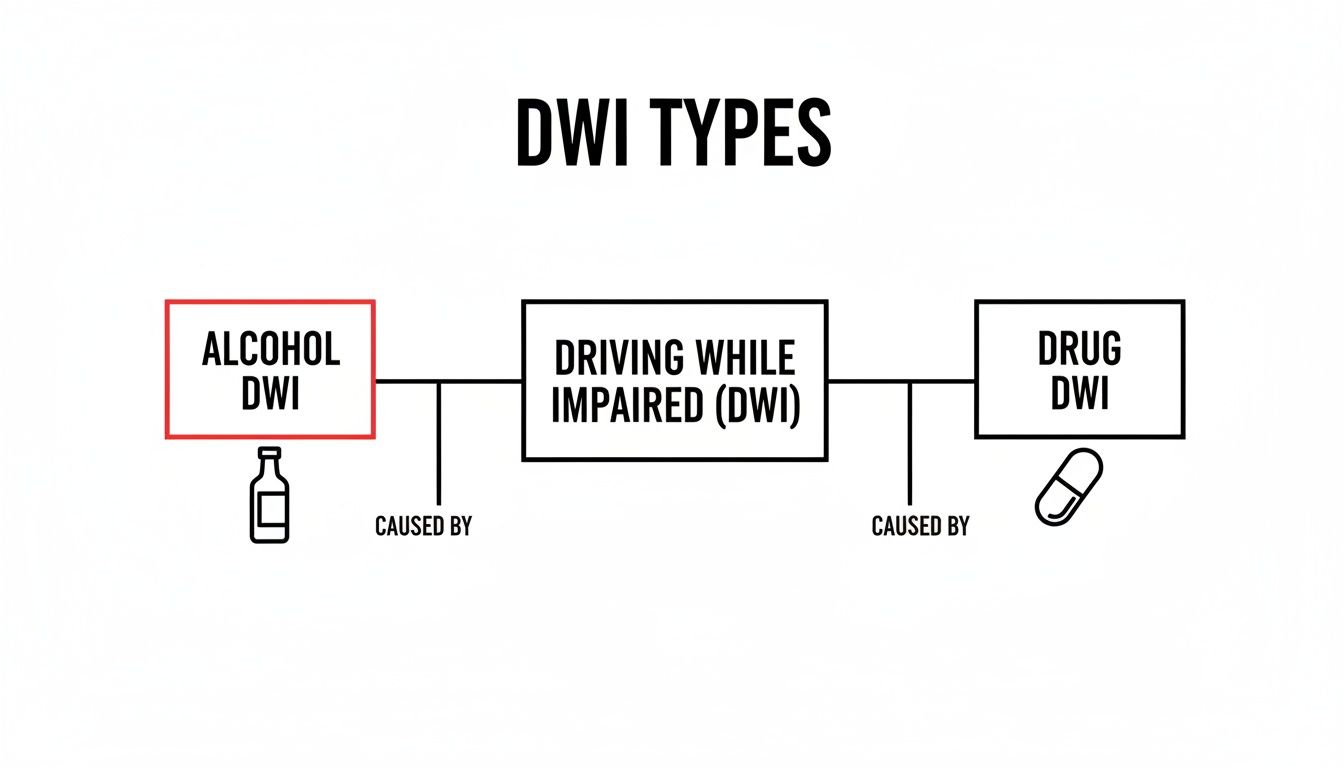
As you can see, intoxication from alcohol and intoxication from drugs are treated as two separate paths, each requiring its own unique kind of proof from the prosecution.
How to Fight a Breath or Blood Test Result
Let's be clear: no test is foolproof. Every single one of these methods is open to both scientific and legal challenges. We've seen it all—from botched sample collections and improper storage to major errors in the lab's analysis.
For instance, a blood test can be thrown into question if the person who drew your blood wasn't properly certified. Or maybe the "chain of custody" was broken, meaning there's no clear record of who handled the sample and when. For a deeper dive, you can learn more about the strict rules for a drug test for probation and see how often those standards fail to be met.
The heart of a strong drugged driving defense is often found in attacking the test results. Proving a drug was present in your system is a world away from proving you were impaired.
Our job as your attorney is to take the state’s evidence apart piece by piece, shining a bright light on every potential error and every bit of doubt. We can argue that a positive urine test is irrelevant because it only shows past use, or that the amount of a substance in a blood test was too minuscule to cause any impairment at all. This is exactly how we fight DWI Texas charges when they are based on faulty or misinterpreted evidence.
Building a Defense When the Court Orders a SCRAM Device
When a judge orders you to wear a SCRAM bracelet, it’s easy to feel like you’ve already been found guilty. The ankle monitor feels like a constant, heavy reminder of your DWI arrest. But it's crucial to understand this is not a conviction. In fact, with a smart legal strategy, that alcohol-only monitor can become a surprisingly powerful tool for your defense, especially if the state is trying to accuse you of drugged driving.
The very first move an experienced DWI attorney will make is to keep the prosecution from twisting the purpose of this device. If the state’s case is built on alleged drug impairment, any data coming from an alcohol-only monitor is completely beside the point. Its only function at that stage is to confuse a jury and unfairly paint you in a bad light.
Challenging Irrelevant Evidence Before It Reaches the Jury
If you’re facing a drug-DWI charge, your lawyer can—and should—work to prevent the prosecution from even mentioning the SCRAM device in court. We accomplish this by filing specific legal motions to exclude the evidence, arguing that it's both irrelevant and highly prejudicial.
The legal argument is straightforward: if a SCRAM bracelet can't detect drugs, its data offers zero proof of drug-related intoxication. Bringing it up in a drugged driving case serves no purpose other than to mislead the jury and imply guilt by association.
This is a critical, proactive step. It stops the prosecutor from building a flimsy narrative or suggesting that because you're being monitored for something, you must be guilty of the drug charge. A skilled Houston DWI lawyer knows exactly how to shut down these backdoor tactics. We can walk you through how to file a motion to suppress evidence and keep improper information from ever poisoning your case.
Forcing the Focus Back to the Real Issues
Once we get the SCRAM data thrown out, the focus snaps back to where it belongs: the state’s weak or non-existent evidence of drug impairment. The fact that the bracelet is specifically for alcohol makes it a non-factor in a drug-DWI defense. Its design is precise. Research shows that while SCRAM devices are highly effective for tracking alcohol sobriety—one study noted just a 3.5% reoffense rate while monitored—all its metrics are strictly alcohol-related. This is vital in Texas, where a drugged driving allegation requires completely different kinds of chemical tests to even begin to prove impairment. You can explore the full study on the device's alcohol-specific effectiveness to see why its data doesn't cross over to other substances.
From there, we get to work dismantling the state’s actual case against you. Our defense strategy involves a meticulous review of every detail, including:
- Analyzing the Traffic Stop: Was the initial stop even legal? Did the officer have a legitimate reason to pull you over?
- Scrutinizing Field Sobriety Tests: We examine whether the officer administered these tests correctly and if they genuinely point to impairment, which they often don't.
- Challenging Chemical Test Results: From the moment a blood or urine sample is taken to its analysis in the lab, errors can happen. We find them.
- Fighting for You at the ALR Hearing: Your DWI case is separate from the attempt to suspend your license. We’ll fight to protect your driving privileges at the administrative license revocation (ALR) hearing.
At The Law Office of Bryan Fagan, PLLC, we don’t just react to the prosecution’s case—we build a proactive defense designed to protect your rights and secure the best possible outcome.
Take Control With A Houston DWI Defense Lawyer
A DWI arrest is a serious moment, but it’s a challenge you don’t have to face by yourself. If there's one thing you should take away from this guide, it's a simple but powerful fact: SCRAM bracelets are designed for alcohol monitoring only. This isn't just a technical detail—it can become the cornerstone of your defense, especially if you're facing a drugged driving charge where the state has no real evidence against you.
Don't let a DWI charge define your future. Being proactive is the single best way to protect your license, your reputation, and your peace of mind.
Let Us Build Your Strategic Defense
At The Law Office of Bryan Fagan, PLLC, we know how confusing and frightening a DWI arrest can be. Our team is here to stand by your side, providing the clear, strategic guidance you need. We're ready to build a defense that fits the specific facts of your case.
We’ll dig into every piece of evidence, from the reason for the initial traffic stop to the chemical test results, looking for the weak spots in the prosecutor's argument.
An arrest is not a conviction. With the right legal team, you can challenge the charges, protect your rights, and work toward a positive outcome that lets you move forward with your life.
Your first step is to get some clarity. We invite you to contact The Law Office of Bryan Fagan, PLLC, for a free, no-obligation consultation. Let our experienced Houston DWI defense lawyers listen to your story, explain your options in plain English, and give you the support you need to take back control.
Frequently Asked Questions About SCRAM Bracelets
Even after you get the basics, you probably have a dozen more questions about what to expect when a court orders you to wear a SCRAM bracelet. Being informed is your first line of defense, so let's tackle some of the most common worries we hear from clients in your exact situation.
Can a SCRAM Bracelet Give a False Positive?
It’s a question we get all the time: "Can this thing be wrong?" The surprising answer is yes. While the technology is designed to be very specific to the alcohol you drink (ethanol), certain things in your environment can fool the monitor and trigger a false positive.
We've seen these false "drinking event" alerts caused by external sources of alcohol that absorb through your skin. This includes everyday products like:
- Alcohol-based hand sanitizers and lotions
- Certain perfumes, aftershaves, and colognes
- Some household cleaning products with high alcohol content
If a judge orders you to wear a SCRAM device, you have to be almost obsessively careful about avoiding these products. Keeping a detailed log of everything you use, eat, and come into contact with can become a crucial piece of evidence if you have to fight a false accusation.
What Happens If My SCRAM Bracelet Detects Alcohol?
If your ankle monitor sends a report that you consumed alcohol, the monitoring company will immediately alert the court or your probation officer. This isn't treated like a minor slip-up; it's a serious violation that sets off an immediate chain reaction.
A positive alcohol alert can lead to a motion to revoke your bond or probation. The judge could issue a warrant for your arrest, and you may find yourself back in jail facing a much more difficult legal battle.
Because the stakes are this high, you absolutely must act fast. Don't sit back and wait for the court to come knocking. The very first call you make should be to your Houston DWI lawyer. An experienced attorney can get out in front of the situation, start gathering evidence to prove the alert was a false positive, and build a defense to protect you from going back to jail.
How Long Will I Have to Wear a SCRAM Bracelet?
There's no magic number here. The amount of time you'll be strapped to a SCRAM bracelet is entirely up to the judge, based on the conditions of your bond or the terms of your probation.
For a first-time DWI, a judge might order the device for a few months before your trial just to ensure sobriety. But for repeat offenses or more serious charges, the monitoring period could easily last for a year or even longer as part of a probated sentence. Complying with the order isn't optional, but a skilled lawyer can sometimes argue for more reasonable terms or a shorter duration from the outset.
A DWI arrest can feel like your world is caving in, but you don’t have to go through it by yourself. At The Law Office of Bryan Fagan, PLLC, our team is ready to give you the clear answers and strategic defense you need. Contact us today for a free, confidential case evaluation to discuss your rights and take the first step toward protecting your future. Request your free consultation now.

