
A DWI arrest can be overwhelming—but you don’t have to face it alone. The flashing lights, the confusing questions, and the trip to the jailhouse can leave you feeling powerless. But take a deep breath. The single most important thing to remember is this: an arrest is not a conviction.
The moves you make from the moment an officer pulls you over can shape your entire defense. Knowing your rights and having a skilled Houston DWI lawyer to protect them is the first step toward minimizing the consequences and protecting your future.
Your First Moves After a DWI Arrest
A DWI arrest is incredibly stressful, but the case against you begins the moment the traffic stop starts. You need to understand that the officer is evaluating everything you do and say, actively looking for evidence to justify an arrest. Your job is to stay calm, be polite, and give them as little ammunition as possible.
From the second an officer approaches your window, the evaluation is on. They're trained to spot signs of intoxication—the smell of alcohol, slurred speech, or fumbling for your license. It's a small but crucial tip: always keep your license, registration, and proof of insurance somewhere you can grab it easily. This avoids giving the officer a chance to note in their report that you seemed "disorganized" or "uncoordinated."
Protecting Your Right to Remain Silent
You have a constitutional right to remain silent. You should use it.
While you are legally required to provide your identification, you do not have to answer the officer's questions. This includes common questions like:
- "Where are you coming from?"
- "Where are you headed?"
- "Have you had anything to drink tonight?"
Politely refusing to answer isn't an admission of guilt. You can say something respectful but firm, like, "Officer, I am choosing to exercise my right to remain silent," or "I would like to speak with my lawyer before answering any questions."
Even admitting to "just one or two drinks" can be twisted and used against you. A prosecutor will argue that your admission, combined with the officer's other observations, proves you were impaired. Staying silent prevents you from accidentally handing the state the evidence it needs to build its case.
What Is Probable Cause?
An officer can't just arrest you on a whim. They need probable cause—a legal standard that requires enough facts and evidence to make a reasonable person believe a crime has been committed. The officer is trying to build this probable cause from the second they pull you over.
A common myth is that one mistake, like weaving in your lane once, is enough for an arrest. The reality is that an officer must build a case based on the "totality of the circumstances." This includes the reason for the stop, your appearance, anything you say, and your performance on any tests. A sharp Houston DWI lawyer will pick apart every single detail to challenge whether the officer truly had enough evidence to make that arrest.
This is exactly why that initial interaction is so critical. By staying calm and silent, you limit the evidence the officer can collect. Ultimately, the choices you make in these first few minutes can make or break your case. For a more detailed breakdown, check out our guide on the first steps after a DWI arrest. An experienced Texas DUI attorney can make sure your rights are protected from the very beginning.
Understanding Field Sobriety and Chemical Tests
After a traffic stop, if an officer suspects you’ve been drinking, they will almost certainly ask you to step out of your car. This is where a simple traffic stop escalates into a full-blown DWI investigation. The officer will then pressure you to perform a series of roadside maneuvers and submit to a breath or blood test.
Knowing your rights during this phase is your single best defense. The officer's goal is to gather evidence to justify arresting you. They are trained to scrutinize everything—from how you get out of the car to your performance on these tests. It's an incredibly high-pressure situation, but understanding what's happening can help you protect yourself.
The Truth About Field Sobriety Tests
In Texas, police rely on three main Standardized Field Sobriety Tests (SFSTs) to gauge impairment. But let’s be clear: while they're called "standardized," the results are highly subjective and often completely flawed. These are not scientific tests of intoxication; they are divided-attention exercises that many sober people would fail.
- Horizontal Gaze Nystagmus (HGN): The officer will ask you to follow a pen or their finger with your eyes, looking for involuntary jerking. The problem? Dozens of medical conditions, prescription drugs, and even fatigue can cause nystagmus.
- Walk-and-Turn: This is the test where you walk nine heel-to-toe steps down a real or imaginary line, turn, and walk back. Poor lighting, uneven pavement, bad shoes, or a past injury can easily make a perfectly sober person look uncoordinated.
- One-Leg Stand: You’ll be instructed to stand on one foot for about 30 seconds. Nerves, a natural lack of balance, or being overweight can make this test nearly impossible for anyone, regardless of their sobriety.
Here is the most important thing to remember: these roadside field sobriety tests are entirely voluntary in Texas. You have the absolute right to politely decline them. Refusing FSTs carries no automatic penalty for your driver's license, and it prevents you from handing the officer subjective "evidence" they can twist to use against you. An officer won't tell you they're optional; you have to know this yourself.
This decision tree visualizes the critical choices you face during a DWI stop.
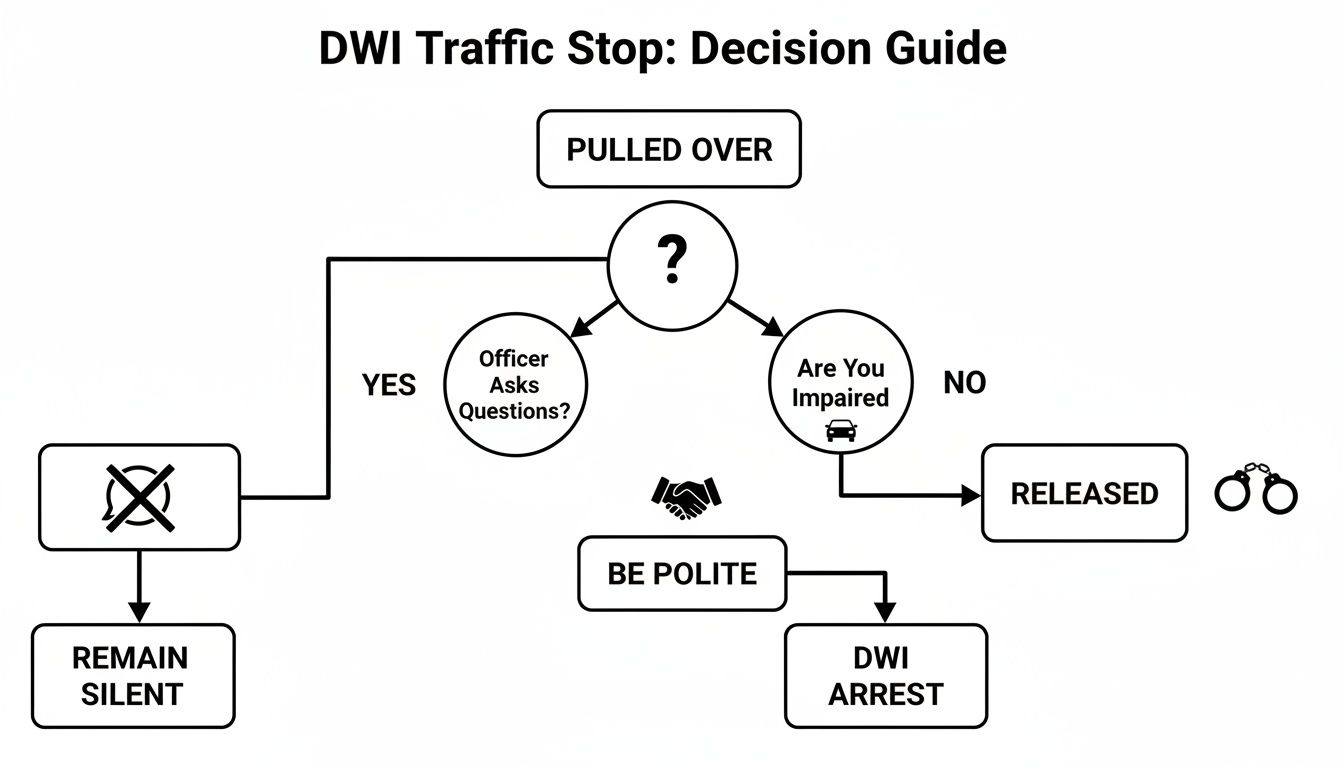
As the chart shows, being polite while asserting your rights is the foundation for handling a DWI stop effectively.
Implied Consent and Chemical Tests (Breath & Blood)
While you can—and should—refuse the roadside gymnastics, the rules change for chemical tests. We’re talking about the breath or blood tests designed to measure your Blood Alcohol Concentration (BAC).
Texas operates under an “implied consent” law. In simple terms, this means that by getting a Texas driver's license and driving on public roads, you have automatically agreed to give a breath or blood sample if you are lawfully arrested for DWI.
Refusing a chemical test after you've been arrested has immediate and significant consequences. The Texas Department of Public Safety (DPS) will automatically begin the process to suspend your driver's license through a process called an Administrative License Revocation (ALR). This is a civil penalty separate from your criminal DWI case.
Field Sobriety Test Refusal vs. Chemical Test Refusal
This table breaks down the key differences between refusing voluntary roadside tests and mandatory chemical tests under Texas's Implied Consent law.
| Action | Is It Mandatory? | Consequences of Refusal | Legal Implication |
|---|---|---|---|
| Field Sobriety Tests (FSTs) | No, completely voluntary. | No direct license suspension. Officer may still arrest you based on other observations. | You avoid creating subjective evidence for the prosecution to use against you in court. |
| Chemical Test (Breath/Blood) | Yes, under Implied Consent law after a lawful arrest. | Automatic driver's license suspension process (ALR) begins. | Your refusal can be used as evidence of guilt in your criminal DWI case. |
Understanding this distinction is key to making an informed decision in a stressful moment.
You are placed in a difficult position: give a sample that could be used as direct evidence to convict you, or refuse and face an automatic DWI license suspension. There’s no perfect answer, but an experienced DWI lawyer can fight the suspension at an ALR hearing and build a strong defense regardless of your choice.
Even if you do agree to a breath test, the results are far from foolproof. Breathalyzer machines must be perfectly calibrated and administered correctly. A skilled attorney will immediately dig into the machine’s maintenance logs and the officer's training records to find flaws that can get the BAC reading thrown out.
Take the Walk-and-Turn test, for example. The officer has a long list of specific instructions they must follow. You can learn more about how to fight a Walk-and-Turn test result to see just how a knowledgeable attorney can dismantle this kind of flimsy evidence. Every decision you make under pressure matters, which is why it's so important to call a lawyer as soon as you can after a DWI arrest.
Navigating the Jail and Bond Process
A DWI arrest is disorienting and often intimidating. But you don't have to go through it alone. After the stop, you'll be taken to a local police station or county jail. This next part—the booking and bond process—is mostly procedural, but every step counts. Understanding what's coming can help lower your stress and allow you to make smart choices that protect your rights.
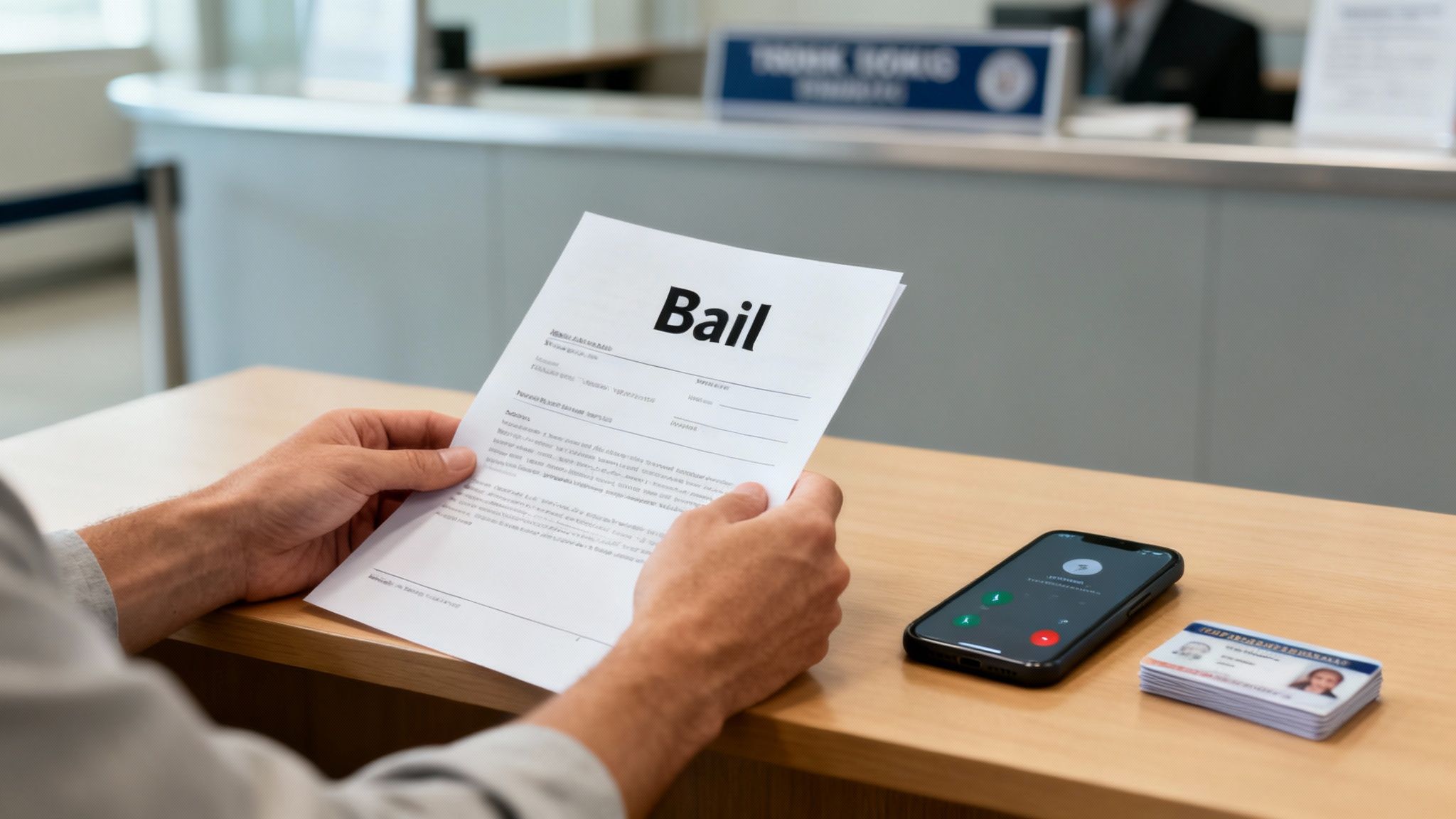
The booking process is where the official record of your arrest begins. Officers will take down your personal information, get your fingerprints, and take a mugshot. They'll also collect your personal items—wallet, phone, keys—and hold them for safekeeping until you're released.
It's absolutely critical to remember your right to remain silent during booking. You only have to provide basic identifying information. Do not get drawn into small talk or answer questions about where you were coming from or what you were doing. Those "friendly" conversations can and will be used against you later in court.
Securing Your Release Through Bond
Once you're booked, you'll be held until you can see a magistrate judge for an arraignment. This is usually a quick hearing where the judge officially tells you the charges you're facing and sets the terms for your release. The most important thing that happens here is the setting of your bond amount.
Bond is simply a financial promise that you'll show up for future court dates. A judge decides the amount based on a few key factors:
- The seriousness of the charge (a first-time DWI is very different from a felony DWI).
- Your criminal history, especially if you have any prior DWI offenses.
- Your connections to the community, like a steady job and local family.
- Whether you're seen as a flight risk or a danger to the public.
After the bond is set, you have a couple of options to get out. Knowing how they work is the key to getting out of jail as quickly as possible.
The first few hours after a DWI arrest are crucial. Calling a Houston DWI lawyer at this stage is the single most important move you can make. An experienced attorney can often get involved to help speed up the bond process and make sure your rights are being protected while you're still in custody.
How to Post Bond in Texas
Getting released from jail typically happens one of two ways. The right choice often comes down to your financial situation and the bond amount set by the judge.
Cash Bond: This is the most straightforward option—you or a family member pays the full bond amount directly to the court. While simple, it can be a significant financial burden. The good news is the money is returned once your case is over, as long as you've made all your court appearances.
Bail Bondsman: This is the more common route. You hire a bail bond company and pay them a non-refundable fee, which is usually 10-15% of the total bond. In exchange, the bondsman posts the full bond amount for you, guaranteeing to the court that you'll show up.
The ins and outs of bail can be confusing, especially under stress. For a deeper dive into how these amounts are set, you can learn more about DWI bond amounts in Texas in our detailed guide. Getting a knowledgeable Texas DUI attorney on your side early on helps you move through this process efficiently, so you can get home and start focusing on your defense.
The Fight to Save Your Driver's License
When you are arrested for DWI in Texas, you are immediately thrown into two separate legal battles. The first is the criminal charge everyone knows about. The second is a lesser-known but much faster civil battle to keep your driver's license.
This administrative process is called an Administrative License Revocation (ALR). It is initiated the second you either fail a chemical test (blowing a 0.08% BAC or higher) or refuse to give one. At that point, the Texas Department of Public Safety (DPS) starts the process to automatically suspend your driving privileges, and the clock starts ticking.
The Critical 15-Day Deadline
Here’s the single most urgent thing you need to understand after a DWI arrest: you have exactly 15 days from the date of your arrest to formally request an ALR hearing.
If you miss this deadline, your license is automatically suspended. Period. There are no do-overs, no extensions, and no second chances. This is why it’s so critical to call a Houston DWI lawyer the moment you get out of jail. We can file the request on your behalf, guaranteeing you meet the deadline and lock in your right to a hearing to fight your DWI license suspension.
Failing to act within this 15-day window means you surrender your best—and often only—chance to prevent a license suspension. It’s a brutally simple timeline that can completely disrupt your ability to work, go to school, or manage your daily life.
Why the ALR Hearing Is More Than Just About Your License
While the immediate goal is to stop your license from being suspended, the ALR hearing plays an even bigger, more strategic role in your overall defense. This hearing is often the very first opportunity for your attorney to question the arresting officer under oath and pick apart the state's evidence.
Think of it as a dry run for your criminal case. During the hearing, your lawyer can investigate the details of your stop and arrest.
- Did the officer actually have a valid reason to pull you over in the first place?
- Were the field sobriety tests administered correctly, following national standards?
- Was the breathalyzer machine properly calibrated, maintained, and operated?
- Did the officer follow every single legal procedure during the arrest?
Everything the officer says at this hearing is recorded and given under oath. That means if their story changes down the line in your criminal trial, your attorney can use their previous testimony to challenge their credibility on the stand.
The ALR hearing is an incredibly powerful discovery tool. It lets us lock in the officer's story, expose weaknesses in the prosecution's case, and gather critical evidence long before your criminal case really gets going. It's a crucial early advantage when you need to fight DWI Texas charges.
Winning the ALR Hearing and What It Means for You
If your attorney successfully challenges the state's case at the ALR hearing, the administrative judge will rule against the suspension, and you get to keep your license. That's a huge win on its own, but the ripple effects are even more significant.
A victory at the ALR hearing sends a powerful message to the prosecutor handling your criminal case. It tells them there are serious holes in the evidence against you. This gives your attorney massive leverage to negotiate a better outcome, like getting the charges reduced or even convincing them to dismiss the DWI case entirely.
The fight for your license is the first battleground after a DWI arrest. Winning the ALR process isn't just about keeping your driving privileges—it's about setting the stage for a successful defense in your criminal case. Don't wait. Contact a Texas DUI attorney today to protect your rights and start fighting back.
Building a Winning DWI Defense Strategy
Getting arrested for DWI can make you feel like the fight is already over. It’s not. It’s critical to remember that an arrest is just the beginning of the legal process—and it’s a long way from a conviction. The prosecution carries the entire burden of proving its case against you beyond a reasonable doubt. Our job, as your defense attorneys, is to find the weaknesses in that case and dismantle it, piece by piece.
There are dozens of proven strategies to fight DWI charges in Texas, and building a strong defense starts the second you hire our firm.
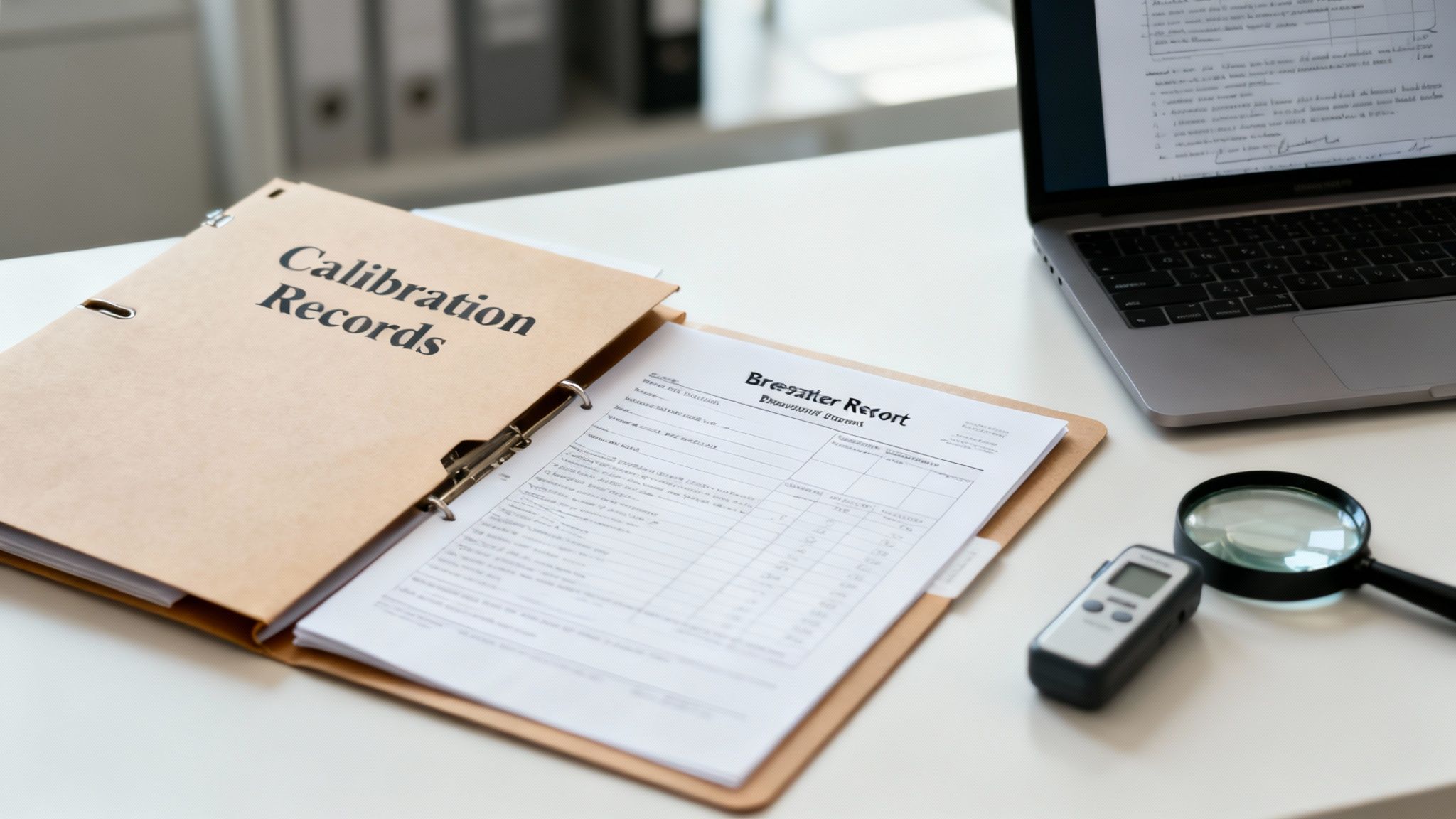
A successful defense is built on a deep-dive investigation into every detail of your arrest. We never just accept the police report at face value; we challenge it. Every piece of the state's evidence gets put under a microscope, because that's where we find the procedural errors and weak spots that can win a case.
Challenging the Initial Traffic Stop
The entire DWI case stands on one critical foundation: the legality of the initial traffic stop. A police officer can't just pull you over on a hunch. They must have reasonable suspicion that you violated a specific traffic law or were involved in criminal activity.
If the stop was unlawful from the start, any evidence gathered after that moment—the field sobriety tests, your statements, the breathalyzer results—can be suppressed and thrown out of court.
We dig into the officer’s stated reason for the stop by:
- Reviewing every second of dashcam and bodycam footage: Video doesn't lie. It often contradicts an officer's written report, showing you didn't actually commit the traffic violation they claimed.
- Analyzing dispatch logs and radio traffic: We look at what the officer was told before they ever activated their lights to understand their true motivations for the stop.
- Identifying pretextual stops: This happens when an officer uses a minor infraction, like a barely rolled stop sign, as an excuse to launch a full-blown DWI investigation. We can argue this was an unjustified fishing expedition.
For instance, if an officer claims you were "weaving" but the dashcam shows you simply corrected your position well within your own lane, that is not a traffic violation. A motion to suppress the evidence that followed could get the entire case dismissed.
Scrutinizing Sobriety Test Administration
As we’ve covered, field sobriety tests are notoriously unreliable. They aren't really "sobriety" tests; they're divided-attention exercises that many perfectly sober people would fail even under ideal conditions. An experienced Houston DWI lawyer knows exactly how to attack these results by zeroing in on the officer's failure to follow strict, standardized protocols.
An officer must administer the Standardized Field Sobriety Tests (SFSTs) exactly as prescribed by the National Highway Traffic Safety Administration (NHTSA). Any deviation from the standardized procedure can make the results invalid and inadmissible in court.
We hunt for common mistakes. Did the officer give you the wrong instructions? Were the tests done on an unsafe or uneven surface? Did they fail to ask about or consider your medical conditions, age, or weight? More often than not, a "failed" test was really caused by improper administration, not intoxication.
Attacking Breath and Blood Test Results
A BAC number from a breathalyzer or blood test might seem like a slam dunk for the prosecution, but it’s far from it. These chemical tests are highly technical and prone to numerous errors. The first thing we do to fight a breath test result is demand and analyze the machine’s maintenance, inspection, and calibration records.
A breathalyzer is just a machine, and like any machine, it needs regular service to work properly. We look for gaps in its maintenance logs or records that show it wasn't properly calibrated when you were tested. If that machine was faulty, the BAC reading it produced is completely unreliable.
We also investigate the officer who administered the test. Were they properly certified to operate that specific device? Did they follow the mandatory 15-minute observation period before the test to ensure you didn’t burp, hiccup, or regurgitate anything that could skew the results?
Any failure to follow these strict protocols can be powerful grounds for getting the breath test evidence thrown out of court. Questioning the state's "scientific" evidence is a cornerstone of a powerful DWI defense. If you’re facing a first DWI in Texas, remember that every single piece of evidence can—and should—be challenged. An aggressive defense is your best path forward.
Common Questions After a Texas DWI Arrest
Being arrested for a DWI can leave your head spinning. The legal process is confusing, and suddenly you're facing a flood of questions about your job, your license, and your future. It's completely normal to feel overwhelmed.
This is a time for clear, strategic action—not panic. Understanding what you're up against is the first step toward building a strong defense and getting your life back on track. Here are straightforward answers to the questions we hear most often from our clients.
Can I Still Drive After Being Arrested for DWI?
Yes, but the clock is ticking—fast. When the officer arrested you, they likely confiscated your plastic driver’s license and gave you a piece of paper that serves as a temporary driving permit. Pay close attention to this document, because it's only valid for 40 days.
To prevent your license from being automatically suspended after those 40 days, you must request an Administrative License Revocation (ALR) hearing within 15 days of your arrest. If you miss this tiny window, your license will be suspended. A savvy Houston DWI lawyer can file this request for you, not only preserving your right to drive but also using the ALR hearing as a powerful opportunity to gather early evidence for your criminal case.
Will a DWI Conviction Show Up on a Background Check?
Absolutely. A DWI conviction in Texas becomes a permanent part of your criminal record. That means it’s visible to potential employers, landlords, and anyone else who runs a background check. This can have devastating consequences for your career, especially if you work in a field that requires a professional license (like nursing or teaching) or involves driving.
The only way to completely wipe a DWI from your public record is through an expunction. But here's the catch: you only qualify for an expunction if your case gets dismissed, you're found not guilty at trial, or you complete a pretrial diversion program. This is exactly why it's so critical to fight the charges from day one.
Many people mistakenly think they can get a DWI sealed with a non-disclosure order if they get deferred adjudication. However, under Texas law, DWI is one of the few offenses that is explicitly not eligible for non-disclosure. That conviction will follow you unless you can get the case expunged.
How Much Does a DWI Cost in Texas?
The financial fallout from a DWI arrest is staggering. The costs go way beyond the initial fines set by the judge. When you add everything up, the total expense can easily exceed $10,000, even for a first-time offense.
Here’s a quick breakdown of where that money goes:
- Court Fines: A first-time DWI carries fines up to $2,000.
- Legal Fees: Hiring an experienced Texas DUI attorney is an investment in protecting your future.
- Ignition Interlock Device: If required, these can cost over $100 per month for installation and monitoring.
- Skyrocketing Insurance Premiums: Expect your auto insurance rates to double or even triple for several years.
- Court Costs & Fees: Although the Texas Driver Responsibility Program was repealed, other administrative fees still apply.
- DWI Education Classes: You'll be ordered to complete a state-approved alcohol education program at your own expense.
While these costs are daunting, they pale in comparison to the long-term financial damage of a conviction, which includes lost job opportunities and promotions.
Do I Really Need a Lawyer for a First-Time DWI?
Without a doubt. It’s a dangerous myth that a first DWI in Texas is "no big deal." The state takes these charges incredibly seriously, and prosecutors are trained to pursue convictions aggressively. If you walk into court alone, you’re at the mercy of a system designed to find you guilty. You risk facing the maximum penalties without a fight.
An experienced DWI defense attorney does much more than just show up to court. We dig into every detail of your case—from the legality of the initial traffic stop to the calibration records of the breathalyzer machine. We know how to expose weaknesses in the state's evidence, negotiate with prosecutors from a position of strength, and protect your constitutional rights at every turn. Trying to navigate Texas DWI charges on your own is a gamble you simply can't afford to take.
A DWI arrest doesn't have to ruin your life. At The Law Office of Bryan Fagan, PLLC, our experienced Houston DWI lawyers are here to provide the strategic, assertive defense you need. We understand what’s at stake and will fight tirelessly to protect your rights, your license, and your reputation. Don’t wait to get help. Contact us today for a free, confidential case evaluation to discuss your options.