
A DWI arrest can be overwhelming—but you don’t have to face it alone. It's crucial to remember one thing: an arrest is not a conviction. You have legal options, and one of the most powerful is something called deferred adjudication. Think of it as a second chance the court can offer—a strategic path that could help you avoid a permanent DWI conviction and protect your future.
Understanding Your Options After a Texas DWI Arrest
Facing a DWI charge can feel like the end of the road, but it’s really just the beginning of a legal process where you have rights and options. One of the most important outcomes to understand is deferred adjudication. This legal tool allows you to take responsibility for your actions while working toward a complete dismissal, which keeps a DWI conviction off your permanent public record.
Our goal is to replace your uncertainty with clarity and confidence. This guide will walk you through exactly how deferred adjudication works for DWI cases in Texas. We'll demystify the legal jargon, explain who qualifies, and show you how knowing your options empowers you to make the best possible decisions for your case.
A Path Forward Without a Conviction
At its core, deferred adjudication is a type of community supervision where you plead "guilty" or "no contest," but the judge doesn't actually find you guilty. Instead, the judge defers—or puts off—a finding of guilt and places you on probation with specific conditions you must follow.
It's a widely used tool in the justice system. In fact, by 2020, 48 U.S. states offered some form of deferred adjudication, aiming to reduce the long-term damage of a conviction while still ensuring accountability. You can read the full research about deferred adjudication’s role in the justice system for more background.

If you successfully complete the program, the judge dismisses the charges entirely. You were never convicted. This is a huge deal, because it protects you from many of the harshest consequences that come with a DWI conviction, such as:
- Avoiding a permanent criminal conviction on your public record.
- Protecting your current and future job opportunities from the stigma of a DWI.
- Preserving your eligibility for professional licenses, housing, and educational programs.
An experienced Houston DWI lawyer can determine if this is the right strategy for your case and negotiate with prosecutors to make it happen.
How Deferred Adjudication Works in Texas
So, what exactly is deferred adjudication? Think of it as a probationary contract you make with the court. It’s a unique legal path that can lead to a complete dismissal of your DWI charge, even after you’ve been arrested and formally charged.
When you accept a deferred adjudication offer, you plead 'guilty' or 'no contest.' But here’s the critical part: the judge agrees to pause—or 'defer'—a finding of guilt. Instead of immediately stamping a conviction on your record, the judge places you on community supervision (probation) for a set period.
If you successfully check off every single court-ordered condition, the judge will dismiss the case entirely. That means no final DWI conviction ever appears on your public criminal record. This outcome is incredibly valuable for protecting your future, especially when it comes to jobs, housing, and professional licenses.
The Step-by-Step Process
Understanding how deferred adjudication unfolds can take some of the mystery out of the legal journey ahead. While every case has its own unique twists and turns, the process generally follows a clear set of steps negotiated between your Houston DWI lawyer and the prosecutor.
- Negotiation and Plea: Your attorney will first negotiate with the prosecutor to see if deferred adjudication is on the table. If an agreement is reached, you’ll enter a plea of 'guilty' or 'no contest' in court.
- Deferred Finding of Guilt: The judge accepts your plea but holds off on finding you guilty. Instead, the judge “defers adjudication” and lays out the terms of your community supervision.
- Community Supervision Period: You will serve a probationary period, which can last up to two years for a misdemeanor DWI. During this time, you must follow every single court-ordered condition to the letter.
- Successful Completion: Once you've fulfilled every requirement for the entire supervision period, your attorney files the necessary paperwork to close out the case.
- Case Dismissal: The judge officially dismisses the DWI charge. At this point, you have successfully avoided a conviction.
This process is fundamentally different from regular probation, where a conviction is placed on your record right from the start.
The key distinction lies in the timing of the "guilt" finding. With deferred adjudication, a finding of guilt is postponed and ultimately avoided upon successful completion. With a standard conviction, guilt is established immediately, and the conviction becomes a permanent part of your record.
Deferred Adjudication vs Regular Probation Outcome
To really grasp the real-world impact of choosing deferred adjudication over a standard conviction, it helps to compare the final outcomes side-by-side. The differences are massive and can affect your life for years to come.
This table breaks down the crucial differences between these two paths.
| Key Outcome | Deferred Adjudication | Regular Probation (Conviction) |
|---|---|---|
| Final Case Status | Dismissed. The court never formally finds you guilty. | Convicted. You have a permanent DWI conviction on your record. |
| Criminal Record | The arrest record remains but shows a dismissal instead of a conviction. | Shows a final conviction for Driving While Intoxicated. |
| Future Opportunities | Significantly better. You can legally state you were not convicted of the crime. | Severely impacted. You must disclose the conviction on many job and housing applications. |
| Record Sealing | Often eligible for an Order of Non-Disclosure, which seals the record from the public. | Not eligible for non-disclosure. The conviction remains public permanently. |
Ultimately, deferred adjudication offers a way to take responsibility for a mistake while fiercely protecting your long-term future. It keeps the door open to opportunities that a permanent DWI conviction would slam shut. An experienced Texas DUI attorney can assess your case to determine if this is the right strategic path for you and fight to secure this favorable outcome.
Who Qualifies for DWI Deferred Adjudication in Texas
While deferred adjudication is a powerful second chance, it’s not available to everyone. Texas law is very clear about who can be offered this outcome in a DWI case. Understanding these qualifications is the first—and most critical—step in building the right defense strategy for your case.
Simply put, not every case makes the cut. The law draws firm lines, and on top of that, prosecutors hold a lot of discretionary power. This is precisely why having an experienced Houston DWI lawyer evaluate your unique situation is so vital. We can tell you right away if deferred adjudication is even a possibility and start fighting for it on your behalf.
Strict Eligibility Rules You Must Meet
The Texas Code of Criminal Procedure lays out several conditions that will automatically disqualify you from getting a deferred adjudication offer for a DWI. If your case has any of the following factors, this option is legally off the table.
Key disqualifiers include:
- A High BAC: If the evidence shows your blood alcohol concentration (BAC) was 0.15 or higher, you are legally barred from deferred adjudication. A BAC is the amount of alcohol in your bloodstream and is often measured through a breath or blood test.
- Holding a CDL: If you had a Commercial Driver's License (CDL) when you were arrested, you cannot get deferred adjudication for a DWI. It doesn't matter if you were in your personal car.
- Previous DWI Convictions: Deferred adjudication is almost always reserved for people facing their first DWI in Texas. If you have a prior conviction for DWI or another intoxication-related offense, you won't be eligible.
These rules are black and white, leaving no wiggle room for negotiation. If your case falls into one of these categories, our focus will immediately pivot to other powerful defense strategies, like challenging the legality of the traffic stop or the way field sobriety tests were administered.
For those who do qualify, the process follows a clear path.
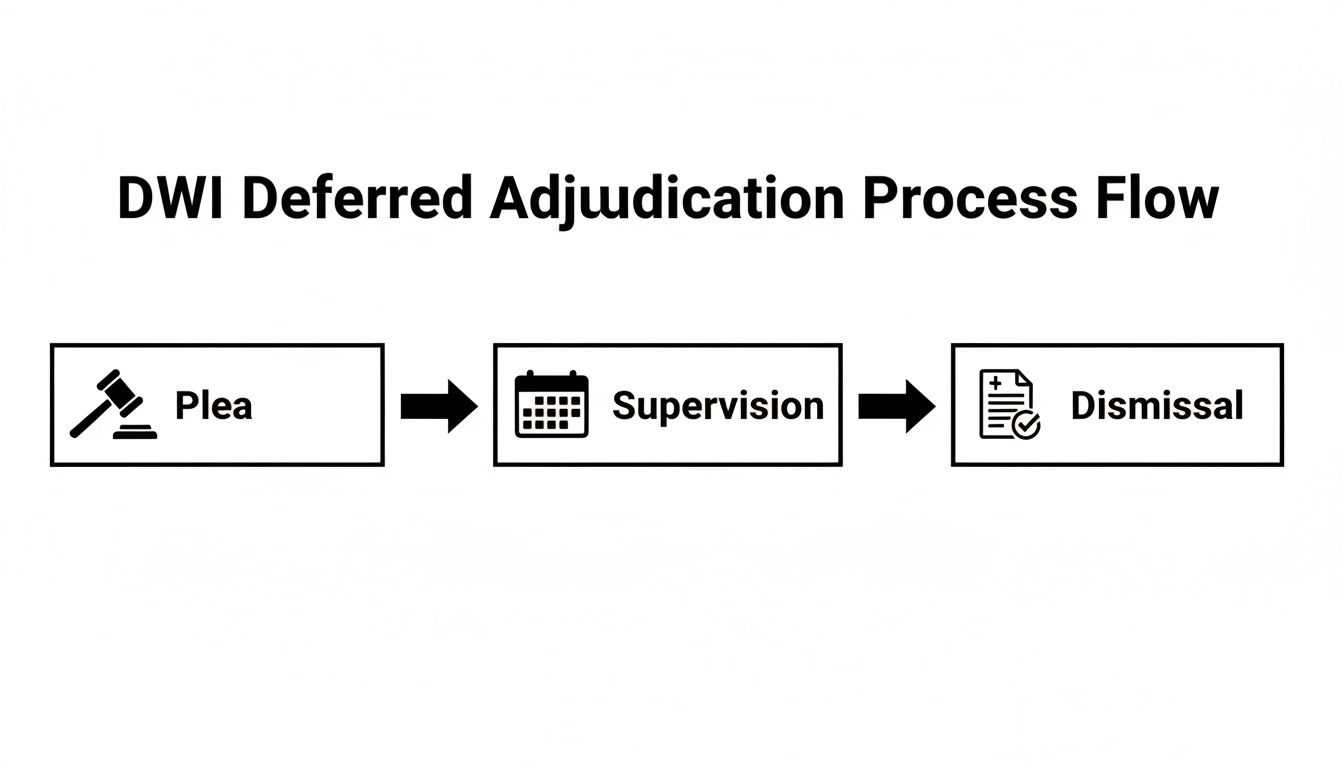
This flowchart breaks it down: it starts with a plea agreement, moves into a period of court-ordered supervision, and, if you do everything right, ends with a full dismissal of the charge.
The Prosecutor’s Role in Your Eligibility
Even if you meet all the legal requirements, an offer of deferred adjudication is never guaranteed. The ultimate gatekeeper is the prosecutor handling your case. They will review every detail—the police report, your driving history, and any other relevant facts—before deciding whether to make an offer.
A prosecutor's willingness to offer deferred adjudication often hinges on the strength of their case. If your attorney can expose serious weaknesses in the evidence, the prosecutor may become much more open to negotiating a favorable outcome like this to avoid the risk of losing at trial.
This is where a skilled DWI attorney becomes your biggest advantage. We know how to build a compelling argument that highlights the positive factors in your situation and shows why you're a strong candidate for the program. Our job is to persuade the prosecutor that giving you deferred adjudication isn't just fair, but it’s also in the best interest of justice. Without that strategic negotiation, you could easily miss out on the best possible resolution for your case.
The Pros and Cons of a Deferred Adjudication Offer
Deciding whether to accept a deferred adjudication offer is a significant choice that should not be made lightly. Think of it as a fork in the road. One path leads to a clean dismissal and a chance to protect your future, while the other could land you with the very conviction you were trying to avoid.
Before you make a move, you must understand the real-world advantages and the serious risks. An experienced DWI attorney will walk you through these pros and cons, making sure you see the full picture. The right choice is different for everyone and depends entirely on the facts of your case and your personal goals.

The Primary Advantages of Deferred Adjudication
Let's start with the biggest win: it allows you to avoid a permanent DWI conviction. This is a game-changer. Once you successfully complete all the terms of your community supervision, the judge dismisses the case. From that point on, you can legally state on most job, housing, or school applications that you have not been convicted of the crime.
This simple fact keeps doors open that a DWI conviction would slam shut. It protects your ability to get or keep professional licenses, helps prevent your auto insurance from skyrocketing due to a conviction, and shields you from the social stigma that follows a permanent criminal record. In short, it’s a genuine second chance.
Another massive benefit is the ability to seal your record down the road. After a waiting period, you can usually petition the court for an Order of Non-Disclosure. This order essentially hides the record of your arrest and deferred adjudication from public view, meaning most private employers, landlords, and commercial background check companies will never see it. It’s the last step in truly putting the incident behind you. You can find out more by reading our guide explaining if deferred adjudication is a conviction.
The Significant Risks and Disadvantages
While the upside is powerful, the risks are just as serious. The single biggest disadvantage is how high the stakes are. If you violate any condition of your community supervision—even a small one—the fallout is severe.
The prosecutor can file a "Motion to Adjudicate Guilt." This brings you back before the judge, who can then revoke your deferred status, find you guilty of the original DWI charge, and sentence you up to the maximum penalty allowed by law. You don't get a new trial to argue the facts of the case; the judge simply hands down a sentence based on your initial plea.
This is the critical trade-off: you exchange your right to a trial for the opportunity to earn a dismissal. A violation means you lose that opportunity and will likely face a conviction and potentially jail time without ever having had your day in court to fight the original charge.
Furthermore, deferred adjudication isn't a "get out of jail free" card. The arrest itself will remain on your criminal record until you get it sealed. While Texas law officially recognizes deferred adjudication as a non-conviction, some background check companies still report the initial arrest, and some employers may treat it just like a conviction anyway.
Finally, you’ll still have to deal with many of the immediate penalties that come with a DWI, such as:
- A potential DWI license suspension from the separate Administrative License Revocation (ALR) process. This is a civil process independent of your criminal case, triggered if you refuse a breath/blood test or provide a sample over the legal limit.
- Mandatory installation of an ignition interlock device in your vehicle.
- Thousands of dollars in fines, court costs, and probation fees.
- Required completion of a DWI education program and community service hours.
Weighing all these factors is a complex balancing act. A skilled Houston DWI lawyer can break down the evidence against you and help you decide if you should fight the charge at trial or accept a deferred adjudication offer to protect your freedom and your future.
Fulfilling Your Deferred Adjudication Requirements
Getting your DWI case dismissed hinges on one final, crucial step: successfully completing your deferred adjudication. Think of this period as a contract between you and the court. Holding up your end of the bargain isn't just important—it's everything. The judge will give you a specific list of conditions you have to meet, and sticking to them is the key to protecting your future.
This phase demands organization and a real commitment. The requirements might feel like a lot to handle, but they're a structured path straight to a dismissal. The best strategy is to be proactive from day one and understand every single one of your obligations.
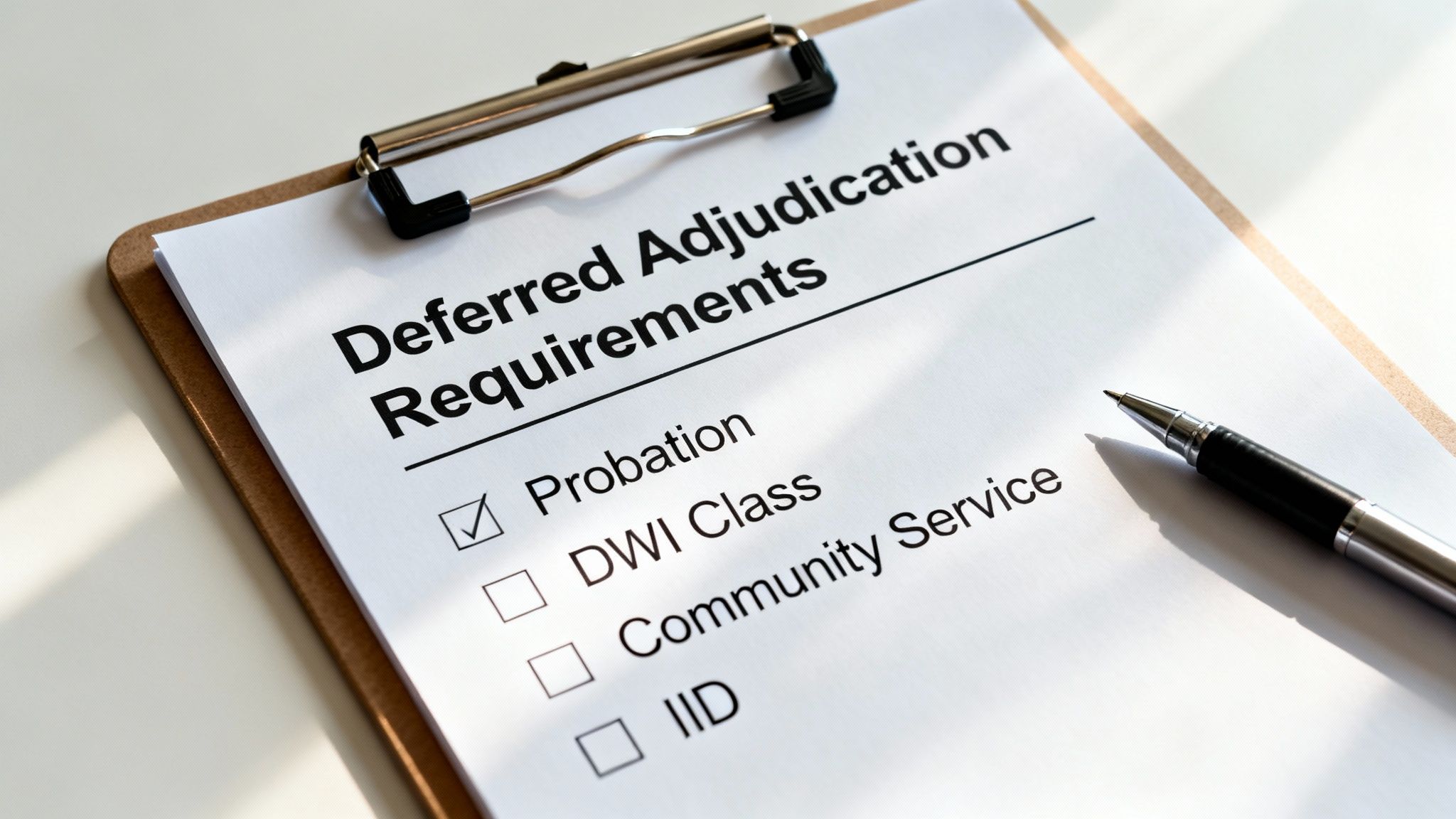
Common Conditions of DWI Deferred Adjudication
The exact terms of your community supervision will vary a bit depending on your specific case and the county it's in. However, most DWI deferred adjudication agreements in Texas share a standard set of requirements. Your attorney will go over the court's order with you in detail, but you should prepare for some common conditions.
When a judge grants you deferred adjudication, they're essentially giving you a checklist of tasks to complete over a set period. Here’s a look at what that checklist usually includes.
Checklist of Common DWI Deferred Adjudication Conditions
| Requirement Type | Specific Examples |
|---|---|
| Supervision & Reporting | Regularly checking in with a probation officer (CSO), usually once a month. |
| Financial Obligations | Paying all court costs, fines, and supervision fees on time. |
| Educational Courses | Completing a state-approved 12-hour DWI education program for first-time offenders. |
| Community Service | Performing a court-ordered number of community service hours and documenting them. |
| Sobriety Monitoring | Abstaining from all alcohol and non-prescribed drugs, often verified through random testing. |
| Vehicle Restrictions | Installing and maintaining an Ignition Interlock Device (IID) on any vehicle you drive. |
These conditions are not meant to be impossible, but they do require you to be organized and diligent. Staying on top of every requirement is the only way to ensure the case against you is ultimately dismissed.
Tips for Proactive Compliance
Successfully navigating your supervision period is about more than just checking boxes—it's about showing the court you're committed to the process. A few simple, proactive steps can make a huge difference and help you avoid the common mistakes that could put your deferred status at risk.
First, build a professional and positive relationship with your probation officer. They are a central figure in your case, and clear, honest communication can prevent small issues from turning into big problems. If you think you might have an issue—like being late for a meeting or struggling to pay a fine—tell them before it happens.
The single worst mistake you can make is to miss a requirement and hope nobody notices. They will. A minor slip-up can quickly turn into a Motion to Adjudicate Guilt if you aren't upfront. Always keep your attorney and your probation officer in the loop.
Here are a few practical tips to help you stay on track:
- Keep Meticulous Records: Create a folder where you keep receipts for fines you've paid, certificates from completed classes, and signed logs of your community service hours.
- Plan Your Schedule in Advance: Look at your calendar and schedule time off work or arrange transportation for probation meetings and classes well ahead of time. Don't let last-minute conflicts trip you up.
- Master Your IID: Take the time to understand exactly how your ignition interlock device works. Know the rules for rolling re-tests and calibration appointments to prevent accidental lockouts or violations.
- Understand Sobriety Rules: It's critical to know the specifics of alcohol testing on probation to avoid an accidental violation from things like mouthwash or certain foods.
Following these steps shows you're taking this opportunity seriously and builds a strong record of compliance. It paves the way for a smooth and successful dismissal of your case.
Life After Deferred Adjudication: Your Next Steps
Making it through deferred adjudication is a huge accomplishment. It means you’ve done everything the court asked, and you can finally start to move past this ordeal. But finishing your supervision isn’t quite the end of the road—there are still a couple of critical steps left to truly close this chapter.
Once you’ve checked all the boxes, the judge will officially dismiss the DWI charge against you. This is the outcome you worked so hard for, because it means you avoided a permanent criminal conviction. The problem? The arrest and the court case don’t just vanish from your record. They stick around for anyone to see unless you take action.
Sealing Your Record for a Fresh Start
After a DWI charge is dismissed through deferred adjudication, the next goal is to make sure that arrest doesn’t follow you around forever. This is where two key legal tools come into play, but for your situation, only one of them is an option.
- Expunction: This is the legal equivalent of a memory wipe—it completely destroys the records of an arrest, as if it never even happened. Unfortunately, a DWI case that ends in deferred adjudication is not eligible for an expunction in Texas law.
- Order of Non-Disclosure: This is the tool you can use. An order of non-disclosure seals your record from the public, effectively hiding it from nosy neighbors, potential employers, landlords, and the general public.
Think of an order of non-disclosure as putting your records in a locked filing cabinet. Only certain government and law enforcement agencies have the key. For almost every practical purpose, it erases the incident from your public-facing life, giving you the freedom to move forward without the stigma of that arrest.
The Path to an Order of Non-Disclosure
Getting your record sealed isn’t automatic; you have to formally petition the court. For a misdemeanor DWI, there is a mandatory two-year waiting period that starts on the date your deferred adjudication is successfully completed and the case is dismissed.
Once that waiting period is over, your Houston DWI lawyer can file a petition for an order of non-disclosure. This is the final, essential step to protect your future and ensure a past mistake doesn't block future opportunities. To learn more about how this works and what its limits are, you can check out our detailed guide on expunging a DWI in Texas, which also clarifies the rules for non-disclosure.
Taking this last step is what makes all your hard work worthwhile. It turns a temporary second chance into the permanent clean slate you’ve earned. A skilled attorney can handle the paperwork and court appearances for you, making sure the process is smooth, correct, and final.
Still Have Questions? Let's Clear Things Up
When you're trying to understand deferred adjudication, it's natural for practical questions to arise. The legal system can feel like a maze, and you need straight answers to figure out the best path forward. Below, we’ve tackled some of the most common things people ask when facing a DWI charge in Texas and weighing this option.
Think of this as a quick-reference guide to reinforce what we've covered and give you more clarity during a confusing time.
Will a DWI Deferred Adjudication Show Up on a Background Check?
Yes, at first, it absolutely will. Right after your case is resolved, any background check will show the DWI arrest and explain that the case was handled through deferred adjudication, which ultimately led to a dismissal. While this is miles better than a conviction, the arrest itself is still visible.
But here’s the good news. After a mandatory waiting period—usually two years for a DWI—you can petition the court for an Order of Non-Disclosure. If the judge grants it, this order effectively seals the record from public view. That means most private employers, landlords, and the companies they use for background checks won't see the arrest or case details. It gives you a clean slate for most practical purposes.
Can I Get Deferred Adjudication if My BAC Was 0.15 or Higher?
No. This is a crucial point in Texas law and a common source of confusion. You are automatically ineligible for deferred adjudication in a DWI case if there's evidence your Blood Alcohol Concentration (BAC) was 0.15 or greater. This isn't a guideline; it's a hard-and-fast rule.
This is exactly why a sharp DWI attorney immediately investigates the BAC evidence. If we can successfully challenge the accuracy of the breath or blood test, or prove it was obtained illegally, we might get that evidence thrown out. Doing so could reopen the door to a deferred adjudication offer that was previously off the table.
What Happens if I Violate My Deferred Adjudication Terms?
Violating your terms is something the court takes incredibly seriously. If you fail to meet any condition—whether it's missing a meeting with your probation officer, failing a drug test, or, even worse, getting arrested for something new—the prosecutor will file a "Motion to Adjudicate Guilt."
From there, the judge schedules a hearing to listen to evidence about the violation. If they agree you broke the rules, they can revoke your deferred status on the spot, enter a final and permanent conviction on your record, and sentence you anywhere within the full punishment range for the original DWI. That could mean steep fines and jail time, all without ever getting a trial on the original charge.
The risk of revocation is the single biggest downside of deferred adjudication. You trade your right to a trial for a chance at dismissal, and a violation means you could lose that chance and face the maximum penalties.
Is Deferred Adjudication the Same as a Case Dismissal?
Not quite, though a dismissal is the prize at the end of the road. The journey to get there is different. A direct dismissal is when a prosecutor drops the charges entirely before you ever enter a plea, usually because their evidence is weak or your rights were violated.
With deferred adjudication, you have to first plead 'guilty' or 'no contest' and then successfully complete all the requirements of community supervision. Only after you've done everything the court asked is the case formally dismissed. It's an earned dismissal, whereas a direct dismissal happens upfront. Both paths, however, lead to the same great result: no DWI conviction on your record.
A DWI arrest can make you feel like your world has been turned upside down, but a strategic defense can protect your future. The experienced attorneys at the Law Office of Bryan Fagan, PLLC are here to fight for you. We investigate every detail of your case, explain all your options in plain English, and build a defense aimed at the best possible outcome—whether that’s deferred adjudication, a reduced charge, or a complete dismissal.
Don’t try to navigate this alone. Call us now for a free, confidential case evaluation to understand how a Houston DWI lawyer can help you move forward. Your future is too important to leave to chance. Contact the Law Office of Bryan Fagan, PLLC today.