 Skip to content
A DWI arrest can be overwhelming—but you don’t have to face it alone. Understanding what comes next is the first step toward regaining control. Your arraignment is that first step—it's your initial, formal appearance in court after being charged.
This isn't the dramatic trial you see on TV. Instead, it's a procedural hearing where the court officially reads the charges against you, asks for your plea, and determines your bail and release conditions. Think of it as the administrative kickoff to your case, not the final verdict. With a strategic Houston DWI lawyer by your side, this hearing becomes the first opportunity to build a strong defense.
Your First Court Appearance: What Is an Arraignment?
Getting arrested for a DWI in Texas triggers a series of legal events, and the arraignment officially starts the criminal court process. While many people picture a tense courtroom showdown, the reality is far more procedural.
The purpose of this hearing is to ensure you are formally aware of the charges you're facing and that you understand your basic constitutional rights. It's a critical moment where the foundation for your defense is laid. During the hearing, a judge presides over the administrative aspects of your case. Nothing about your guilt or innocence will be decided here.
Key Functions of an Arraignment Hearing
An arraignment is a structured hearing with very specific goals. If you're facing a first DWI in Texas, knowing what to expect can significantly reduce your anxiety. Here’s what the court will typically cover:
- Formal Reading of Charges: The judge or a court clerk will read the official complaint filed against you, making it clear what you're being accused of (e.g., a Class B Misdemeanor DWI).
- Advisement of Rights: You will be informed of your constitutional rights, including the right to an attorney, the right to a jury trial, and the crucial right to remain silent.
- Entering a Plea: The court will ask you to enter an initial plea. Pleading "not guilty" is the standard strategic move. It doesn't mean you're claiming factual innocence on the spot; it simply keeps all your legal options open and allows your lawyer to start building your defense.
- Setting Bail and Release Conditions: The judge decides the terms of your release while your case is pending. This could involve posting a bond or being released on your own recognizance (OR), often with conditions like installing an ignition interlock device on your vehicle.
At its core, an arraignment is the first formal step in the court process. It’s where you’re officially told what you’re up against. For anyone facing a DWI in Texas, the importance of this hearing can't be overstated. It's often the first chance for your lawyer to assess the prosecution's case and start mapping out a defense strategy. You can discover more about the legal definition of an arraignment on Wikipedia.
To give you a clearer picture, here’s a quick breakdown of what happens during a typical arraignment hearing.
Key Events During a Texas DWI Arraignment
This table summarizes the main stages of an arraignment hearing to give you a clear overview of the process.
| Event | What It Means for You |
|---|---|
| Case is Called | Your name and case number are announced. You or your lawyer will approach the judge. |
| Charges Are Read | The judge or clerk officially states the DWI charge filed against you by the prosecutor. |
| Rights Are Explained | The court confirms you understand your right to an attorney, a trial, and to remain silent. |
| Plea is Entered | You (or your lawyer) will enter a plea. "Not guilty" is the standard plea at this stage. |
| Bail is Set | The judge sets the amount of your bond and any conditions for your release. |
| Next Court Date | You'll be given the date for your next appearance, often called a pretrial conference. |
Seeing it laid out like this helps demystify the process, turning a daunting court date into a series of manageable steps.
Having an experienced attorney standing next to you at your arraignment isn't just a good idea—it's a strategic necessity. Your lawyer acts as your shield, handling all the talking with the court, entering the right plea to protect your rights, and fighting for the most favorable release conditions possible.
This initial hearing sets the tone for your entire case. Going in without skilled legal counsel means you risk making procedural mistakes or agreeing to conditions that could harm your freedom and finances. A good lawyer ensures your case starts on the strongest possible footing, turning an intimidating procedure into the first step toward a successful defense. If you're facing a DWI charge, the time to act is now.
Navigating the Arraignment Hearing Step by Step
Walking into a courtroom for the first time can be an intimidating experience. The good news is that knowing what to expect at an arraignment hearing turns a scary unknown into a manageable process. This isn't chaotic television drama; it’s a highly structured hearing where every step has a clear purpose.
When you arrive, the courtroom will likely be busy with other cases. You'll sit with your attorney and wait for the court clerk to formally call your name and case number. That's your cue to approach the front of the courtroom and stand before the judge with your lawyer at your side.
The Formal Reading of Charges
The first thing the judge will do is make sure you know exactly what criminal charge has been filed against you. Either the judge or a clerk will read the formal complaint out loud. This can sound intense, but it’s just a procedural step.
It's critical to understand that this is not a trial. The prosecutor won’t be calling witnesses, showing the judge police reports, or presenting any evidence. This moment is simply about officially informing you of the allegations so the case can move forward. Your attorney will be right there with you, handling everything so you can remain calm and composed.
Confirmation of Identity and Counsel
Next, the judge will confirm your identity and acknowledge that you are represented by an attorney. This is another formality, but it’s an important one. Having your lawyer present from the very beginning shows the court you're taking this seriously and are ready to defend your rights.
Your lawyer will do all the talking. Their presence ensures you don't accidentally say something that could be used against you down the road. Your only job here is to listen and follow your attorney's lead.
The primary goal of the arraignment is procedural. It's about setting the stage for the rest of your case—not deciding guilt or innocence. An experienced attorney turns this formality into the first strategic move in your defense.
This flowchart breaks down the simple, three-part flow of a typical arraignment hearing.
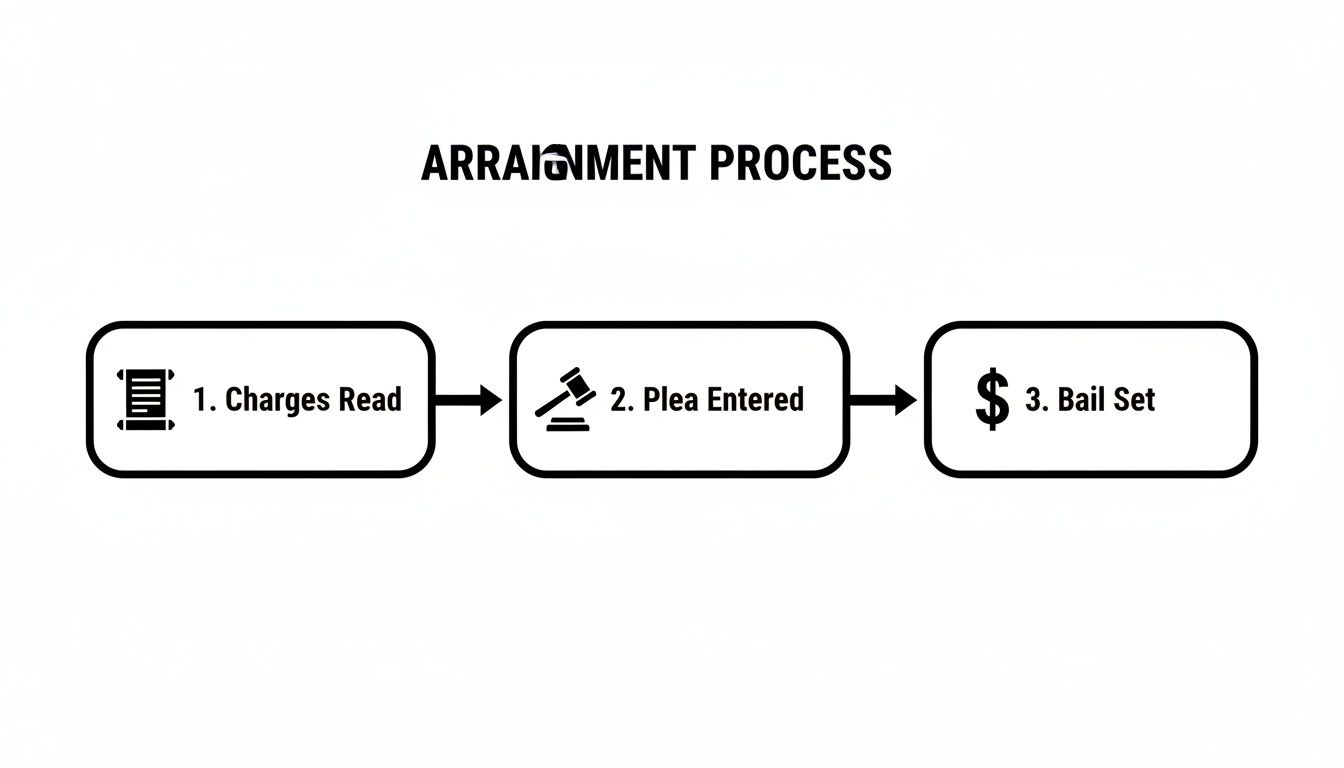
As you can see, the arraignment really boils down to these core actions. Each one is a critical building block for the legal process that lies ahead.
Entering a Plea and Setting Future Dates
The most significant action at the arraignment is entering a plea. Your attorney will almost always enter a plea of "not guilty" on your behalf. This is the standard, strategic move for a few key reasons:
- It Preserves Your Rights: Pleading "not guilty" keeps every one of your legal options open.
- It Allows for Investigation: This plea gives your legal team the time needed to investigate the evidence, including police reports and any breath or blood test results.
- It Initiates the Defense: It puts the court and the prosecutor on notice that you intend to challenge the state's case against you.
After the plea is entered, the judge will set the conditions for your release, which we'll cover in more detail. Finally, the court will schedule your next appearance, which is usually a pretrial conference or hearing.
You’ll walk out of the courtroom knowing exactly what comes next, confident that your case is in capable hands. A skilled Houston DWI lawyer transforms what could be a confusing legal procedure into a clear, manageable sequence of events, ensuring your defense starts on the strongest possible footing.
Understanding Your Plea Options: Guilty, Not Guilty, or No Contest
At your arraignment, you'll face one of the most pivotal moments in the criminal justice process. The judge will ask how you plead to the charges, and your answer sets the trajectory for your entire case. It’s a decision that demands a clear, strategic head—not an emotional reaction.
In Texas, you generally have three choices: Guilty, Not Guilty, or No Contest (also called nolo contendere). While they all sound different, only one of them is almost always the right move at this early stage of a DWI case.
Why Pleading Not Guilty Is Your Strongest First Move
It might feel counterintuitive, especially if you think the evidence is strong, but the standard—and most strategic—plea to enter at your arraignment is "not guilty." This isn't about denying what happened; it’s a critical legal step that protects your constitutional rights.
Think of it this way: pleading "not guilty" is like hitting the pause button. It stops the case from moving directly to a conviction and gives your attorney the time needed to do their job. This plea informs the court and the prosecutor that you intend to hold them to their burden of proof. They must prove every single element of the DWI charge beyond a reasonable doubt.
A "not guilty" plea isn’t a statement about the facts. It is a legal tool that preserves your right to a defense, opens the door for a thorough investigation, and keeps every single one of your options on the table.
This one action is the key that unlocks your ability to fight a DWI charge in Texas. It allows your attorney to get to work by:
- Requesting and Reviewing Evidence: Your lawyer can file for "discovery," which forces the state to hand over all its evidence—police reports, body cam videos, breath or blood test results, and maintenance logs for the testing equipment.
- Identifying Defenses: Once they have the evidence, your attorney can hunt for weaknesses. Was the traffic stop legal? Were the field sobriety tests administered incorrectly? Was the breathalyzer calibrated properly?
- Filing Pretrial Motions: Your lawyer might be able to file motions to suppress evidence that was gathered illegally. If successful, this can cripple the state’s case against you.
Pleading anything else at the arraignment slams the door on these opportunities before you even know what they are.
The Consequences of Pleading Guilty or No Contest
Pleading "guilty" at your arraignment is the legal equivalent of forfeiting the match. You are admitting to every element of the DWI charge. The case ends right there, and you move directly to sentencing. You give up your right to a trial, your right to challenge the evidence, and any leverage you had to negotiate a better outcome. It is a final decision with permanent consequences.
A "no contest" plea means you aren't admitting guilt, but you're also not fighting the charges. The court will find you guilty, and the conviction goes on your record just as if you’d pleaded guilty. While it can sometimes offer a small advantage in a later civil lawsuit, it is almost never the right call in a DWI arraignment.
The Texas criminal justice system relies on plea bargains to manage its caseloads. For you, the arraignment is a critical moment where you must decide if a quick outcome is truly in your best interest. Having a skilled Texas DUI attorney by your side ensures you understand all your options before being asked to make that choice.
Ultimately, your plea at the arraignment is the first major strategic move in your defense. Pleading "not guilty" is the only play that empowers you and your legal team to challenge the charges and fight for the best possible result, whether that’s a dismissal, a reduced charge, or a victory at trial. To learn more about how negotiations work down the road, you can check out our guide on how a plea bargain works for a DUI.
How Bail and Release Conditions Are Determined
Once you’ve entered your plea, the arraignment shifts to one of the most pressing issues: your freedom while the case is ongoing. This is where the judge decides on bail and sets conditions for your release. Bail is not a fine or a punishment. It’s simply a financial promise to the court that you’ll show up for all your future court dates.
This decision is crucial. It determines whether you go home to your family and job or remain in jail while your case moves forward. The judge weighs several factors, and having a sharp attorney who knows how to argue on your behalf can make all the difference.
Release on Recognizance vs. Posting a Bond
The judge has two main paths they can take. The best-case scenario is being released on your own recognizance, or "OR." This means the court trusts your word that you'll return for your hearings, so you don't have to put up any money. An OR release is usually reserved for people with strong ties to the community and little to no criminal history.
More often in DWI cases, the judge will set a bond amount. This is a specific dollar figure you'll need to pay—or have a bail bondsman cover—before you can be released. The amount can vary widely depending on the facts of your case. To get a better handle on what drives these numbers, check out our in-depth guide on the factors that influence DWI bail costs.
Factors the Judge Considers
When setting bail, a judge doesn’t just pick a number. They are legally required to consider specific aspects of your life to balance your freedom with public safety.
- Ties to the Community: Do you have a stable job? A home? A family that depends on you? Strong local connections suggest you are not a flight risk.
- Prior Criminal Record: A clean record is your best asset. If you have a history of arrests, especially for DWI, expect the judge to set a higher bail.
- The Specifics of the Charge: Was your BAC level extremely high? Was there an accident or injury? Any of these "aggravating factors" can lead to a much higher bond and stricter release conditions.
- Your Personal Circumstances: The judge can also take your financial situation and ability to pay a bond into account.
An experienced Houston DWI lawyer knows exactly how to frame these factors to your advantage, arguing for the most affordable and least restrictive release conditions possible.
Common Release Conditions in Texas DWI Cases
Getting out on bond is a huge relief, but it’s just the first step. The judge will almost certainly attach conditions to your release, and you must follow them perfectly to stay out of jail. If you violate a condition, your bond can be revoked, and you’ll be sent back to jail.
Pretrial detention represents one of the most consequential outcomes following an arraignment… For DWI defendants in Texas, arraignment decisions directly influence pretrial detention outcomes. Research demonstrates that early legal intervention dramatically improves these odds: defendants receiving pre-arraignment legal representation were 75 percent more likely to secure pretrial release and spent 79 percent less time in detention. This underscores why having experienced DWI defense counsel present at arraignment is critical. You can learn more about the findings on pretrial release from this study.
Here are some of the most common conditions you might face:
- Ignition Interlock Device (IID): Texas law is strict. It's very common to be ordered to install an IID on your car, even on a first-time DWI. This device is a breathalyzer that prevents your car from starting until you provide an alcohol-free breath sample.
- Abstaining from Alcohol: You will be ordered not to consume any alcohol or use any non-prescribed controlled substances while out on bond.
- Regular Check-Ins: You might have to report to a pretrial services officer on a regular basis, either in person or by phone.
- Counseling or Classes: The judge could also require you to attend alcohol education classes or undergo a substance abuse evaluation and follow any recommended treatment.
Your attorney's job is to advocate for fair and manageable conditions. We fight to ensure these requirements don't disrupt your ability to work, care for your family, and live your life while you defend yourself against the DWI charge.
The Strategic Advantage of Having a DWI Lawyer at Your Arraignment
Facing a court date alone is a daunting thought. You might be wondering if you really need to hire an attorney for what seems like a quick, procedural hearing. The answer is an absolute yes.
Having an experienced DWI lawyer with you at your arraignment isn't just a good idea—it's the single most important strategic decision you can make at this stage. This first hearing sets the tone for your entire case. Walking in unprepared can lead to mistakes that will follow you for months or even years. But with a skilled advocate by your side, the arraignment shifts from a source of anxiety into the first powerful move in your defense.
Waiving Your Appearance and Protecting Your Peace of Mind
One of the most immediate benefits of hiring a Texas DUI attorney is that for most misdemeanor DWI charges, your lawyer can appear in court for you. This is a significant advantage, as it often means you may not have to show up at all.
This allows you to avoid the stress and disruption of a court appearance. You won't have to take a day off work, arrange for childcare, or sit in a crowded, tense courtroom. Your attorney handles all the formalities, letting you focus on your life while they get to work protecting your future.
Serving as Your Legal Shield
From the moment your case is called, your attorney becomes your shield. They do all the talking, ensuring you don't accidentally say something that could be used against you later. The prosecutor and the judge will direct every question to your lawyer, who knows exactly how to respond in a way that protects your rights.
You will simply be advised to remain silent, which is your constitutional right. This prevents you from making any admissions or offhand comments that could unintentionally harm your defense. Your lawyer manages the entire interaction, making sure the process is handled correctly and professionally.
An attorney turns a procedural hearing into a strategic opportunity. They don't just stand beside you; they stand for you, laying the groundwork for a strong defense from the very first moment.
Executing the Right Legal Strategy from Day One
A seasoned DWI lawyer does more than just show up. They arrive with a plan designed to put you in the best possible position moving forward. This isn't just about getting through the hearing; it's about winning the first battle.
Here are a few key moves your lawyer will make that an unrepresented person wouldn't even know to consider:
- Entering the Correct Plea: Your attorney will immediately enter a plea of "not guilty" on your behalf. This is a critical step that preserves all your legal rights and officially kicks off your defense team's investigation into the state’s evidence.
- Arguing for Fair Release Conditions: Your lawyer will present a compelling argument for the least restrictive bail conditions possible. They can highlight your ties to the community, your job, and your family to advocate for a low bond or even a release on your own recognizance (OR), saving you money and protecting your freedom.
- Analyzing the Prosecution: The arraignment is your lawyer's first chance to size up the prosecutor assigned to your case. This initial contact provides valuable insights into their style and opens the door for future negotiations.
Ultimately, hiring an attorney for your arraignment is an investment in a better outcome. It ensures your case starts on the strongest possible footing and sends a clear message to the court: you are taking these charges seriously and are prepared to fight your DWI in Texas.
Practical Steps to Prepare for Your Arraignment Hearing

Heading to court can be nerve-wracking, but feeling prepared makes a significant difference. Knowing what an arraignment is helps, but taking a few practical steps beforehand will empower you to walk into that courtroom with confidence. This isn't about legal strategy—that's your lawyer's job. This is about managing the small things so you can present yourself in the best possible light.
A few simple, concrete steps can help you feel ready. Your attorney is there to handle the legal heavy lifting; your job is to show up on time, look the part, and be respectful.
Your Arraignment Day Checklist
Think of your court date like an important meeting. How you look and act sends a message to the court that you're taking this situation seriously. Here’s a straightforward checklist to get you ready:
- Dress Professionally: Opt for conservative, business-casual clothes. Avoid jeans, shorts, graphic t-shirts, or anything too casual. A respectful appearance shows you understand the gravity of the situation.
- Arrive Early: Courthouses can be confusing, and security lines can be long. Plan on getting there at least 30-45 minutes ahead of schedule. This gives you time to find parking, get through security, and locate the right courtroom without feeling rushed.
- Bring Essential Documents: Have your government-issued ID, any court notices you received, and your bond release papers. Keep them organized so you can access them easily.
Following these simple tips helps you start the day on the right foot, free from unnecessary panic.
Courtroom Conduct and Communication
Once you’re in the courtroom, your behavior is just as important as your appearance. The judge, clerks, and bailiffs observe everything. Your goal is to be quiet, respectful, and let your attorney do the talking.
Remember, the courtroom is a formal environment. Your conduct should reflect an understanding and respect for the legal process. Turn off your phone, remain quiet, and follow your lawyer’s instructions at all times.
Here are a few non-negotiable rules for courtroom etiquette:
- Address the Judge Properly: If you must speak, always address the judge as "Your Honor." You should also stand whenever you're speaking to the judge or when the judge enters or leaves the room.
- Let Your Attorney Speak: Your lawyer is there to speak for you. Do not interrupt them, the judge, or the prosecutor. This is not the time to explain your side of the story. That comes later, if at all.
- Do Not Discuss Your Case: This is critical. Do not talk about the details of your DWI case with anyone at the courthouse except your attorney. That includes other defendants, court staff, or the prosecutor. Anything you say can be used against you.
By sticking to these guidelines, you present yourself as a responsible individual and empower your lawyer to manage your case effectively. Your preparation and professional conduct create a positive first impression that can only help as your case moves forward.
Common Questions About Texas DWI Arraignments
Even with a detailed guide, it’s natural to have more questions. Facing a court date is stressful, and it’s normal to have lingering concerns. Here are straightforward answers to the questions we hear most often about Texas DWI arraignments.
Can My DWI Case Be Dismissed at the Arraignment?
It is extremely rare for a DWI case to be dismissed this early. The arraignment is the official start of your case, not the end. It is a procedural hearing, not a trial where evidence is argued.
The real opportunity to fight the charges comes later, after your attorney has had a chance to thoroughly review the state's evidence, file motions to suppress anything obtained illegally, and negotiate with the prosecutor. The arraignment is simply the starting line.
What Happens if I Miss My Arraignment Date?
Missing your arraignment is a serious mistake with immediate consequences. If you fail to appear, the judge will almost certainly issue a bench warrant for your arrest. This means any police officer can take you into custody on sight.
Additionally, your bond will likely be forfeited, meaning you lose any money you put up to get out of jail. When you are brought back to court, the judge is likely to set a much higher bond with far stricter conditions—if they grant you a new bond at all. It is a situation you must avoid at all costs.
How Is a Felony DWI Arraignment Different?
While the basic steps are similar, a felony DWI arraignment is a much more serious proceeding. Under Texas law, you are required to be there in person. Your attorney cannot waive your appearance as they often can for a misdemeanor.
Because the stakes are higher, the judge will be extra thorough in making sure you understand the severe potential penalties. You can also expect the bond amount to be significantly higher for a felony charge, with more restrictive release conditions from the start.
Will I Have to Speak During the Hearing?
No, and you shouldn’t. Your lawyer will do all the talking. Your job is to stand there respectfully, listen carefully, and follow your attorney's lead. You won’t be asked to give your side of the story or answer questions about the incident.
Your silence is your right. An experienced attorney acts as your voice and your shield, handling all communication with the court to protect you from accidentally saying something that could damage your case.
This hearing is formal and procedural. Let your lawyer handle the legal dialogue while you focus on staying calm and composed.
A DWI charge can feel like the weight of the world is on your shoulders, but you don't have to carry it alone. The Law Office of Bryan Fagan, PLLC is dedicated to defending Texans against DWI charges. Our experienced Houston DWI lawyers are ready to stand by your side, protect your rights, and fight for the best possible outcome for your case. Your future is too important to leave to chance. Request your free consultation today by visiting us at our Texas DWI law firm website.

