
A DWI arrest can be overwhelming—but you don’t have to face it alone. When you’re driving in Texas, there’s one number everyone knows: 0.08% Blood Alcohol Concentration (BAC). The law says that if you’re behind the wheel with a BAC at or above this level, you’re legally intoxicated. This is what can lead directly to a Driving While Intoxicated (DWI) charge.
But here's the thing: an arrest is not a conviction. Just because you were charged doesn't mean the state can easily prove you were intoxicated while driving. It's their job to prove it, and our job is to make sure your rights are protected every step of the way.
What You Need to Know After a DWI Arrest

A DWI arrest is an overwhelming experience. The flashing lights, the confusion of field sobriety tests, and the trip to the station can leave you feeling powerless and worried about what comes next. The most important thing to remember is that an arrest is just the beginning of a legal process, not the final word. You have rights, and with a strategic defense, you can fight the charges against you.
At the heart of almost every DWI case is that Blood Alcohol Concentration (BAC) number. While 0.08% is the legal line in the sand in Texas, it’s not an unshakeable fact. Think of it as a piece of evidence—one that is often gathered with imprecise tools under stressful conditions and can be challenged.
Key Terms Defined: What is BAC?
Blood Alcohol Concentration (BAC) is a measurement of the percentage of alcohol in your bloodstream. A 0.08% BAC means there are 0.08 grams of alcohol for every 100 milliliters of blood.
Law enforcement typically uses a breathalyzer or a blood test to measure your BAC. But these tests are far from perfect. In fact, many factors can throw off the results, including:
- The Timing of the Test: Your BAC can continue to rise after you stop drinking. The prosecution must prove you were over the limit while driving, not an hour later at the station.
- Machine Errors: Breathalyzers are machines that need constant calibration and proper operation. A poorly maintained device or a simple mistake by the officer can give a false high reading.
- Your Own Body: Your metabolism, weight, and even certain medical conditions can affect how your body processes alcohol, which can impact test results.
An arrest is merely an accusation. With a strategic legal defense, you can challenge the evidence and protect your rights, shifting from a position of uncertainty to one of empowerment.
Our goal is to pull back the curtain on the Texas law on alcohol and show you that there are clear ways to defend your case. A skilled Houston DWI lawyer acts as your advocate, digging into every detail—from the reason for the initial traffic stop to the chemical test results. We are here to ensure your rights are protected and to build a defense that aims for the best possible outcome.
The first few hours after an arrest are absolutely critical. Knowing what to do can make a huge difference, which is why we created this detailed DWI post-arrest checklist to guide you.
Texas DWI Penalties Explained
Getting charged with a DWI in Texas isn't just a one-time problem. It’s the first step in a legal process where the consequences can quickly escalate. The state uses a tiered system for DWI penalties, meaning the punishment gets more severe with each new offense or if aggravating factors are present.
That’s why understanding these penalties is so important. We're not just talking about fines; a conviction can impact your job, strain family relationships, and take away your freedom to drive. A skilled Houston DWI lawyer is your best ally in navigating this complex system and fighting to protect your future.
First DWI in Texas: A Class B Misdemeanor
For a first DWI in Texas, without other aggravating factors, you’ll typically be charged with a Class B Misdemeanor. Don't let the term "misdemeanor" mislead you; the penalties are serious and designed to leave a lasting mark.
A conviction for a first-time DWI can include:
- Jail Time: A mandatory minimum of 72 hours and up to 180 days in county jail.
- Fines: A fine of up to $2,000.
- License Suspension: A DWI license suspension can last from 90 days to one year.
- Annual Surcharges: An extra fee of up to $2,000 per year for three years to keep your license valid.
And that’s just the starting point. If your Blood Alcohol Concentration (BAC) was 0.15% or higher, the charge is automatically elevated to a Class A Misdemeanor, meaning the potential jail time and fines can double.
When DWI Charges Become Felonies
The jump from a misdemeanor to a felony is the most serious escalation in the Texas DWI system. This is where your freedom and future are on the line, and where hiring an experienced Texas DUI attorney is absolutely necessary to protect your rights.
A third DWI offense is automatically a third-degree felony, regardless of the specifics. This charge alone could result in 2 to 10 years in state prison and a fine of up to $10,000.
However, you don't need three DWIs to face a felony. Other situations can elevate a first or second offense to that level. The two most common scenarios are:
- DWI with a Child Passenger: If you are arrested for DWI with a passenger under the age of 15, you face a state jail felony. Punishment includes 180 days to two years in a state jail facility and a fine of up to $10,000.
- Intoxication Assault or Manslaughter: If an accident allegedly caused by an intoxicated driver leads to someone suffering a serious bodily injury, it's charged as Intoxication Assault—a third-degree felony. If someone dies, it becomes Intoxication Manslaughter, a second-degree felony carrying a prison sentence of 2 to 20 years.
These aren't just hypotheticals; they are harsh realities that underscore why you have to fight DWI Texas charges from the very beginning.
The Escalating Consequences of Repeat Offenses
The state’s message is clear: punishments get worse for repeat offenses. A second DWI is a Class A Misdemeanor, with mandatory jail time and fines up to $4,000. As noted, a third offense is a life-altering felony.
Texas law enforces strict penalties that escalate dramatically. Understanding the full scope of these potential penalties is crucial. For a detailed breakdown of how these laws are applied, you can explore comprehensive guides on Texas alcohol regulations.
An experienced attorney sees beyond the charge sheet to the weak spots in the state's case. We can challenge the reason for the traffic stop, question the validity of prior convictions, or find errors in the BAC evidence. An arrest can feel like the end of the road, but with the right legal team, it’s just the beginning of your defense.
The Implied Consent Law and Protecting Your License
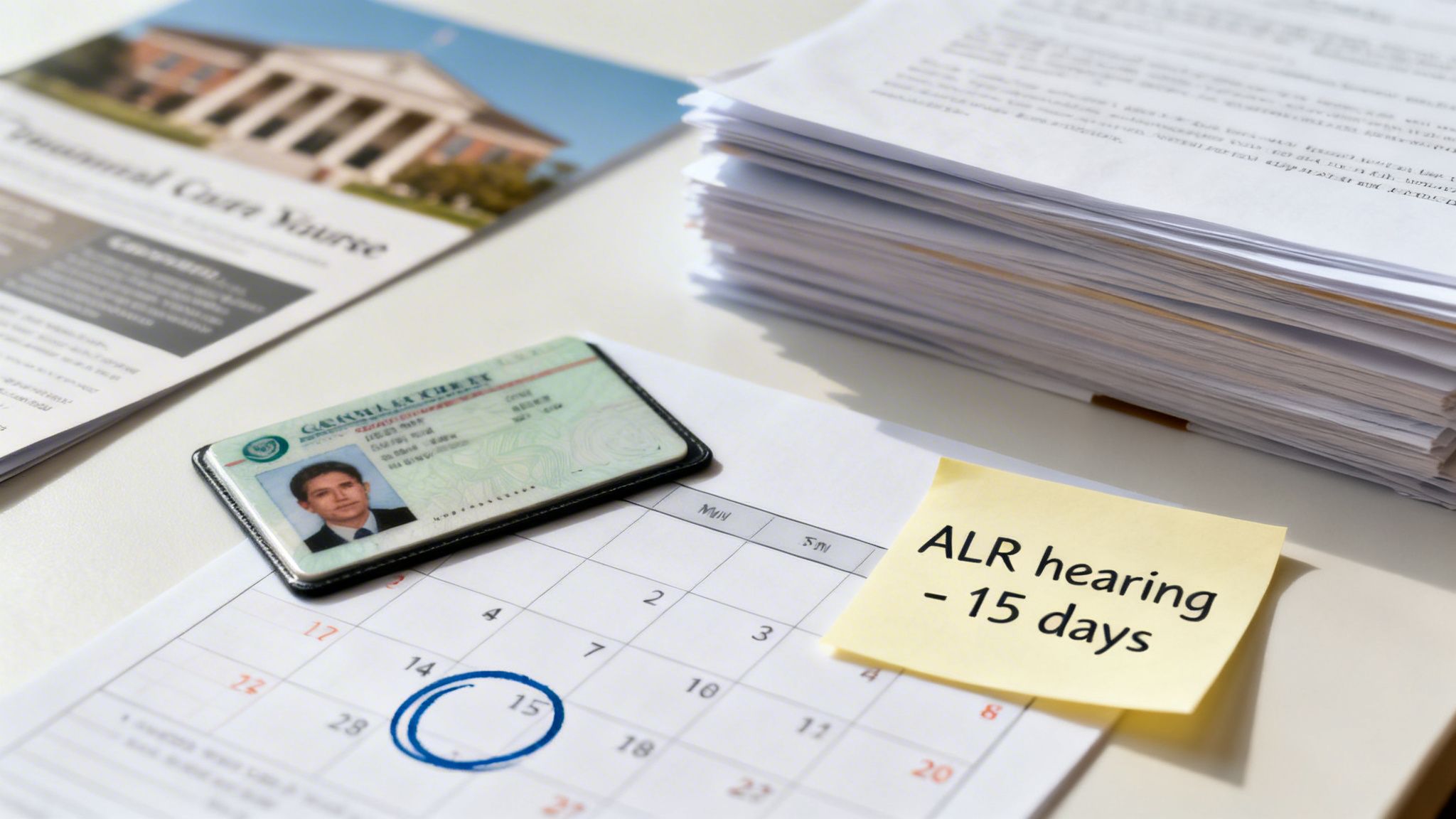
If you’ve been arrested for a DWI in Texas, the officer almost certainly asked you to take a breath or blood test. This request is rooted in a key part of the Texas law on alcohol known as “Implied Consent.”
Key Terms Defined: What is Implied Consent?
Implied consent means that by obtaining a Texas driver's license, you have automatically agreed to provide a breath or blood sample if you are lawfully arrested for DWI.
You still have the right to refuse that test. However, refusing triggers a separate, immediate civil process called an Administrative License Revocation (ALR). Understanding that you’re fighting on two fronts—one criminal and one administrative (civil)—is the first step to protecting your right to drive.
What Happens When You Refuse a Breath or Blood Test
Saying "no" to a chemical test doesn't make the DWI charge go away. It immediately initiates the ALR process, which is managed by the Texas Department of Public Safety (DPS) with the sole purpose of suspending your license.
For a first-time DWI arrest where you refuse the test, the penalty is an automatic 180-day license suspension. This suspension is separate from any criminal penalties.
This suspension is automatic, but it isn’t unstoppable. You have a very narrow window of time to fight back.
The Critical 15-Day Deadline for an ALR Hearing
This is one of the most important deadlines in your entire DWI case. After an arrest where you refused a chemical test, you have exactly 15 days to request an ALR hearing. If you miss that deadline, your license will be suspended automatically on the 40th day after your arrest, and you lose your only chance to contest it.
Requesting an ALR hearing does two crucial things:
- It Pauses the Automatic Suspension: Filing the request puts the suspension on hold until a judge hears your case and makes a decision.
- It Gives Your Lawyer a Major Strategic Advantage: The ALR hearing is often the first and best opportunity for your Houston DWI lawyer to question the arresting officer under oath, long before the criminal trial. We can gather evidence and testimony to expose weaknesses in the state’s case.
Fighting a DWI license suspension is a critical first move. By acting fast and requesting an ALR hearing, you’re not just trying to save your license—you’re taking the first aggressive step toward building a comprehensive plan to fight your DWI Texas charges.
Stricter Rules: How Texas DWI Laws Target Underage and Commercial Drivers

Most drivers know the 0.08% BAC limit. But if you’re under 21 or drive a commercial truck for a living, the rules change dramatically, and the stakes are much higher. An accusation of impaired driving can derail a young person’s future or end a professional driver's career. Our job is to provide the strategic defense you need to protect everything you've worked for.
For Drivers Under 21: Texas's "Zero-Tolerance" Policy
When it comes to underage drinking and driving, Texas law is clear: there is zero tolerance. For anyone under 21, having any detectable amount of alcohol in your system while driving is illegal.
A conviction for Driving Under the Influence (DUI) as a minor is a Class C Misdemeanor. A first-time offense can include:
- A fine up to $500.
- A 60-day driver’s license suspension.
- Mandatory alcohol awareness classes.
- Up to 40 hours of community service.
More importantly, a DUI creates a criminal record that can create roadblocks for college applications, scholarships, and future job opportunities. This requires a proactive defense to shield a young adult’s future from long-term damage.
The "any detectable amount" rule is incredibly strict. It means that even a single drink taken hours before driving could be enough to trigger a DUI charge. It’s a harsh reality that underscores why getting immediate legal advice is so critical.
A Costly Mistake: The Texas Open Container Law
The Open Container Law makes it illegal to have an open container of alcohol in the passenger area of your car on a public road. An "open container" is any can, bottle, or flask that is open, has a broken seal, or has been partially consumed.
This is a Class C Misdemeanor, but if you're arrested for DWI and police also find an open container, the DWI charge is enhanced. It becomes a Class B Misdemeanor with a mandatory minimum of six days in jail.
For CDL Holders: Your Career Is on the Line
If you hold a Commercial Driver's License (CDL), a DWI charge is a direct threat to your livelihood. Texas holds commercial drivers to a far higher standard.
While operating a commercial vehicle, the legal BAC limit is just 0.04%—half the limit for other drivers.
A DWI conviction, even in your personal vehicle, leads to a one-year disqualification of your CDL for a first offense. A second offense results in a lifetime disqualification. When your ability to earn a living is at stake, fighting your case is the same as fighting for your job.
Whether you’re a young driver or a professional whose career depends on a clean record, an experienced Houston DWI lawyer can dissect your case, challenge the evidence, and build a defense aimed at protecting not just your rights, but your entire future.
How to Fight a DWI in Texas: Building Your Defense
Of all the things to remember after being charged with a DWI, this is the most important: an arrest is not a conviction. An experienced Houston DWI lawyer knows that every piece of evidence, from the traffic stop to the breathalyzer printout, can be questioned.
Building a strong DWI defense isn’t about one magic argument. It’s about methodically taking apart the prosecution's case to find the weak spots. We don’t take the police report at face value; we dig deeper.
Questioning the Initial Traffic Stop
Every DWI case starts with a traffic stop, and that’s where your defense begins. Police can't pull you over on a hunch. They must have reasonable suspicion that you've broken a law.
If the officer’s reason for the stop was weak—like a vague claim of "suspicious driving" without specific facts—then everything that happened afterward could be thrown out. We review dashcam and bodycam footage to see if the stop was legally sound. If not, we can file a motion to suppress the evidence, which could lead to your case being dismissed.
How to Fight a Breath Test Result and Field Sobriety Tests
Key Terms Defined: What are Field Sobriety Tests?
Field Sobriety Tests (FSTs) are a series of physical and mental exercises police use to gauge impairment. The three standardized tests are the Horizontal Gaze Nystagmus (eye test), the Walk-and-Turn, and the One-Leg Stand.
These tests are notoriously subjective and difficult for anyone to pass, even when sober. Medical issues, exhaustion, bad weather, or confusing instructions can cause a "fail." We challenge how these tests were administered and interpreted to argue they are not reliable proof of intoxication.
Likewise, breath and blood tests aren't infallible. Common problems that can make a test result invalid include:
- Operator Error: The officer may not have followed strict procedures or may lack proper training.
- Machine Malfunctions: Breathalyzers require constant maintenance. We have the right to review the machine's service logs to check for a history of errors.
- Medical Conditions: Conditions like acid reflux (GERD) or diabetes can create "mouth alcohol" that leads to a falsely high reading.
An arrest is simply the start of the legal process. A strong defense is built by questioning every assumption and challenging every piece of evidence the prosecution plans to use against you.
This is where having an experienced Texas DUI attorney really matters. We know exactly what to look for. Our goal is to show the court that the number on that piece of paper doesn't tell the whole story.
Scrutinizing the Role of Alcohol Law Enforcement
A strong defense also means understanding the system. The Texas Alcoholic Beverage Commission (TABC), created in 1935, is a powerful law enforcement agency. You can explore detailed information about Texas alcohol laws to get a better sense of their reach. Knowing how these agencies work and the rules they must follow is critical to holding them accountable in court.
Successfully navigating a DWI charge requires you to fight DWI Texas allegations with a full-circle strategy. An arrest is a stressful time, but with the right legal team, you can face what's ahead with the confidence that your rights are being fiercely protected.
Your Action Plan After a Texas DWI Arrest
In the chaotic hours after a DWI arrest, it’s easy to feel lost. The first step toward regaining control is understanding that you’re fighting on two fronts: a criminal case for the DWI charge and a civil case to save your driver's license. You must act fast on both, because the clock is already ticking.
Your very first move should be to contact an experienced Houston DWI lawyer. There is no time to waste.
Step-by-Step Guidance on What Happens After a DWI Arrest
- Request Your ALR Hearing: You have only 15 days to request an Administrative License Revocation (ALR) hearing to fight the automatic suspension of your driver's license. This is your most urgent deadline.
- Get Out of Jail (Bond): After you've been booked, the next step is getting out. This usually happens by posting a bond, which is a financial promise that you’ll appear for all court dates. A defense attorney can often help speed up this process and argue for a lower bond amount.
- Hire an Attorney and Build Your Defense: Your lawyer will begin gathering evidence, reviewing police reports, and identifying weaknesses in the state's case.
This flowchart breaks down the first few stages of building a DWI defense, from the initial traffic stop to the critical phase of reviewing the evidence.
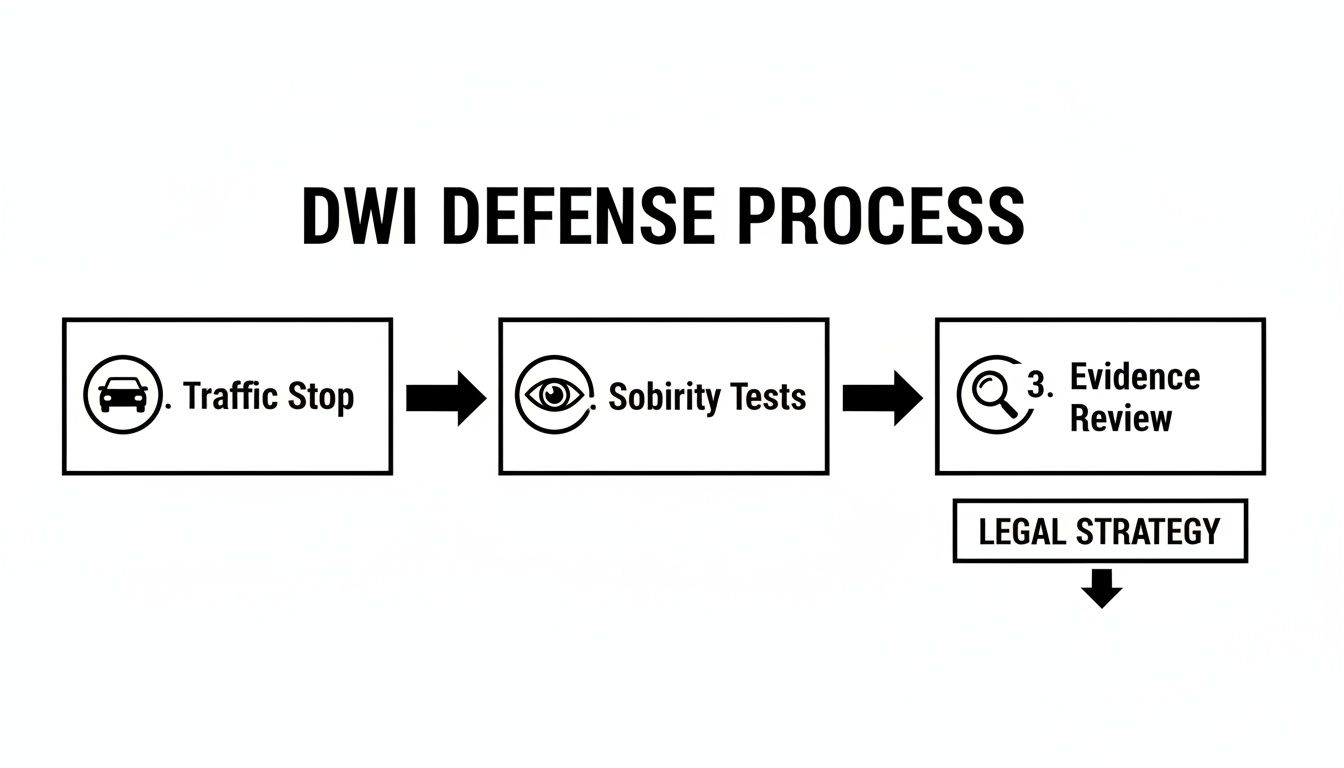
Think of each step as an opportunity. It's a chance for a skilled attorney to find cracks in the prosecution's case against you.
A DWI arrest can be overwhelming—but you don’t have to face it alone. Acting quickly and hiring the right legal team is the most powerful step you can take to protect your rights and your future.
It helps to understand why the Texas law on alcohol is so aggressively enforced. Texas is a massive market for alcohol sales, which leads to strict oversight. This context makes it clear why having a strong legal advocate isn't just a good idea—it's a necessity.
Take Control of Your Case Today
An arrest is not a conviction. The steps you take in the hours and days that follow are what will truly shape the outcome of your case.
When you contact The Law Office of Bryan Fagan, PLLC, you are partnering with a team dedicated to defending your freedom. We are ready to stand by your side, fiercely protect your rights, and build the strongest possible defense for you. Don't wait for the state to build its case against you.
Frequently Asked Questions About Texas Alcohol Laws
When you're facing a DWI charge, your mind is racing with questions. It’s an overwhelming time, and you need clear, straightforward answers. Here are some of the most common questions we hear.
Can I Get a DWI for Something Besides Alcohol in Texas?
Yes, absolutely. A common misconception is that "DWI" only means driving while drunk. In Texas, Driving While Intoxicated (DWI) covers impairment from any substance that takes away your normal mental or physical faculties. This includes illegal drugs, controlled substances, legally prescribed medications, and even some over-the-counter drugs.
What Is an Occupational Driver's License?
If a DWI leads to a license suspension, an occupational driver's license (ODL) can be a lifeline. It is a special, restricted license that allows you to drive for essential needs—like getting to work or school, handling family responsibilities, and running necessary errands. A skilled Houston DWI lawyer can petition the court for an ODL to minimize the disruption to your life.
A DWI charge doesn't have to define your future. With the right legal strategy, you can explore options to clear your record and move forward.
Can a DWI Charge Be Removed from My Record in Texas?
In many cases, yes. Getting a DWI off your record isn't automatic, but there are two main legal paths depending on your case's outcome.
- Expunction: This is the ideal outcome. If your DWI case is dismissed or you are found "not guilty," you can petition for an expunction. This process legally destroys all public records of the arrest. It’s as if it never happened.
- Non-Disclosure: If you are a first-time offender and successfully complete a special community supervision program, you might be eligible for an order of non-disclosure for a first DWI in Texas. This seals the record from public view, meaning it won't show up on most background checks.
An experienced attorney can analyze your case to see if you are eligible for an expunction or non-disclosure and guide you through the complex legal process.
An arrest can make you feel powerless, but you don’t have to go through this alone. The dedicated attorneys at The Law Office of Bryan Fagan, PLLC are here to provide the strong, strategic defense and reassuring guidance you deserve. We are known for defending Texans against DWI charges and are available 24/7 to protect your rights and help you face the legal system with confidence.
Contact us today for a free, confidential case evaluation by visiting us at https://texasduilawfirm.com. Let us start fighting for you today.