
A DWI arrest can be overwhelming, but you don't have to face it alone. If you're sitting at your kitchen table wondering how this will affect your license, your job, and your insurance bill, that reaction is normal. The good news is that Texas DWI insurance impact is not one single penalty, it's a set of moving parts, and once you understand them, you can start making smart decisions instead of reacting in panic.
What usually surprises people is that insurance doesn't just “go up” once and then settle back down. In Texas, a DWI can trigger two separate clocks, one tied to state compliance and one tied to the insurer's own risk review. Those clocks don't always end at the same time, which is why a driver can get back on the road legally and still feel trapped by high premiums.
That separation matters. A first-time DWI in Texas can change the way a company prices your policy, whether it keeps you as a customer, and whether you're pushed into a non-standard market. If you're trying to fight DWI Texas charges or protect your driving record, the insurance side of the case deserves attention right away, not months later.
A DWI Arrest Does Not Have to Define Your Future
The first phone call usually happens before the shock wears off. One client hears the arrest details, another is worried about getting to work, and almost everyone asks the same question in a different way, “How long is this going to follow me?” That worry is fair, because the insurance fallout can outlast the court date if nobody helps you manage it.
A Texas DWI is not just a traffic problem. It can affect your auto policy, your ability to keep continuous coverage, and your options when you start shopping again after reinstatement. The important part is that the damage is often manageable if you handle the legal case and the insurance timeline together, instead of treating them like separate problems.
Practical rule: don't wait for the insurance letter before you start planning. By then, you've already lost time.
If you're dealing with a Houston DWI lawyer, a Texas DUI attorney, or your own search for the best next move, the right strategy usually starts with the same mindset, protect the case first, then protect the policy. Even where rates rise, that rise is rarely permanent. Drivers who understand the process can shorten the pain by challenging the arrest, keeping coverage active, and shopping at the right time.
The rest of this guide breaks the issue into plain language. You'll see how the DWI case affects insurance, why the SR-22 and underwriting clocks are different, what happens after arrest, and which moves can reduce the long-term cost. If this is your first DWI in Texas, clarity matters more than speculation.
How Texas DWI and Insurance Systems Work Together
Texas law and insurance law don't move at the same pace. The criminal case asks whether the state can prove intoxication, while the insurer asks whether you now look like a higher-risk driver. Those are related questions, but they're not the same, and that distinction explains a lot of the confusion people feel after an arrest.
Here are the core terms in plain English. BAC means blood alcohol concentration, the measure officers and prosecutors use when they argue intoxication. Implied consent is the rule that says Texas drivers are treated as having agreed to chemical testing under certain circumstances. A field sobriety test is the roadside balance and coordination test officers use to look for signs of impairment. Administrative license suspension is the driver's license consequence handled through the state's administrative process, not the criminal courtroom.
The insurance company is not punishing you the way a judge does. It is re-pricing risk, and a DWI is one of the strongest risk signals it sees. That's why a routine ticket usually doesn't compare to a DWI for policy treatment, renewal decisions, or tier changes.
If you refused a breath test, the issue becomes even more layered. Texas Implied Consent and Refusing a Breath Test explains what happens after chemical testing is refused, and that choice can affect both the license case and how the insurer reads the arrest record. Your defense strategy should take both tracks seriously.
What Really Happens to Your Premium After a Texas DWI
The first thing many drivers notice is that the renewal notice feels like a second punishment. That's because the insurer often stops viewing you as a preferred customer and starts pricing you like a risk it has to monitor closely. The price change isn't random, it comes from how the company ranks alcohol-related convictions inside its underwriting model.
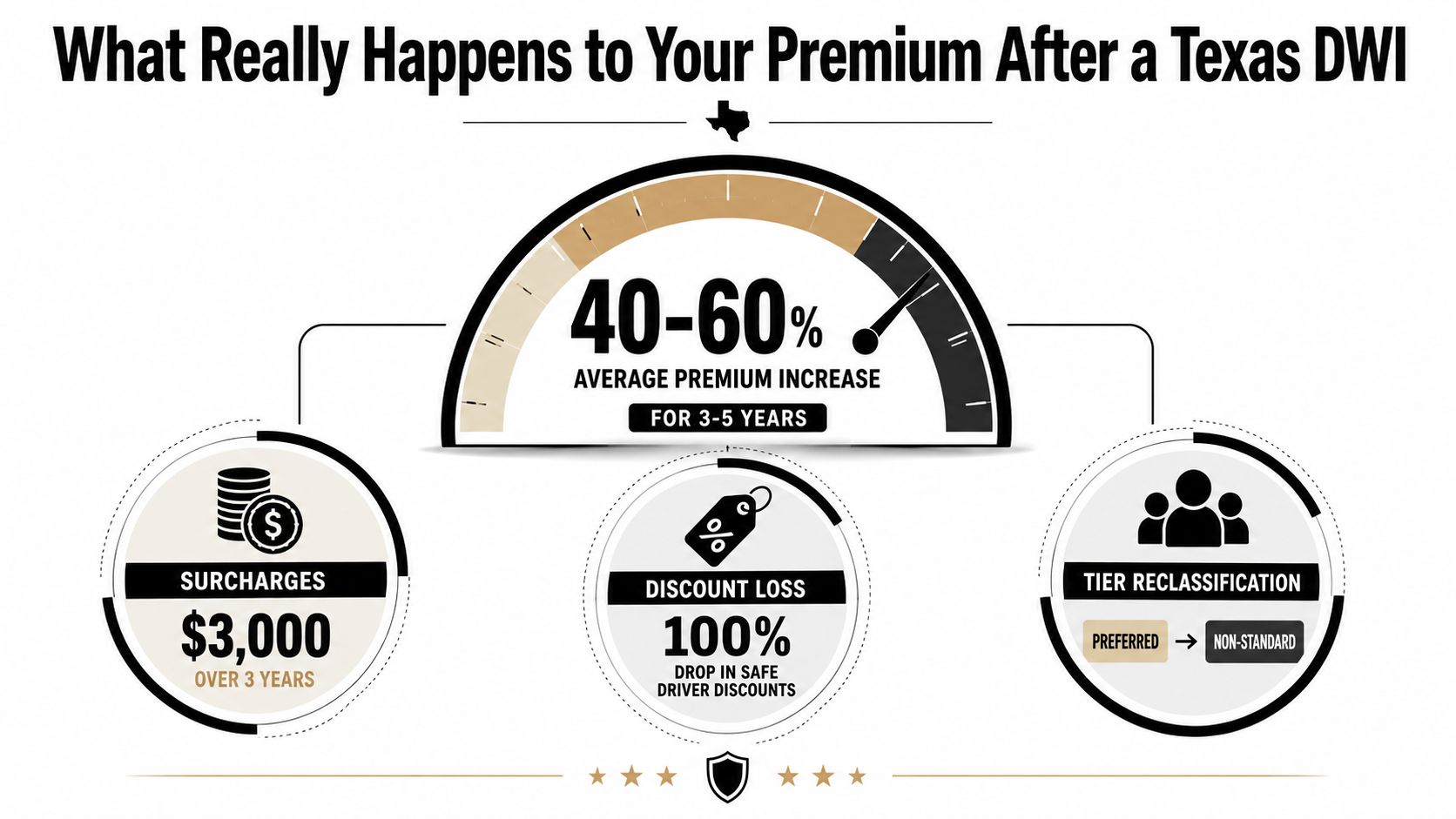
In Texas, a DWI conviction can raise auto insurance premiums by 54% on average, according to The Zebra, which reports a statewide increase from $1,415 for a driver with no DUI/DWI to $2,178 after the offense, an annual jump of about $762. That Texas surcharge pattern is discussed here, and the key point is that the higher price often lasts because insurers keep treating the conviction as a serious signal for 3 to 5 years. That means the financial hit can spread across multiple renewals, not just one.
The world gets more complicated than a single surcharge. Some companies remove safe-driver discounts, some move the policy into a non-standard tier, and some decline to renew. That's why two drivers with the same truck, the same coverage, and the same zip code can still get very different quotes after a DWI.
Insurance after a DWI is often less about one surcharge and more about a reclassification.
The timing also matters. The state may let you reinstate your license after the administrative requirements are satisfied, but the insurer may still treat the conviction as fresh. That gap is why shopping too early can lead to frustration, while shopping too late can leave money on the table. If you're trying to understand DWI license suspension consequences alongside premiums, think in terms of both eligibility and pricing.
SR-22 Requirements in Texas and How to Stay Compliant
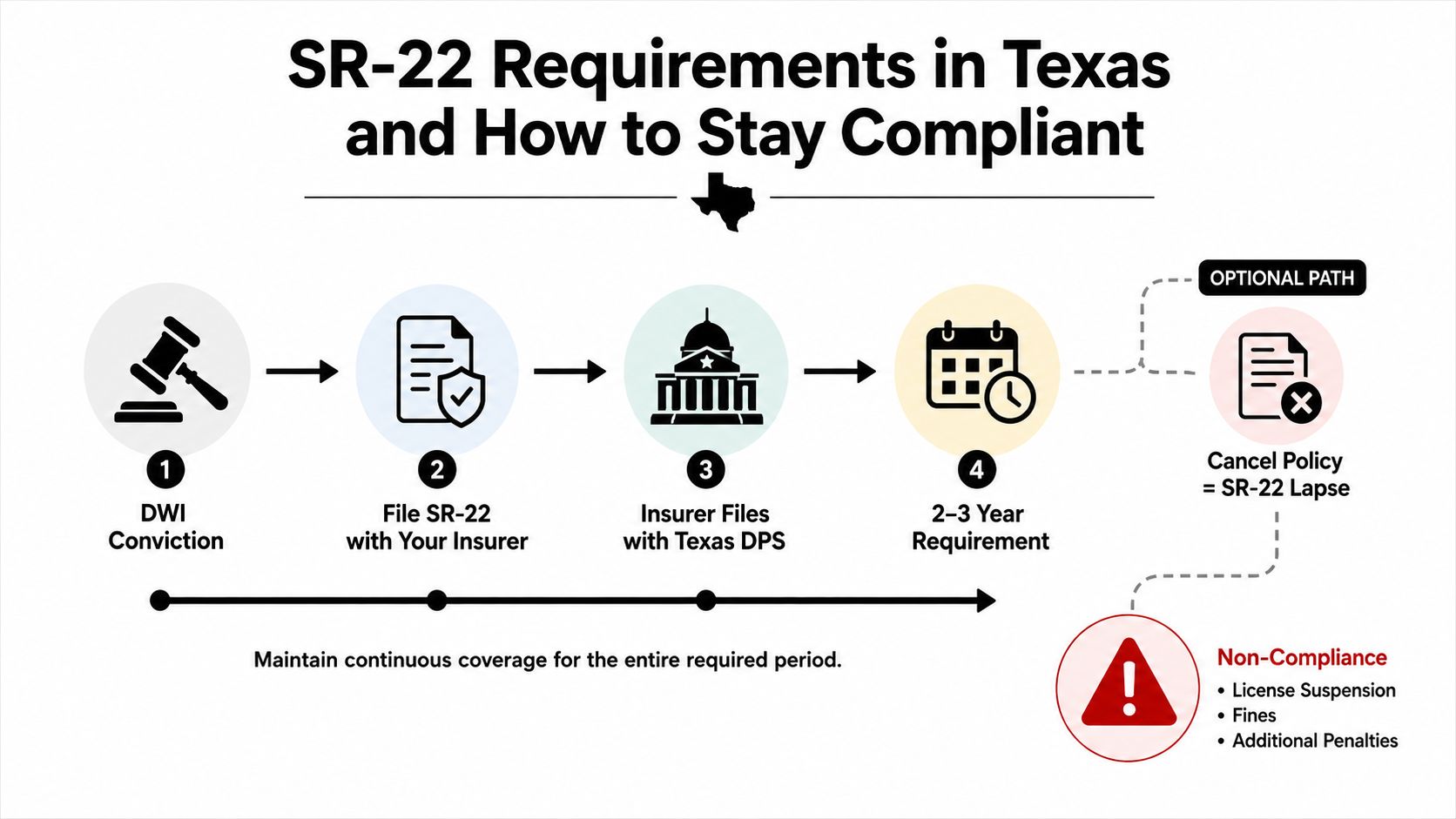
An SR-22 is not insurance. It's a filing that tells the state you're carrying the required coverage, and it usually comes into play after a DWI-related license issue. People often think the filing itself solves the problem, but it only satisfies one part of the process.
Texas drivers often have to keep that compliance going for about 2 to 3 years from license reinstatement, while the insurer's own rating window may last 3 to 5 years from conviction. That split is why you can do everything required by DPS and still get quoted like a high-risk driver. The state and the insurer are tracking different things.
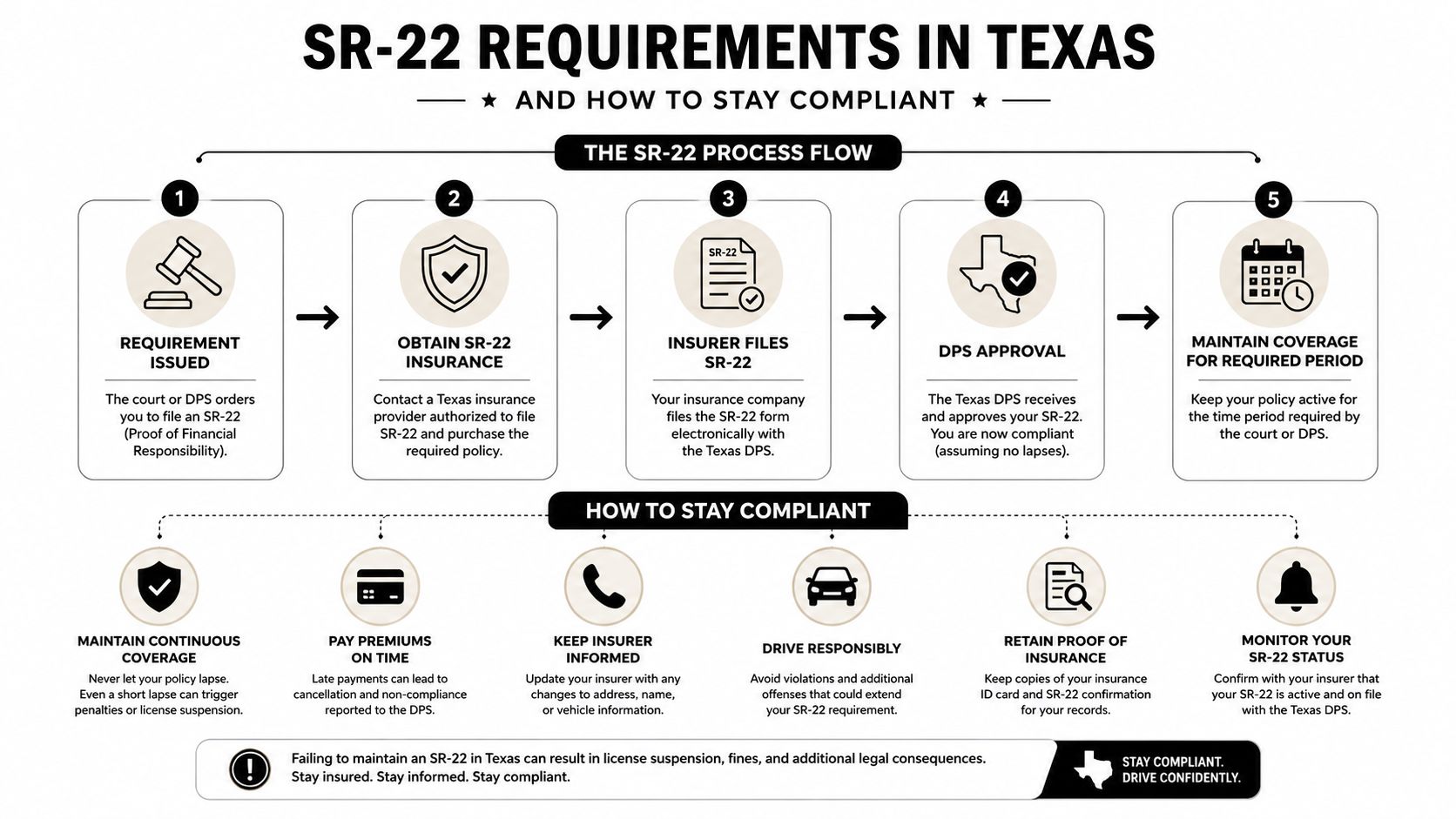
The filing itself usually happens through your insurer, who then sends the proof to the state. If the policy lapses, the filing can lapse too, and that can create a fresh license problem. For a driver already dealing with court dates and work stress, small mistakes can become expensive.
A few practical habits help a lot:
- Keep coverage continuous: A lapse can create a new compliance problem.
- Confirm the carrier files the SR-22: Don't assume the paperwork is done until you verify it.
- Match the policy to the license timeline: Your state deadline and insurer deadline may not be the same.
- Ask before switching carriers: Some companies will file the form, others won't.
If you want a simple place to start, review this Texas SR-22 guide and compare it against your reinstatement paperwork. That approach helps you avoid mixing up the filing requirement with your future rate problem. They're connected, but they're not identical.
License Suspension ALR Hearings and Special Risks for CDL Holders
The clock starts fast after a DWI arrest. If you want to challenge the license consequences, you usually have to request an ALR hearing on a tight deadline, while bond issues, criminal court dates, and other obligations are already piling up. That leaves you dealing with two systems at once, and they do not wait for each other.
The ALR track and the insurance track move on different timelines. A hearing can affect what shows up in the record, which can matter before an insurer locks in its view of your case. If the stop, the testing, or the arrest was flawed, pushing back early may limit how much damage reaches the renewal or replacement quote stage.
For a commercial driver, the stakes spread wider. A CDL holder may have employer rules, fleet coverage, or job-related driving duties that go far beyond a personal auto policy. The same concern can apply to rental fleets, out-of-state drivers arrested in Texas, and workers whose jobs depend on a clean driving profile.
Insurance companies do treat DUI and DWI as serious underwriting events, and that can mean higher premiums, tighter coverage options, or placement in the non-standard market. That question becomes sharper for CDL holders and drivers who are tied to an employer's vehicle policy, because the issue is not only what your personal policy costs. Sometimes the question is whether you can stay insurable for work at all.
Practical insight: if your driving is tied to your job, your defense has to protect both your license and your ability to keep earning.
A focused case review helps separate the pieces that can be challenged from the ones that can be managed. Some first-time DWI cases can be handled in a way that reduces long-term fallout, while others need a harder fight on the stop, the test, or the paperwork. An ALR hearing page can help explain how the administrative process fits into that strategy, and a Houston DWI lawyer can coordinate the ALR side with the criminal case so one mistake does not turn into several.
Proven Ways to Reduce the Insurance Harm After a DWI
A DWI does not mean you have to accept the first quote that lands in your inbox. You are dealing with two separate clocks. One clock is the state side, where compliance rules like SR-22 filing and license issues run their course. The other clock is the insurer side, where underwriting keeps reacting to the DWI long after the court process starts to cool off. The best results usually come from working both at once, starting early, and not letting either clock run unattended.
That starts with the defense itself. If the traffic stop was weak, the testing was flawed, or the paperwork has gaps, those problems can affect more than the criminal case. They can also change how much damage reaches the renewal stage and how long the file stays expensive.
The insurance hit after a Texas DWI is usually heavier than a routine ticket because carriers treat alcohol-related convictions as a high-severity underwriting event. Texas-market analyses show that full-coverage premiums can rise sharply after a DWI, and the exact jump depends on the carrier, the driver profile, and whether the policy is still in the standard market or has moved into a more restrictive one. The point is not the exact number, it is that the quote spread can be wide, so shopping carefully matters.
You get better results when you compare admitted and non-standard carriers after reinstatement, keep continuous coverage, and avoid any lapse while you switch. A gap in coverage can create a second problem on top of the first one, especially when the insurer is already watching your file closely. Timing matters because the state may finish its compliance requirements before the insurance company finishes its own review.
A few defenses and practical moves often work together:
- Challenge probable cause: If the stop was weak, the case may be weaker too.
- Scrutinize testing: Breath and blood results only matter if the process behind them holds up.
- Shop both markets: Standard carriers and non-standard carriers may quote very differently.
- Preserve discounts where you still can: Ask which discounts remain available after the conviction and which ones drop away.
- Use a defense team that understands the timing: A focused legal defense can help shape the insurance picture later.
If you want help on the legal side, the team at The Law Office of Bryan Fagan, PLLC handles DWI defense, ALR hearings, and related record issues, and that can matter when you are trying to limit how long the conviction stays expensive. If your case also raises license or commercial driving concerns, those issues should be addressed early so they do not keep the insurance problem alive longer than necessary.
Your Path Back to Affordable Coverage and a Clear Record
A recovery plan after a DWI usually works better when you treat it like two clocks running at once. One clock is the SR-22 compliance clock, which tracks whether you are staying current with what the state requires. The other is the insurer underwriting clock, which tracks how long the conviction keeps affecting how a carrier prices you. If you keep both in view, you can make better decisions about your case, your license, and your next policy.
The first move is to protect the case, because the outcome can shape what happens with insurance later. Then keep your coverage clean, follow the SR-22 rules if they apply, and shop again once the underwriting pressure starts to ease. A lapse in coverage can slow that progress, especially when you are already trying to show a carrier that you are a lower risk now.
Texas drivers with a DWI often face a much larger long-term financial hit than the initial court fines alone suggest. An analysis from The Zebra reports that full-coverage premiums can rise from about $2,697 per year to $5,287 after a single DUI or DWI. That same analysis shows why the conviction can stay expensive for a while, because the price increase is not just tied to the court case itself, it also reflects how insurers view the risk on the policy side.
That is why record strategy matters. A result that helps with sealing, expunction, or a reduced charge can matter later when an insurer reviews your file again. The legal case and the insurance file are connected, even if they move on different schedules.
If you are rebuilding after a DWI, keep the plan simple. Protect the license case, watch the underwriting clock, and revisit quotes when the risk profile starts to age out. If the underlying case can be resolved favorably, your future quotes may improve faster than if you only wait and hope.
For a practical next step, read these insurance reinstatement steps and compare them with your court paperwork. If your case is still open, get advice now, before the premium notice arrives and the process gets harder to sort out.
