Facing a DWI arrest can be overwhelming—but you don’t have to face it alone. If you're now on probation in Texas, the words "probation drug test" can add a new layer of anxiety. The constant worry about a surprise test—or worse, a false positive—is a heavy weight to carry when you’re trying to meet your legal obligations. It can feel like your future is hanging by a thread, but knowledge and a strong legal strategy can restore your confidence.
You Have Options After a Probation Drug Test
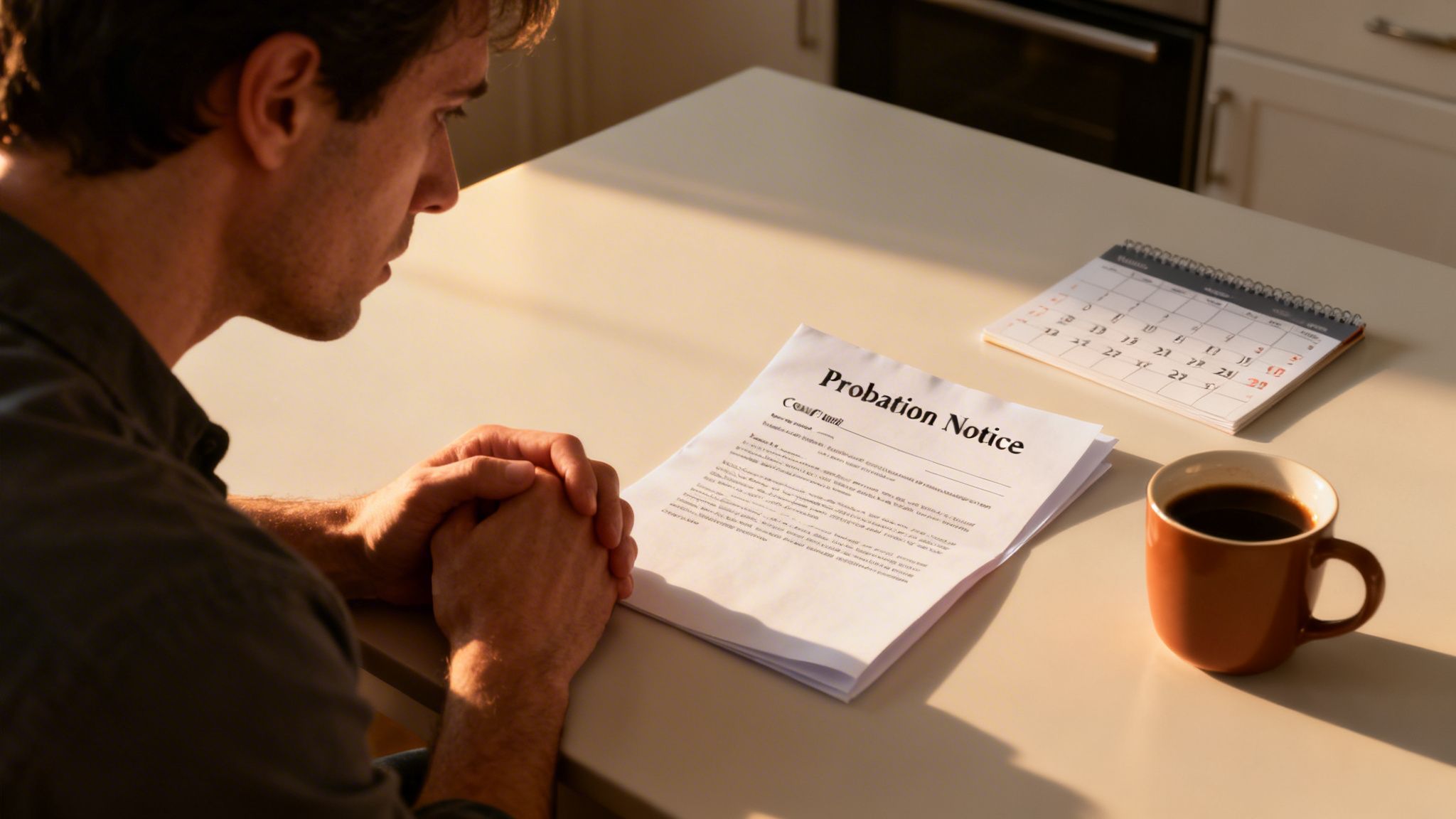
Navigating the aftermath of a DWI is challenging enough. Add the pressure of probation, and the anxiety around a mandatory drug test is completely understandable. The fear of a positive result can feel paralyzing, but it's crucial to know that you are not powerless.
This guide is designed to help you replace that anxiety with knowledge. We’ll walk you through the entire process, explaining what to expect from different tests, your rights, and the strategic steps you and your attorney can take if you receive a positive result.
A positive drug test does not automatically mean your probation will be revoked. With the right legal strategy from a Houston DWI lawyer, you can challenge the results and fight to protect your freedom.
Understanding Your Rights and Preparing Your Defense
Knowing what to expect is the first step toward taking back control. Many people mistakenly believe a failed test is the end of the road, but that simply isn’t true. The entire testing process is governed by strict rules and procedures that must be followed precisely. If they aren't, the results can be deemed inadmissible.
Think of it like a chain: if any link is broken, the entire chain falls apart. For example, common issues that can form the basis of a successful defense include:
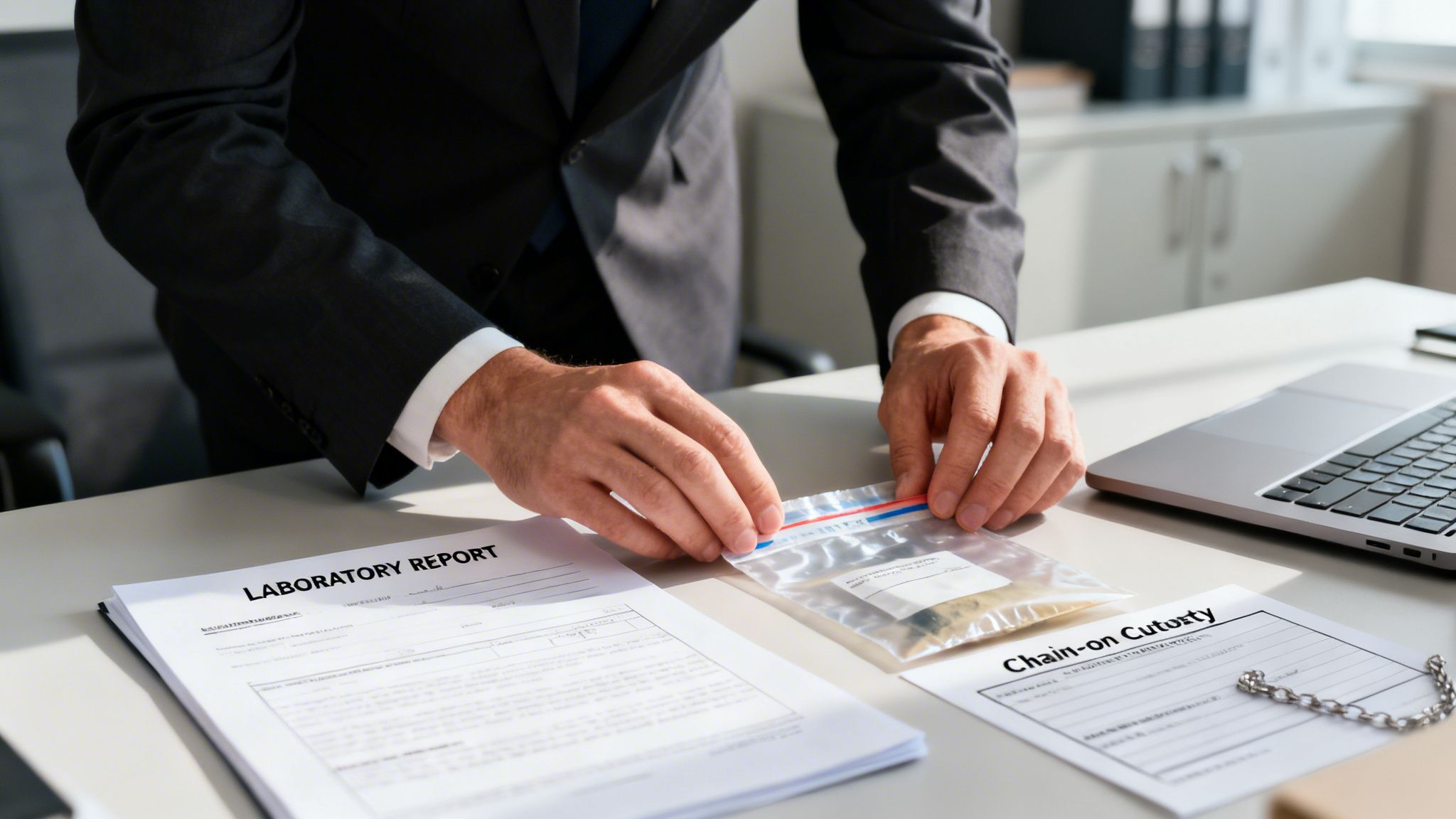
- Chain of Custody Errors: The lab must prove your sample was correctly handled, sealed, and documented at every step. If they cannot prove who had the sample and when, the result may be inadmissible in your hearing.
- False Positives: This happens more often than you might think. Certain legal prescription drugs, common over-the-counter medications, and even some foods can trigger a false positive result for illicit substances.
- Improper Lab Procedures: The sophisticated equipment used for testing must be perfectly calibrated and maintained. If the lab skipped a maintenance check or an employee wasn't properly trained, it can invalidate the test entirely.
A skilled Texas DUI attorney knows how to investigate these details, requesting lab records and personnel files to find potential flaws. This guide will serve as your starting point for understanding your options and building a defense to protect your future.
Understanding Texas Probation Drug Testing Rules
When a Texas court places you on probation for a DWI, you receive a list of conditions you must follow. Among the most common—and most stressful—is the requirement to submit to drug and alcohol tests. Your probation officer can demand a probation drug test at any time, with or without notice. While this uncertainty can be unsettling, understanding the process is your best defense against missteps.
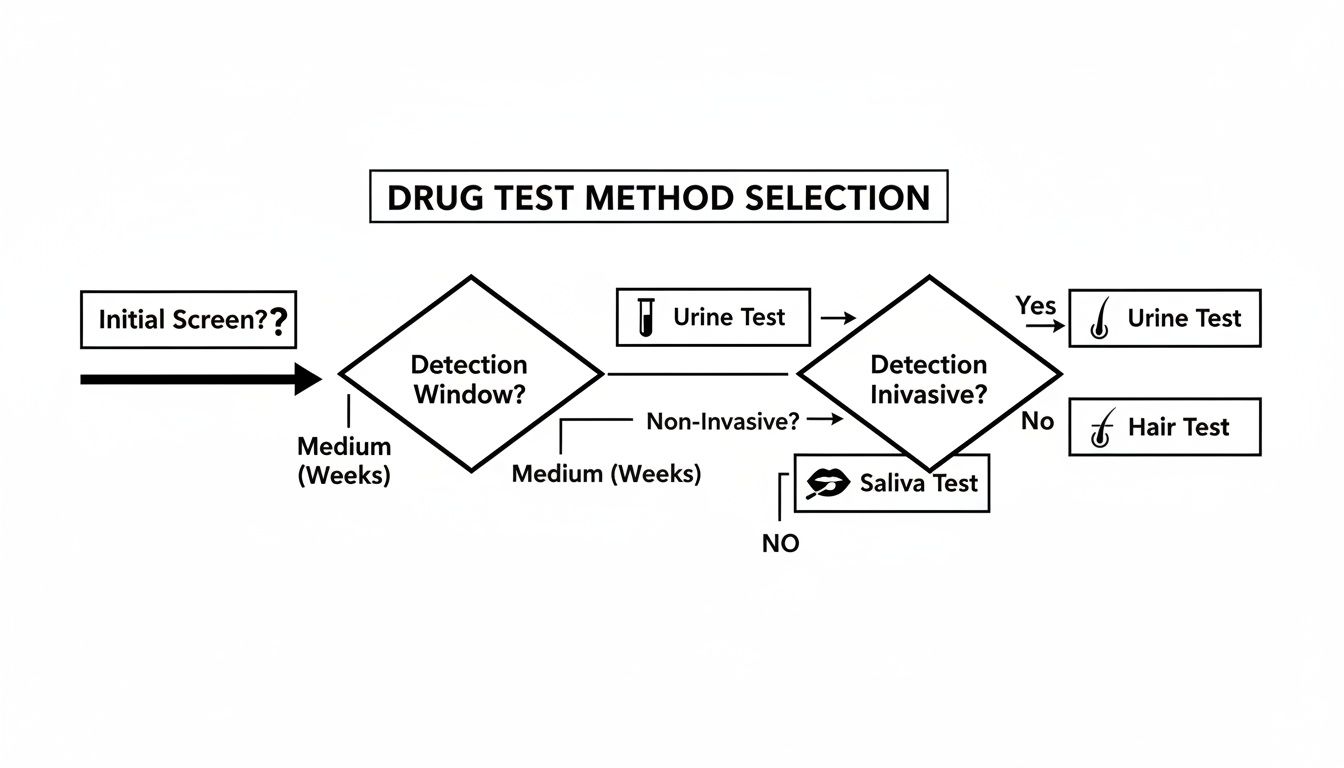
Knowing your legal obligations demystifies the process. The court uses different testing methods, and each has its own strengths and weaknesses. You are most likely to encounter urine, hair, and saliva tests.
Common Types of Drug Tests in Texas
Every type of drug test has a "detection window," which is the amount of time a substance remains detectable in your system. For anyone on probation, understanding these windows is critical.
- Urine Tests (Urinalysis): This is the most common method for probation testing. It's affordable and effective for detecting recent drug use, typically within the last few days to a week. The main exception is chronic marijuana use, which can remain detectable for much longer.
- Hair Follicle Tests: If the court wants a long-term view of your history, it may order a hair test. By analyzing a small hair sample, labs can detect substance use for up to 90 days, revealing patterns of use rather than a single instance.
- Saliva (Oral Fluid) Tests: These tests have the shortest detection window, typically just 24 to 48 hours. Saliva tests are used to determine very recent use—in other words, to see if someone might be impaired at that moment.
Probation drug testing is a major part of the justice system nationwide. North America accounts for over 45% of the global drug screening market—valued at USD 10.37 billion in 2023—and these tests are used to monitor compliance for a wide range of offenses.
The key is to remember that these tests are not infallible. Each one can be challenged based on procedural errors, contamination, or the possibility of a false positive.
The table below breaks down these common methods. If you have specific concerns about alcohol, you can also learn more about the challenges of alcohol testing on probation in our detailed guide.
Common Types of Probation Drug Tests in Texas
| Test Type | Detection Window | Commonly Detects |
|---|---|---|
| Urine Test | 1-7 days (up to 30 for heavy cannabis use) | Marijuana, Cocaine, Opiates, Amphetamines, Benzodiazepines |
| Hair Test | Up to 90 days | A wide range of illicit drugs, showing historical use patterns |
| Saliva Test | 24-48 hours | Marijuana (THC), Cocaine, Amphetamines, Opiates, Alcohol |
Understanding these basics is the first step toward regaining control. If you find yourself facing a probation drug test, knowing the science behind it gives you and your attorney the power to identify potential weaknesses and build a strong defense.
What Happens After a Failed Probation Drug Test
Receiving a call from your probation officer about a positive drug test can be a gut-wrenching experience. While it’s the scenario every person on probation dreads, the most important thing to know is this: a positive test is the beginning of a legal process, not an automatic trip to jail.
It is not the final word on your freedom.
When a test comes back positive, your probation officer will likely file a Motion to Revoke Probation (MTR) with the court. An MTR is a formal notice informing the judge that you have allegedly violated the terms of your probation. This motion officially kicks off the legal process.
The Motion to Revoke Probation Process
Receiving an MTR can be intimidating, but it's essential to understand what it is: a notification that the state intends to present its case against you. You have a right to a hearing where the prosecutor must prove you violated your probation. While the burden of proof is lower than in a criminal trial, the state still has to present credible evidence.
A judge has significant discretion in an MTR hearing, and the outcome depends on the facts of your case, your probation history, and the strength of your defense. The judge may:
- Continue Probation: Allow you to continue on probation, sometimes with a warning.
- Modify Conditions: Make your probation stricter, such as requiring more frequent drug tests, mandatory counseling, or an ankle monitor.
- Extend Probation: Add more time to your probation sentence.
- Revoke Probation: In the most serious cases, the judge can revoke your probation and impose the original jail or prison sentence.
This is why understanding the testing process is so critical. A procedural error can be the key to your defense.
Every step—from how the sample was collected to the lab's chain of custody—can be challenged. A procedural error can be enough to have a "positive" result thrown out.
You Have the Right to a Defense
A positive test is not a guilty verdict. It’s a piece of evidence that must be examined, questioned, and challenged. You have the right to a lawyer and the right to present a defense at your hearing. This is your opportunity to find weaknesses in the prosecutor's case and protect your liberty.
A failed drug test doesn't have to result in jail time. A strategic defense can question the test's accuracy, challenge the procedures, and argue for a less severe outcome, protecting your future and your liberty.
Trying to navigate this alone is overwhelming, but you don't have to. An experienced Texas DUI attorney who understands both the law and the science behind drug testing is your greatest asset. To better understand what you’re facing, our in-depth guide to DWI probation violation hearings explains how these battles are fought—and won.
How a Lawyer Can Challenge a Positive Drug Test Result
A positive drug test result while on probation can feel like a final blow. It’s easy to assume it's game over, but a positive test result is just a piece of evidence—and like any evidence, it can be flawed, mishandled, or wrong.
This is where a skilled defense lawyer can change the narrative. Instead of simply accepting the result, we treat it like a case to be investigated, digging into every step of the process to find weaknesses in the state’s argument.
A proactive defense is your best strategy against a Motion to Revoke Probation. A positive test doesn’t automatically mean you’re going back to jail; it means it’s time to build your defense.
Challenging the Chain of Custody
From the moment a sample is collected to the time it’s tested, it must be tracked under a strict protocol called the chain of custody. This is a detailed log that documents every person who handled your sample, where it was stored, and how it was transferred.
Any break in that chain destroys the evidence’s credibility. An attorney will immediately demand these records to look for any sign that your sample could have been contaminated, mislabeled, or even swapped with someone else's. If there are gaps in the documentation, we can argue that the result is unreliable.
Questioning the Scientific Validity of the Test
Lab testing sounds foolproof, but it’s a science performed by humans using machines that require precise and regular calibration. A skilled lawyer knows the right technical questions to ask to challenge the scientific validity of a probation drug test.
We start by attacking the process from multiple angles:
- Equipment Calibration Records: Was the testing machine working correctly? We demand records showing the equipment was properly calibrated and maintained. An improperly calibrated machine can produce false positives.
- Lab Technician Qualifications: Who ran your test? Were they properly trained and certified? Human error is a significant factor, and an overworked or undertrained technician can make critical mistakes.
- Confirmation Testing: An initial positive screen is a fast, preliminary test known for errors. The lab is required to perform a second, more accurate confirmation test (like GC-MS). We ensure this was done—and done correctly.
If we find flaws in the lab's procedures, your attorney can file a motion to suppress the results. If granted, the judge is legally forbidden from considering it as evidence against you.
A positive drug test is an accusation, not a conviction. Your attorney’s job is to deconstruct that accusation by challenging the procedures, questioning the science, and presenting alternative explanations to the court.
Investigating False Positive Results
It’s surprising how many common and legal substances can cause you to fail a drug screen. Your attorney should immediately conduct a detailed interview to determine if an innocent substance is the real culprit. This can be a powerful defense because it provides the judge with a logical, reasonable explanation for the result.
Some of the most common sources of false positives include:
- Prescription Medications: Many legitimate prescriptions for ADHD, anxiety, depression, or pain management can appear on a test as illegal drugs.
- Over-the-Counter Drugs: Common cold medicines containing pseudoephedrine and even some pain relievers like ibuprofen have been known to trigger false positives for amphetamines.
- Dietary Factors: Something as simple as eating a poppy seed bagel can cause a false positive for opiates.
By presenting your medical records, prescriptions, or other proof, your lawyer can build a strong argument that the positive test was a mistake. For anyone facing a possible revocation, understanding the options for a probation violation 1st offense in Texas is crucial, as a solid defense can often persuade a judge to consider alternatives to jail. A positive test isn't the end of your case—it’s the beginning of your defense.
Your First Steps After a Positive Test Notification
The moment your probation officer informs you that you’ve failed a probation drug test can be incredibly stressful. Your natural reaction might be to panic, explain, or make excuses. However, what you do—and don’t do—in these first few moments can significantly impact the outcome. Your first moves are your first line of defense.
Taking the right steps immediately puts you in a position of strength, even when it feels like the situation is out of your control.
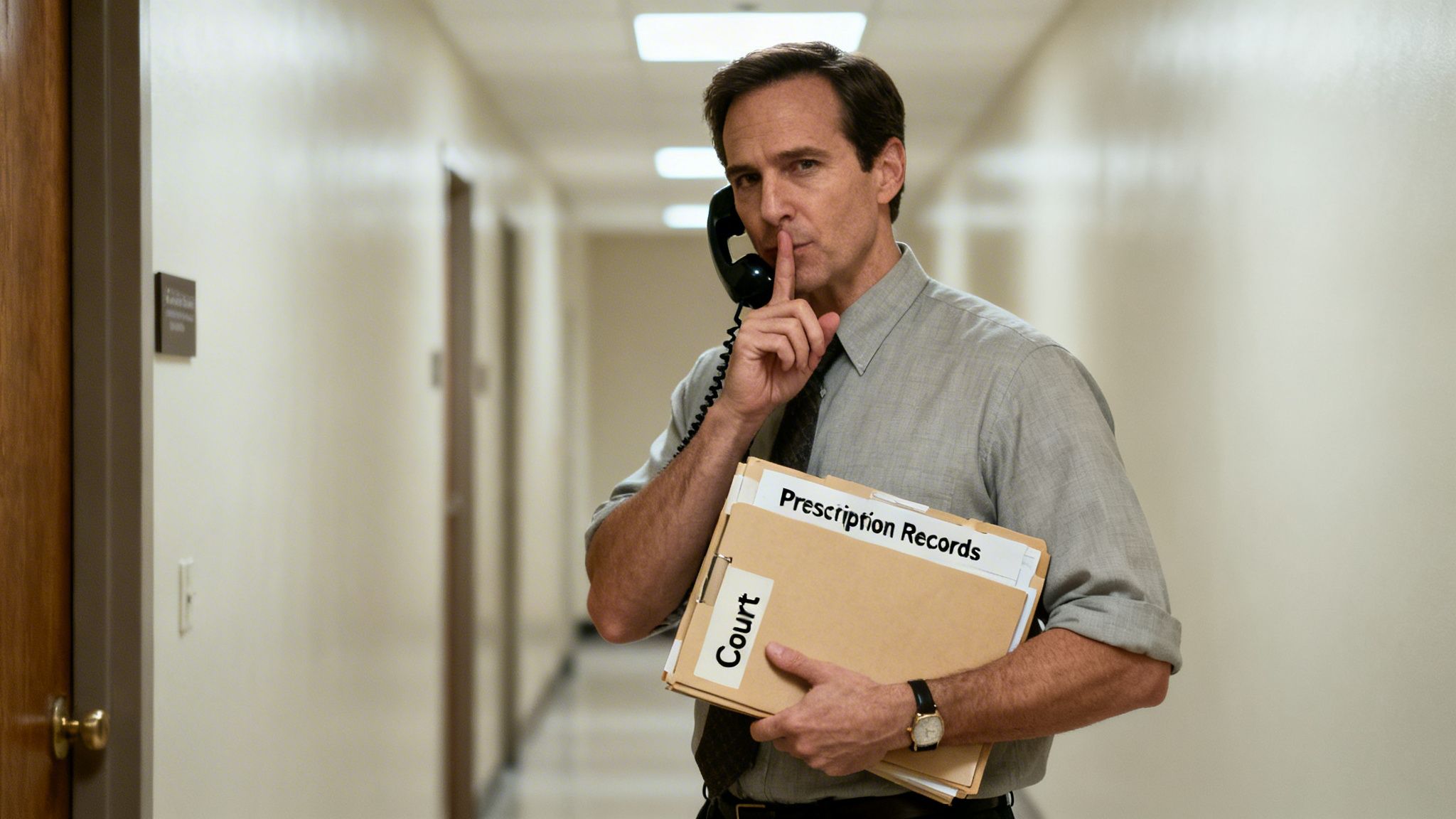
Here's what you need to do right away to protect your rights before the court process begins.
Step 1: Exercise Your Right to Remain Silent
This is the most important—and often the most difficult—step. Your instinct may be to defend yourself, apologize, or try to justify the result to your probation officer. Do not. Exercise your right to remain silent.
Anything you say can be used against you in a Motion to Revoke Probation hearing. Simply remain calm, be polite, and state that you will not discuss the matter without legal advice. Do not offer any information, no matter how harmless it seems.
Step 2: Immediately Contact a Defense Attorney
Your second call should be to an experienced Houston DWI lawyer. Time is critical. The sooner an attorney is involved, the more options you have to build an effective defense.
A proactive lawyer can get ahead of the situation, sometimes even before a Motion to Revoke Probation is officially filed. We can start preserving evidence, provide concrete advice, and handle all communication with your probation officer to ensure you don't say something that weakens your case.
Don't wait for the court to make the first move. A powerful defense starts the second you get that notification. This allows your attorney to control the narrative from day one, not just react to what the prosecutor claims.
Step 3: Gather Your Documentation
While your lawyer develops the legal strategy, you can begin gathering documents that might explain the positive test. This is not about building the case yourself—it's about arming your lawyer with the information they need to fight for you.
Your attorney will guide you on what is relevant, but you can get a head start by collecting:
- Prescription Records: A complete list of all medications you take, including the dosage, prescription date, and prescribing doctor.
- Medical History: Documents related to medical conditions that require you to take medications, especially those known to cause false positives.
- Proof of Accidental Exposure: If you believe you were unintentionally exposed to a substance, any proof you have—such as receipts, text messages, or witness information—could be valuable.
Taking these proactive steps demonstrates to the court that you are taking the allegation seriously and preparing to defend yourself responsibly. This simple shift changes the dynamic from one of fear to one of strategic action.
Protect Your Future and Your Freedom Today
A positive result on a probation drug test can make you feel like your world is collapsing. It’s a serious situation, and the threat of having your probation revoked is real. But this is not the end of the road. It is a critical moment where your next steps matter immensely. You have rights, and there are proven strategies to challenge the results and keep your life on track.
You don’t have to face the court system alone during this stressful time. The team at The Law Office of Bryan Fagan, PLLC has years of experience defending Texans against DWI charges and probation violations. We understand the science behind drug tests, the strict procedures that labs must follow, and the legal arguments that can make all the difference. We know what’s at stake for you and your family, and we are ready to fight for you.
Your future is worth fighting for. A probation violation is a critical moment, but with the right legal team, you can challenge the evidence and work toward a positive outcome.
Don't let one test derail your future. We invite you to request a free, confidential consultation to discuss what happened. Let our experienced Houston DWI lawyers review your case and provide a straightforward assessment of your options. Taking that first step is the most important one—call The Law Office of Bryan Fagan, PLLC today to start protecting your freedom.
Frequently Asked Questions About Texas Probation Drug Tests
If you're on probation in Texas, drug tests are a part of life. With that reality comes a wave of questions and anxiety. Let's address some of the most common concerns we hear from our clients.
How Often Will I Be Drug Tested on Probation in Texas?
The frequency of testing depends entirely on your specific probation conditions. There's no one-size-fits-all schedule.
Your testing could be predictable, like a once-a-month check-in, or completely random, with a call demanding you report for a test immediately. If you're on probation for a DWI or are considered "high-risk," you should expect random testing. This system is designed to ensure strict compliance.
Can I Fail a Drug Test for Using Legal CBD Products?
Yes, and this is a common pitfall. Although CBD products are sold legally, they still pose a significant risk for anyone on probation.
Many over-the-counter CBD products contain trace amounts of THC, the psychoactive compound in marijuana. Even if the product is legal to purchase, these small amounts can be enough to trigger a positive result on a sensitive lab test. Claiming the product was legal is not a defense to a probation violation, so it is best to avoid them entirely while on probation.
A "dilute" sample result can be just as problematic as a positive one. Probation officers often interpret it as an attempt to cheat the test, which can trigger a violation and a Motion to Revoke Probation.
What Is a Dilute Sample and Can It Violate My Probation?
A "dilute" sample means your urine was too watered down for the lab to get an accurate reading. This usually happens if you drink an excessive amount of water before your test.
While it might seem innocent, probation officers often view it with suspicion. They may interpret it as an attempt to "flush your system" to hide substance use. A dilute sample can be treated with the same seriousness as a failed test and can be used as grounds for a probation violation.
Will I Go Directly to Jail if I Fail a Drug Test for a First-Time DWI?
Not necessarily, but the risk is very real. For a first violation, a judge has other options besides immediate jail time.
A judge might instead choose to impose stricter probation terms, order mandatory substance abuse counseling, or extend the length of your probation. This is where having an experienced Texas DUI attorney makes a crucial difference. We can argue for a second chance and present a strong case for why rehabilitation, not incarceration, is the appropriate response.
Failing a probation drug test can feel like the end of the road, but it is a fight you can still win. The Law Office of Bryan Fagan, PLLC specializes in providing an assertive, strategic defense for clients facing probation violations. Don't gamble with your freedom—contact us for a free, confidential case evaluation today. Let us show you how we can help protect your future.