
A DWI arrest can be overwhelming—but you don’t have to face it alone. Facing a DWI charge in Texas is a deeply unsettling experience, but it’s critical to remember one thing: an arrest is not a conviction. You still have options, and one of the most powerful is something called deferred adjudication probation—a unique legal path that can end with a complete dismissal of the charge.
If handled correctly, this second chance keeps a permanent DWI conviction off your public record for good.
Your Path Forward After a Texas DWI Arrest
A DWI charge can throw your entire future into question, from your career to your freedom. The legal system is a maze of confusing terms and high stakes, but you don't have to navigate it blind. The first step toward taking back control is understanding every option on the table.
For a first-time DWI, one of the best outcomes a skilled Houston DWI lawyer can negotiate is deferred adjudication. Think of it like a contract with the court. You agree to follow a strict set of rules for a certain period, and in return, the court agrees not to find you guilty.
This chart shows the two main roads your case can go down after a DWI arrest.
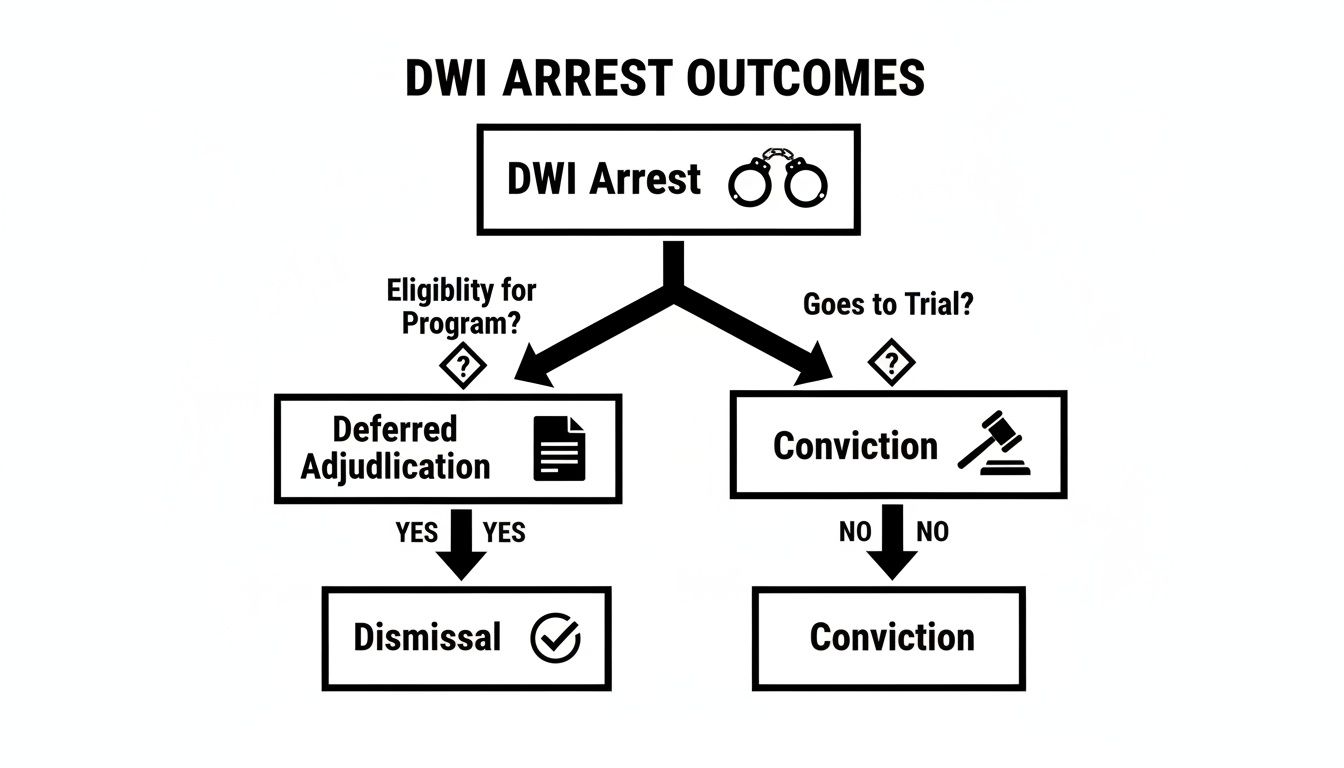
As you can see, one path leads to a dismissal, while the other leads to a conviction. The long-term consequences of each are worlds apart.
Understanding the Difference
It’s easy to confuse deferred adjudication with standard probation, since both involve being supervised by the court. But their end results couldn't be more different.
- Deferred Adjudication: You plead "guilty" or "no contest," but the judge puts off—or defers—a finding of guilt. Once you finish the probation term successfully, the case is dismissed. You are never officially convicted of the crime.
- Standard Probation (or "Straight Probation"): You are found guilty and formally convicted of DWI. Instead of sending you to jail, the judge sentences you to a term of community supervision. That conviction stays on your public criminal record forever.
The key takeaway is this: Deferred adjudication offers a direct route to a dismissal. It's a powerful tool for protecting your reputation and future opportunities by keeping a DWI conviction off your record.
Let's break down the practical differences in a quick table.
Deferred Adjudication vs Standard DWI Conviction at a Glance
This table offers a snapshot of what to expect from each path, assuming you successfully complete all court requirements.
| Outcome | Deferred Adjudication | Standard DWI Conviction |
|---|---|---|
| Final Legal Status | Case is dismissed. No conviction. | Convicted of a Class B Misdemeanor. |
| Public Criminal Record | No conviction appears on public background checks. | The DWI conviction is a permanent part of your public record. |
| Future Job Applications | You can legally say you were not convicted of this crime. | You must disclose the conviction when asked. |
| Record Sealing Eligibility | Eligible for an Order of Nondisclosure (sealing) after a waiting period. | Not eligible to have the conviction sealed. |
| Long-Term Impact | Minimal impact on career, housing, and licensing. | Can create significant barriers to employment and professional licenses. |
The choice between these two outcomes can shape the rest of your life, highlighting just how crucial the right legal strategy is from day one.
While deferred adjudication is an excellent option, it's not handed out automatically. Your eligibility depends on the facts of your case, your criminal history, and the specific court you're in. This is where having an experienced Texas DUI attorney in your corner becomes invaluable. A good lawyer can pick apart the evidence, find weaknesses in the prosecutor's case, and negotiate hard to secure the best possible outcome for you.
Don’t wait to get help. The steps you take right now will define your future.
What Does Deferred Adjudication Actually Mean for You?
When you’re facing a DWI, the legal jargon can feel overwhelming. One term you’ll hear is probation deferred adjudication, and while it sounds complicated, the idea behind it is actually pretty simple—and powerful.
Think of it as a formal contract with the court. It’s an agreement that offers you a clear path to getting your DWI charge dismissed.

Here's how it works. When you accept this offer, you enter a plea of "guilty" or "no contest." But here’s the crucial part: the judge doesn't actually find you guilty right then and there. Instead, that finding of guilt is put on hold, or "deferred."
Instead of sentencing you to jail time, the court places you on community supervision, which is basically a form of probation. From that point on, your main job is to successfully complete all the conditions the court lays out within a specific timeframe.
The Power of a Dismissal
The single biggest reason to fight for deferred adjudication is what happens when you successfully finish the program. If you follow every rule and meet every single requirement without a slip-up, the judge will dismiss your case. Poof. It’s gone.
This means you are never formally convicted of the DWI. This is an absolute game-changer. A dismissal keeps a permanent and damaging conviction off your public record, protecting your future job prospects, housing opportunities, and your reputation. The legal framework for this is outlined in Article 42A of the Texas Code of Criminal Procedure. Many people ask, is deferred adjudication a conviction?, and the answer is a firm "no" if you complete it successfully.
Deferred adjudication is a cornerstone of the Texas justice system, built to give people a second chance. State judicial data shows that thousands of Texans get this opportunity every year, especially for first-time intoxication offenses. It’s a tool that allows courts and prosecutors to use their discretion and shield people from the lifelong baggage of a conviction.
The Agreement with the Court
It really helps to see the whole thing as a straightforward deal. The court is essentially telling you, "Prove to us you can follow these rules for a set period, and we will dismiss this charge."
Your side of the bargain is strict compliance with your probation terms. The court's side of the bargain is the promise of a dismissal. This setup gives you a direct, actionable way to earn a positive outcome and move forward without a criminal record hanging over your head.
A successful deferred adjudication ends with a dismissal, not a conviction. This is the key difference that protects your future from the permanent stain of a DWI on your public record.
But this opportunity isn't just handed out. A prosecutor has to offer it, and a judge has to sign off on it. This is exactly why having a skilled Houston DWI lawyer in your corner is so critical.
A good attorney can dissect your case, negotiate with the prosecutor, and make a compelling argument for why you deserve this chance. They work to show the court that you're a strong candidate for the program. Without that powerful advocacy, this option might not even make it to the table.
Can I Get Deferred Adjudication for My DWI?
While deferred adjudication is a powerful tool for earning a dismissal, it's not an automatic get-out-of-jail-free card. Think of it as an opportunity you have to earn. The eligibility rules for DWI cases in Texas are notoriously strict, and prosecutors hold a lot of power in deciding who gets this second chance.
Figuring out if this path is even on the table for you is the very first step. It's not about being discouraging; it's about being realistic. A strong defense strategy always starts with a clear-eyed look at where you stand.
The Hard Stops: Immediate Disqualifiers
Texas law draws a few very clear lines in the sand. If your case falls into one of these categories, getting deferred adjudication is almost always impossible. It's just off the menu.
- A High Blood Alcohol Concentration (BAC): If the prosecutor’s evidence shows your BAC (Blood Alcohol Concentration) was 0.15 or higher, you are legally barred from receiving deferred adjudication. This is what's often called a "DWI with a high BAC," and the system treats it far more seriously.
- Holding a Commercial Driver’s License (CDL): If you had a CDL when you were arrested for DWI, you are ineligible for deferred. This rule is absolute—it doesn't matter if you were driving your personal pickup truck on a Saturday and not your big rig.
If either of these situations applies to you, it's time to pivot. Your attorney will need to dig in and find other ways to fight the charges and protect your future.
What Else Do Prosecutors Look At?
Once you clear those two main hurdles, it's not a done deal. Prosecutors look at the whole picture to decide if you're a good candidate for community supervision. They're trying to gauge risk—are you someone who made a one-time mistake, or do you represent a danger to the community?
This is where the unique details of your arrest become absolutely critical. They’ll be weighing things like:
- Your Criminal History: Deferred adjudication is almost exclusively for first-time DWI offenders. If you have any prior convictions, especially for a first DWI in Texas or other alcohol-related crimes, your chances drop dramatically.
- The Facts of the Arrest: Was there a car accident? Was a child in the car? Were you cooperative and respectful with the police, or was it a messy scene? The story of your arrest matters a great deal to the prosecutor making the call.
- How Strong Their Case Is: Here’s the reality—a prosecutor is much more willing to offer a good deal like deferred if they know they have holes in their case. This is where a sharp DWI lawyer can completely change the game.
Negotiation isn't just about asking for mercy. It's about building a compelling legal argument that forces the prosecutor to see deferred adjudication as a fair and logical outcome for everyone involved.
How a Houston DWI Lawyer Can Tip the Scales
This is where strategy and experience come in. You don't just have to accept the police report as the final word. A skilled Houston DWI attorney can actively dismantle the state's case piece by piece, creating the leverage needed to get a deferred offer on the table.
Your lawyer will comb through every shred of evidence, asking the tough questions:
- Was that traffic stop even legal to begin with?
- Did the officer administer the field sobriety test by the book?
- Can we trust the breathalyzer or blood test results? Are they even admissible in court?
By finding procedural mistakes, sloppy police work, or weak evidence, your attorney creates pressure. They can turn a case that looks like a sure loser into one where deferred adjudication is the smartest path forward for the prosecution. A great defense isn't just about preparing for a trial; it's about creating opportunities to fight DWI Texas and win long before a jury is ever selected.
What to Expect from Your Probation Conditions
Successfully getting through deferred adjudication probation is about more than just staying out of trouble. It means actively checking off every single one of the court's requirements. Think of it as a detailed roadmap the court gives you—each condition is a checkpoint on the way to getting your case dismissed. When you know what's expected from day one, the whole thing feels a lot less overwhelming.
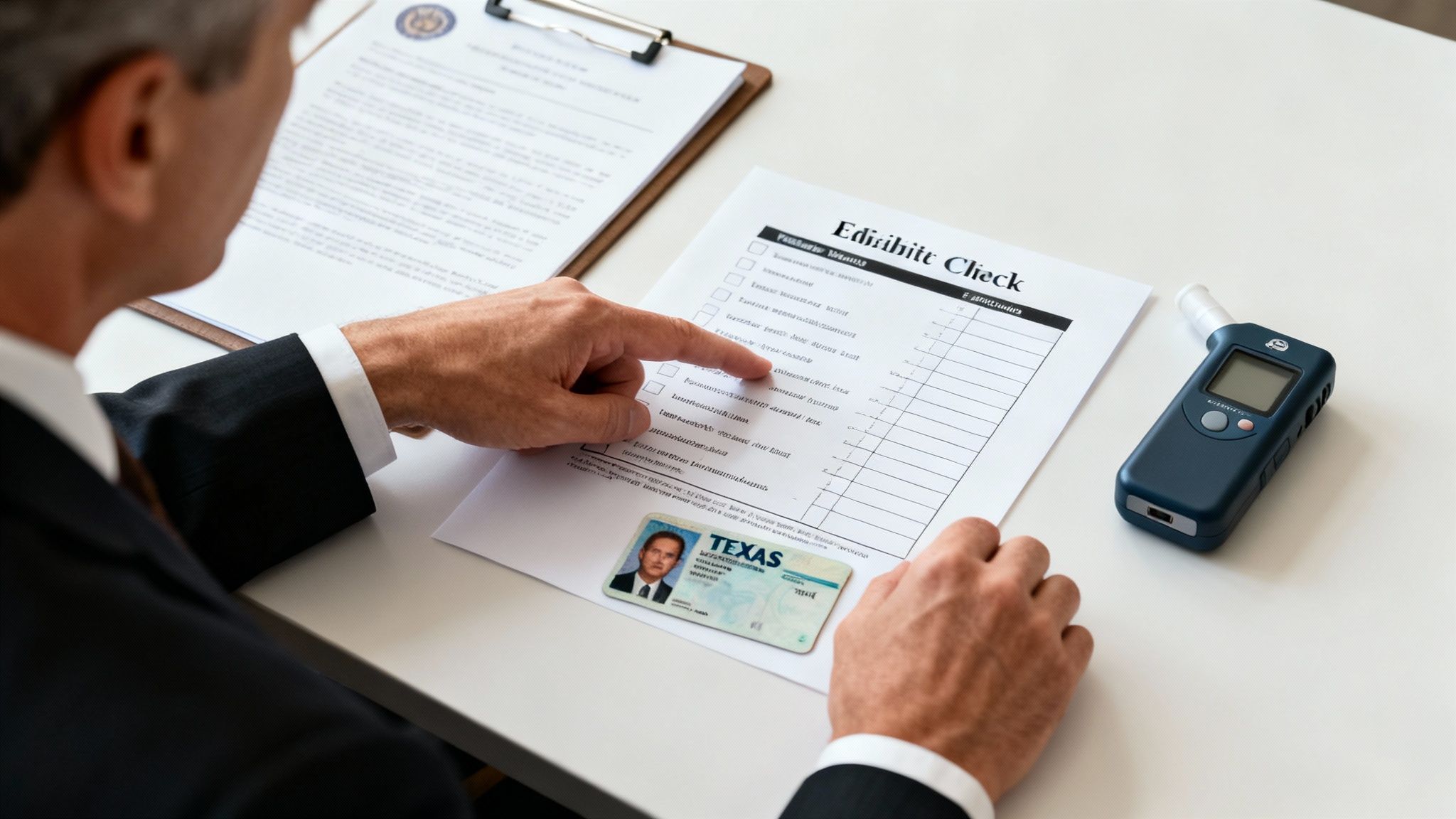
This is a huge second chance. If you can complete your probation successfully, you get to avoid a conviction that would follow you for life. Your attorney will go over the specifics of your agreement with you, but most DWI deferred adjudication plans in Texas are built on a core set of standard conditions.
Core Requirements of DWI Probation
Every case is different, but the judge and prosecutor will create your probation plan around a few key goals: keeping the public safe and making sure you’re held accountable. You should be ready to commit to these things:
- Regular Reporting: You’ll be assigned a Community Supervision Officer (CSO), who you’ll probably just call your probation officer. You have to meet with them on a regular basis, usually once a month, to update them on your progress.
- Fines and Court Costs: All court-ordered fines, fees, and other costs have to be paid. Your CSO can usually help you get on a payment plan if you need one.
- DWI Education Class: You’ll be required to sign up for and finish a state-approved DWI education program. This is a 12-hour course that teaches offenders about the real dangers of drinking and driving.
- Community Service: The court will order you to complete a certain number of community service hours at an approved non-profit organization.
These items are the foundation of your probation. If you miss a meeting, fall behind on payments, or don't finish your class on time, it could be seen as a violation.
The conditions of your probation aren't suggestions—they are direct orders from the court. Following them perfectly is the only way to guarantee the dismissal you're working toward.
The Ignition Interlock Device and Sobriety
Beyond the paperwork and meetings, the court's biggest concern is making sure you don't drive while intoxicated ever again. Because of that, you can expect some very strict rules about alcohol.
The biggest condition will probably be installing an Ignition Interlock Device (IID). This is a small breathalyzer that gets wired into your car's ignition. Before the car will start, you have to blow into the device to prove you have a BAC of zero. The IID will also prompt you for random "rolling retests" while you're driving.
On top of the IID, your probation will almost certainly include these rules:
- Total Abstinence: You must stay away from alcohol completely for the entire time you're on probation. No exceptions.
- No Illegal Drug Use: Using any illegal substances is strictly forbidden.
- Random Testing: You will be subject to random drug and alcohol tests whenever your probation officer decides. Failing a test is a major violation that could jeopardize your entire deferred adjudication deal. You can learn more about alcohol testing on probation and what that process looks like.
Meeting all these terms takes real commitment, but it’s absolutely doable. With a clear understanding of the rules and the help of an experienced DWI defense attorney, you can successfully finish your probation, get that dismissal, and move on with your life.
The Big Risk: What Happens If You Violate Probation?
Getting deferred adjudication is an incredible second chance, but it’s not a free pass. Think of it as a contract with the court: you hold up your end of the deal, and they’ll hold up theirs. But if you break the rules, that deal is off the table, and the consequences are severe.
If the prosecutor gets word that you’ve slipped up, they can file a legal document called a “Motion to Adjudicate Guilt.” This isn’t a new criminal charge. Instead, it’s the prosecutor telling the judge, “Hey, this person isn’t following the rules we agreed on. It’s time to revisit the original DWI case and find them guilty.”
This motion kicks off a formal revocation hearing. It won't be in front of a jury—just a judge, who will hear the evidence and decide whether you actually violated one or more of your probation conditions.
The Stakes Are Higher Than You Think in a Revocation Hearing
A probation revocation hearing is a whole different ballgame from a criminal trial, and the odds are stacked against you. The prosecutor’s job is much easier here. They don’t have to prove you violated your probation “beyond a reasonable doubt.” They only have to show it was “more likely than not” that you messed up. This is a much lower standard called preponderance of the evidence.
If the judge sides with the prosecutor, they can revoke your deferred adjudication on the spot. The “deferred” part of your deal vanishes. The judge will find you guilty of the original DWI, and they’ll have the full authority to sentence you however they see fit within the legal range for that crime. For a first-time DWI, that could mean up to 180 days in county jail and a permanent DWI conviction that follows you for life.
A probation revocation isn’t just a slap on the wrist. It completely erases the second chance you were given and can land you in jail with a permanent criminal record for the original DWI charge.
It’s Not Just About Getting Arrested Again
So, what does it take to get your probation revoked? A lot of people think you have to get arrested for another crime. While that’s certainly a fast track to a revocation hearing, most violations are much smaller, "technical" issues that pile up.
Here are some of the most common ways people violate their DWI probation:
- A positive drug or alcohol test: This is probably the number one reason for revocations. It’s a direct violation and very hard to argue against.
- Missing appointments with your probation officer: Your PO meetings are not optional. Blowing them off is a clear sign you’re not taking probation seriously.
- Not finishing your required classes: If you don't complete your DWI education course or victim impact panel on time, you've broken the terms of your deal.
- Getting behind on fines and court costs: The court sees failing to pay your financial obligations as a form of non-compliance.
- Messing with your Ignition Interlock Device (IID): Any attempt to tamper with, bypass, or disable the device is a major violation that judges take very seriously.
This isn’t meant to scare you, but to drive home just how critical it is to follow every single rule, every single day. The entire system is designed to hold you accountable, and successfully finishing your probation is the only way to avoid a conviction.
If you think you might have violated a condition—or you're worried you’re about to—the worst thing you can do is stick your head in the sand. Your very first call should be to your Houston DWI lawyer. An attorney can immediately start building a defense, negotiate with the prosecutor, and advise you on the best steps to protect your freedom and keep this second chance alive.
Sealing Your Record After a DWI Dismissal
Successfully finishing your probation deferred adjudication is a massive victory. It means your DWI case is dismissed, and that’s a huge weight off your shoulders. But don’t celebrate just yet—there's one last, critical step to truly put this entire experience behind you for good: sealing the record of the arrest itself.
Even with a dismissal, the original arrest can still pop up on detailed background checks. This can lead to awkward questions from potential employers, landlords, or anyone else digging into your past. Fortunately, Texas law gives you a powerful tool to solve this problem.
The Final Step: An Order of Nondisclosure
The whole point of deferred adjudication is getting a clean slate. Once your case is officially dismissed, you can petition the court for an Order of Nondisclosure. This is a legal order that essentially locks away the records related to your DWI arrest, hiding them from public view.
Think of a nondisclosure as putting your arrest record in a locked file cabinet that almost no one has the key to. For most practical purposes, like job or apartment applications, it's as if the arrest never happened.
This means that most private entities—including employers, lending agencies, and apartment complexes—will be legally barred from seeing the incident when they run a background check. You can confidently and legally say that you have not been convicted of the crime. For a deeper dive into how this all works, check out our detailed guide on securing an Order of Nondisclosure in Texas.
Why Sealing Your Record Is So Important
Getting that nondisclosure is the key to protecting your reputation and future opportunities. Without it, a dismissed charge can still create unnecessary hurdles and uncomfortable conversations for years to come. This final, hopeful step ensures your one mistake doesn't unfairly define the rest of your life.
Keep in mind, there are statutory waiting periods you have to follow before you can file the petition. The process also requires careful legal maneuvering to make sure it's done correctly and, ultimately, granted by the judge. This is where an experienced DWI defense firm provides immense value, guiding you through the paperwork and court filings to ensure your record is properly sealed. It allows you to finally move forward with the confidence and peace of mind you deserve.
Common Questions About DWI Deferred Adjudication

Navigating the legal system after a DWI arrest can feel like learning a new language, with terms and processes that are anything but clear. We get it. To help cut through the confusion, we've answered some of the most common questions we hear from clients about probation deferred adjudication in Texas.
Can I Get Deferred Adjudication for a Second DWI in Texas?
That’s a hard no, almost every time. In Texas, deferred adjudication is pretty much exclusively an option for first-time DWI offenders. If you already have a DWI conviction on your record, you can bet the prosecutor won't be offering this path.
Courts take repeat offenses very seriously, and the penalties get dramatically tougher. This is exactly why an aggressive legal defense is non-negotiable from the moment you're charged with a second DWI.
Does Deferred Adjudication Show Up on a Background Check?
At first, yes it will. While you're serving out the probation period, the arrest record is still public. That means it’s visible on the comprehensive background checks run by potential employers, landlords, or anyone else digging into your history.
But that's not where the story ends. The real power of deferred adjudication comes after you finish. Once you successfully complete your probation, you can petition the court for an Order of Nondisclosure. Think of this as a legal shield that seals the record from public view, making it invisible to most employers and screening companies. A skilled lawyer makes sure this critical final step gets done right.
What Is the Difference Between Deferred Adjudication and Pretrial Diversion?
They both have the same goal—getting the charge dismissed—but they take different roads to get there.
With deferred adjudication, you have to plead "guilty" or "no contest" in front of a judge first. The judge then hits the pause button on finding you guilty and places you on probation. Finish probation, and the case is dismissed.
A pretrial diversion program is different. You never enter a plea. Instead, you cut a deal directly with the prosecutor's office to complete certain requirements. Once you do, they just drop the charges. While it's often the better option, pretrial diversion for DWI cases is much harder to come by in most Texas counties.
How Does Deferred Adjudication Affect My Driver's License?
This is a point that trips up a lot of people. The criminal case for the DWI and the fight for your driver's license are two completely separate battles. The outcome of your deferred adjudication has zero impact on the automatic administrative license suspension triggered by a breathalyzer failure or refusal. This is based on Texas's implied consent law.
That process, called Administrative License Revocation (ALR), starts ticking the second you're arrested. You only have 15 days from the date of arrest to request an ALR hearing and challenge the DWI license suspension. A Houston DWI lawyer is essential to fight for you on both fronts—in the courtroom and at the ALR hearing—to protect your freedom and your ability to drive.
A DWI arrest is overwhelming, but you don’t have to face it alone. At The Law Office of Bryan Fagan, PLLC, our experienced DWI defense attorneys are ready to protect your rights and fight for the best possible outcome, including negotiating for probation deferred adjudication. Don't wait to get the help you need. Request a free and confidential consultation today by visiting us at https://texasduilawfirm.com.