
A criminal charge can be overwhelming, but a past mistake doesn’t have to define your future. An Order of Nondisclosure in Texas is a powerful legal tool that seals certain criminal records from public view. Think of it as putting a lock on a file that was once open for anyone to see. It effectively hides the record from potential employers, landlords, and the general public.
While it's not the same as having the record completely destroyed (an expunction), it provides a critical layer of privacy. Sealing your record allows you to legally deny the arrest and prosecution on most private job or housing applications, giving you a real chance to move on without the weight of a past charge holding you back.
What a Nondisclosure Order Means for Your Future

Facing a criminal charge can feel isolating. The thought of a past mistake following you for years, affecting job opportunities and personal relationships, is a heavy burden. But you don’t have to face it alone, and one event does not have to dictate your future. An Order of Nondisclosure acts as a privacy shield for your record, offering a genuine second chance.
Here's a simple way to think about it: a public criminal record is like a document in an open filing cabinet, accessible to anyone who looks. An Order of Nondisclosure moves that document into a private, locked safe. The record still technically exists—and certain government and law enforcement agencies can still see it—but it’s sealed off from public view.
The Power of a Sealed Record
That distinction makes all the difference. Sealing your record means that when a potential employer, landlord, or university runs a standard background check, the sealed offense simply won't appear. This allows you to regain control over your personal story and move forward without the stigma of a past charge.
The primary benefits of securing a nondisclosure are immediate and life-changing:
- Improved Employment Prospects: You can apply for jobs with confidence, knowing a past arrest won’t immediately disqualify you.
- Better Housing Opportunities: Landlords won't see the sealed offense on background checks, which can dramatically increase your chances of securing a lease.
- Personal Peace of Mind: You can finally stop worrying about who might discover your record and start focusing on your future.
An Order of Nondisclosure is more than just a legal filing; it's a strategic step toward rebuilding your reputation and ensuring that a past mistake doesn't permanently close doors to future success.
Under Texas Government Code Section 411.074, certain offenders can petition the court for an Order of Nondisclosure, but only after meeting very strict criteria. It isn’t an automatic fix for everyone, but it’s a strategic lifeline for those who qualify—like many clients we help at The Law Office of Bryan Fagan, PLLC after a first DWI in Texas.
Is Nondisclosure the Right Path for You?
The most common way to become eligible is by successfully completing a deferred adjudication program. Once you fulfill all the terms of your probation, the case gets dismissed, and you can start the process of petitioning the court to seal the record. This isn't just about filling out paperwork; it's about presenting your case effectively to a judge who has the final say.
Navigating the legal requirements can be tricky, and ensuring every step is handled correctly is essential for a successful outcome. Our comprehensive Texas DUI record sealing guide provides more details on the options available. An experienced Houston DWI lawyer can evaluate your case, confirm your eligibility, and manage the entire process on your behalf, giving you the reassurance you need to finally move forward.
Determining Your Eligibility for Nondisclosure
Not everyone arrested in Texas can wipe the slate clean with an Order of Nondisclosure. Getting your record sealed isn't automatic—it all comes down to the specific outcome of your case and the charge you were facing. The rules are strict, but they offer a clear path forward for those who qualify.
The most common path to eligibility is by successfully completing deferred adjudication probation. Think of it this way: the court gives you a chance to prove yourself. If you follow all the rules—complete any required classes, perform community service, and pay all fines—the judge dismisses your case. That dismissal is the key, because it means you were never officially convicted of the crime.
This is a huge distinction. A conviction, where you're found guilty and sentenced, will almost always block you from getting a nondisclosure for that offense. The law is designed to reward people who followed the court's orders and demonstrated they could get back on the right track.
The Role of Deferred Adjudication
So, what exactly is deferred adjudication? It’s a special kind of plea where you plead "guilty" or "no contest," but the court postpones finding you guilty. Instead, you're placed on community supervision (probation). Complete it successfully, and the case gets dismissed. After that, you must wait out a mandatory period before you can file to have it sealed.
It’s a critical tool for keeping a one-time mistake from damaging your future. To get a better handle on the specifics, check out our guide on what deferred adjudication means in Texas. For most people seeking a nondisclosure, this legal path is the foundation their entire case is built upon.
Offenses That Automatically Disqualify You
While deferred adjudication opens the door for many, some crimes will slam it shut immediately. The Texas legislature has decided that certain offenses are too serious to be hidden from public view, regardless of the case outcome.
These disqualifying offenses include:
- Any offense that requires sex offender registration
- Aggravated kidnapping
- Murder or capital murder
- Trafficking of persons
- Any offense involving family violence
The presence of a family violence finding is an absolute bar to nondisclosure. Even if you complete deferred adjudication for a charge like assault, if the court makes an affirmative finding of family violence, you cannot seal that record.
This isn't a complete list, and the law can be incredibly specific. This is exactly why it’s so important to have an experienced Houston DWI lawyer look at your case. A Texas DUI attorney can spot any hidden disqualifiers in your specific charge that could stop your petition before it even starts.
The Importance of a Clean Criminal History
Your eligibility also hinges on what you do after the case you want to seal is dismissed. During the mandatory waiting period, you absolutely cannot be convicted of or placed on deferred adjudication for any new crime. The only exception is for a minor traffic offense that’s punishable by a fine only.
A new arrest or charge can completely torpedo your chances of getting an Order of Nondisclosure, even if you were otherwise perfectly eligible. The court will see it as a pattern of behavior and will be far less likely to grant your request. The goal is to convince the judge that the offense you want sealed was an isolated mistake. A skilled attorney can help frame your history in the best possible light, proving you're committed to a clean record and a better future.
Understanding Nondisclosure Waiting Periods
Finishing deferred adjudication is a huge milestone. After the stress of a criminal case, getting it dismissed feels like the finish line. But when you’re ready to seal that record with an order of nondisclosure, there’s one more crucial step: the mandatory waiting period. Texas law is very clear on this, and you can't file your petition the day after your case is dismissed. Timing is everything.
Many people get confused about when the clock actually starts ticking. The waiting period does not begin on the date you were arrested. The countdown officially starts on the day the court discharges you and dismisses your case after you’ve successfully completed community supervision.
Timelines for Misdemeanors
For misdemeanors, the waiting period depends entirely on the specific charge. Getting this detail wrong is a common mistake that leads to a denied petition and wasted filing fees. The Texas legislature has categorized misdemeanors based on public safety concerns.
For many lower-level misdemeanors, you can petition for nondisclosure immediately after the case is dismissed. No wait is required.
However, a specific list of more serious misdemeanors comes with a two-year wait. If your charge falls under one of the following chapters of the Texas Penal Code, you’ll have to be patient:
- Chapter 20: Kidnapping, Unlawful Restraint
- Chapter 21: Sexual Offenses
- Chapter 22: Assaultive Offenses
- Chapter 42: Disorderly Conduct and Related Offenses
- Chapter 43: Public Indecency
- Chapter 46: Weapons Offenses
If your offense is on that list, you must wait two full years from the date of your dismissal before you can file your petition.
Timelines for Felonies
When it comes to felonies, the timeline is more straightforward but considerably longer. If you successfully completed deferred adjudication for a felony, the waiting period is a flat five years from the date your case was discharged and dismissed.
This extended wait is intentional. It ensures a long stretch of law-abiding behavior has passed before a serious offense can be sealed from public view. It’s a high bar to clear, but it provides a definite pathway forward for those who stay on the right track.
The waiting period is non-negotiable. Filing your petition even one day early will result in the court denying it, forcing you to start the entire process over again and pay new filing fees.
To make these timelines easier to understand, here’s a simple table that breaks it all down.
Texas Nondisclosure Waiting Periods at a Glance
This table outlines the mandatory waiting period after completing deferred adjudication before you can petition for an order of nondisclosure, based on the type of offense.
| Offense Classification | Waiting Period After Dismissal |
|---|---|
| Most Misdemeanors | Immediately upon dismissal |
| Certain Misdemeanors (e.g., Assault, Weapons) | Two (2) years |
| All Eligible Felonies | Five (5) years |
As you can see, knowing your exact waiting period is the first and most critical step in planning for an order of nondisclosure.
Because these rules can be so specific to your charge, it’s always a good idea to speak with an experienced Houston DWI lawyer. An attorney can verify the exact date you become eligible, prepare your petition correctly, and make sure your case is presented to the judge in the best possible light. This protects you from costly mistakes and delays, giving you the strongest shot at a successful outcome.
How to File for an Order of Nondisclosure
Navigating the legal system to get an order of nondisclosure in Texas can feel like a maze, but it’s a process with a clear path. Once you understand each step, the journey becomes much less intimidating—especially when you have a skilled legal guide helping you protect your rights.
The real work begins long after your court case is over. After you’ve confirmed you’re eligible and have patiently waited out the required time, you can begin the formal process of petitioning the court. This isn't just about filling out a form; it's about making a solid legal argument that sealing your record is in the best interest of justice.
Gathering Your Essential Documents
Before you can file anything, you need to get your paperwork in order. The single most important document is the Order of Dismissal and Discharge from the court that handled your original criminal case. This is the official proof that you successfully completed your deferred adjudication probation.
You’ll also need:
- Your complete criminal history record from the Texas Department of Public Safety (DPS).
- The original cause number and court details for the case you want sealed.
- Any other papers showing you completed your probation terms, like certificates from required classes.
Organizing these documents upfront will make the next steps go much more smoothly and help you avoid frustrating delays. An experienced Texas DUI attorney can help you gather these records efficiently.
Drafting and Filing the Petition
With your documents in hand, the next step is to draft the formal Petition for an Order of Nondisclosure. This legal document is filed with the same court that originally heard your case. It must be written precisely, citing the correct Texas laws and clearly explaining why you qualify to have your record sealed.
The petition lays out your personal information, details of the original charge, and confirms you’ve met all legal requirements, including the mandatory waiting period. Once drafted, it is filed with the court clerk, which officially begins the process. This is a critical step where even small mistakes can get your petition denied, making professional legal help invaluable.
This visual breaks down the common waiting periods you must complete after your case is dismissed before you can file.
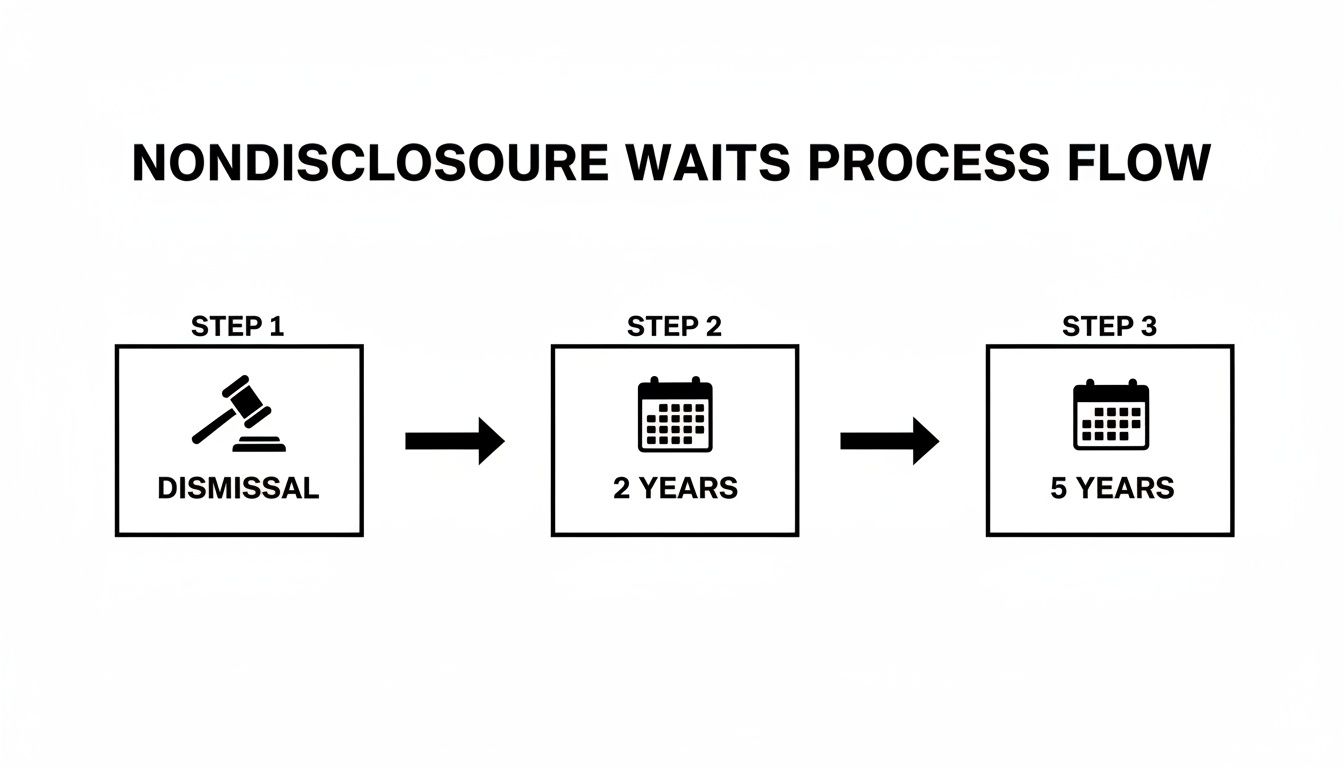
As you can see, the timeline depends entirely on the type of offense. It can range from being eligible immediately to having to wait a full five years for felonies.
The Court Hearing and Final Order
After you file your petition, the prosecutor’s office has the right to object, and they might argue that granting the nondisclosure isn’t in the best interest of justice. Because of this, the court will schedule a hearing where both you (or your attorney) and the prosecutor can present your cases to the judge.
The judge has the final say. Their decision will be based on whether you meet all legal criteria and whether sealing your record serves the interest of justice. Having a lawyer advocate for you during this hearing is crucial to fight for your rights.
If the judge sides with you, they will sign the Order of Nondisclosure. This is the final, official command that seals your record. From there, the court clerk is responsible for sending a copy of the order to various state agencies, like the DPS, instructing them to seal all records related to your case. At that point, your record is officially hidden from the public, giving you the fresh start you’ve worked so hard for.
Nondisclosure vs. Expunction: Which Is Right for You?

After a criminal charge, the goal is always the same: clear your record and get your life back. Many people hear the terms "sealing" and "expunging" and assume they're interchangeable. They're not.
In Texas, these are two completely different legal tools with vastly different outcomes. Understanding this distinction is the first step toward setting realistic expectations and choosing the right strategy for your future.
Choosing the wrong path can lead to wasted time, money, and a denied petition. But making the right one can open doors you thought were permanently closed. Let's break down the difference so you know which remedy might apply to your case.
The Key Difference Explained
The best way to understand the difference is with a simple analogy.
An expunction is like taking a sensitive document, running it through a high-security shredder, and then wiping every digital copy from every server. The record is permanently and completely destroyed. For all legal purposes, the arrest and charge never happened.
An Order of Nondisclosure, on the other hand, is like taking that same document and locking it away in a secure vault. The document still exists, but it’s hidden from public view. Only a specific list of government and licensing agencies can get inside that vault and see it.
This core difference—destruction versus concealment—determines your eligibility and what the final result actually means for your life.
Who Qualifies for Each Remedy?
Your eligibility for an expunction or a nondisclosure almost always comes down to how your case ended. The two options were designed for entirely different scenarios.
An expunction is generally reserved for cases where the outcome proves your innocence or where the state could not prove its case. You might be eligible for an expunction if your case ended in one of these ways:
- Acquittal: You went to trial and were found "not guilty."
- Dismissal: The prosecutor dropped the charges, and the statute of limitations has run out.
- Pardon: You received a full pardon from the Governor of Texas.
In contrast, an Order of Nondisclosure is for people who successfully completed deferred adjudication probation. By finishing the program, your case was dismissed, but it doesn't meet the strict "total innocence" standard required for an expunction. It's a second chance for those who took responsibility and did everything the court asked.
An expunction erases the past completely. A nondisclosure hides it from public view. Knowing which one you qualify for is the first step toward reclaiming your future.
To give you a clearer picture, let's put the two options side-by-side. Our attorneys can also provide a deeper dive if you want to learn more about how to expunge records in Texas.
Nondisclosure vs. Expunction in Texas
This table compares the two primary methods for clearing a criminal record in Texas to help you understand which may apply to your case.
| Feature | Order of Nondisclosure | Expunction |
|---|---|---|
| What Happens to the Record? | The record is sealed and hidden from public access. | The record is permanently destroyed. |
| Primary Eligibility Path | Successful completion of deferred adjudication probation. | Case resulted in an acquittal, pardon, or dismissal. |
| Who Can See the Record? | A specific list of government and licensing agencies. | No one. All records are physically destroyed. |
| Can You Deny the Arrest? | Yes, on most private job and housing applications. | Yes, you can legally deny the arrest ever happened. |
Ultimately, an expunction is the "gold standard" for clearing a criminal record, but it's only available to a select few. An Order of Nondisclosure provides a powerful and more accessible alternative for many Texans, including those who have resolved a first-time DWI case through deferred adjudication. A knowledgeable Houston DWI attorney can analyze your case history and advise you on the best path forward to fight for your future.
Ready to Seal Your Record? Here’s Your Next Step.
Going through a DWI or any criminal charge is tough, and figuring out what comes next can feel overwhelming. But you don’t have to do it alone. An order of nondisclosure in Texas isn’t just a piece of legal paper—it’s a powerful tool that can open doors to better jobs, housing, and the peace of mind you’ve been waiting for. This is your chance to make sure one mistake doesn’t define the rest of your life.
When your record is sealed, you can finally move forward with confidence. You can apply for that job without worrying about the background check, find a place to live without fear of rejection, and start rebuilding your life on your own terms. Taking action now is the first step toward putting this chapter behind you for good. The process might seem intimidating, but with the right legal defense, it's absolutely manageable.
Your Path to a Clean Slate
Getting a nondisclosure takes a careful, strategic approach. You have to verify your eligibility, meet strict waiting periods, and file the correct petitions with the court. Our team lives and breathes these details, and we’re here to handle all the complexities for you. We’ll protect your rights, stand up for you in court, and do the hard work needed to help you get the fresh start you've earned. You did your part by completing probation—now let us handle this final step.
Securing an order of nondisclosure is an investment in your future. It's about reclaiming your story and making sure you're judged on your potential, not by a single moment in your past.
We invite you to reach out to The Law Office of Bryan Fagan, PLLC for a free, confidential case evaluation. An experienced Houston DWI lawyer is ready to listen, review your case, and walk you through your options in plain English. Let us help you get the fresh start you deserve.
Common Questions We Hear About Nondisclosure Orders
When you're trying to move on from a past mistake, the legal details can feel overwhelming. Navigating an order of nondisclosure in Texas brings up a lot of practical, real-world questions. Getting straight answers is the first step toward reclaiming your peace of mind.
Here are some of the most common concerns we help our clients work through every day.
Can I Say "No" to the Arrest Question on Job Applications?
For the most part, yes. This is one of the biggest benefits of sealing your record. Once the nondisclosure order is officially granted, Texas law allows you to legally deny the arrest and the case itself on most applications for private-sector jobs.
However, there is an important exception you must be aware of. You must still disclose the offense if you're applying for work with certain state agencies or in sensitive fields. This includes jobs with:
- Law enforcement agencies
- Government entities
- School districts, charter schools, and other education providers
- Hospitals and other healthcare facilities
- State licensing boards (like those for nursing, finance, or real estate)
An experienced attorney can help you understand the exact disclosure rules for your specific career path and protect your rights.
Is It Possible to Seal a First-Time DWI in Texas?
Yes, but the rules are incredibly strict. A first DWI in Texas can be sealed with an order of nondisclosure, but only if you were placed on and successfully completed deferred adjudication probation.
However, several factors will immediately disqualify you. For example, you cannot seal a DWI if your Blood Alcohol Concentration (BAC) was 0.15 or higher, or if your case involved an accident where another person was present. The laws around a DWI license suspension and record sealing are complex, which is why getting guidance from a lawyer who will fight for you is so important.
What Does It Typically Cost to Get a Nondisclosure Order?
The total investment depends on your specific county and the complexity of your case. Generally, you can expect to cover two main costs: the court's filing fees and the attorney's fees.
Court filing fees typically range from $300 to $500. Attorney's fees cover the time and expertise needed to draft a precise legal petition, represent you in court, and ensure the final order is sent to all the right state agencies so your record is actually sealed. We always provide a clear, transparent breakdown of all costs during a free case evaluation.
Who Can Still See My Record After It’s Sealed?
A nondisclosure is powerful, but it doesn't make your record vanish completely. While it effectively hides your record from the general public (like landlords, private employers, and neighbors), a specific list of government and licensing agencies can still access the sealed information.
This list includes groups like police departments, prosecutors, school districts, and state licensing boards. The main goal is to keep the offense from showing up on the commercial background checks that most private companies use, and an order of nondisclosure does that job very well.
An order of nondisclosure is a powerful tool for putting the past behind you, but getting it right requires legal precision. At The Law Office of Bryan Fagan, PLLC, we manage every detail of the process so you can move forward with confidence. Contact us today for a free, confidential consultation to see how we can help.