
For a first DWI in Texas, a lawyer's fee often falls between $3,000 and $10,000. There isn't one fixed price, because the actual cost depends on how much legal work your case needs, and that's exactly what drives the fee.
A DWI arrest can be overwhelming, but you don't have to face it alone. If you're sitting there wondering how much this is going to cost, whether you can still drive, and whether hiring a Houston DWI lawyer is even worth it, you're asking the right questions.
My view is simple. Don't shop for a DWI lawyer the way you'd shop for a phone charger. The cheapest quote often means the narrowest scope of work. In Texas, DWI defense cost is tied to investigation, strategy, motion practice, negotiations, and trial preparation. You're not paying for a label. You're paying for someone to protect your license, your record, your job, and your options.
Understanding the Cost of a Texas DWI Lawyer
You get arrested on a Friday night. By Monday morning, you are trying to answer three questions at once: Can I keep my license, what happens to my record, and how much is this defense going to cost me?
Start with the right frame. A Texas DWI lawyer is not just quoting a price to stand beside you in court. The fee reflects the amount of work needed to protect your license, challenge the State's evidence, and put you in the best position to avoid a conviction or limit the damage. If you want a clear breakdown of Texas DWI lawyer fee options and how they are structured, review that before you compare quotes.
The price swings because the job swings. One case calls for a close review of the traffic stop, body camera video, breath or blood testing records, and a negotiated resolution. Another case requires an ALR hearing, motions to suppress, expert review, witness preparation, and trial work. Those are very different defenses, and they should not cost the same.
What those legal terms mean
If the terminology is new, get these basics straight:
- BAC means blood alcohol concentration. The State uses it to argue you were intoxicated.
- Implied consent means Texas law can trigger license consequences if you refuse a lawful request for a breath or blood specimen.
- Field sobriety test means the roadside tests officers use to build their case.
- Administrative license suspension usually means the separate license case after a DWI arrest, often called the ALR process.
What you are actually paying for
A good fee quote should track the actual work in the case.
If your lawyer plans to obtain police reports, review video, analyze the stop, examine testing procedure, advise you on the license case, negotiate with prosecutors, and prepare the case for court, the fee should reflect that labor. If the defense also includes contested hearings, subpoenas, officer cross-examination, and trial preparation, the cost rises because the time and skill required rise.
That is the point many people miss.
You are not buying a generic “DWI package.” You are paying for strategy, investigation, judgment, and courtroom work. And if you only focus on the number on the retainer agreement, you can miss the bigger financial reality. A cheap fee up front can cost far more later if the lawyer does not address the license case, the evidence problems, or the long-term consequences of a DWI.
The Three Common Fee Structures for DWI Lawyers
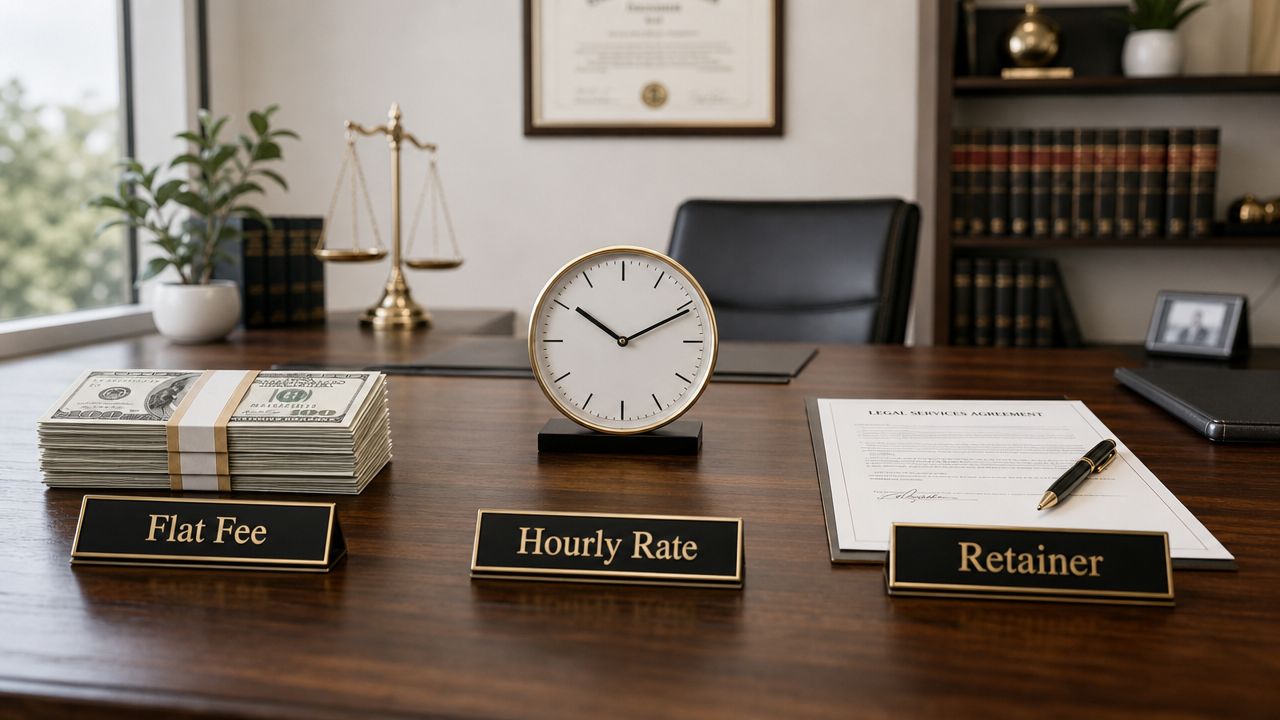
You sit down for two consultations. One lawyer quotes $4,000. Another quotes $7,500. The cheaper quote sounds better until you learn the first fee stops at plea negotiations, while the second includes contested hearings and trial prep. Those are not the same product, and treating them like they are is how people make expensive mistakes.
Texas DWI lawyers usually bill in three ways. You need to know which model you are being offered, because the billing structure often tells you a lot about the lawyer's strategy, the expected workload, and how much financial risk gets pushed onto you.
Flat fee
A flat fee is a fixed price for a defined scope of work. In DWI cases, that scope might mean representation through plea negotiations, or it might mean full representation through trial. Those are very different commitments.
Flat fees work best when the lawyer can clearly define the job and is willing to take on the risk that the case may require more time than expected. That can favor you if your case turns into a real fight. It also makes budgeting easier, which matters because attorney fees are only one part of the total cost of a Texas DWI.
The catch is simple. “Flat fee” does not automatically mean “everything included.”
Some flat-fee agreements cover only the core criminal case and charge extra for the ALR hearing, expert witnesses, motions to suppress, or trial. Others include far more. Before you sign, read the scope line by line. If you want a clearer breakdown of how these billing models are usually structured, review this Texas guide to DWI lawyer fee options.
Hourly billing
With hourly billing, you pay for the lawyer's time as the case develops. That usually means a lower upfront payment, but less certainty about the final bill.
Hourly billing makes the most sense when the case path is hard to predict. Maybe the blood evidence needs close review. Maybe there is a suppression issue that could require extensive briefing and hearings. Maybe the case will resolve quickly, or maybe it will demand months of work. Under an hourly model, you pay for the actual labor involved.
That can be fair. It can also get expensive fast.
If your lawyer charges hourly, ask for specifics. What is the hourly rate? Who bills on the file besides the lawyer? Are phone calls, emails, travel, court waiting time, and document review billed separately? A low initial retainer under an hourly agreement can end up costing more than a higher flat fee if the case becomes contested.
Retainer plus hourly work
Some lawyers require a retainer up front and then bill hourly against that deposit. Once the retainer is exhausted, you pay more to replenish it.
This structure is common in cases with too many moving parts for a clean flat fee. It shows up more often in felony DWI cases, repeat-offender cases, or files that may involve experts, intensive motion practice, or trial.
There is nothing wrong with that model if the terms are clear. If the terms are vague, walk away.
Ask these questions before you agree to a retainer plus hourly arrangement:
- What work is covered by the initial retainer?
- What events trigger another payment request?
- How often will I receive billing statements?
- Will unused retainer funds be refunded?
- Are trial, experts, and hearings billed separately?
A low quote can cost you more if it only buys the early paperwork and leaves the serious defense work for later invoices.
The right fee structure depends on the case strategy. A straightforward case may fit a flat fee. A case with uncertain forensic issues or likely litigation may justify hourly billing or a larger retainer. Focus on what the fee buys, how far the lawyer plans to take the case, and how that choice affects your total DWI costs, not just the number on page one.
What Your Attorney's Quoted Fee Should Cover
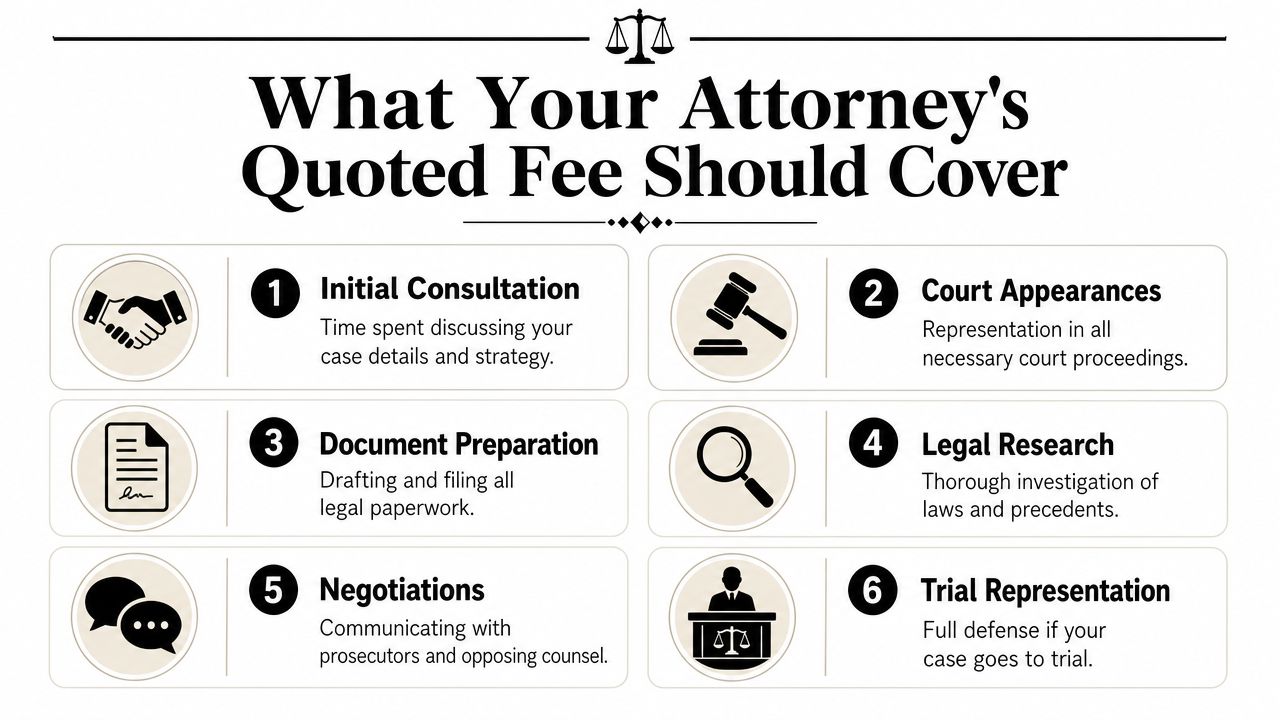
The most important question isn't just “how much?” It's “how much for what?”
That's where people get burned. Many Texas DWI fee quotes sound complete, but they cover only a portion of the case. One source specifically notes that some attorneys charge a flat fee only through the plea-bargain phase and then charge extra if the case goes to trial, as explained in this discussion of what Austin DWI lawyer fees may or may not include.
The parts of a DWI case that may be billed separately
A DWI case in Texas can involve several separate battles:
- The ALR hearing: This is the license case tied to your arrest. If you miss it, you can lose an early chance to fight your DWI license suspension.
- Pretrial motions: This includes challenges to the stop, arrest, breath or blood testing, and evidence collection.
- Plea negotiations: A lawyer works to reduce exposure, challenge weak points, or seek a better outcome.
- Trial preparation and trial: This is the most labor-intensive stage.
What to ask before you hire anyone
When a lawyer gives you a number, slow down and pin it down.
Use questions like these:
- Does this fee include the ALR hearing?
- Does it include pretrial motions and evidence review?
- Does it include trial, or only plea negotiations?
- Are expert witnesses, investigators, or testing costs extra?
- What events trigger additional fees?
If you want a deeper breakdown of hidden billing issues, review this guide on additional DUI attorney fees in Texas.
Client advice: Never compare two DWI quotes until you know whether both lawyers are pricing the same scope of work.
What happens after a DWI arrest
The process usually starts fast, and that matters for fees because early action can shape the whole case.
- Arrest and booking: You're taken in, processed, and released on bond in many cases.
- Bond conditions: The judge may impose restrictions like no alcohol use or check-ins.
- ALR deadline: You may have a short window to challenge the license suspension.
- Criminal court settings: The case moves through appearances, negotiations, motion practice, and possibly trial.
If this is your first DWI in Texas, the right lawyer should explain that timeline clearly, not bury it inside a contract.
Factors That Raise or Lower Your DWI Defense Cost
You and another driver can get arrested on the same night, in the same county, for the same charge on paper, and still receive very different fee quotes. That is normal. DWI defense pricing follows the work the case demands and the punishment risk you are facing.
The fastest way to understand price is to ask one question. Is this case likely to resolve through negotiation, or does it require a full attack on the stop, the testing, the officer's conclusions, and punishment exposure? That answer usually drives the quote more than the label "first DWI" or "second DWI."
Aggravating facts raise the stakes and the fee
Some facts change the case immediately.
A BAC of 0.15 or higher can increase the charge level for a first DWI in Texas. The Texas Department of Transportation states that a first DWI is generally a Class B misdemeanor, but a BAC at or above 0.15 raises it to a Class A misdemeanor in many cases, which means higher exposure and more pressure on the defense strategy. See the Texas Department of Transportation DWI penalties overview.
A child passenger, an accident with injuries, a prior DWI, or any fact pattern that creates felony exposure also pushes the case into a more expensive tier. That is not because the lawyer is padding the bill. It is because the strategy changes. More records have to be reviewed. More motions may need to be filed. The prosecutor is less likely to treat the case as routine.
The facts that usually increase defense cost
These are the cost drivers I see most often:
- Prior convictions or prior alcohol-related history: Repeat cases usually require a tighter defense plan and more attention to punishment issues.
- Breath or blood testing: Scientific evidence adds technical review, possible expert consultation, and more motion practice.
- Large amounts of video: Dash cam, body cam, jail video, and blood draw footage all take time to review carefully.
- Crash allegations: Accidents often bring extra witnesses, medical records, property damage evidence, and harder negotiations.
- Unusual stop or arrest issues: Illegal stop arguments, poor field testing instructions, or weak probable cause can strengthen the defense, but they also require more preparation.
- Court and county practice: Some courts move quickly and pressure early resolution. Others require more appearances and more time.
Those facts do not just raise the price. They usually explain what you are paying for.
Flat-fee cases and hourly cases rise for different reasons
Clients often compare numbers without comparing strategy, an approach that can be incomplete.
In a flat-fee arrangement, a lawyer usually raises the quote when the case is likely to require motions, contested hearings, expert review, or serious trial preparation. You are paying in advance for a larger block of work and a more aggressive defense posture.
In an hourly arrangement, the starting retainer may look lower, but the total can climb if the case turns into a fight over blood evidence, video review, suppression issues, or trial. A cheaper entry price does not mean a cheaper case.
That is the key point. The fee structure and the case strategy have to match.
Trial readiness costs more because real preparation costs more
A lawyer who is prepared for trial has to build the case long before a jury is sworn. That means reviewing every video, cross-checking police reports against the footage, examining the stop, studying the breath or blood evidence, preparing witnesses, and filing motions when the state cut corners.
That work can improve your bargaining position in plea talks. Prosecutors tend to value a case differently when they know defense counsel is ready to challenge it in court.
Field sobriety tests are a good example. They are not mechanical pass-fail exams. They are officer-administered roadside tests that depend on instructions, conditions, observations, and interpretation. If your defense turns on how those tests were given or scored, your lawyer has to spend the time to break that down correctly.
Cheap quotes usually leave something out. In DWI defense, what gets left out is often the part you end up needing most.
Typical Cost Ranges for a Texas DWI Lawyer by Case Type
You call a lawyer after an arrest and hear one quote for $1,500, another for $4,000, and a third that starts at $7,500. That gap is not random. It usually reflects how the lawyer expects to handle the case, how much work is included, and whether the price covers a quick plea, serious pretrial litigation, or actual trial preparation.
As noted earlier, Texas DWI fees are usually tiered by case posture. A case that is likely to resolve early costs less. A case involving contested evidence, expert review, multiple hearings, or heightened punishment exposure costs more because the attorney is buying time to do real defense work.
Estimated Texas DWI Lawyer Fee Ranges 2026
| Case Type | Typical Fee Range |
|---|---|
| Basic plea representation | $1,000 to $2,500 |
| More complex pretrial case | $2,500 to $5,000 |
| Trial or aggravated DWI case | $5,000 to $10,000 or more |
Use those numbers as a budgeting range, not a promise.
A basic plea quote usually fits a first-offense case with no major factual disputes, limited motion practice, and a realistic chance of early resolution. A pretrial quote usually signals the lawyer expects to challenge parts of the stop, the arrest, the testing, or the police paperwork. Trial and aggravated-case pricing usually reflects the time needed to prepare witnesses, challenge scientific evidence, work through punishment issues, and spend days in court if the case does not settle.
That distinction matters because you are not just paying for a lawyer's name. You are paying for a strategy.
If a quote is far below the range that fits your case, ask a hard question. Does that fee include motions, contested hearings, subpoena work, expert consultation, and trial preparation, or does the price jump the moment the case becomes difficult? Cheap entry pricing often means you have only bought the first stage of the defense.
You should also budget beyond the legal fee itself. A DWI can trigger costs that keep going long after the court date, including license-related expenses, insurance increases, and court-ordered requirements. Review the long-term financial impact of a Texas DWI before you decide that the lowest legal quote is the cheapest option.
Beyond Attorney Fees The Total Financial Impact of a DWI
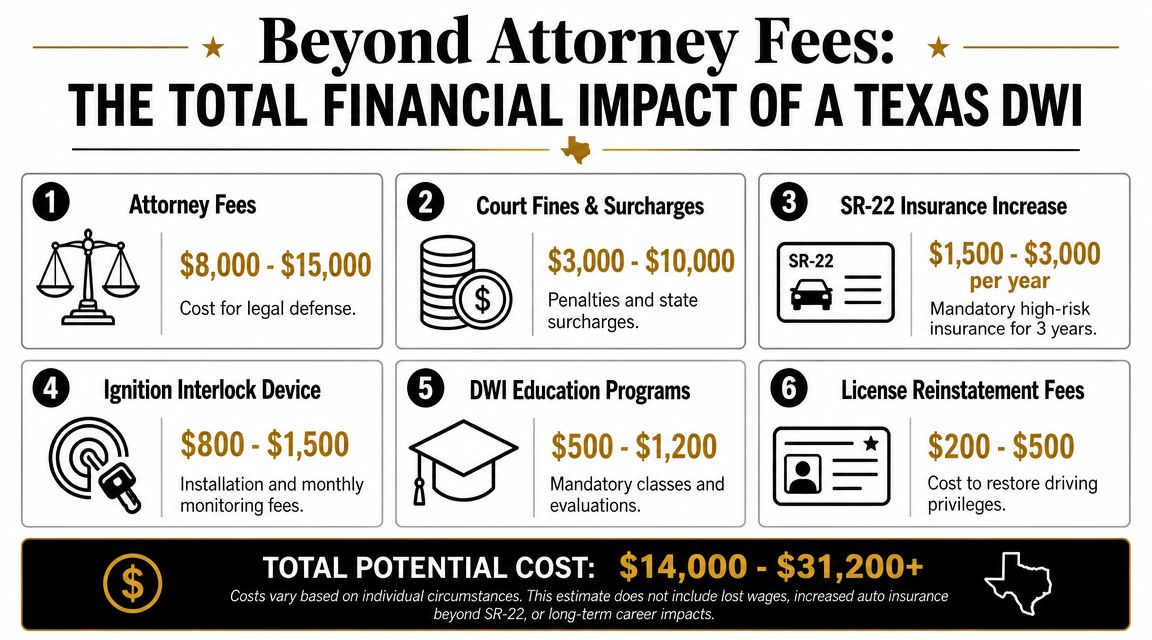
A lot of clients focus on the lawyer's bill because that's the first large number they hear. I understand that. But it's often not the biggest financial problem.
One Texas estimate places the attorney fee at up to $9,400 and the overall cost of a DWI at up to $17,000 once other expenses are included. Another estimate placed the total cost of a first-time DWI at $5,000 to $24,000, which shows how much the final damage can vary, as summarized in this breakdown of the total cost of a DWI in Texas.
Here's a helpful overview of the broader picture:
Where the money goes besides legal fees
The total bill can include a long list of obligations:
- Fines and court costs: These are separate from your defense bill.
- Probation-related costs: If probation is imposed, supervision and compliance can become part of the financial burden.
- Classes and programs: DWI education requirements add to the total.
- Ignition interlock: Installation and monitoring can be required in some cases.
- Towing and storage: The arrest often triggers immediate vehicle expenses.
- Insurance increases: The financial burden of this can continue.
Why this changes the hiring decision
Once you look at the full financial picture, hiring a Texas DUI attorney stops looking like a stand-alone expense. It becomes a risk-management decision.
If a lawyer can help you avoid unnecessary penalties, challenge weak evidence, or protect your ability to drive, that can affect your finances long after court ends. For more on those longer-term consequences, review this guide to the long-term financial impact of a Texas DUI.
A DWI conviction doesn't just create one invoice. It can create a chain of costs that keeps showing up after the case feels “over.”
If you're comparing quotes from a Houston DWI lawyer or any other defense firm in Texas, compare them against the full financial risk of the case, not just the upfront legal fee.
Your Next Steps How to Discuss Fees at a Consultation
You sit down for a consultation after a DWI arrest, and within ten minutes you should know two things. What is at stake in your case, and what the lawyer's fee buys you.
If you cannot get straight answers on both, do not hire that lawyer.
The fee questions you should ask directly
Bring a written list. Ask each question exactly the same way with every firm so you can compare answers fairly:
- Is your fee flat, hourly, or based on a retainer
- Does the quoted fee include the ALR hearing
- Does it cover pretrial work only, or does it include trial
- What expenses are billed separately
- Do you offer a payment plan
- Will you personally handle my court appearances and communication, or will someone else
Those questions are basic. A good DWI lawyer should answer them without getting defensive or vague.
You are not just buying courtroom time. You are paying for a defense plan, early case review, license protection work, negotiations, and, in some cases, trial preparation. That is why fee structure matters. A flat fee usually fits a defined strategy and a defined scope. An hourly arrangement can make sense in a case likely to involve unusual motions, experts, or extended litigation. Ask which model matches your case and why.
What a strong consultation should sound like
A useful consultation sounds specific.
The lawyer should identify the pressure points in your case, explain your license exposure under Texas implied consent rules, discuss whether the BAC evidence looks vulnerable, and tell you what defense work makes sense based on your facts. If the answer is all sales talk and no case analysis, move on.
You should also hear a plain-English explanation of the likely strategy, such as:
- Challenging the stop: Was there a lawful basis for the traffic stop?
- Attacking probable cause: Did the officer have enough evidence to make the arrest?
- Reviewing testing procedure: Was breath or blood evidence collected, stored, and tested properly?
- Examining field sobriety testing: Were the roadside tests administered fairly and interpreted correctly?
This shifts the conversation from price alone to what you are getting for the fee.
A factual example in Texas is the Law Office of Bryan Fagan, PLLC, which handles DWI defense matters such as ALR hearings, first-offense cases, repeat offenses, and record-clearing issues. If you are meeting with that firm or any other, use the same questions every time and compare scope before you compare price.
Don't wait for the case to get more expensive
Delay hurts DWI cases. Fast action can protect your license options, preserve facts, and give your lawyer more room to work.
Take these steps now:
- Write down everything you remember while the details are still fresh.
- Save every document from the jail, bond paperwork, towing, and court.
- Confirm every deadline instead of guessing, especially for license-related action.
- Set consultations quickly and compare what is included in the fee.
- Hire the lawyer who explains the process clearly and answers fee questions directly.
A DWI arrest is serious, but it is manageable if you act quickly and ask the right questions. If you need clear answers about fees, license risks, ALR hearings, a first DWI in Texas, or whether you may qualify for options like expunction or record relief later, request a free consultation with Law Office of Bryan Fagan, PLLC. You'll get a direct discussion of your case, the likely defense path, and what representation should include so you can make a smart decision without guessing.