 Skip to content
A DWI arrest can be overwhelming — but you don’t have to face it alone. That first search for a "DWI lawyer near me" is the single most important step you can take right now to protect your future. An arrest is not a conviction, and the strategic choices you make in the coming hours and days can change everything.
Your First Move After a DWI Arrest
When you're charged with a DWI in Texas, two legal clocks start ticking immediately. You are facing not only criminal charges but also a separate, urgent fight to keep your driver’s license. This isn't a time to panic; it's a time for a clear, focused plan with a skilled Houston DWI lawyer.
The process kicks off the moment you are arrested, and as this timeline shows, an attorney needs to step in quickly to protect your rights.
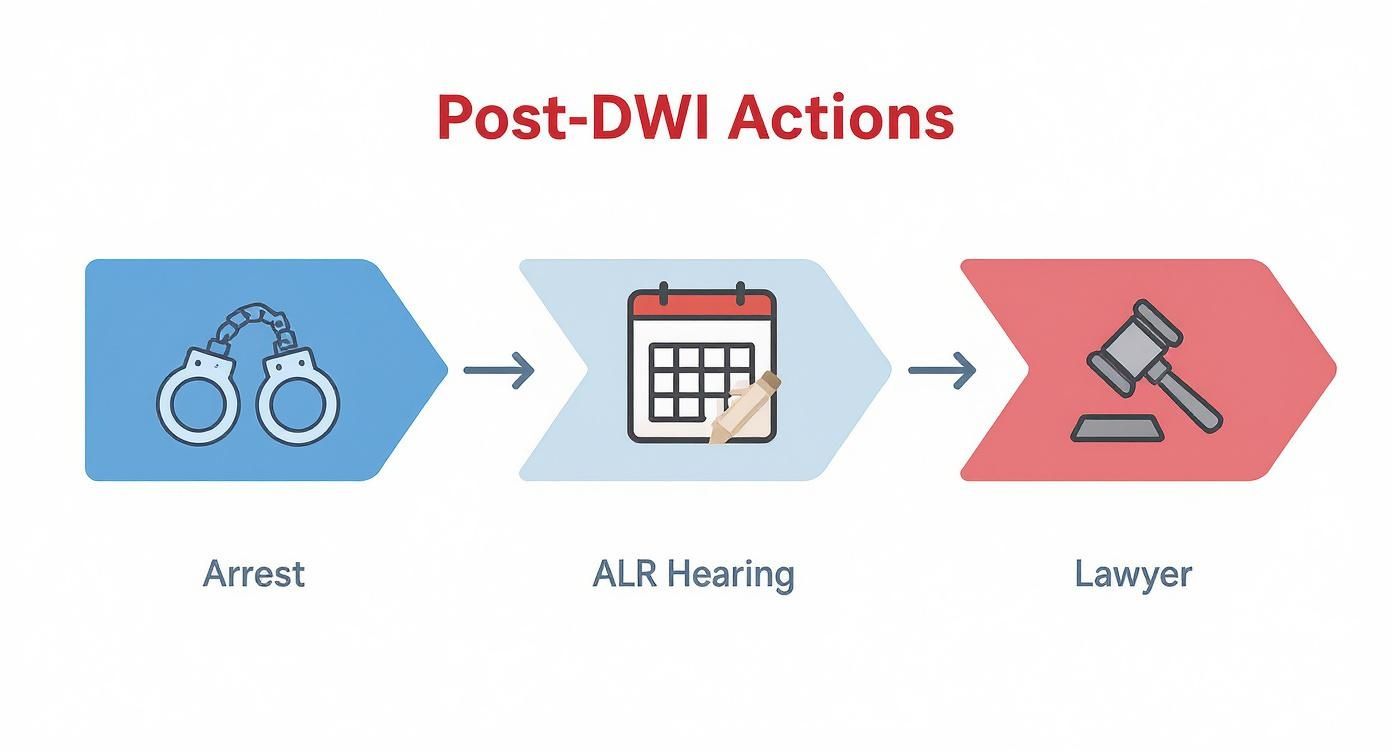
As you can see, your first priorities are meeting the tight ALR hearing deadline and securing an experienced legal advocate on your side.
Two Battles on Two Fronts
Right away, you're fighting a battle on two fronts: one criminal and one administrative. They are completely separate, and you must address both to achieve the best possible outcome.
The Criminal Case: This is the court process that determines if you are guilty of the DWI charge. It involves court appearances, negotiations with prosecutors, and potentially a trial. A conviction can lead to fines, jail time, and a permanent criminal record.
The Administrative License Revocation (ALR) Hearing: This is a civil case with the Texas Department of Public Safety (DPS) that is only about your driver's license. If you refused a breath or blood test, or if your BAC was .08 or higher, the state will automatically try to suspend your license. This is known as a DWI license suspension.
You have only 15 days from the date of your arrest to request an ALR hearing. If you miss this deadline, your driver’s license will be suspended automatically. This suspension is often for 90 days or longer, with no exceptions.
This isn’t a soft deadline; it’s a hard stop. Requesting this hearing is the most urgent task you face. A skilled Texas DUI attorney will file the ALR request for you immediately, which pauses the license suspension and preserves your ability to drive while they build your defense.
This first step is crucial. You can learn more about the Administrative License Revocation process in Texas in our detailed guide, but the key takeaway is simple: act now to regain control of your situation.
How to Spot a Top-Notch Texas DWI Attorney

After a DWI arrest, choosing an attorney is the single most important decision you will make. It’s a common mistake to assume any lawyer will do, but DWI cases are incredibly complex. A general practice lawyer simply doesn’t have the specialized knowledge needed to effectively defend you.
A dedicated DWI defense attorney brings a completely different level of expertise. They understand the science behind breathalyzers, the flaws in field sobriety tests, and the common procedural errors officers make. This is about more than just knowing the law—it's about knowing how to systematically dismantle the prosecution's case.
Vetting Your Potential Attorney
Think of your first consultation as an interview—where you are the one hiring. The job? Protecting your future. Don't be afraid to ask direct, tough questions to gauge their experience and strategic approach.
Here are a few questions you must ask:
- What percentage of your practice is dedicated to DWI defense? You want someone who is in DWI court daily, not just a few times a year.
- What is your strategy for challenging the traffic stop? An expert lawyer always starts at the beginning, looking for any illegal reason you were pulled over.
- How do you challenge breath or blood test results? They should be able to explain potential issues, from machine calibration errors to problems with how your sample was handled.
A great attorney will not overwhelm you with legal jargon; they will outline a clear, understandable strategy. You should leave the meeting feeling informed and confident, not more anxious than when you arrived.
This process is about finding a true partner for your defense. For a deeper look, our guide on how to find a local DWI lawyer provides more questions to ask and red flags to watch for.
Look for a Verifiable Track Record
Finally, look for an attorney with a proven history of success in your local courthouse. A lawyer who knows the local prosecutors and judges by name has a significant advantage.
They understand the personalities, unwritten rules, and expectations of the very people deciding your case. That insider knowledge is invaluable when it's time to negotiate a favorable outcome or prepare your case for trial. When you search for a "DWI lawyer near me," you’re looking for someone who knows both the law and the local legal landscape.
Understanding Texas DWI Laws and Procedures
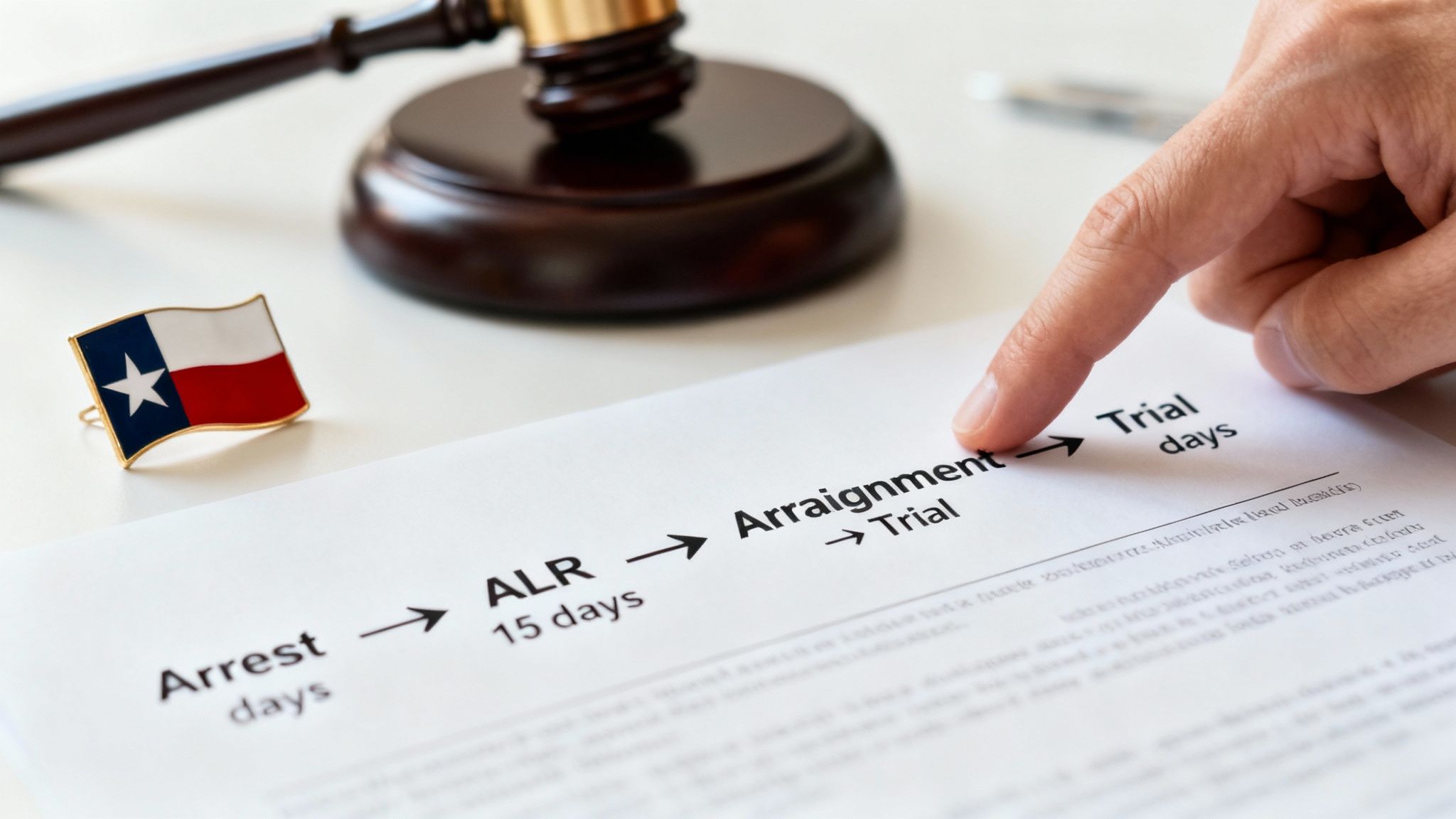
After a DWI arrest, it can feel like you've been dropped into a confusing legal world. The system is full of unfamiliar terms, deadlines, and procedures, and it’s normal to feel overwhelmed. Knowledge is the first step toward regaining your footing.
Our goal is to translate the legal jargon into plain English so you can understand what is happening in your case. A DWI case in Texas isn’t a single court date; it's a series of stages, each with its own rules. Knowing what to expect helps you and your attorney build a proactive defense instead of just reacting to the prosecution.
Key Terms You Need to Know
To understand your case, you need to know the language. These terms will appear in police reports, court documents, and conversations with your lawyer.
Blood Alcohol Concentration (BAC): This is the measure of alcohol in your system. In Texas, the legal limit for most drivers is 0.08%. For commercial drivers, it is 0.04%, and for anyone under 21, any detectable amount of alcohol is illegal.
Implied Consent: When you get a Texas driver's license, you automatically agree to provide a breath or blood sample if an officer has probable cause to believe you're intoxicated. Refusing the test does not make the charge go away; instead, it triggers a separate penalty—an automatic driver's license suspension.
Administrative License Revocation (ALR): This is the automatic license suspension that occurs if you refuse a chemical test or if your BAC is over the legal limit. It is a civil process, separate from your criminal DWI case, that deals only with your driving privileges.
These three concepts form the foundation of the state’s case against you. A skilled DWI attorney knows how to challenge them, from questioning the accuracy of a BAC machine to fighting to save your license in an ALR hearing.
The Typical Timeline of a DWI Case
While every case is unique, they all tend to follow a similar path. Understanding these steps can make the process feel less intimidating.
Here’s a general roadmap of what to expect:
- Arrest and Booking: After being pulled over and arrested, you will be taken to a station for booking (fingerprints, photos). You will be held there until you can post bond.
- Arraignment: This is your first court appearance. The judge will formally read the charges, and you will enter a plea—almost always "not guilty" at this stage. The judge also sets the conditions for your release.
- Pre-Trial Phase: This is where the real work of your defense happens. Your attorney will gather evidence, analyze police reports, file motions to suppress evidence, and negotiate with the prosecutor.
- Trial or Plea Agreement: Your case will end in one of two ways: a plea agreement negotiated by your lawyer or a trial where a judge or jury determines the outcome.
Navigating this timeline alone is extremely difficult. When you search for a "DWI lawyer near me," you are looking for a guide who can manage each stage, protect your rights, and fight to secure the best possible result for your case.
Why a Local DWI Lawyer Gives You an Edge

When you search for a "DWI lawyer near me," you're tapping into a powerful strategic advantage. An attorney with deep roots in the local legal community brings an insider’s perspective that an outsider cannot replicate.
This isn't just about knowing the law; it's about knowing how that law is applied in the specific Harris County or Houston courtroom where your case will be heard. A local lawyer understands the tendencies of the prosecutors and judges who make the system work.
The Home-Court Advantage in a DWI Case
A local Texas DWI attorney often has established, professional relationships with the prosecutors and judges who will decide your future. That familiarity is a priceless asset.
They know from experience:
- Which prosecutors are more open to negotiating a plea bargain.
- A specific judge’s stance on key issues, like suppressing evidence from a flawed field sobriety test.
- The most effective ways to present an argument in that particular courtroom.
This is not guesswork. It is a calculated, strategic defense built on real-world experience. This local knowledge allows your attorney to anticipate the prosecution's moves and build a defense strategy that is far more likely to resonate with the court.
With over 252,159 criminal defense lawyers practicing nationwide, finding one who truly understands your local jurisdiction is critical. This local insight can dramatically change your case's trajectory, from disputing weak evidence to fighting for reduced or dismissed charges. You can learn more about how much the right attorney matters from these criminal defense statistics.
Hiring a lawyer who is a regular in your courthouse gives you an immediate and undeniable edge.
Building Your DWI Defense Strategy Today
Facing a DWI charge is serious, but it is a manageable situation with the right professional in your corner. Your defense doesn't begin in the courtroom—it starts with the strategic actions you take right now.
The first and most urgent task is to protect your driver's license. From the day of your arrest, you have a strict 15-day deadline to request an Administrative License Revocation (ALR) hearing. If you miss this narrow window, the state will automatically suspend your license.
This single step is the foundation of a proactive defense and must be your top priority.
Your defense starts with a single conversation. Taking action provides the answers and clarity you need to move forward with confidence.
An experienced Houston DWI lawyer can immediately file the ALR request for you, preserving your driving privileges while they begin dissecting the prosecution's evidence. Our detailed guide explains more about how to fight a DWI in Texas, but the journey begins today.
Contact The Law Office of Bryan Fagan for a confidential, no-cost consultation to understand your options and start building a powerful defense strategy.
Common Questions About Texas DWI Cases
When you’re facing a DWI arrest, questions can pile up quickly, making a stressful situation feel overwhelming. Getting clear answers is the first step toward regaining control. Here are some of the most common questions we hear.
What Are the Penalties for a First DWI in Texas?
In Texas, a first DWI in Texas is typically a Class B Misdemeanor. The potential penalties can include:
- 72 hours to 180 days in jail
- Fines up to $2,000
- Driver's license suspension for up to one year
However, these are the maximums, not automatic outcomes. An experienced Texas DWI attorney will fight for a better result, whether that means negotiating for probation instead of jail or challenging the evidence to get the charges dismissed entirely.
Should I Refuse a Breathalyzer Test?
This is a complex question. Texas has an "Implied Consent" law, which means that by driving on a public road, you have already agreed to submit to a breath or blood test if lawfully asked.
Refusing the test triggers an automatic driver's license suspension, separate from your criminal case and regardless of whether you are ultimately convicted. While refusing means the prosecutor has less direct evidence against you, it is not a simple solution. The best strategy depends entirely on the specific details of your case, and a knowledgeable attorney can help you understand the implications.
A DWI charge doesn't have to define your future. With the right legal strategy, it's possible to protect your record and move forward.
Can I Get a DWI Removed From My Record?
In certain cases, yes. If your DWI case is dismissed or you are found "not guilty" at trial, you may be eligible to petition the court for an expunction. An expunction legally erases the arrest from your record as if it never happened.
Another option in specific situations is an order of nondisclosure, which seals the record from public view. A skilled lawyer can analyze your case, determine your eligibility, and guide you through the process of clearing your name.
When you are ready to get answers and start building a strong defense, contact The Law Office of Bryan Fagan, PLLC for a free, confidential case evaluation. Visit us at https://texasduilawfirm.com to take the first step toward protecting your future.

