
DWI ignition interlock violations can create serious complications in a Texas impaired-driving case because an ignition interlock device may be required as a condition of bond, community supervision, occupational driving privileges, or another court-imposed restriction. Once an interlock requirement applies, compliance involves more than simply having the device installed. The driver may need to use it correctly, submit required breath samples, complete scheduled servicing, avoid tampering, and follow the precise conditions contained in the applicable court order.
An unusual interlock record does not always mean that someone intentionally violated a DWI-related condition. Devices generate electronic data, and events can involve failed tests, missed rolling retests, lockouts, power interruptions, maintenance problems, or other entries requiring interpretation. Some events may have innocent explanations, while others can provide substantial evidence of noncompliance.
Understanding dwi ignition interlock violations therefore requires looking beyond a single word such as “fail” on a device report. The underlying order, interlock data, calibration and service history, timing, driver’s explanation, provider records, and surrounding evidence can all affect whether a report represents an actual legal violation and what consequences may follow.
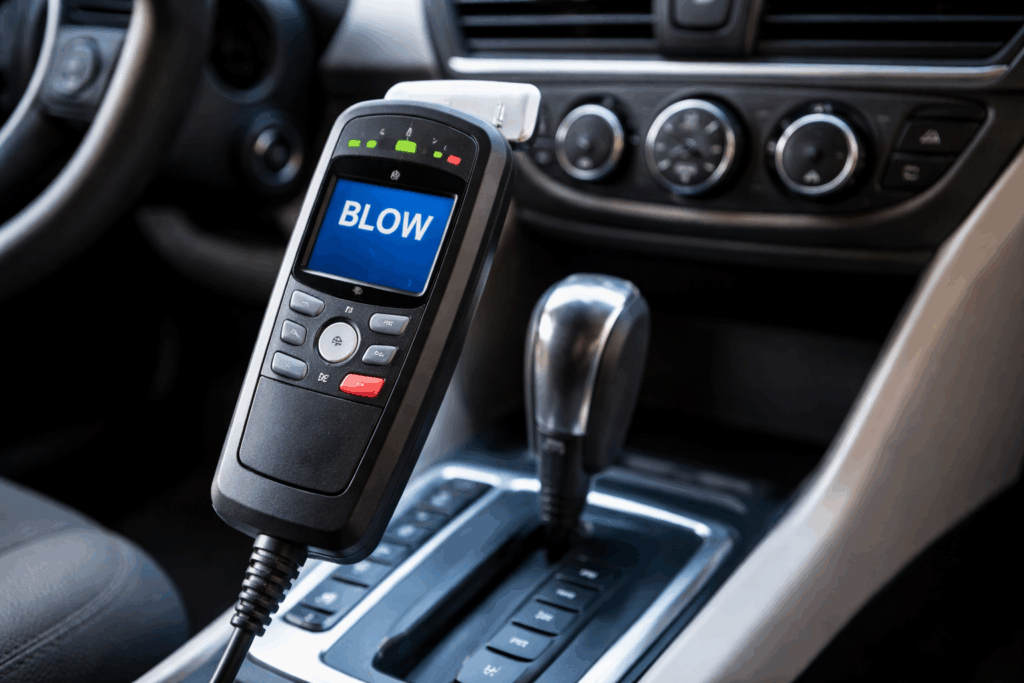
What an Ignition Interlock Actually Monitors
An ignition interlock is installed in a vehicle and connected to its starting system.
Before the vehicle starts, the driver generally provides a breath sample.
The device analyzes that sample and responds according to its programmed settings.
Interlock systems can also record information about vehicle use and testing events.
Depending on the equipment and monitoring arrangement, records may include initial tests, subsequent retests, unsuccessful samples, service events, and other information.
Those electronic records can later become evidence.
Why DWI Ignition Interlock Violations Are Not All the Same
The phrase “interlock violation” can describe several very different events.
One driver may submit an elevated breath sample.
Another may forget a service appointment.
A third may be accused of disconnecting the device.
Someone else may operate a different vehicle without the required equipment.
Grouping all these events together can hide important differences.
The legal significance depends on what happened and what the applicable order required.
Start With the Order, Not the Device Report
Suppose an interlock provider sends a report containing several flagged events.
Before deciding that the driver violated a legal condition, the actual court order should be reviewed.
What was the person required to do?
Which vehicles were covered?
How long was the device required?
Were there alcohol-abstinence conditions separate from the interlock?
Was reporting required?
A machine can document an event.
The court order determines the legal obligation.
Interlock Requirements Can Exist Before a DWI Conviction
Some defendants encounter ignition interlock conditions while the criminal case is still pending.
A court may impose an interlock-related bond condition in appropriate circumstances.
This means a person can face a compliance issue before a jury or judge has determined guilt on the underlying DWI.
The defendant should take the condition seriously.
A pretrial requirement is still a court requirement.
A Bond Violation and the Original DWI Are Separate Issues
Consider Ryan.
Ryan is awaiting trial on a DWI charge and has an ignition interlock condition as part of bond.
The device later records an alleged violation.
That event does not automatically prove Ryan committed the original DWI.
However, it may create a separate issue concerning whether he complied with bond.
The court can evaluate the bond matter under the applicable legal framework while the original criminal case remains pending.
Community Supervision Can Create Longer-Term Interlock Responsibilities
An interlock may also become part of community supervision following a conviction or plea.
Now the person may need to maintain compliance for an extended period.
That means:
Using the required vehicle correctly.
Keeping appointments.
Following testing procedures.
Maintaining the equipment.
Preserving documentation.
A single misunderstanding can become more significant when supervision lasts months or years.
Installation Deadlines Matter
The first possible violation may occur before the driver ever uses the device.
Suppose the court requires installation within a specified period.
The defendant waits because the preferred provider has no convenient appointment.
The deadline passes.
Even though no breath sample has been failed, the person may have a compliance problem.
Scheduling installation promptly can prevent this avoidable issue.
Keep Proof That Installation Occurred
After installation, preserve the paperwork.
Useful documentation can include:
- Installation receipt
- Provider information
- Device identification
- Vehicle information
- Installation date
The supervising authority may receive information directly from the provider, but keeping a personal copy creates additional protection if records later conflict.
A Failed Start Test Can Raise Immediate Questions
One of the most recognizable dwi ignition interlock violations is an elevated initial breath test.
Imagine Jessica gets into her vehicle in the morning.
She provides a breath sample.
The device records an elevated result and prevents the vehicle from starting.
That record may concern the supervising authority.
But the investigation should not stop at the first number.
What happened next can matter substantially.
Follow-Up Samples Can Provide Important Context
Suppose Jessica waits several minutes and tests again.
The second result is dramatically lower.
Another test shortly afterward is acceptable.
That pattern may raise questions different from a sequence in which several consecutive samples remain elevated.
The data should be reviewed chronologically.
A single result viewed without surrounding tests can give an incomplete picture.
Residual Mouth Alcohol Can Complicate Breath Results
Alcohol remaining temporarily in the mouth can potentially influence breath-testing results.
Alcohol-containing mouthwash is a commonly discussed example.
Certain products or recent exposure can therefore become relevant when an initial test is followed rapidly by much lower readings.
However, saying “mouthwash” is not a magic explanation.
The timing and subsequent data need to support the claim.
A Generic Excuse Can Hurt Credibility
Consider someone with repeated elevated interlock tests on several different days.
The person says:
“It must have been mouthwash every time.”
That explanation may become difficult to accept if the pattern does not fit brief residual mouth alcohol.
A credible response should address the actual data rather than select a convenient explanation first.
Evidence should drive the explanation.
Failed Tests and Alcohol-Abstinence Conditions Are Separate Issues
A driver may assume that the only prohibited conduct is providing a sample high enough to prevent the vehicle from starting.
That may be wrong.
The court may separately prohibit alcohol consumption.
If so, even an alcohol reading below the device’s programmed lockout threshold could potentially create concerns under the separate court condition.
The machine’s threshold does not rewrite the judge’s order.

Rolling Retests Can Produce Another Category of Violations
Many devices request additional samples after the vehicle has started.
These rolling retests are designed to verify continued compliance.
A requested test may need to be provided within a particular process established by the device.
Ignoring or missing the request can generate an event.
A missed retest should be distinguished from an elevated retest because the underlying conduct is different.
What If the Driver Misses the Retest Accidentally?
Consider Matthew.
Matthew is driving when the device requests another sample.
Because of surrounding traffic and noise, he does not respond properly within the expected period.
The system records a missed test.
The event may still require explanation.
The detailed device log can show what happened before and after the missed sample.
The driver should follow provider instructions rather than improvise.
Safety Still Comes First
An interlock requirement does not mean a driver should handle equipment in a way that creates unsafe driving.
Providers should supply instructions concerning rolling tests and safe device use.
Drivers should learn those procedures before beginning regular operation.
Claiming later that the device was confusing is less persuasive if the provider offered training that the driver ignored.
Someone Else Should Not Provide the Sample to Bypass the Requirement
One of the clearest forms of intentional circumvention involves asking another person to provide a breath sample so the restricted driver can operate the vehicle.
Consider Andrew.
Andrew has consumed alcohol.
His friend is sober.
Andrew asks the friend to blow into the device, start the vehicle, and then let Andrew drive.
That conduct can create serious legal consequences.
It defeats the purpose of the interlock requirement.
Cameras Can Make Circumvention Easier to Detect
Some interlock systems incorporate cameras or related monitoring technology.
These features may provide evidence concerning who submitted a sample.
A defendant who says:
“My friend was the one driving”
may find that the device records provide additional information.
Interlock evidence should therefore be reviewed as a package rather than only as breath numbers.
Tampering Can Be More Serious Than an Accidental Missed Test
A driver should never attempt to disable or alter the device.
Tampering allegations can involve conduct such as unauthorized disconnection or attempts to interfere with the equipment.
The exact definition and consequences depend on the governing legal requirements.
Mechanical problems should be handled through the provider.
Self-help can transform an equipment problem into an allegation of deliberate circumvention.
Vehicle Battery Problems Can Look Suspicious in the Data
Modern vehicles occasionally need battery replacement or electrical repair.
An interlock system may record power interruptions.
Suppose Rebecca’s battery fails.
A mechanic disconnects it and installs a replacement.
The interlock report later shows a power event.
Without context, that event might attract attention.
With a repair invoice and provider service record, the same event becomes easier to explain.
Documentation Should Begin Before the Repair When Possible
If the vehicle needs planned maintenance, the driver should contact the interlock provider and follow its procedures.
Keep:
Repair appointments.
Invoices.
Provider instructions.
Service tickets.
Dates and times.
This creates a contemporaneous record showing why the electrical interruption occurred.
Emergency Repairs Should Be Documented Too
Not every breakdown allows advance planning.
Suppose the vehicle stops working on a highway.
It is towed to a repair shop, where the battery is disconnected.
The driver should contact the provider as soon as reasonably possible and retain towing and repair records.
An emergency does not eliminate the need to explain unusual device data.
Missing Calibration or Service Can Become a Violation
Interlock systems generally require periodic maintenance or monitoring.
The provider may schedule regular service appointments.
A driver who repeatedly misses those appointments can create compliance concerns even if no alcohol-positive breath sample appears.
Service requirements should be treated like court dates:
Put them on a calendar.
Set reminders.
Address conflicts early.
One Forgotten Appointment Can Turn Into a Lockout
Imagine Steven misses a calibration appointment.
The device displays warnings.
Steven keeps driving without contacting the provider.
Eventually, the system enters a lockout mode.
Now the record contains more than one issue.
A simple scheduling mistake has developed into a longer pattern of ignored warnings.
Early communication could have prevented escalation.
A Lockout Does Not Automatically Tell You Why It Happened
Drivers often say:
“My device locked me out, so they think I was drinking.”
Not necessarily.
Depending on the system, lockouts can relate to different events.
The detailed record may identify whether the cause involved:
A failed sample.
Missed servicing.
Repeated missed tests.
Equipment issues.
Another programmed condition.
The cause should be verified before drawing conclusions.
Driving an Unequipped Vehicle Can Create a Separate Violation
The interlock requirement may restrict which vehicles the defendant can operate.
Suppose Emma’s car is equipped with the device.
Her car breaks down.
She borrows her mother’s vehicle for a quick trip.
Her mother’s car has no interlock.
If Emma’s order prohibits her from operating a vehicle without the required equipment, the short duration of the trip does not necessarily excuse the violation.
The written order controls.
Work Vehicles Can Create Difficult Questions
A defendant’s job may require driving an employer-owned vehicle.
This should be addressed immediately after the interlock requirement begins.
Do not wait until a supervisor says:
“Take the company truck today.”
Applicable law or the court order may contain rules affecting employer vehicles or other circumstances.
The defendant should determine the legal requirements before operating the vehicle.
Rental Cars Can Be Problematic Too
Suppose a defendant’s interlock-equipped vehicle is damaged in an accident.
The insurance company provides a rental car.
The defendant assumes the rental can be used temporarily.
But if the applicable order prohibits operation of an unequipped vehicle, the rental may create a violation.
Vehicle emergencies do not automatically suspend court conditions.
Changing Vehicles Should Be Coordinated With the Provider
People sell cars.
Leases end.
Vehicles are totaled.
A defendant may need another vehicle during the interlock period.
The device may need to be transferred or a new installation completed according to authorized procedures.
Removing the old device before confirming the process can create gaps in compliance.
DWI Ignition Interlock Violations Can Be Administrative or Behavioral
This distinction helps organize the evidence.
Administrative problems might include:
Missed servicing.
Late installation.
Failure to provide required documentation.
Behavioral concerns might involve:
Elevated alcohol readings.
Operating an unequipped vehicle.
Circumvention.
Tampering.
Both can matter legally.
But they should not be analyzed as though they prove the same thing.
Provider Records Can Tell a Detailed Story
A complete interlock report may include much more than a summary page.
It can contain:
- Test results
- Timestamps
- Retest sequences
- Lockout events
- Power interruptions
- Service history
- Calibration information
- Device messages
Defense counsel should consider obtaining enough information to reconstruct the event rather than relying only on a probation officer’s brief description.

A Summary Saying “Three Violations” Can Be Misleading
Suppose a report identifies three flagged events.
The first is an elevated initial sample followed immediately by acceptable results.
The second is a documented battery replacement.
The third is a missed calibration appointment.
Calling all three “alcohol violations” would be inaccurate.
Each event has a different evidentiary meaning.
Precision matters.
Device Malfunctions Should Be Reported Immediately
Technology can malfunction.
If a driver believes the interlock is not operating correctly, the provider should be contacted according to its procedures.
A contemporaneous service ticket is valuable.
A defendant who waits six months and then claims:
“The device was broken that day”
has a much harder evidentiary problem.
Prompt reporting strengthens legitimate technical explanations.
Do Not Attempt Personal Repairs
A defendant may be mechanically skilled.
That does not mean the person should repair or alter the ignition interlock personally.
Unauthorized work can create tampering concerns.
The provider should handle device-specific problems.
Ordinary vehicle repairs should also be coordinated according to provider instructions when they can affect the interlock.
Community Supervision Can Turn Device Events Into Violation Allegations
When interlock compliance is a condition of probation, reported events can be reviewed by the supervision department.
A serious or repeated pattern may lead to further action.
The defendant may eventually need to respond to allegations before the court.
At that point, device records and documentation become particularly important.
A Violation Report Is Not the Same as a Judicial Finding
Suppose a probation officer receives a provider report and identifies a possible violation.
That does not necessarily mean a judge has already determined that intentional noncompliance occurred.
The defendant may have an opportunity to address the allegation through applicable procedures.
The exact process depends on the case.
This distinction is important when technical events have legitimate explanations.
Repeated Violations Can Be Much Harder to Explain
Consider David.
Over six months, his device records several elevated tests on different days.
Some are followed by additional elevated samples.
He also misses two service appointments.
The pattern may be more persuasive evidence of noncompliance than one isolated event.
Courts and supervision authorities can consider the overall history.
Repeated problems should therefore be taken especially seriously.
One Isolated Event Can Still Matter
The opposite should not be overstated.
A person with hundreds of compliant samples can still face consequences for one genuine violation.
A clean history does not automatically erase a later event.
It simply provides context.
The actual data and applicable legal condition remain central.
Removing the Interlock Too Early Can Undo Months of Compliance
A defendant may count the months personally and decide:
“Today is the end date.”
The provider removes the device.
Later, the supervising authority says the legal requirement actually continues for another month.
Now the defendant has a compliance problem that could have been avoided.
Device removal should occur only after the appropriate authorization and confirmation.
Never Assume Probation Ending Means Automatic Removal
Different legal requirements can overlap.
An interlock condition may arise from a specific order or licensing arrangement.
Before removing the device, determine which requirement remains in effect and when it legally ends.
The provider’s willingness to schedule removal does not necessarily establish that every court restriction has expired.
Financial Hardship Should Be Addressed, Not Hidden
Interlock programs can involve installation, service, and monitoring costs.
A defendant who struggles to pay should not simply stop attending appointments or remove the equipment.
Financial hardship may have procedures for review depending on the circumstances.
The defendant should communicate through proper channels and obtain legal advice where necessary.
Nonpayment should not quietly become noncompliance.
A Full DWI Ignition Interlock Violations Example
Consider Jacob.
Jacob is on community supervision after a Texas DWI conviction.
For eight months, he uses an ignition interlock without reported problems.
Then several events occur within two weeks.
First, the device records an elevated initial breath sample.
Five minutes later, Jacob provides another sample that is substantially lower.
Several days later, his vehicle will not start because of an electrical problem.
A repair shop replaces the battery.
The interlock report records a power interruption.
Finally, Jacob misses a service appointment because he wrote the wrong date on his calendar.
A summary report describes three interlock events.
That sounds serious.
But the detailed evidence tells a more complicated story.
The first event requires review of the actual breath sequence.
The second corresponds with a documented repair.
The third appears to be a service-compliance issue rather than evidence of alcohol consumption.
Jacob may still need to address each event.
But treating them as three identical dwi ignition interlock violations would oversimplify the evidence.
Compare That With Intentional Circumvention
Now imagine another defendant repeatedly asks a friend to provide samples.
Camera records support the allegation.
The defendant also operates another unequipped vehicle despite knowing the restriction.
That case involves very different conduct.
Technical ambiguity is minimal.
The distinction illustrates why intent, pattern, and supporting evidence can affect the seriousness of an interlock allegation.
What Evidence Can Help Explain a Disputed Event?
Depending on the allegation, useful evidence may include:
- Detailed device logs
- Camera records
- Calibration history
- Service tickets
- Vehicle repair invoices
- Towing records
- Follow-up test results
- Provider communications
The evidence should match the explanation.
A repair invoice does not explain an elevated breath test.
A clean follow-up test does not explain an unauthorized vehicle.
Each allegation requires its own evidence.
Create an Interlock Timeline
When several events exist, organize them chronologically.
For example:
8:02 a.m. — initial elevated sample.
8:07 a.m. — second sample.
8:12 a.m. — third sample.
2:30 p.m. — provider contacted.
Next day — service inspection completed.
This makes patterns easier to understand.
A timeline can reveal information that disappears in a summary report.
What to Do After Receiving a Violation Notice
Do not ignore it.
First, determine what event is being alleged.
Second, review the exact court condition.
Third, preserve any available documentation.
Fourth, obtain the detailed provider records when appropriate.
Finally, discuss serious allegations with defense counsel.
The objective is to understand what happened before deciding how to respond.
What Not to Say Without Checking the Records
A defendant may instinctively respond:
“The machine was wrong.”
That statement can become problematic if the records later show repeated consistent results.
Another person may say:
“I never missed a test.”
The detailed log may show otherwise.
Review the data before making categorical claims.
Accuracy protects credibility.
Expert Analysis Can Matter in Technical Disputes
Some cases involve questions about breath-testing technology, calibration, device errors, or unusual data patterns.
A qualified expert may be able to evaluate the technical records.
Not every case needs expert testimony.
But when the alleged violation depends heavily on complex device data, technical review can help distinguish reliable evidence from misunderstanding.
Why DWI Ignition Interlock Violations Require Context
A machine event is only the beginning of the analysis.
The important questions are:
What exactly happened?
When?
What happened immediately afterward?
Was the event repeated?
Was there a documented mechanical issue?
Who provided the sample?
What condition did the court impose?
Does the evidence actually establish a violation of that condition?
Those questions turn raw electronic information into a meaningful legal analysis.

Conclusion
DWI ignition interlock violations can arise from many different circumstances, including failed breath tests, missed rolling retests, late installation, missed servicing, unauthorized vehicle use, tampering allegations, power interruptions, circumvention, or premature device removal. Because ignition interlock systems generate detailed electronic records, a flagged event can quickly become part of a bond or community-supervision compliance review. But the existence of a device event does not necessarily establish its cause or legal significance.
From an analytical perspective, the strongest approach to dwi ignition interlock violations is to compare the detailed device data with the actual court order and surrounding evidence. Follow-up breath samples can provide context for an initial reading, repair invoices can explain legitimate power interruptions, camera records can identify who provided a sample, and service documentation can clarify alleged maintenance problems. Repeated alcohol-related failures or deliberate attempts to bypass the device can present substantially more serious concerns than an isolated technical event. Careful compliance, prompt communication with the provider, accurate documentation, and early review of disputed events can help prevent misunderstandings from developing into more serious allegations.