
DWI arraignment process is often one of the first things a defendant tries to understand after a Texas impaired-driving arrest, especially when a court date appears on paperwork with little explanation of what will actually happen. For someone who has never been inside a criminal courtroom, the word “arraignment” can sound like the beginning of a trial. In practice, the proceeding is generally much more procedural.
Imagine Andrew, who is arrested after a traffic stop on a Saturday night. After dealing with booking and release, he goes home carrying a stack of paperwork. There are dates, case information, bond conditions, and instructions that seem important but are difficult to put into context.
Then he sees his upcoming court date.
Andrew pictures the arresting officer sitting across the courtroom while prosecutors immediately begin presenting evidence. He wonders whether he will have to explain himself to the judge and whether the court will decide his case that morning.
Those assumptions illustrate why understanding the DWI arraignment process matters. An arraignment or comparable early court setting is generally not the trial. Instead, it helps move the criminal case into the formal court process, address procedural matters, and establish what happens next.
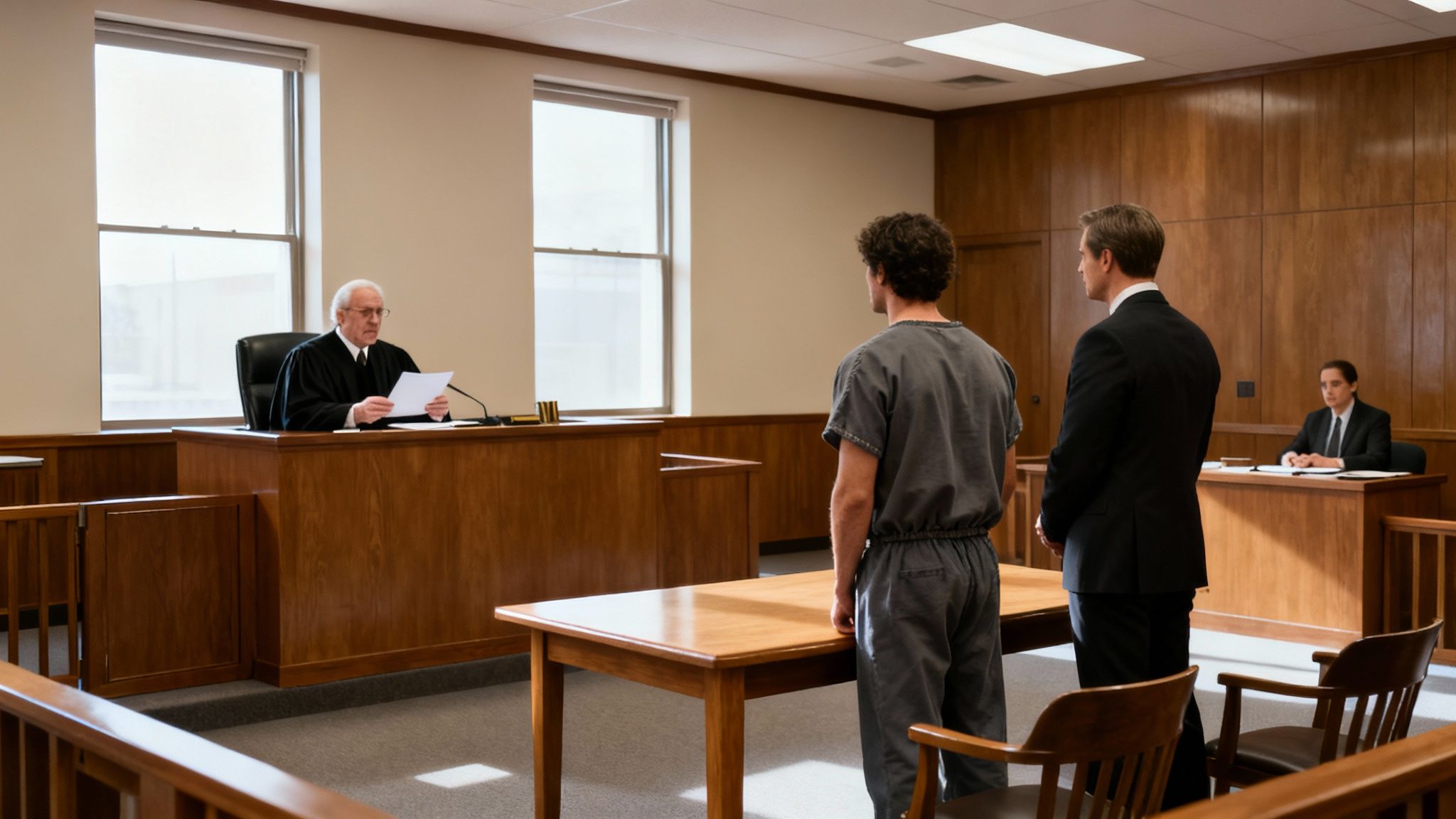
Why the DWI Arraignment Process Comes After the Arrest
The roadside investigation and the court proceeding serve different purposes.
During the investigation, an officer may observe driving behavior, speak with the driver, conduct additional investigative procedures, obtain video, and gather breath or blood evidence where applicable.
After an arrest, the case begins moving through the judicial system.
That transition changes the focus.
The roadside question was whether law enforcement had a sufficient legal basis to take particular actions. The courtroom process deals with the formal criminal accusation and how the case will be handled under Texas procedure.
Your Court Paperwork Deserves Immediate Attention
One of the easiest mistakes after a DWI arrest is placing all the paperwork in a drawer.
The documents may contain information about:
- Court dates
- Court locations
- Case numbers
- Bond conditions
- Release requirements
- Attorney-related procedures
- Other deadlines
A defendant should understand which instructions apply and when action is required.
Missing a required court appearance can create a new problem on top of the existing DWI case.
What Happens When You Enter the Courthouse?
A court appearance begins long before the judge calls the case.
Courthouses may require security screening, and larger facilities can contain numerous courtrooms operating simultaneously.
Arriving early provides time to locate the correct courtroom and speak with counsel.
Once inside, defendants may encounter a busy docket with numerous cases scheduled during the same session.
That can be surprising.
A 9:00 a.m. setting does not necessarily mean the judge will call one particular case at exactly 9:00.
Texas Arraignments Can Look Different From County to County
The exact DWI arraignment process is not identical throughout Texas.
Local courts can organize criminal dockets differently. The terminology used for particular settings may also vary, especially depending on whether the offense is being handled as a misdemeanor or felony.
For that reason, defendants should follow the instructions from the court actually handling their case rather than assuming an online description applies word-for-word.
The basic procedural principles may be similar, but local practice matters.
The Charge Becomes Part of the Formal Court Case
A defendant may already know that police arrested them for DWI, but the formal accusation deserves careful review.
The charging document identifies the offense the state intends to prosecute.
That matters because not every impaired-driving prosecution presents identical legal issues or potential consequences.
The DWI arraignment process helps place that formal accusation within the court system, where it can later be challenged, negotiated, or tried according to applicable procedures.
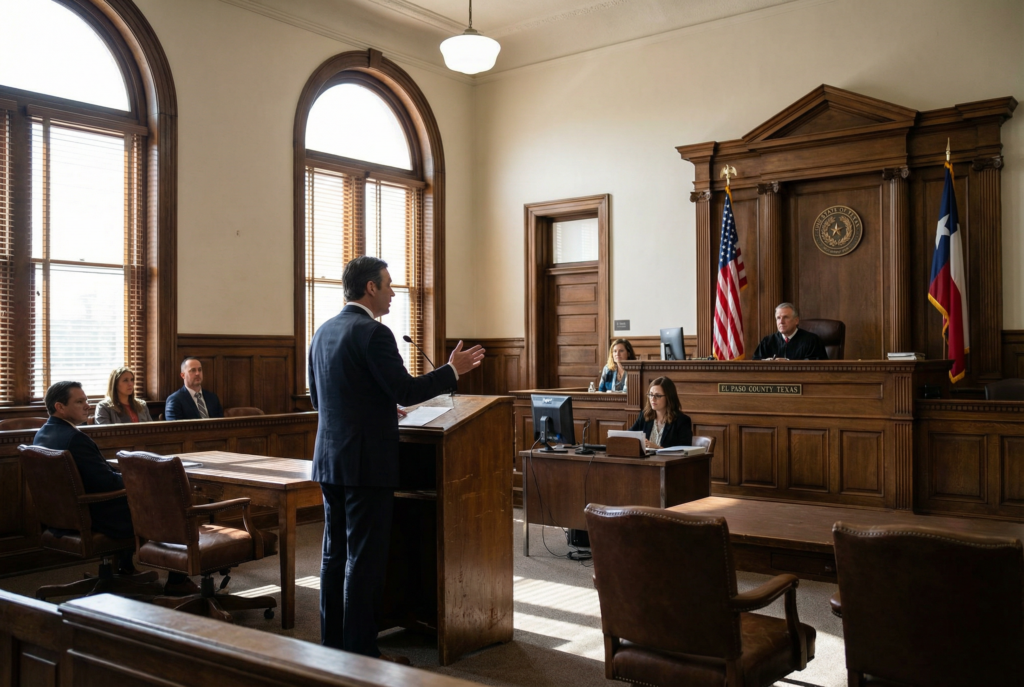
What Does the Judge Actually Do?
The judge’s role during an early proceeding is primarily judicial and procedural.
Depending on the court and circumstances, issues may include:
- The pending accusation
- Representation by counsel
- Plea-related procedures
- Bond conditions
- Scheduling
- Future court appearances
The judge ordinarily is not using the arraignment to hear every witness and decide the entire DWI case.
That comes later if the case proceeds to contested hearings or trial.
The Plea Is an Important Procedural Moment
Many defendants become nervous when they hear the word “plea.”
A plea communicates the defendant’s formal response to the criminal charge.
Possible pleas in criminal proceedings can include guilty, not guilty, or no contest where legally appropriate.
But entering a plea at an early stage does not necessarily mean the case is immediately ending.
For example, a not-guilty plea allows the case to continue while evidence is reviewed and legal issues are addressed.
Why “Not Guilty” Does Not Mean “Trial Today”
Television courtroom dramas compress months of litigation into a few scenes.
Real criminal procedure moves differently.
After a not-guilty plea, the defense may still need to:
- Obtain discovery
- Review video
- Examine police reports
- Analyze scientific evidence
- Investigate witnesses
- File appropriate motions
- Discuss possible resolutions
A trial, if one occurs, generally comes later.
This makes the DWI arraignment process more of a procedural beginning than a final confrontation.
What If You Do Not Have an Attorney Yet?
Representation is an important issue during criminal proceedings.
A defendant who has retained an attorney should know whether counsel will attend and whether the defendant must personally appear.
Someone who cannot afford private counsel may need to follow the applicable procedure for requesting appointed representation if eligible.
Ignoring the issue is not a strategy.
The earlier representation is addressed, the sooner someone can begin reviewing the evidence and procedural requirements.
A Realistic First-Court-Date Scenario
Consider Jasmine.
She was arrested six weeks ago and arrives at court expecting to defend every detail of the traffic stop.
Her attorney meets her outside the courtroom.
The case is eventually called. The court addresses the necessary procedural matters, and another setting is scheduled.
Jasmine spends far less time standing before the judge than she expected.
She leaves thinking, “Why did I spend all morning here for five minutes?”
Because those five minutes were part of moving the case through the court system.
More importantly, the next stage gives her attorney time to analyze what actually happened during the investigation.
The Real Evidence Review Often Begins Around This Stage
After the early procedural appearances, attention increasingly shifts toward discovery and evidence.
Depending on the case, defense counsel may review:
- Body-camera recordings
- Dash-camera footage
- Police reports
- Witness statements
- Photographs
- Breath-test documentation
- Blood-testing materials
- Laboratory records
This is where the underlying DWI case begins to receive detailed scrutiny.
The DWI arraignment process itself usually does not answer whether that evidence is strong, weak, admissible, or disputed.
Why Body-Camera Footage Can Matter
An officer’s report is one description of the encounter.
Video can provide additional context.
Suppose the report says a driver appeared confused and had difficulty following instructions.
Body-camera footage may allow attorneys to evaluate those observations directly.
Was the environment noisy?
Were the instructions clear?
How did the driver respond?
Did the video match the written description?
These questions become part of the later evidence analysis.
Breath and Blood Evidence May Require Detailed Review
When chemical testing becomes part of a DWI case, scientific evidence can add another layer of complexity.
A laboratory result or breath-test number may appear straightforward, but attorneys may examine the procedures and documentation surrounding that evidence.
Depending on the circumstances, relevant issues can include:
- Collection timing
- Testing procedures
- Laboratory documentation
- Instrument records
- Other scientific considerations
These matters generally require more analysis than an arraignment hearing provides.
Bond Conditions Can Follow You Into the Courtroom
Release from jail does not necessarily mean a defendant has no continuing restrictions.
Bond conditions can remain effective while the criminal case is pending.
A defendant needs to understand those conditions precisely.
Depending on the case, they may involve restrictions or requirements relating to conduct, monitoring, travel, alcohol, or other court-ordered matters.
Violating a condition can create additional complications.
Never Assume the Court Changed a Condition
Suppose Andrew believes a condition is inconvenient and assumes his attorney’s request to change it means the condition no longer applies.
That can be a serious mistake.
A request and a court order are not the same thing.
Until the appropriate court changes a condition, the defendant should understand and comply with the requirements actually in effect.
The Criminal Case May Not Be the Only Proceeding
A DWI arrest can also create driver’s-license issues under separate administrative procedures.
This can surprise defendants.
They focus entirely on the criminal court date and assume every consequence will be handled during the DWI arraignment process.
Not necessarily.
Administrative matters may operate under different procedures and deadlines.
This is one reason all paperwork from the arrest should be reviewed promptly.
Should You Explain the Case to the Judge?
Defendants often feel a strong urge to tell their side.
“I only had two drinks.”
“The officer misunderstood me.”
“I wasn’t driving badly.”
An arraignment is generally not the time to improvise a detailed factual defense without understanding the legal consequences.
Statements about the underlying case can matter.
A defendant represented by counsel should discuss how factual issues will be addressed through the proper legal process rather than treating the first court appearance like an informal conversation.
Talking About the Case in the Hallway Can Also Be Risky
Courthouse hallways are public environments.
Other defendants, attorneys, witnesses, court staff, and law enforcement personnel may be nearby.
Loudly discussing disputed facts is unnecessary.
The same principle applies outside the courthouse.
A pending criminal case is usually not improved by broadcasting detailed explanations to acquaintances or posting them online.
Social Media Does Not Need to Become Evidence
Consider Tyler, who leaves court angry and posts:
“Everyone acts like I was wasted. I drive better after four beers than most people do sober.”
He thinks he is joking.
But the statement now exists.
Whether it ultimately becomes relevant depends on the circumstances, but creating unnecessary public statements about a pending DWI allegation serves little purpose.
Silence on social media can be much simpler.
What Happens at the Next Court Setting?
The answer depends on how the case develops.
Future settings may involve:
- Status discussions
- Discovery issues
- Motion hearings
- Negotiations
- Trial preparation
- Other procedural matters
Some cases resolve relatively early.
Others continue through numerous settings.
There is no universal number of appearances that every Texas DWI case requires.
Pretrial Motions Can Shape the Case
Legal disputes sometimes require formal motions.
Suppose the defense believes evidence was obtained through a procedure that raises a significant legal issue.
An appropriate motion may ask the court to evaluate that issue.
The judge can then hear arguments and, where necessary, evidence before making a ruling.
This is one reason the first court date rarely tells the entire story.
The meaningful legal battles may occur later.
Plea Negotiations Can Happen After Evidence Review
Not every DWI case goes to trial.
Prosecutors and defense attorneys may discuss possible negotiated resolutions.
But evaluating a proposed agreement requires context.
The defendant should understand the charge, evidence, potential consequences, and alternatives before making major decisions.
A fast plea is not automatically a favorable plea.
Likewise, rejecting every negotiation automatically is not necessarily a sound strategy.
The case should be evaluated individually.

Two DWI Cases Can Start the Same and End Very Differently
Imagine Noah and Eric are arrested on the same weekend and charged with similar offenses.
Their arraignments look nearly identical.
Both appear in court.
Both have attorneys.
Both receive future settings.
But the evidence differs dramatically.
Noah’s case contains extensive video and chemical-test evidence.
Eric’s case involves disputed observations and significant questions about parts of the investigation.
The procedural beginning looks similar.
The substantive cases are not.
That illustrates why the DWI arraignment process should never be used to predict the ultimate outcome.
How Long Can the Case Continue?
A Texas DWI case does not have one standard completion date.
The timeline can depend on court congestion, discovery, laboratory evidence, motions, negotiations, witnesses, and whether a trial is required.
Some defendants become frustrated when a case continues for months.
But speed is not the only consideration.
A meaningful defense may require time to obtain and analyze evidence properly.
Staying Organized Can Reduce Stress
A simple case calendar can make the process easier to manage.
Track:
- Court dates
- Attorney meetings
- Bond requirements
- Administrative deadlines
- Documents received
- Important communications
Keep court paperwork together rather than scattered among text messages, emails, glove compartments, and kitchen drawers.
Organization cannot decide the case, but it can prevent avoidable mistakes.
Questions to Ask After the Arraignment
A defendant should leave the early court stage understanding what comes next.
Useful questions include:
- When is my next court date?
- Must I personally attend?
- What bond conditions currently apply?
- What evidence has been received?
- Is additional evidence still outstanding?
- Are there separate license-related deadlines?
- Is there anything my attorney needs from me?
Knowing these answers makes the criminal process much easier to follow.
The DWI Arraignment Process Is Only the Opening Chapter
The arraignment may be short.
The case is not.
What ultimately matters may include the legality of the stop, reliability of evidence, credibility of witnesses, scientific testing, video recordings, negotiations, and other facts that cannot realistically be resolved during a brief initial appearance.
That is why defendants should treat arraignment seriously without treating it as a verdict.
Conclusion
The DWI arraignment process is an early procedural stage in a Texas criminal case rather than a full trial of the impaired-driving allegations. Depending on local court practices and the nature of the charge, the proceeding may address representation, the formal accusation, plea-related procedures, bond matters, and future scheduling. The arresting officer generally does not use this setting to present the entire prosecution, and complex disputes involving video, breath testing, blood evidence, or police procedures typically develop during later stages.
Understanding the DWI arraignment process is valuable because it allows defendants to focus on what actually matters at each stage. The immediate priorities include appearing as required, understanding bond conditions, addressing representation, preserving court documents, tracking separate deadlines, and preparing for the evidence-review process ahead. Arraignment may be one of the shortest court appearances in the case, but it opens the door to the investigation, legal analysis, negotiations, motions, and possible trial proceedings that ultimately determine how the DWI charge is resolved.