 Skip to content
DUI arrest at checkpoint Texas cases raise immediate questions about legality, and DUI arrest at checkpoint Texas situations often sit at the intersection of public safety and constitutional rights. For many drivers, the moment feels confusing: you didn’t break a visible traffic law, yet you are being stopped, questioned, and possibly investigated. This confusion often comes from the sudden shift in expectations while driving. It also raises concerns about what rights apply in that moment.
Picture a late-night drive through Austin. Traffic slows. Cones appear. Officers wave cars into a controlled lane. You roll down your window, expecting a quick exchange. Instead, the officer asks questions, observes closely, and then signals you to pull aside. What started as a routine drive suddenly becomes a legal situation. This transition can feel abrupt and unsettling. It often leaves drivers unsure about what to do next.
That moment is where legality matters most. It defines whether the stop will hold up under legal scrutiny. It also determines how the situation may develop afterward.
Understanding how DUI arrest at checkpoint Texas cases are evaluated helps explain what makes these stops lawful—and when they cross the line. This knowledge helps drivers better understand their position during such encounters. It also provides a clearer view of how courts analyze these situations.
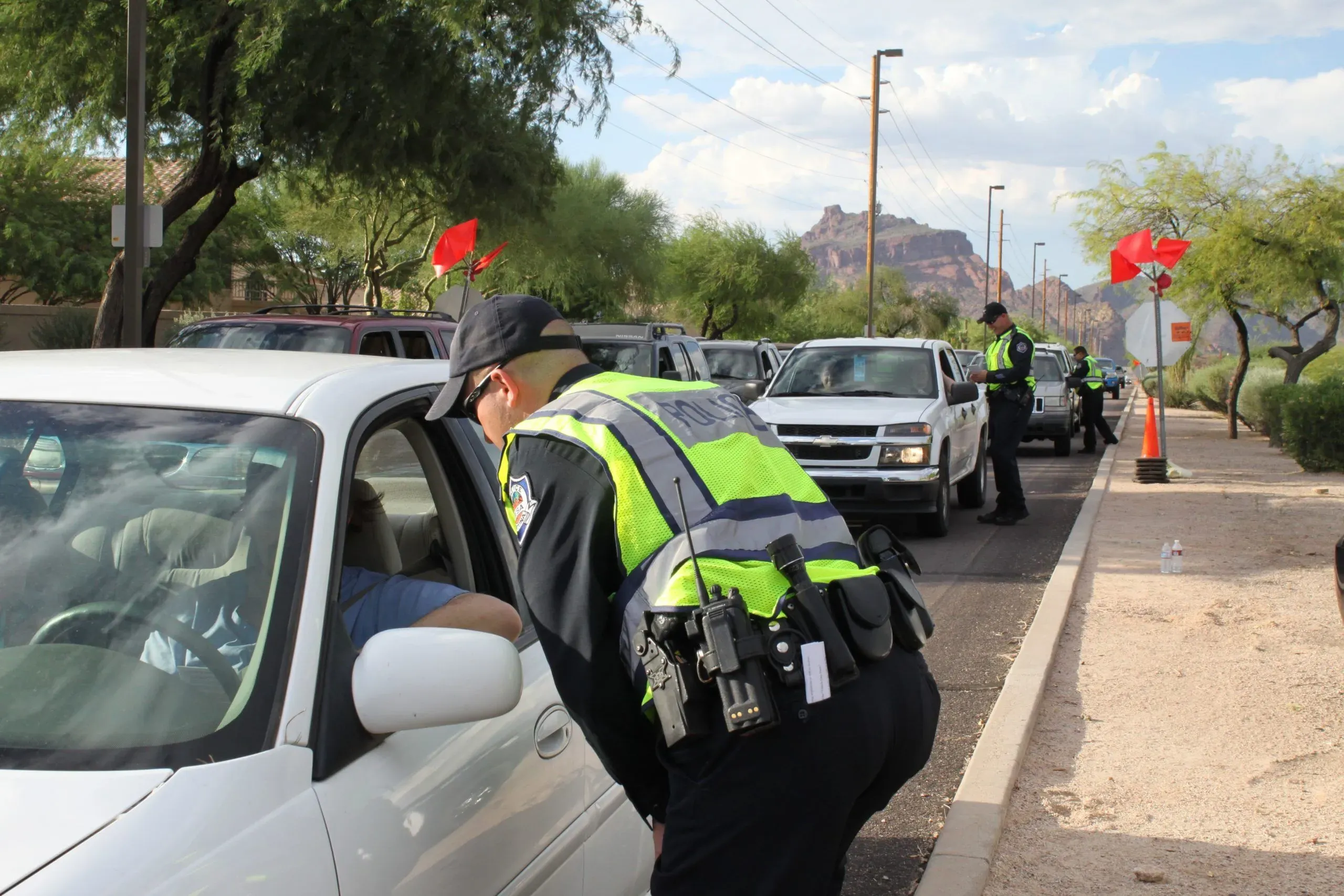
Are DUI Checkpoints Even Legal in Texas?
This is the first and most important question. It is also the one that creates the most confusion for drivers. The answer depends on how the checkpoint is conducted.
Unlike some states, Texas does not automatically allow DUI checkpoints. In fact, courts have ruled that checkpoints require strict legal justification. Without proper authorization, a DUI arrest at checkpoint Texas may not hold up. This limitation reflects the importance of constitutional protections. It also shows that not all checkpoints are automatically valid.
However, that does not mean checkpoints never happen. Law enforcement agencies may still conduct them under certain conditions. These situations require careful planning and oversight.
Instead, they must meet specific constitutional standards. These standards focus on balancing two competing interests:
- Public safety
- Individual rights
Each of these interests plays a role in determining legality. Together, they shape how checkpoints are evaluated.
From an analytical perspective, legality depends less on the checkpoint itself and more on how it is conducted. The structure and procedures used become the key factors. This approach ensures that individual rights are not overlooked.
The Constitutional Foundation Behind Checkpoints
Checkpoint legality revolves around the Fourth Amendment, which protects against unreasonable searches and seizures. This protection forms the basis for evaluating all stops. It ensures that law enforcement actions remain within legal limits.
In a DUI arrest at checkpoint Texas scenario, the key issue is whether the stop is considered “reasonable.” This concept guides how courts assess the situation. It also determines whether the stop meets constitutional standards.
Normally, police need individualized suspicion to stop a driver. Checkpoints challenge that rule by stopping multiple vehicles without specific suspicion. This creates a tension between efficiency and legality. It also requires additional safeguards to remain lawful.
Because of this, courts require:
- A neutral plan for stopping vehicles
- Minimal intrusion on drivers
- Clear public safety purpose
Each of these requirements helps protect drivers’ rights. Together, they create a framework for lawful checkpoints.
Without these elements, the stop may be unconstitutional. This can affect the validity of any resulting arrest. In many cases, it becomes a central issue during legal review.
Real-Life Scenario: A Question of Legitimacy
Consider a situation in Houston.
A checkpoint is set up late at night. Officers stop every third vehicle. There is no clear signage, and no public notice is given.
A driver is stopped and later arrested for DUI.
During legal review, questions arise:
- Who authorized the checkpoint?
- Was there a formal plan?
- Were procedures followed consistently?
If the answer to these questions is unclear, the DUI arrest at checkpoint Texas case may face challenges.
What Makes a Checkpoint Legally Valid
For a checkpoint to support a valid DUI arrest at checkpoint Texas case, certain conditions must exist.
These typically include:
- Advance planning by supervisory officials
- Neutral criteria for stopping vehicles
- Minimal officer discretion at the scene
- Visible safety measures (lights, signs, cones)
Each of these factors reduces the risk of arbitrary enforcement.
The more structured the checkpoint, the more likely it is to be upheld.

The Role of Neutral Criteria
One of the most important elements is how vehicles are selected.
In DUI arrest at checkpoint Texas situations, officers cannot randomly choose who to stop.
Instead, they must follow a neutral pattern, such as:
- Every vehicle
- Every third vehicle
This prevents discrimination and ensures fairness.
If officers deviate from the pattern, the legality of the stop may be questioned.
Officer Conduct During the Stop
Even if the checkpoint itself is valid, the officer’s behavior still matters.
During a DUI arrest at checkpoint Texas stop, the officer must:
- Keep the interaction brief
- Avoid unnecessary questioning
- Limit the scope of the stop
However, if the officer observes signs of impairment, the situation changes.
At that point, they may:
- Ask additional questions
- Request field sobriety tests
- Extend the stop
This shift must be based on observable facts.
Real-Life Style Example: Observation Leads to Investigation
Imagine a driver in Dallas.
At a checkpoint, the officer notices:
- Slurred speech
- Bloodshot eyes
- Odor of alcohol
These observations create reasonable suspicion.
The driver is asked to pull over for further evaluation.
This is where a routine stop becomes a DUI investigation.
In DUI arrest at checkpoint Texas cases, this transition must be justified by specific observations.
Field Sobriety Tests and Their Role
Once suspicion develops, officers may request field sobriety tests.
These tests are used to assess impairment.
In DUI arrest at checkpoint Texas situations, their validity depends on:
- Proper instructions
- Appropriate conditions
- Accurate interpretation
For example:
- Uneven ground can affect performance
- Poor lighting can impact results
These details matter when evaluating the case later.
Chemical Testing at Checkpoints
Chemical tests, such as breath or blood tests, often follow field sobriety tests.
In DUI arrest at checkpoint Texas cases, these tests must follow strict procedures.
This includes:
- Proper timing
- Equipment calibration
- Documentation
If procedures are not followed, results may be challenged.
The Importance of Documentation
Every step of the process must be documented.
This includes:
- The checkpoint plan
- Officer observations
- Test results

In DUI arrest at checkpoint Texas situations, documentation provides the foundation for the case.
Without it, proving legality becomes difficult.
Challenges to Checkpoint Arrests
Defendants may challenge checkpoint arrests on several grounds:
- Lack of proper authorization
- Absence of a neutral plan
- Excessive intrusion
- Improper officer conduct
Each challenge focuses on whether the stop met legal standards.
In DUI arrest at checkpoint Texas cases, these challenges can affect the outcome significantly.
Analytical Perspective: Structure vs Discretion
From an analytical standpoint, checkpoint legality depends on structure.
The more structured the process:
- The less room for arbitrary decisions
- The stronger the legal position
Conversely, increased discretion raises concerns.
In DUI arrest at checkpoint Texas scenarios, courts look for consistency and predictability.
The Emotional Experience for Drivers
Checkpoint stops can feel intimidating. They often happen unexpectedly and disrupt what feels like a normal drive. For many drivers, the sudden presence of law enforcement creates immediate tension.
Drivers may experience:
- Confusion
- Anxiety
- Pressure
Each of these reactions is natural in an unfamiliar situation. Together, they can make it harder to think clearly in the moment.
Even when nothing is wrong, the situation can feel serious. The presence of officers and structured traffic control adds to that perception. It can make even routine interactions feel significant.
Understanding the legal framework helps reduce uncertainty. It gives drivers a clearer sense of what is happening. In many cases, that knowledge can make the experience less stressful.
Long-Term Impact of a Checkpoint Arrest
A DUI arrest can affect:
- Driving privileges
- Insurance rates
- Employment opportunities
Each of these consequences can extend far beyond the initial stop. Together, they can influence both personal and professional life.
Even if the arrest occurs at a checkpoint, the consequences remain significant. The location of the stop does not reduce the impact. It still carries the same legal weight as other DUI cases.
In DUI arrest at checkpoint Texas cases, legality may influence whether those consequences stand. If the stop is challenged successfully, outcomes may change. This makes legal analysis an important part of the process.
Common Misconceptions About Checkpoints
Several misconceptions exist.
Some believe:
- All checkpoints are legal
- Refusing interaction is always allowed
- Officers have unlimited authority
In reality, each of these assumptions is incomplete.
Understanding the law helps clarify what is actually permitted.
Practical Takeaways for Drivers
To navigate checkpoint situations:
- Remain calm
- Follow instructions
- Understand your rights

These steps help manage the interaction effectively.
Conclusion
DUI arrest at checkpoint Texas cases highlight the balance between public safety and individual rights. While checkpoints can serve an important purpose, their legality depends on strict adherence to constitutional standards. This balance ensures that safety measures do not override fundamental protections. It also reflects how carefully the law approaches situations involving both enforcement and personal freedom.
By understanding how these standards apply, individuals can better evaluate their situation and recognize when a stop meets—or fails to meet—legal requirements. This awareness helps drivers respond more confidently during encounters. It also provides a clearer understanding of how such cases may be reviewed later.

