
A DWI arrest can be overwhelming—but you don’t have to face it alone. Even if it starts with a simple traffic ticket, the situation can escalate quickly. An arraignment for a traffic ticket is your first opportunity to take control, and knowing your rights is crucial.
Think of it as a procedural first step, not a trial. It’s where the court formally reads the charge against you and you enter an initial plea. Your decision here sets the stage for everything that follows, making it a critical moment in your case.
What Happens at an Arraignment for a Traffic Ticket
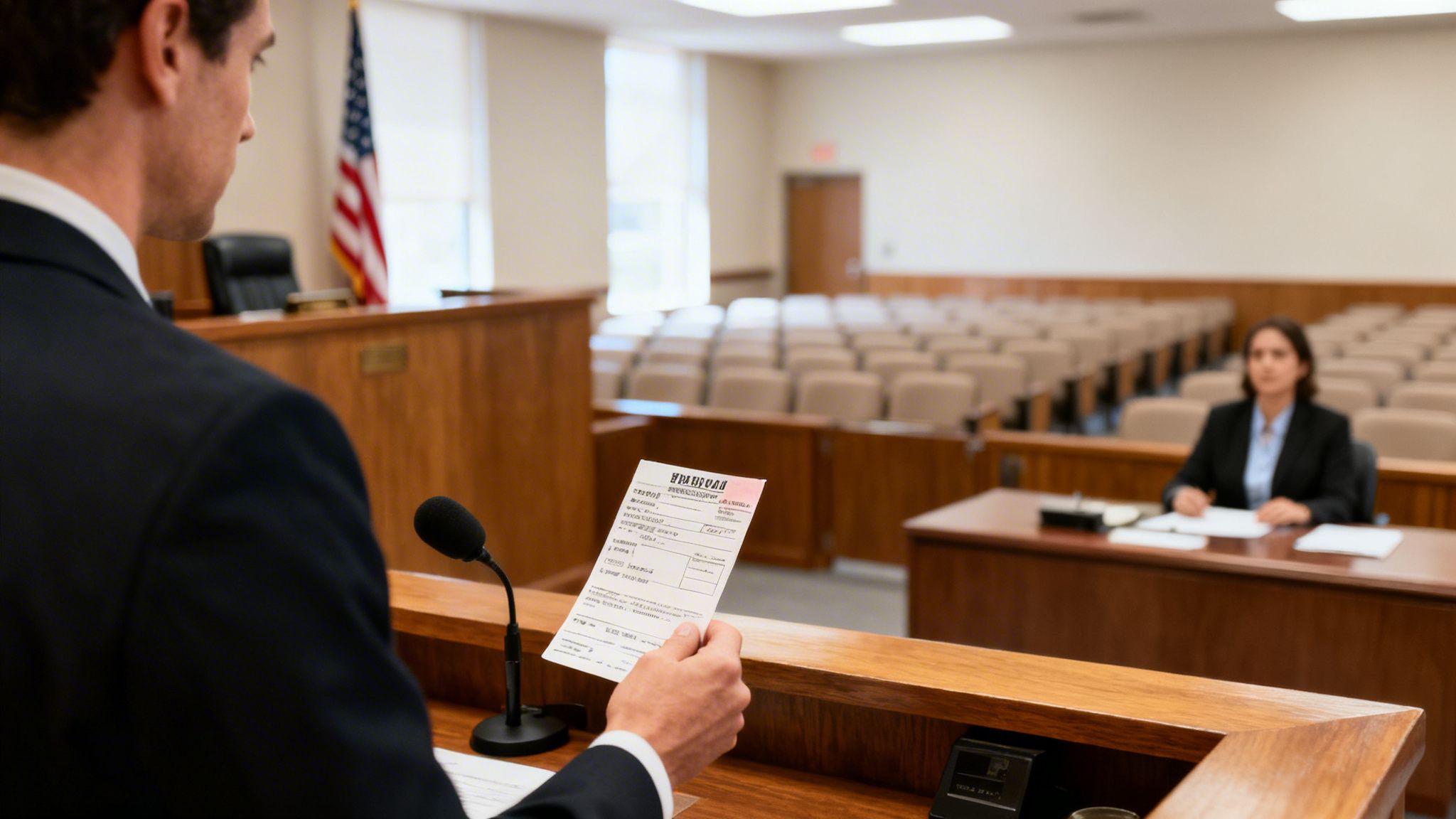
Facing a judge, even for a minor traffic violation, can be intimidating. However, understanding the process can replace anxiety with confidence. The arraignment is your first chance to assert your rights and begin building a strong defense, especially if the traffic stop led to a DWI investigation.
This initial hearing is purely procedural. You will not argue your case or present evidence. The court's purpose is to inform you of the accusation and ask for your plea. How you plead is the first strategic decision you'll make.
The Purpose of the First Court Hearing
Your arraignment formally begins the court process. It's a brief but critical hearing where the judge will:
- State the charge against you: The judge will read the specific violation, such as, "You are charged with speeding, traveling 75 miles per hour in a 60-mile-per-hour zone."
- Explain your rights: This includes your right to an attorney, your right to a trial, and your right to review the evidence the prosecution has against you.
- Ask for your plea: You will be asked to plead "guilty," "not guilty," or "nolo contendere" (no contest).
The plea you enter dictates whether your case ends that day with a conviction or moves forward, allowing you to fight the charge. To learn more, see our detailed guide on the arraignment process.
Your Three Plea Options at Arraignment
Choosing your plea is a strategic decision with significant legal consequences. Each option sets a different path for your case.
| Plea Option | What It Means | Immediate Outcome |
|---|---|---|
| Guilty | You are admitting to the traffic violation as charged. | The judge will find you guilty and impose a penalty (usually a fine). The conviction is reported to your driving record. |
| No Contest | You are not admitting guilt, but you accept the conviction and penalty. | Same as a guilty plea—you will be found guilty and sentenced. The conviction goes on your record, but it cannot be used against you in a related civil lawsuit. |
| Not Guilty | You are denying the charge and exercising your right to make the State prove its case. | The case is set for a future court date. You and your attorney will have time to prepare a defense and negotiate with the prosecutor. |
Pleading "not guilty" is the only option that gives you the opportunity to have the ticket dismissed or reduced. The other two pleas result in an immediate conviction.
Traffic Enforcement Trends in Texas
It's important to recognize that traffic enforcement is a priority for law enforcement across Texas. A ticket isn't just bad luck; it's often part of a larger trend.
A recent 2025 analysis showed that speeding tickets increased by 29% in a single year. With nearly 1 million drivers cited, it's clear that facing an arraignment for a traffic ticket is becoming more common for Texas drivers. A Houston DWI lawyer can help you navigate this aggressive enforcement environment.
With increased enforcement, the consequences of a conviction—higher insurance rates, points on your license, and potential license suspension—are more serious than ever. Approaching your arraignment with a strategic plan is essential.
When you stand before the judge, the question "How do you plead?" is the most important one you'll answer. Your response is a strategic move that defines the rest of your case. You have three options: guilty, not guilty, or no contest.
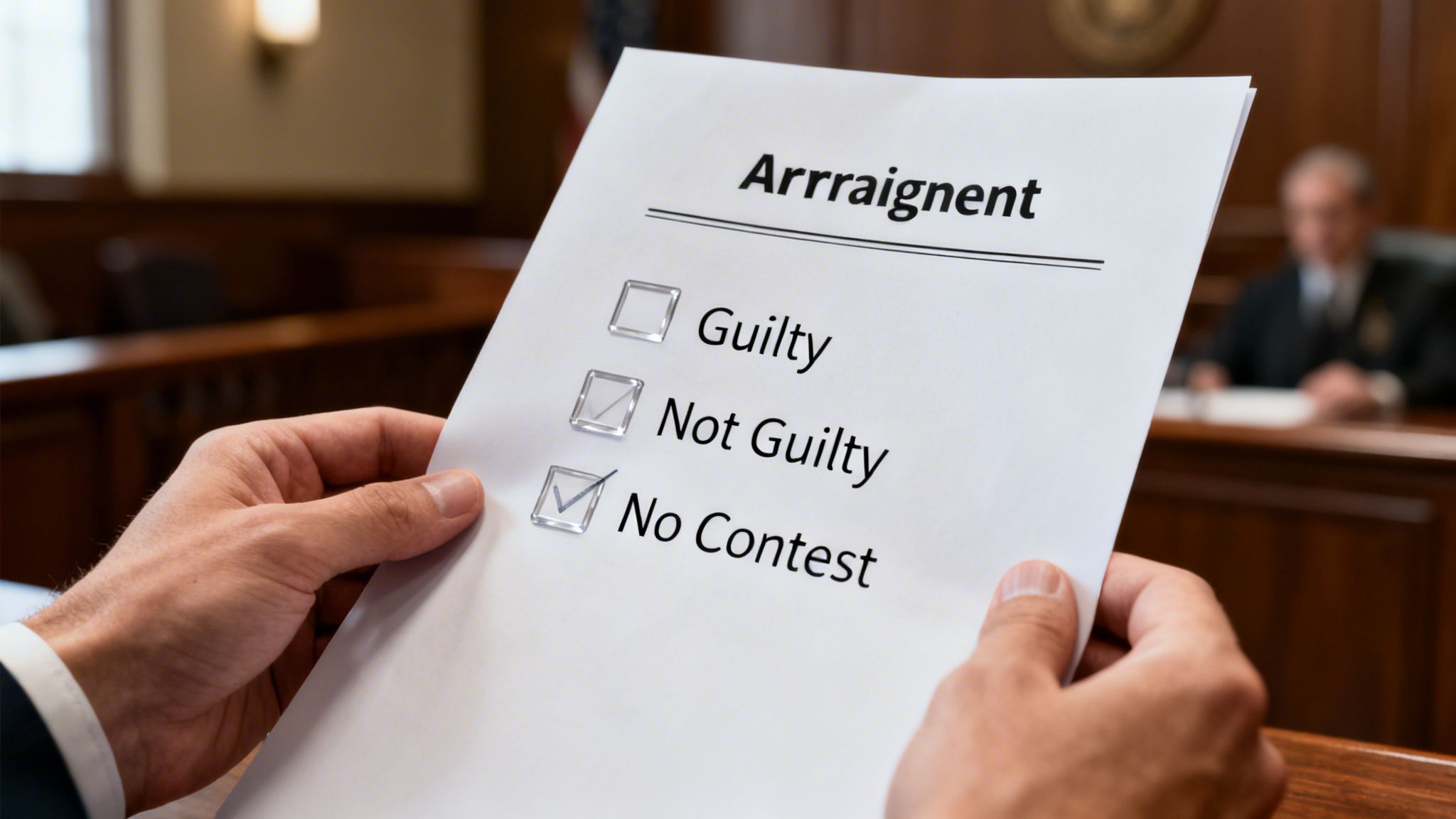
It’s easy to underestimate this moment. With U.S. courts handling over 10 million traffic cases annually, judges move quickly. A hasty plea in a busy Texas court can turn a minor ticket into a major headache. You can explore court trends and data from the National Center for State Courts.
Making the right call begins with understanding what each plea means for your driving record, your finances, and your future.
Pleading Guilty: A Direct Admission
Pleading "guilty" is an admission that you committed the violation. While it's the fastest way to resolve the case, it comes with immediate and lasting consequences. The judge will find you guilty, order you to pay a fine, and report the conviction to the Texas Department of Public Safety (DPS).
A guilty plea means:
- A guaranteed conviction: The violation goes on your permanent driving record.
- Immediate fines: You will likely pay the full fine immediately.
- Long-term costs: The conviction will almost certainly lead to points on your license and an increase in your car insurance rates.
Pleading No Contest: A Strategic Nuance
Pleading "nolo contendere," or no contest, is more nuanced. You are not admitting guilt, but you are choosing not to fight the charge and will accept the consequences. In traffic court, the outcome is the same as a guilty plea: you are found guilty, pay a fine, and the conviction is recorded.
So, what is the benefit? A no contest plea cannot be used against you as an admission of fault in a civil lawsuit. For example, if your ticket resulted from an accident, pleading no contest prevents the other driver from using your plea to prove you were at fault in a personal injury claim.
Pleading Not Guilty: Your Right to a Defense
Pleading "not guilty" is your constitutional right to require the State to prove its case against you. This is the only plea that provides you and your attorney with the time and opportunity to build a defense. It does not mean you are being dishonest; it simply means you are holding the prosecutor to their legal burden of proving guilt beyond a reasonable doubt.
Pleading not guilty is the first step in protecting your rights. It opens the door for your attorney to review evidence, find weaknesses in the case, negotiate with the prosecutor for a dismissal or reduction, and fight to keep your record clean.
Understanding the Consequences of Your Plea
The choice you make at your arraignment for a traffic ticket has long-term consequences. Pleading guilty or no contest results in a conviction on your driving record, which is the first domino to fall.
That conviction adds points to your license under the Texas Driver Responsibility Program. Accumulating too many points leads to annual surcharges just to maintain your license. Failure to pay can result in a DWI license suspension.
The Financial Fallout Beyond the Fine
The court fine is just the beginning. The real financial pain often comes from your auto insurance provider. A traffic conviction signals to insurers that you are a higher-risk driver, and they will likely raise your premiums accordingly.
This increase isn't a one-time event. You could face higher rates for three to five years, potentially costing you thousands of dollars.
For example, a $200 speeding ticket could ultimately cost you over $1,500 in increased insurance premiums. This hidden penalty catches many people by surprise.
The Penalty for Ignoring Your Court Date
Perhaps the biggest mistake you can make is failing to appear for your court date. Ignoring your arraignment is not a passive act—it is a separate criminal offense.
When you miss your court date, the judge will issue a warrant for your arrest for "Failure to Appear" or "Violate Promise to Appear." This new charge is added on top of the original traffic ticket, significantly compounding your legal troubles.
This means any future interaction with law enforcement could result in your arrest. What began as a simple ticket can spiral into a situation that threatens your freedom. Facing your arraignment for a traffic ticket with a clear strategy is the only way to avoid these severe consequences.
How a Lawyer Can Change Your Arraignment Outcome
Walking into a courtroom alone can feel overwhelming. Hiring an attorney for a traffic ticket—especially if it's connected to a DWI charge—is about leveling the playing field. It provides you with a defender who understands the system.
A significant benefit is that a lawyer can often appear in court on your behalf. This means you may not have to miss work or spend hours in a courtroom just to enter a plea. Your attorney handles the procedural steps, allowing you to continue with your life.
The Power of Early Negotiation
The true value of a Texas DUI attorney begins the moment they are hired. They will immediately begin negotiating with the prosecutor. Where you see a single ticket, a lawyer sees a set of legal elements the state must prove. They analyze the citation for errors, scrutinize the officer’s report, and identify weaknesses in the case.
Their primary goal is to protect your driving record. This often involves negotiating for resolutions you may not be aware of:
- Deferred Adjudication: This is often the best outcome. You pay a fee and complete a short probationary period. If you stay out of trouble, the ticket is dismissed as if it never happened. No conviction, no points.
- Defensive Driving Course: Your attorney may persuade the prosecutor to allow you to take a state-approved driving safety course in exchange for a dismissal.
- Reduced Charge: If a full dismissal is not possible, your lawyer can often negotiate to reduce the violation to a non-moving one, which means no points on your license and no impact on your insurance.
- Outright Dismissal: If your lawyer finds a fatal flaw in the state's case, such as an improper traffic stop, they will file a motion to have the entire case thrown out.
Turning a Ticket into a Manageable Situation
Hiring legal counsel transforms a traffic citation from a personal crisis into a manageable legal process. An experienced traffic attorney knows the local courts, prosecutors, and judges. This insider knowledge is a powerful advantage you cannot get on your own.
An attorney transforms your arraignment from a simple plea hearing into a strategic first move. They use this initial appearance to establish a professional line of communication with the prosecutor, signaling that this case will be taken seriously and must be handled correctly.
Ultimately, a lawyer's job is to protect your record and shield you from long-term consequences. A clean driving record saves you money on insurance, helps you avoid state surcharges, and, for commercial drivers, protects your livelihood. Learning how to find a good DUI attorney provides insight into the qualities to look for in any criminal defense lawyer.
When a Traffic Ticket Is Part of a DWI Charge
It can happen in an instant. You're pulled over for a minor traffic violation, but the officer suspects you've been drinking. Suddenly, that simple ticket becomes the basis for a serious DWI charge.
Now, you are fighting a battle on two fronts. The traffic violation is no longer just a nuisance; it's a critical piece of your DWI case. The officer's reason for the stop is called reasonable suspicion, and it's the legal foundation for the entire encounter. If an experienced attorney can prove the stop was unlawful, everything that followed—field sobriety tests, breathalyzer results, and the arrest—could be thrown out of court.
Two Cases, Two Timelines
It's crucial to understand that your traffic ticket and DWI charge are handled on separate legal tracks. The arraignment for your traffic ticket will likely occur in a municipal or Justice of the Peace court. Your DWI, however, is a criminal case heard in a county or district court.
Each case has its own rules and deadlines. For example, after a DWI arrest in Texas, you have only 15 days to request an Administrative License Revocation (ALR) hearing to fight the automatic suspension of your driver's license. This is a civil process, separate from both the criminal DWI case and the traffic ticket. If you miss this deadline, your license will be suspended—even if you are later found not guilty of the DWI.
This table helps illustrate the separate legal tracks for a DWI arrest versus its related traffic ticket.
Timeline DWI Arrest vs Traffic Ticket Arraignment
| Action Item | DWI Case Deadline | Traffic Ticket Deadline |
|---|---|---|
| ALR Hearing Request | 15 days from arrest | Not applicable |
| Arraignment | Weeks to months after arrest | Typically within weeks |
| Court Venue | County or District Court | Municipal or JP Court |
| Primary Goal | Avoid criminal conviction, jail | Avoid fines, points, conviction |
Understanding this dual-track system is essential, as a misstep in one case can negatively impact the other. A "fight DWI Texas" strategy starts here.
Key DWI Terms and Your Defense
When a traffic stop escalates to a DWI investigation, you will encounter new legal terms. One of the most important is implied consent. Under Texas law, having a driver's license means you have implicitly agreed to provide a breath or blood sample if lawfully arrested for DWI. Refusal results in an automatic license suspension.
Another key term is Blood Alcohol Concentration (BAC), which measures the amount of alcohol in your system. The legal limit for most drivers in Texas is 0.08%.
A strong defense often begins by challenging the initial traffic stop. If the officer lacked a legitimate reason to pull you over, your constitutional rights were violated. A skilled DWI lawyer will scrutinize the police report and dashcam video to find flaws in the prosecution's case. You can get a better sense of this first court date by reading our in-depth explanation of the arraignment process.
This timeline shows how a lawyer’s involvement can dramatically change your case's trajectory, from the initial arraignment to a potential dismissal.
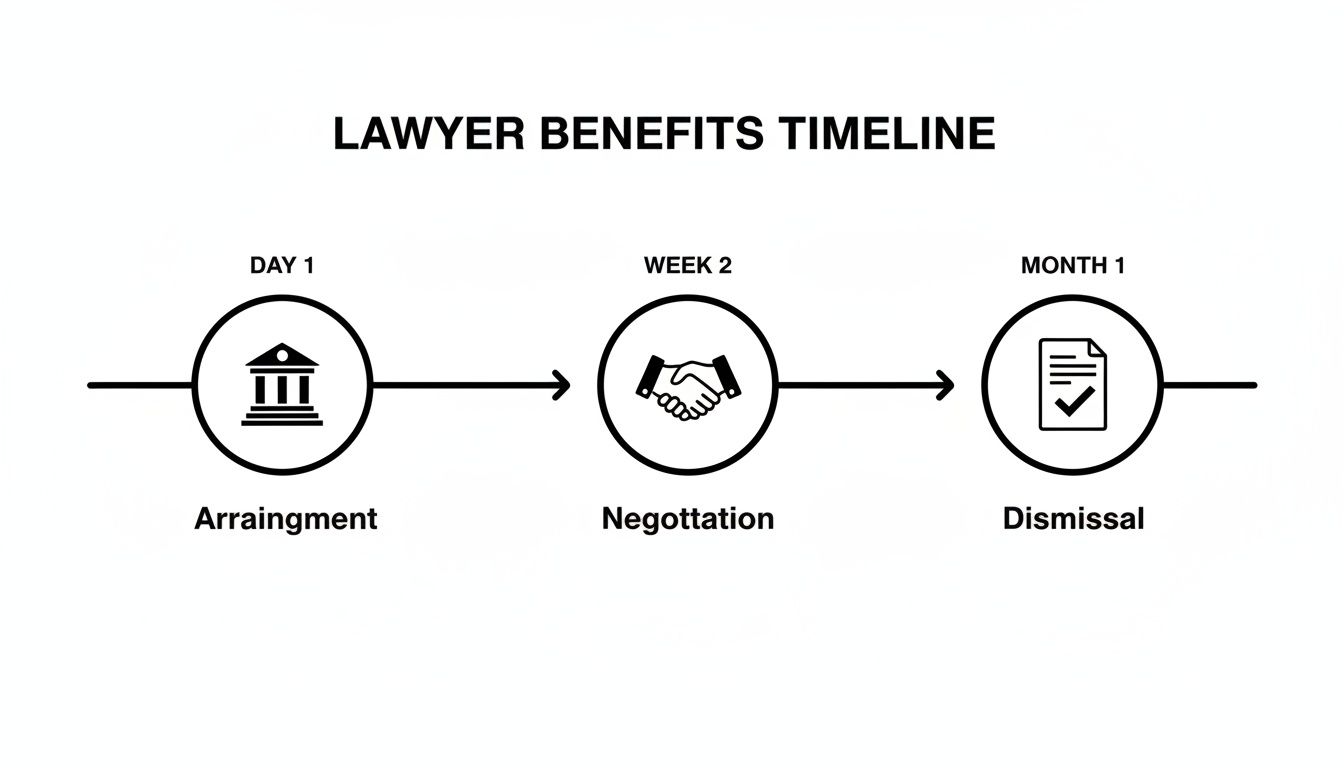
As you can see, strategic action at arraignment, skilled negotiation, and a relentless push for dismissal are where an attorney can turn a bad situation around.
Don't underestimate the pressure cities face to generate revenue from tickets. This is a global trend. For instance, Estonia reported a 50% jump in traffic ticket revenue in a single year, showing a worldwide push for aggressive enforcement. That simple ticket can have massive consequences, especially when a DWI is involved. You can review the full report on traffic revenue to see the data for yourself.
Common Questions About Texas Traffic Ticket Arraignments
A traffic ticket is a summons to a confusing and intimidating world. It’s natural to have questions about your next steps. Our goal is to provide clear, practical answers to help you walk into your arraignment for a traffic ticket with confidence.
Can I Just Pay the Ticket Online and Skip Court?
Yes, but this is a common and costly mistake. Paying a ticket online is legally the same as pleading "guilty" or "no contest." It results in an immediate conviction on your driving record.
That conviction can lead to:
- Points on your driver's license under the Texas Driver Responsibility Program.
- Annual state surcharges for too many points.
- A significant increase in your auto insurance premiums for years.
Attending the arraignment (or having a lawyer appear for you) is the only way to seek a better outcome, such as a dismissal or a deferred disposition that keeps your record clean.
What Happens If I Miss My Arraignment Date?
Missing your court date has immediate and serious consequences. If you fail to appear, the judge will likely issue a warrant for your arrest.
This warrant is for a new, separate criminal charge: "Failure to Appear." It means any future encounter with law enforcement could end with you in handcuffs.
If you cannot make your court date, contact the court clerk or an attorney immediately to request a reset. Ignoring it will only make the situation worse.
Do I Really Need a Lawyer for a Speeding Ticket?
While not legally required, hiring an attorney for a traffic ticket is a smart, strategic move to protect your driving record and finances. An experienced Houston DWI lawyer who also handles traffic cases can often achieve results you can't get on your own.
An attorney can:
- Attend court for you, so you don't have to miss work.
- Negotiate with the prosecutor for a dismissal.
- Arrange for deferred adjudication to keep the violation off your record.
- Fight to reduce fines and prevent insurance hikes.
For anyone with a Commercial Driver's License (CDL), a history of tickets, or facing a first DWI in Texas, hiring an attorney is essential to protect your livelihood and driving privileges. The attorney's fee is often a small investment compared to the long-term financial damage of a conviction.
What Should I Bring to My Arraignment?
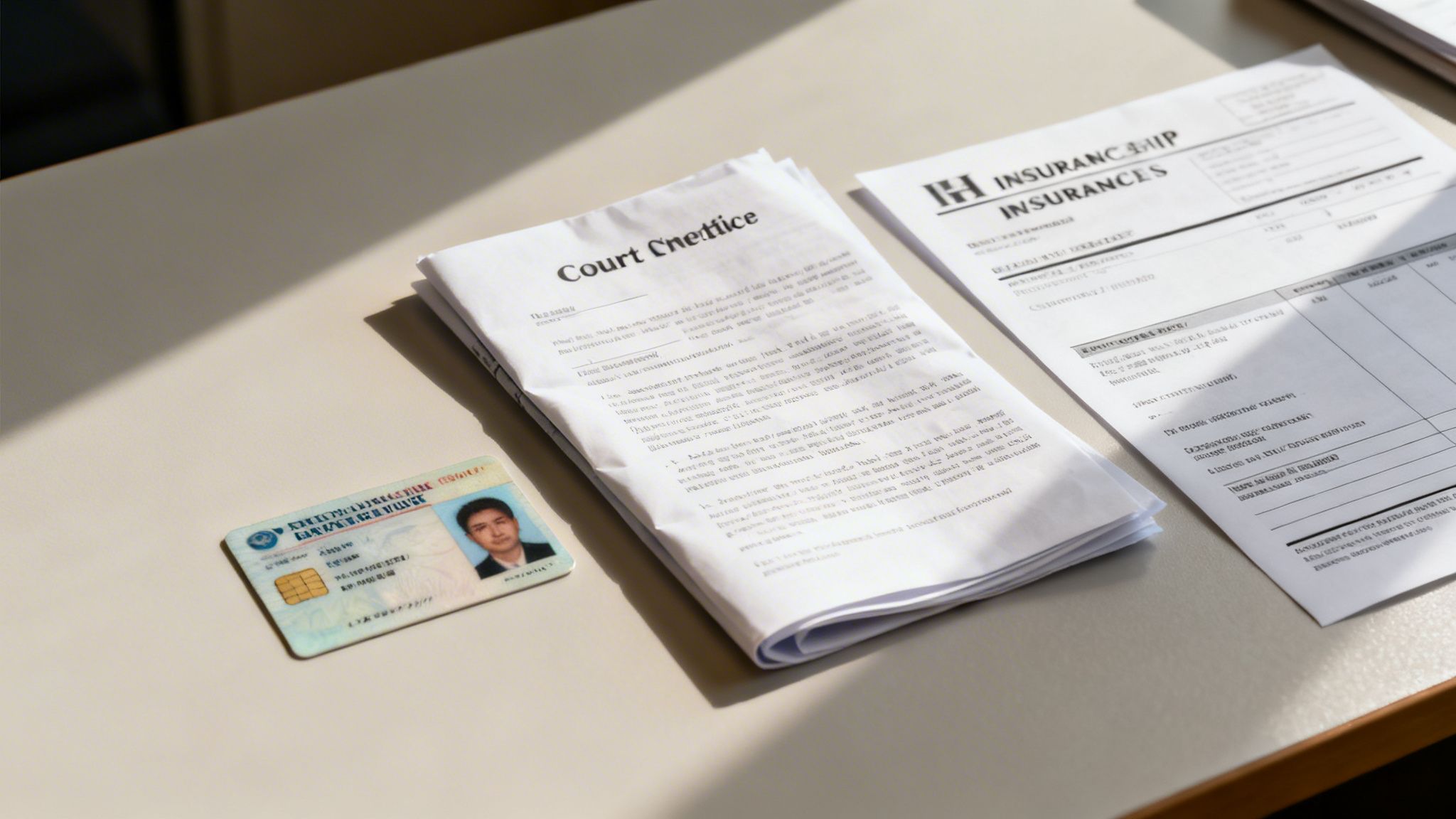
Preparation can reduce the stress of a court date. Gather these items in a folder:
- The original traffic citation.
- Your court notice with the arraignment date and time.
- A valid, government-issued photo ID (like your driver's license).
- A way to pay potential fines or court costs.
It's also wise to bring a pen and paper for notes. Dress in clean, business-casual attire to show respect for the court. If you've hired an attorney, confirm with their office whether your appearance is necessary.
A traffic ticket can feel like an overwhelming burden, but you don't have to face it alone. The experienced attorneys at The Law Office of Bryan Fagan, PLLC are here to protect your rights, fight for your record, and guide you through every step of the process. Contact us today for a free, confidential case evaluation and learn how we can help you achieve the best possible outcome. Visit us at https://texasduilawfirm.com to get started.